If you’ve ever stepped into a quilt shop, you know the feeling. You go in for one thing and suddenly you’re staring at rows of color and running your hands over bolts. Before you know it, inspiration sneaks up on you. And you’re already mapping your next quilt.
Before your rotary cutter hits the mat, here’s one crucial decision you’ll need to make:
Choosing the right fabric.
To do this, it’s a must to understand how various fabrics behave. Besides, some press beautifully while others stretch or shrink more. Armed with proper knowledge, you can avoid frustration during sewing.
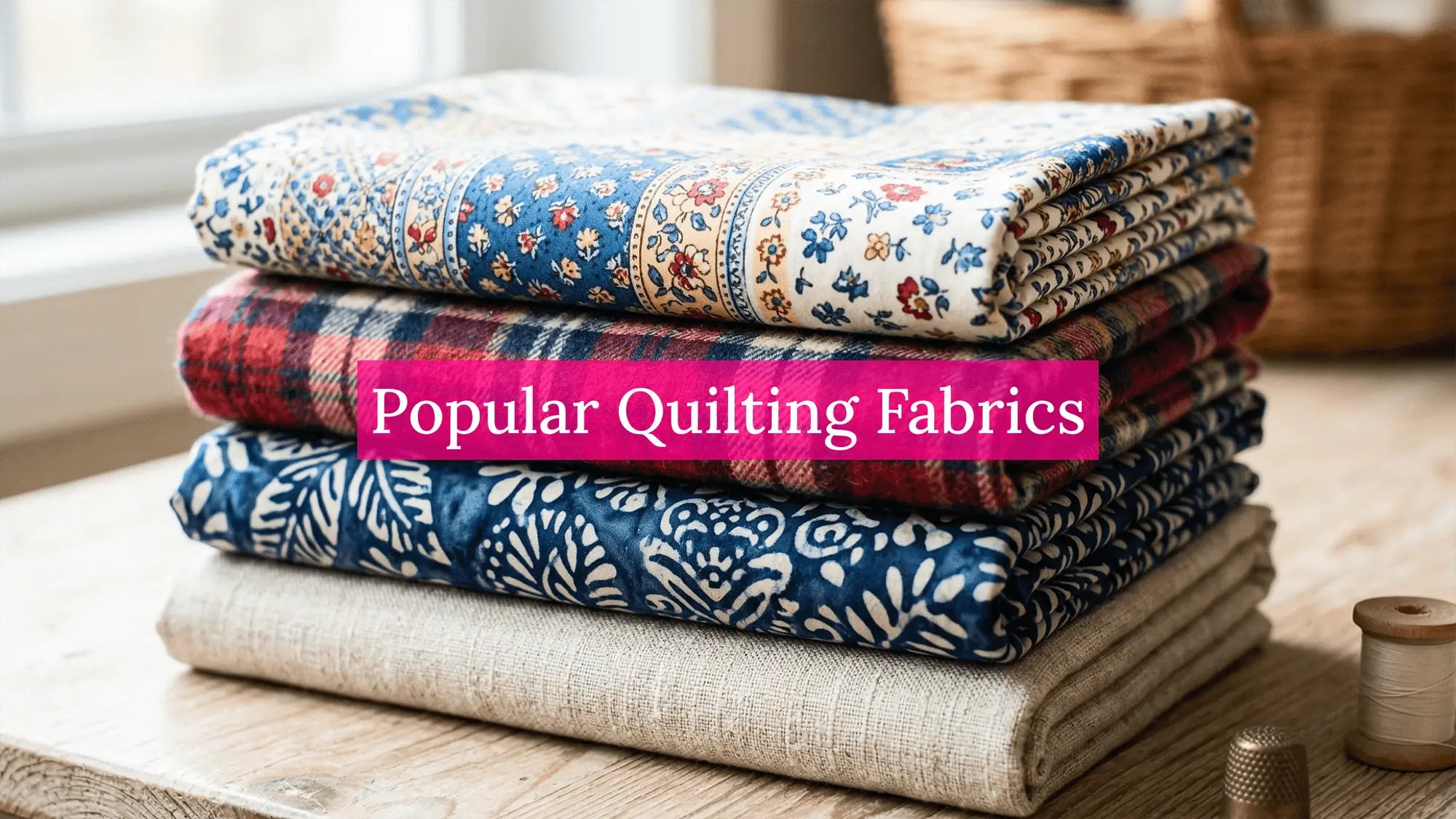
Here’s a look at 5 of the most popular fabrics for quilting. We’ll point out what makes each oone easy (or tricky) to sew with and where they tend to shine. With this, you’ll be able to pick a fabric for your project.
Getting to Know Your Quilting Fabric Options

The fabric you pick changes everything. How it cuts. How it presses. Whether your seams stay flat or start shifting halfway through the project. It also affects how your quilt holds up after several washes.
Here’s a quick guide to show you what makes each fabric unique:
|
Fabric Type |
Best For |
Key Characteristics |
Skill Level |
|
Quilter’s Cotton |
Traditional patchwork, modern quilts |
Stable, crisp, minimal stretch, holds a press |
Beginner to expert |
|
Flannel |
Warm bed quilts, baby blankets, rag quilts |
Soft, cozy, prone to shrinking and fraying |
Beginner to intermediate |
|
Minky |
Baby quilts, throw blankets, plush quilt backings |
Ultra-soft, stretchy knit, doesn’t fray, can shift while sewing |
Intermediate |
|
Batiks |
Artistic wall hangings, intricate piecing |
High thread count, vibrant color, no wrong side |
Intermediate to expert |
|
Linen Blends |
Heirloom quilts, home décor projects |
Textured, elegant drape, prone to wrinkling |
Intermediate to expert |
Quilter’s Cotton: The Gold Standard
100% quilter’s cotton is the clear favorite among quilters. This is specifically manufactured for piecing and patchwork. Typically, it has a thread count of 68 x 68 per inch or more, which translates to a tight weave with minimal stretch.
For quilting, that translates to fewer headaches. Your cuts stay clean, points line up more easily, and it doesn’t fray. Plus, the fabric stays put when you press a seam.
Quilting cotton is perfect for beginners. The fabric’s predictable behavior means it’s much easier to focus on improving technique instead of managing distortion.
Another major advantage is colorfastness. Quality quilting cotton is treated to lock in dyes. You’re less likely to open the washer and find your white fabric turned pink. That reliability makes a difference when you’re using coordinated light and dark prints.
Quilter’s cotton is an excellent choice, whether you’re making traditional patchwork or modern designs.
Flannel: Warm, Soft, and Cozy
If you’re going for something durable yet comfortable, you may want to consider flannel.
This brushed cotton fabric is known for its soft, fuzzy surface. The unique texture comes from a finishing process called “napping.” Fibers are gently lifted to create warmth-trapping air pockets.
Flannel is most ideal for:
-
Bed quilts
-
Baby blankets
-
Rag quilts
That said, flannel also comes with a few quirks.
For example, its looser weave causes it to fray more. It may also shrink up to 5% or more during the first wash. That’s why pre-washing is recommended.
A walking foot helps prevent shifting during sewing. A slightly longer stitch length of around 2.8 to 3.0 mm works well with its thicker texture.
Minky: Plush Backing with Stretch
Compared with other fabric types, Minky is luxuriously soft.
This polyester knit fabric is known for its ultra-soft pile and stretch. It’s commonly used as quilt backings for baby quilts and throw blankets.
Unlike woven cotton, Minky won’t fray on you. Be warned, however, that it stretches. And that stretch can get wild if you’re not careful.
When working with Minky:
-
Use plenty of pins or clips
-
Sew with a walking foot
-
Consider using a stretch needle
-
Avoid pulling the fabric as you stitch
Because of its stretch, Minky is rarely used for piecing. But it definitely adds warmth and softness as a quilt backing.
Batiks: Vibrant and Artistic
Batiks bring depth and artistry to quilting. These fabrics are made using a wax-resist dyeing process. This gives it multi-tonal color and intricate crackle patterns. Each piece is slightly unique, which makes your project visually interesting.
Batiks are also known for their high thread count. They’re crisp and dense, making them excellent for intricate piecing. They fray less than many standard cottons. Plus, they hold shape really well. Technically, there’s no wrong side to it because the dye penetrates deeply.
That said, pre-washing is essential because batiks are heavily saturated. Doing this reduces the color transfer risks, especially for deep reds, purples, and blues.
Batiks are often used for:
-
Wall hangings
-
Landscape quilts
-
Intricate designs
-
Projects that rely on color depth and texture
Linen Blends: Texture and Sophistication
Cotton-linen blends offer a distinct look for quilt projects. They add a slightly nubby texture and graceful drape. Over time, the fabric softens beautifully, giving quilts a relaxed, heirloom feel.
These blends are often chosen for:
-
Home décor quilts
-
Throw quilts
-
Decorative pillows
Linen blends do fray and wrinkle more. So, pay attention to your seam finishes and pressing. They’re not difficult but they can be a little less forgiving.
Quilters ready to experiment will benefit the most from linen blends. They’re definitely not the easiest choice for beginners.
Matching Fabric to Your Project

The best fabric for quilting depends entirely on what you’re making.
If you’re doing something detailed with lots of sharp points, stick with stable cotton or batiks. If the goal is comfort, flannel or Minky backing makes sense. For texture and a softer drape, linen blends can give that extra character.
Also, remember that durability matters. Higher thread counts and tighter weaves lead to long-term performance.
Finally, pre-washing is an important step. Do it, especially if you’re working with flannel and heavily dyed materials. Taking time to prepare your fabric helps prevent undesirable surprises.
Supporting Your Fabric Choices with the Right Tools
Choosing appropriate tools contributes to a more polished result.
To get clean cuts and durable seams, use:
-
High-quality quilting thread that matches your fabric fiber
-
A sharp rotary blade to reduce fraying
-
The correct needle size and type for your material
-
Batting that suits your quilt’s purpose
To illustrate, cotton batting provides a classic, flatter finish. Wool batting, on the other hand, adds loft and warmth.
Frequently Asked Questions
Should I always pre-wash quilting fabric?
Generally, yes. Pre-washing removes excess dye and lets the fabric shrink before stitching. It’s especially important for flannel and deeply saturated fabrics.
Do not, however, pre-wash pre-cut fabric bundles (charm squares, jelly rolls) because it can cause distortion and fraying. This makes them harder to piece accurately. If you’re unsure, test a small swatch first.
Can I mix different fabric types in one quilt?
Yes. But it needs planning and preparation. First, pre-wash everything to deal with shrinkage. Next, consider stretch and weight variations when combining fabrics. A walking foot can help feed layers evenly and reduce puckering. Moreover, mixing textures can add beautiful depth.
What’s the difference between quilting cotton and regular cotton?
Quilting cotton has a tighter weave and higher thread count. It’s designed for durability, crisp pressing, and minimal stretch. These are essential qualities for patchwork.
Regular cotton is often lighter and drapier. It’s better suited for clothing than quilting projects.
Final Thoughts
Choosing the best quilting fabric doesn’t have to be hard.
As you understand fabric behavior, picking the right type can be much easier. As a result, sewing becomes more enjoyable. Your finished quilt will likely last for years.
Also, it helps to start with a clear vision. Consider how the quilt will be used. Then select a fabric that supports your purpose.
As expert quilters will say, a good quilt starts before the first stitch. It’s when you choose fabric that works with you.