Ever tried cutting quilt pieces with scissors? If yes, then you know how things can go wrong quickly. Edges can wobble and corners may drift. Before long, your blocks end up a little off.
That’s where a rotary cutter can be helpful.
There’s just no turning back once you start using one. A good rotary cutter glides through fabric layers like a wheel through butter. It leaves clean, precise edges behind. For quilters, that accuracy is more than satisfying. It’s essential for piecing blocks that line up properly.
Here’s a fact: the “best” rotary cutter isn’t the fanciest one in the market.
Usually, it’s the one that fits comfortably in your hand and suits the way you work.
A reliable setup starts with 3 basics:
-
a versatile 45mm blade
-
a comfortable handle
-
dependable safety features
In this article, we’ll walk through what actually matters when choosing a rotary cutter for quilting. You’ll learn how blade size and handle directly affect performance. We’ll also cover basic maintenance tips. That way, your cutter stays sharp and reliable.
Why a Rotary Cutter Changes the Way You Quilt
Switching from scissors to a rotary cutter is often a big step for beginners.
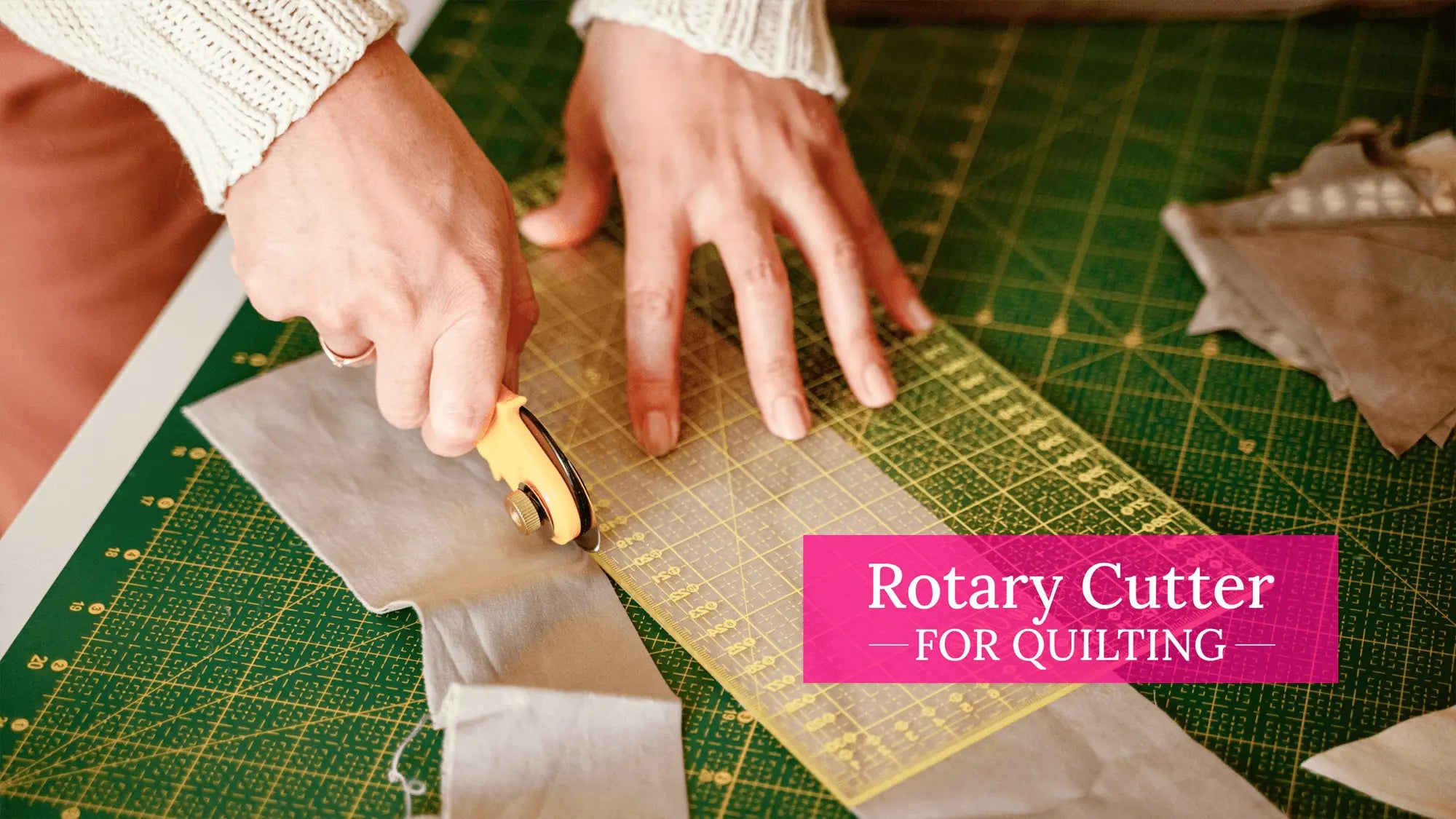
The tool itself is simple. It’s a circular blade mounted in a handle, similar to a pizza cutter. However, its impact on the quilting process is huge. It lets you slice through several layers of fabric in a single smooth pass.
That means:
-
straighter cuts
-
faster fabric prep
-
more consistent pieces
For projects with repeated shapes (such as strip piecing or precut blocks), the time savings alone is worth it.
Additionally, rotary cutters work with rulers and cutting mats. They create a system designed specifically for quilting precision.
Choosing the Right Blade Size

A rotary cutter is only as good as its blade. Different sizes exist for a reason. Once you understand how they work, you can choose which best matches your projects.
45mm Blades: The Everyday Standard
This is the go-to size for most quilters. With it, you can cut fabric strips and square up blocks easily. A sharp one handles 4 to 6 layers of quilting cotton at once.
28mm Blades: Precision Work
When you’re cutting curves or small shapes, this blade is the better pick. It offers tighter control and better maneuverability. With its size, you can cut detailed patterns without accidentally slicing beyond the line.
60mm Blades: Big Jobs
This blade excels at cutting through larger stacks of fabric. If you need to slice multiple layers at once, it helps save time and effort. It also glides smoother across thicker materials.
In general, quilters keep at least two types of cutters for different cutting jobs.
Blade Materials and Specialty Options
Most rotary blades are made from tungsten steel. This holds a sharp edge well under normal use. However, frequent quilters often prefer titanium-coated blades. They stay sharp longer. The coating reduces wear. It even helps the blade glide through fabric more smoothly over time.
Beyond standard blades, you’ll also find specialty versions designed for decorative effects. These include:
-
Pinking blades, which create a zigzag edge.
-
Wave blades, which produce soft curved edges.
They’re less common but they add interesting texture to fabric projects.
Choosing a Handle That Fits Your Cutting Style

Blade size matters, but the handle design can affect comfort just as much. This is especially true for long cutting sessions. The handle is often the reason if your wrist feels sore after preparing fabric.
Straight Handles
The traditional straight handle is simple and familiar. It encourages a firm downward motion, which works well when cutting long, straight strips against a ruler. This style also offers a clear view of the cutting line. With its symmetrical design, this handle works well for both right-handed and left-handed users.
Ergonomic Handles
Ergonomic handles are shaped to follow the hand’s natural curve. The design reduces the amount of grip pressure required. This helps prevent fatigue during long cutting sessions. Quilters dealing with arthritis, wrist strain, or carpal tunnel issues often prefer ergonomic handles.
Safety Features Worth Paying Attention To
Rotary blades are extremely sharp. In fact, they slice through fabric with almost no resistance.
That said, safety matters a lot. Most cutters rely on one of two protective systems.
Manual Blade Guards
A sliding guard covers the blade when not in use. You move the cover back with your thumb before cutting. Then you slide it forward again afterward.
Automatic Retracting Blades
Some cutters use spring-loaded mechanisms that expose the blade only when pressure is applied. As soon as you lift the cutter from the mat, the blade retracts automatically.
Quilters appreciate this feature when doing repetitive cutting. It reduces the chance of accidental contact with the blade.
Some models combine both systems, adding a locking mechanism for storage as well.
Keeping Your Rotary Cutter in Good Shape
A rotary cutter performs best when it’s clean. Over time, the blade housing may collect lint and fabric fibers. This may cause the blade to drag instead of rolling smoothly. A quick wipe after larger projects helps keep the mechanism running freely.
Replacing the Blade
A dull blade is easy to recognize. You might notice:
-
skipped threads
-
rough edges
-
extra pressure needed to cut
Typically, quilters replace blades after two or three large quilts. Heavy cutting may require more frequent changes.
Adjusting Blade Tension
When installing a new blade, tighten the screw just enough to hold the blade securely. If you go too tight, the blade will drag. If you’re too loose, it will wobble. Finding that middle ground ensures accurate cuts.
Use the Right Surface
A self-healing cutting mat is essential. Cutting on hard surfaces quickly dulls and damages the blades. The mat protects it while also preventing fabric from shifting as you cut.
Common Rotary Cutter Questions
Why Is My Cutter Skipping Threads?
Skipped threads usually mean the blade has become dull or damaged. Even a tiny nick along the blade’s edge can cause it to snag fibers instead of slicing cleanly. Replacing the blade typically solves the problem.
If skipping continues after installing a new blade, check two other factors:
-
consistent downward pressure while cutting
-
deep grooves in the cutting mat
Worn mats can trap the blade and interfere with smooth cuts.
How Many Fabric Layers Can I Cut at Once?
The number of layers depends largely on blade size. A 45mm blade generally cuts 4 to 6 layers of quilting cotton. A 60mm blade can sometimes handle 6 to 8 layers. Before cutting large stacks, test on scrap fabric first to make sure every layer cuts cleanly.
Can Rotary Cutters Cut Fabrics Other Than Quilting Cotton?
Yes. Rotary cutters can handle a wide range of fabrics. Beyond quilting cotton, you can use cutters for flannel, denim, fleece, and lightweight leather. Just use the right blade size and ensure it’s sharp enough for the material.
Thicker fabrics may require fewer layers when cutting. Delicate fabrics often benefit from extra stabilization and careful pressure. Regardless of the material, always cut on a proper self-healing mat.

Conclusion
Rotary cutters are always useful for new and experienced quilters. With this tool, you can cut fabric quickly and with less hand strain. Again, using the right blade size and handle determines a cutter’s effectiveness. With a good rotary cutter in your hands, even complex projects feel more manageable. Your finished quilts also look sharper and more polished.
So, investing time in finding the right tool pays off in every stitch. Ultimately, it’s about making your quilting experience smoother and more enjoyable.