Embarking on a quilting project is an exciting step into a world of creativity, but complex designs can feel intimidating for newcomers. This guide eliminates that barrier by providing a curated collection of easy quilting patterns free of charge, specifically chosen for beginners. We've gathered eight simple yet stunningly effective designs that will build your confidence, teach you fundamental skills, and help you produce a beautiful finished quilt you'll be proud to display or gift. Each pattern in this listicle breaks down the process into manageable steps, making your first—or next—quilting adventure a success.
Before you start cutting fabric, remember that high-quality materials are the foundation of any great quilt. The right fabric, thread, and batting can transform a simple pattern into a professional-looking masterpiece. At Linda's, we offer everything you need to bring these free patterns to life, from vibrant fabric collections and precision cutting tools to the perfect thread and soft batting. This list will guide you through the "how," and we're here to provide the "what." Let's start your quilting journey.
1. Simple Square Patchwork Quilt
The simple square patchwork is the quintessential starting point for anyone new to quilting. Its beauty lies in its simplicity: equal-sized fabric squares are cut and sewn together in a basic grid. This foundational technique minimizes complex cutting and tricky seams, allowing beginners to focus on mastering fundamental skills like consistent seam allowances and accurate pressing. It's a forgiving design that builds confidence quickly.
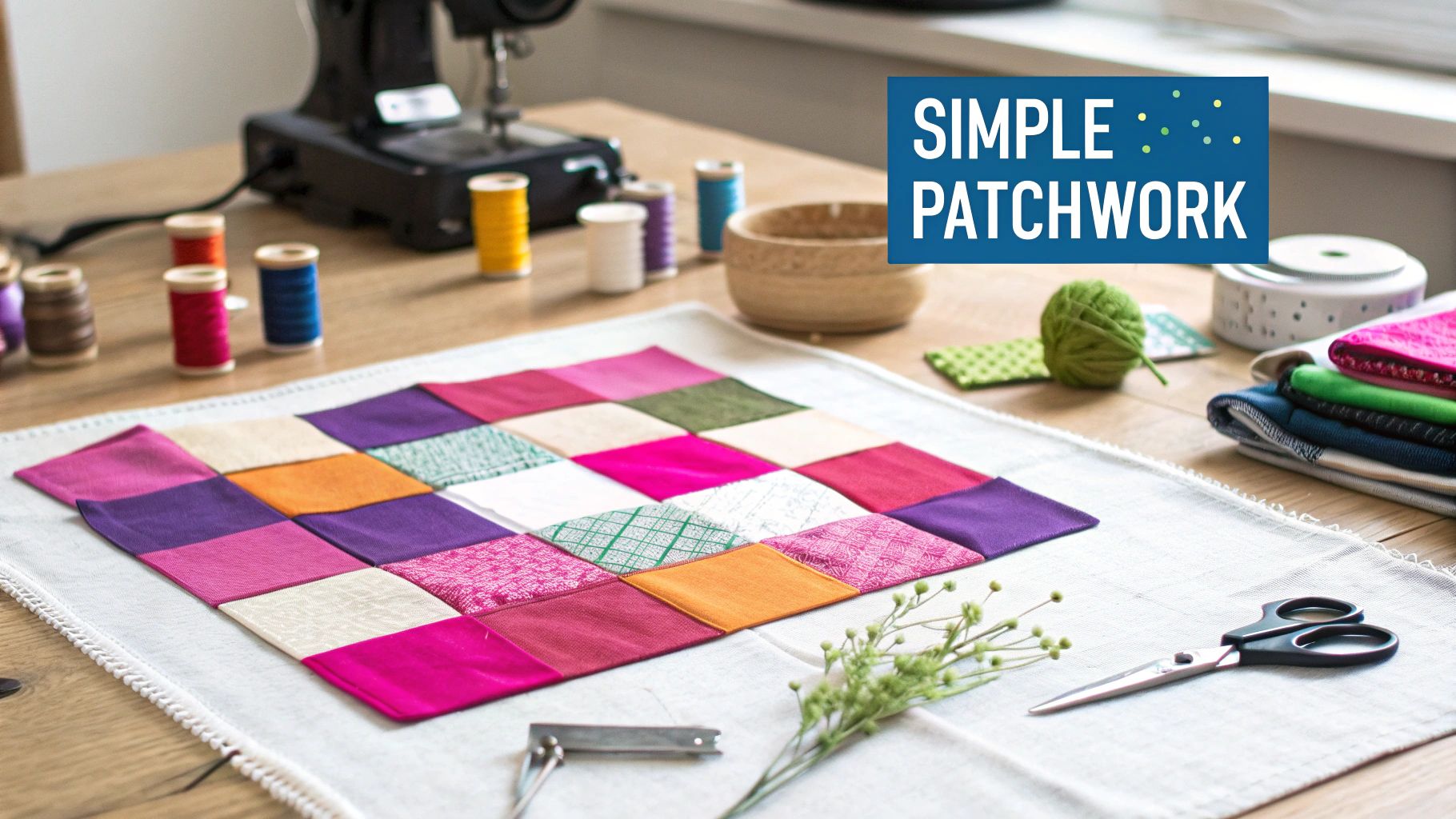
Because the pattern is so straightforward, the fabric selection takes center stage. This makes it one of the best easy quilting patterns free of complicated steps, allowing the prints and colors to tell the story.
Why This Pattern is Perfect for Beginners
The magic of a square patchwork quilt is its versatility. It can be adapted to any size, from a small table runner to a king-sized bed quilt, just by changing the number or size of the squares. It's also an excellent way to use up fabric scraps or showcase a curated fabric bundle.
- Memory Quilts: Incorporate squares made from old t-shirts, baby clothes, or even custom-printed photo fabric.
- Scrappy Quilts: Use leftover fabric scraps of various colors and prints for a vibrant, eclectic look.
- Modern Minimalist: Arrange solid-colored squares in a deliberate, artistic pattern for a clean and contemporary design.
- Pre-Cut Friendly: This pattern is perfect for using pre-cut "charm packs" (5-inch squares) or "layer cakes" (10-inch squares), which saves significant cutting time.
Pro Tips for a Flawless Finish
To ensure your first patchwork project is a success, pay attention to a few key details.
Expert Tip: Pressing your seams correctly is crucial. Press the seams for each row in alternating directions (row 1 to the right, row 2 to the left, etc.). This allows the seams to "nest" together when you join the rows, reducing bulk and helping your corners align perfectly.
Lay out all your squares on a design wall or the floor before sewing. This allows you to visualize the final color arrangement and make adjustments. For precise and consistent seams, a quarter-inch presser foot is an invaluable tool. Find the perfect high-quality cotton fabrics and essential quilting notions at Linda's to ensure your project looks professional and lasts a lifetime.
2. Rail Fence Pattern
The Rail Fence pattern is a beginner's dream, creating a dynamic visual effect with surprisingly simple techniques. The design involves sewing long fabric strips together into "strip sets," which are then cut into blocks. These blocks are rotated and arranged to create striking zigzag or stacked patterns. This method relies entirely on straight seams and basic strip piecing, making it an ideal project for those new to quilting who want a sophisticated result without complex cuts.
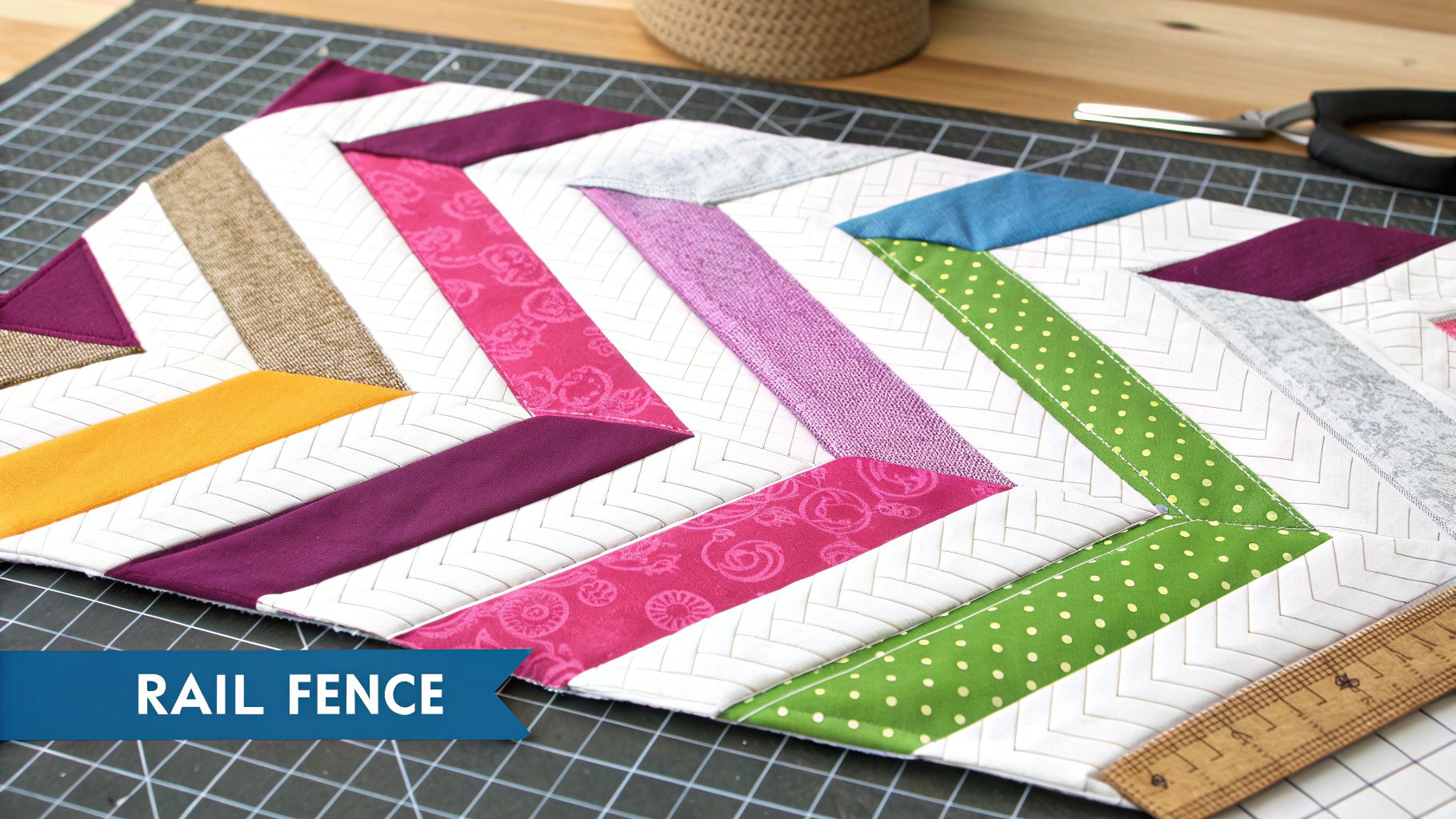
Because the construction is so streamlined, the arrangement of colors and prints creates the quilt's character. This makes it another fantastic example of easy quilting patterns free from intricate piecing, allowing the fabric to do all the heavy lifting.
Why This Pattern is Perfect for Beginners
The Rail Fence pattern is celebrated for its ability to produce a visually complex quilt with minimal effort. By simply alternating the orientation of each block (horizontal then vertical), a beautiful interwoven design emerges. This pattern is incredibly versatile and works well for all sizes, from baby quilts to large bedspreads.
- Jelly Roll Friendly: This pattern is perfectly suited for pre-cut 2.5-inch strips known as "jelly rolls," which eliminates most of the initial cutting work.
- Scrappy Designs: Use leftover strips from other projects to create a vibrant, eclectic quilt that is truly one-of-a-kind.
- Modern Gradients: Arrange solid fabrics in a gradient or rainbow progression for a stunning, contemporary look.
- Two-Tone Zigzags: Using just two contrasting colors creates a bold and graphic zigzag pattern that makes a powerful statement.
Pro Tips for a Flawless Finish
Achieving a professional-looking Rail Fence quilt comes down to consistency in your cutting and sewing. A few key practices will ensure your finished project is something to be proud of.
Expert Tip: Pressing your strip sets is key. Before cutting them into blocks, press all seams in one direction. Then, when you sew the blocks together, you can nest the seams just as you would with a patchwork quilt, ensuring flat junctions and sharp points.
Always lay your blocks out on a design wall or floor before sewing them together. This step is crucial for visualizing the final pattern and ensuring your color placement creates the desired effect. For perfectly straight strips and accurate block cuts, a sharp rotary cutter and a quality quilting ruler are essential. Find all the premium quilting tools and vibrant jelly rolls you need at Linda's to bring your Rail Fence vision to life.
3. Four Patch Quilt Pattern
The Four Patch is a classic and versatile quilting block, acting as a natural next step after mastering single squares. It consists of four equal-sized squares sewn together into a simple 2x2 grid. This foundational block teaches crucial skills like precise cutting, chain piecing for efficiency, and the art of matching seam intersections perfectly.
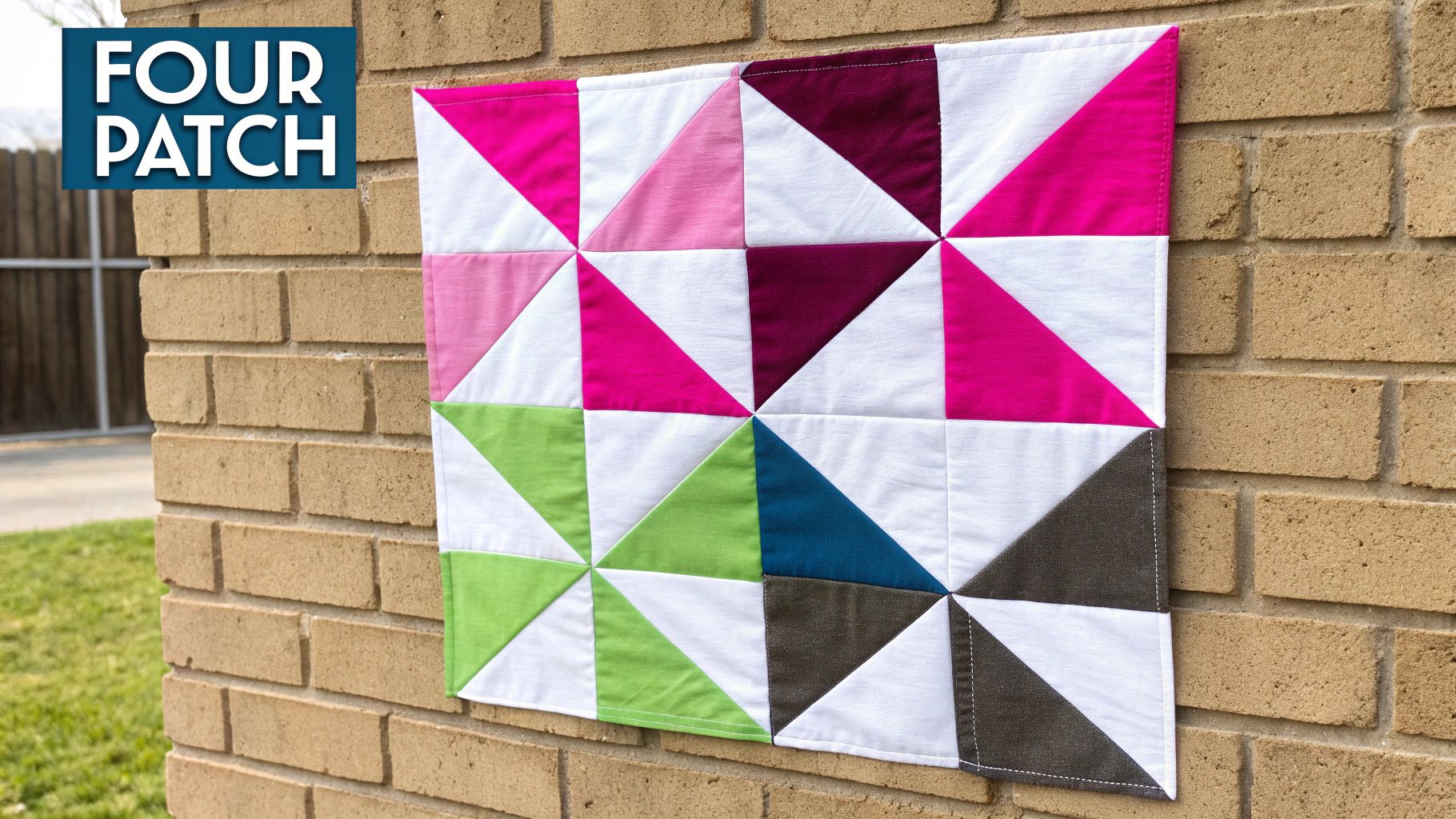
While the construction is straightforward, the design possibilities are nearly endless. This makes the Four Patch one of the most adaptable easy quilting patterns free for quilters looking to expand their skills without tackling overly complex techniques.
Why This Pattern is Perfect for Beginners
The Four Patch block serves as a fundamental building block in countless quilt designs. By combining it with plain squares or arranging the blocks in different orientations, you can create surprisingly intricate and dynamic patterns. It’s an ideal way to practice precision on a small, manageable scale before assembling a full quilt top.
- Irish Chain Quilts: Alternate Four Patch blocks with solid squares to create the iconic and beautiful Irish Chain design.
- Scrappy Quilts: Dive into your scrap bin and use hundreds of different fabrics to create a vibrant, one-of-a-kind quilt.
- Modern Minimalist: Use large-scale Four Patch blocks with a limited color palette for a bold and contemporary statement piece.
- Baby Quilts: A Four Patch block makes a charming center for a block or a delightful, repeating border around a central panel.
Pro Tips for a Flawless Finish
To achieve sharp points where your four squares meet, a few simple techniques make all the difference.
Expert Tip: For perfect corners, press the seam between the first two squares to the left and the seam between the second two squares to the right. When you sew the two pairs together, the seams will "nest" snugly, allowing the center points to align perfectly with minimal effort.
Boost your efficiency by chain piecing, which means sewing multiple pairs of squares one after another without cutting the thread in between. For beginners, starting with larger squares (e.g., cut at 4.5 inches for a finished 8-inch block) can make handling and aligning easier. Find the perfect coordinating fabrics and a reliable quarter-inch presser foot at Linda's to guarantee your Four Patch project is a beautiful success.
4. Strip Quilt (Jelly Roll Race)
The Strip Quilt, famously known as the "Jelly Roll Race," is a thrilling and speedy pattern that has taken the quilting world by storm. It's designed to create an entire quilt top, often in less than an hour, using a pre-cut "Jelly Roll" of 2.5-inch fabric strips. The technique involves sewing all the strips end-to-end to create one very long strip, then folding it and sewing the long edges together in a continuous loop.
This method is one of the most exciting easy quilting patterns free from the stress of precise piecing. Because the fabric placement is entirely random, the process is full of surprises, and the final result is always a unique and vibrant design.
Why This Pattern is Perfect for Beginners
The Jelly Roll Race is pure sewing fun. It eliminates the need for complex cutting and intricate block assembly, making it an ideal project for a beginner's first full-size quilt. It’s also incredibly satisfying to see a quilt top come together so quickly.
- Charity Quilts: Its speed makes it perfect for group sewing events or "sew-a-thons" to create multiple charity quilts in a single day.
- Quick Gifts: Need a thoughtful handmade gift for a baby shower or graduation fast? This pattern is your solution.
- Beginner Workshops: The simple, repetitive process makes it a fantastic project for a first quilting class, ensuring every student leaves with a completed top.
- Pre-Cut Perfection: This pattern is literally designed for Jelly Rolls (pre-cut 2.5-inch strip sets), which means no tedious cutting is required.
The following infographic illustrates the basic workflow for constructing a Jelly Roll Race quilt top.
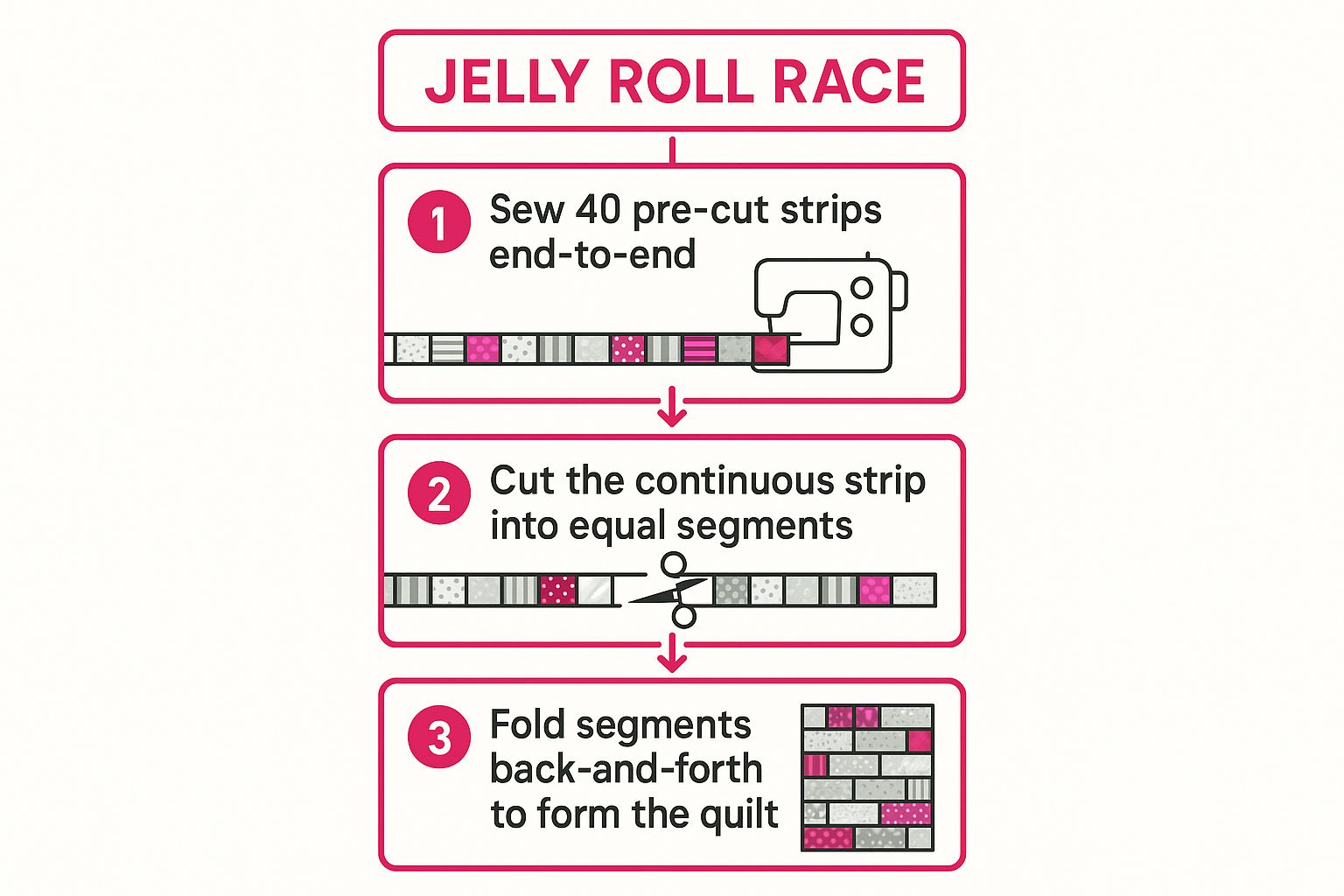
This simple, three-step process is the key to the pattern's incredible speed and efficiency, turning a bundle of strips into a full quilt top in record time.
Pro Tips for a Flawless Finish
While the process is fast, a few tips will ensure your race is a smooth one. Watching a video tutorial, like the one below from Missouri Star Quilt Company, is highly recommended to visualize the process before you begin.
Expert Tip: To prevent your long strip from getting tangled, try feeding it from a basket or box placed on the floor next to your sewing machine. This keeps the fabric contained and allows it to feed smoothly as you sew.
Choose a Jelly Roll with a good mix of light, medium, and dark values to create visual interest. For the best selection of vibrant pre-cuts and all the high-quality thread you'll need, visit Linda's to find the perfect materials that will make your strip quilt shine.
5. Nine Patch Quilt Pattern
The Nine Patch is a cornerstone of quilting history and an ideal project for beginners. This iconic pattern consists of nine equal-sized squares arranged in a 3x3 grid. Traditionally, these squares alternate between light and dark fabrics to create a simple checkerboard effect. Its enduring popularity comes from its simplicity in construction and its incredible versatility as a design element.
As one of the most fundamental easy quilting patterns free of complex piecing, the Nine Patch allows new quilters to build core skills. It provides a perfect canvas for playing with color, value, and fabric placement.
Why This Pattern is Perfect for Beginners
The Nine Patch block is more than just a simple pattern; it’s a foundational building block for countless other quilt designs. Once you master making the basic block, you can explore a world of creative possibilities, moving from simple layouts to more intricate arrangements.
- Classic Amish Style: Use solid, high-contrast colors for a bold and traditional look.
- Irish Chain: Alternate Nine Patch blocks with solid fabric squares to create a stunning secondary pattern of interlocking chains.
- Scrappy Design: Dive into your scrap bin to create a vibrant, "planned improv" quilt where every block is a unique combination of fabrics.
- Disappearing Nine Patch: Sew a basic Nine Patch block, then cut it into four quadrants and rearrange them to create a completely new, more complex-looking block.
Pro Tips for a Flawless Finish
Creating a perfect Nine Patch block is all about accuracy in cutting and piecing. A few simple techniques will help you achieve crisp points and flat blocks.
Expert Tip: To speed up construction, try strip piecing. Sew three long fabric strips together, press, and then sub-cut them into the three-square segments needed for your rows. This method is faster and often more accurate than piecing individual squares.
When assembling your block, remember to nest your seams. Press the seams of the top and bottom rows in one direction and the seams of the middle row in the opposite direction. This will help your corners lock together perfectly for a professional finish. Find the perfect charm packs and high-contrast solids at Linda's to get your Nine Patch project started right.
6. Disappearing Nine Patch
The Disappearing Nine Patch is a wonderfully deceptive pattern that creates a complex, intricate design from a very simple starting point. Quilters begin by making a standard nine-patch block, a 3x3 grid of fabric squares. The magic happens next: this completed block is cut into four equal quarters, which are then rearranged and sewn back together to create a completely new, more dynamic block.
This simple trick elevates a basic block into something extraordinary, making it one of the most rewarding easy quilting patterns free of charge and widely available online. It's the perfect project for a beginner who wants to create something that looks impressively advanced.
Why This Pattern is Perfect for Beginners
The "wow" factor of this pattern is undeniable. It introduces the concept of block deconstruction and reconstruction in a manageable way, building skills without overwhelming a new quilter. The creative possibilities are immense just by changing the rotation of the quarter-blocks.
- Two-Color Impact: Use two contrasting solid colors for a bold, graphic quilt with strong visual lines.
- Scrappy Delight: This is an excellent pattern for using up leftover 2.5-inch or 5-inch squares, creating a vibrant, confetti-like effect.
- Modern Gradient: Arrange fabrics in an ombre or gradient layout within your nine-patch blocks for a stunning, contemporary look.
- Planned Placement: Carefully arrange specific colors in the nine-patch to create secondary patterns like pinwheels or chains when the blocks are reassembled.
Pro Tips for a Flawless Finish
Accuracy is key to making the "disappearing" effect work perfectly. A few extra steps will ensure your blocks come together beautifully.
Expert Tip: When you cut your nine-patch block into quarters, you create bias edges. These edges can stretch easily, which can distort your final block. Handle the quarter-pieces gently and avoid pulling or stretching them as you sew them back together.
Before you start cutting, lay out all your finished nine-patch blocks to ensure you like the color flow. A quality square ruler is essential for making precise cuts. For all your cutting and piecing needs, from sharp rotary cutters to premium cotton fabrics that will make your design pop, find everything you need at Linda's to complete your project with professional results.
7. Half Square Triangle (HST) Quilt
The Half Square Triangle (HST) quilt is built from one of the most versatile and fundamental units in quilting: two triangles sewn together to form a square. While the resulting patterns can look intricate, the process of creating HSTs is straightforward and opens up a universe of design possibilities. This makes it a perfect next step for a beginner ready to move beyond simple squares.
This pattern teaches essential skills like handling bias edges and precision piecing while offering incredible creative freedom. Because the HST unit is so adaptable, it's easy to find easy quilting patterns free online that use this single, simple block to create stunningly complex designs.
Why This Pattern is Perfect for Beginners
The magic of the HST is its ability to create dynamic movement and secondary patterns just by changing its orientation. A single, easy-to-make block can be arranged into countless classic and modern designs, providing a huge return on a small learning investment.
- Chevron and Zigzag: Arrange HSTs in rows to create a classic, energetic chevron pattern.
- Pinwheels: Place four HSTs together with the triangles pointing toward the center to create charming pinwheel blocks.
- Modern Gradients: Use a range of solid colors to create a beautiful and sophisticated gradient effect across the quilt top.
- Scrappy Designs: HSTs are a fantastic way to use up smaller fabric scraps, turning leftovers into a vibrant and cohesive quilt.
Pro Tips for a Flawless Finish
Precision is key to making HSTs look their best. A few simple techniques can ensure your points line up perfectly and your finished quilt looks sharp and professional.
Expert Tip: Starch your fabric before cutting. The diagonal edge of the triangle is a "bias" edge, which is very stretchy and can easily distort. A good starching stabilizes the fabric, preventing stretching and making it much easier to cut and sew accurately.
Learn efficient construction methods like the "two-at-a-time" or "eight-at-a-time" techniques to speed up your process. Always trim your finished HST units down to the exact size using a square ruler; this step is crucial for ensuring all your blocks fit together perfectly. For the sharpest points, find premium quilting cottons and precise cutting tools at Linda's to give your project a polished finish.
8. Rag Quilt Pattern
The rag quilt offers a wonderfully tactile and forgiving approach to quilting, perfect for those seeking a rustic, cozy finish. Its signature feature is the exposed, frayed seam allowances that create a soft, chenille-like texture. Unlike traditional methods, each block is a mini quilt sandwich (top, batting, and backing) sewn together with the seams facing outward. This innovative construction means the quilting and binding are completed as you go.
This "quilt-as-you-go" technique eliminates some of the more intimidating final steps, making it one of the most unique and satisfying easy quilting patterns free from complex finishing work. The final result is a charming, textured quilt that's as fun to make as it is to snuggle under.
Why This Pattern is Perfect for Beginners
The beauty of a rag quilt is its accessible, "imperfect" charm. Precision is less critical than with traditional piecing, and the construction process is straightforward and repetitive. It’s a fantastic way to build skills without the pressure of perfect points, making it a great confidence booster for new quilters.
- Cozy Baby Quilts: Use soft flannel in gentle prints to create a sensory, comforting blanket for a little one.
- Teen or Dorm Quilts: Customize a quilt with school colors or fabrics featuring a favorite hobby or theme.
- Durable Pet Blankets: Select sturdy fabrics like denim or canvas for a rugged and washable pet bed.
- Warm Lap Quilts: The extra texture and weight make these quilts especially comforting for elderly recipients who appreciate extra warmth.
Pro Tips for a Flawless Finish
To achieve that signature fluffy texture, a few specific techniques are key. The magic happens after sewing, during the washing and drying process.
Expert Tip: The choice of fabric is crucial for a great rag quilt. Use 100% cotton fabrics like flannel or homespun, as they fray beautifully. To create a fuller, more luxurious fringe, increase your seam allowance from the standard quarter-inch to a half-inch or even three-quarters of an inch.
Before washing, use sharp scissors to clip the seam allowances every half-inch, being careful not to cut through your seam. Wash the quilt a few times on its own to encourage the fraying process. Be prepared to clean your machine's lint trap several times, as this process generates a lot of lint. Find the perfect flannels and high-quality thread at Linda's to ensure your cozy creation is built to last.
Easy Quilting Patterns: 8-Item Comparison Guide
| Quilt Pattern | Implementation Complexity 🔄 | Resource Requirements ⚡ | Expected Outcomes 📊 | Ideal Use Cases 💡 | Key Advantages ⭐ |
|---|---|---|---|---|---|
| Simple Square Patchwork Quilt | Low - straight cuts and seams only | Low - uses charm packs or scraps | Basic, clean grid design | Beginners, scrap usage, quick projects | Beginner-friendly, quick to assemble, minimal fabric waste |
| Rail Fence Pattern | Low to Medium - strip piecing and rotation | Moderate - accurate strip cutting needed | Dynamic zigzag/brick effect with strong movement | Confident beginners, visual impact quilts | Efficient strip piecing, forgiving for mistakes, striking design |
| Four Patch Quilt Pattern | Low - sewing 2x2 blocks with precise seams | Low to Moderate - fabric scrap friendly | Classic block with versatile arrangements | Beginners learning precision, versatile designs | Great for learning seam matching, versatile layout options, quick blocks |
| Strip Quilt (Jelly Roll Race) | Low - continuous strip piecing, no blocks | Moderate - requires pre-cut 2.5" strips | Random, organic designs fast to construct | Time-sensitive quilts, beginners wanting fast results | Extremely fast, no planning needed, great confidence builder |
| Nine Patch Quilt Pattern | Medium - 3x3 grid with multiple seam intersections | Moderate - needs precise cutting and piecing | Classic checkerboard with complex variations | Beginner to intermediate, traditional patterns | Teaches seam matching, versatile, creates striking secondary patterns |
| Disappearing Nine Patch | Medium - involves cutting and rearranging | Moderate - careful cutting and bias handling | Complex, “magic” secondary patterns | Confident beginners, engaging design work | Simple construction yields complex look, fun transformation, forgiving |
| Half Square Triangle (HST) Quilt | Medium - triangle units with bias edges | Moderate - requires precision and handling | Dynamic diagonal designs, versatile blocks | Beginners to intermediate, creative designs | Versatile building block, multiple fast piecing methods, visual interest |
| Rag Quilt Pattern | Low - simple sewing with exposed seams | Moderate - uses extra fabric and batting | Warm, textured, frayed seams and cozy feel | Beginners, warm casual quilts, no quilting required | No quilting/binding needed, forgiving seams, unique texture and warmth |
Your Quilting Masterpiece Awaits – Let's Bring It to Life!
You've just explored a fantastic collection of eight distinct and approachable quilting patterns, each offering a unique entry point into the world of quilting. From the foundational simplicity of the Simple Square Patchwork to the clever geometry of the Disappearing Nine Patch, these designs prove that you don't need complexity to create something truly beautiful. The journey through these easy quilting patterns free of charge has equipped you with a versatile toolkit for your next creative endeavor.
We covered the classic, grid-based structure of the Four Patch and Nine Patch, which are perfect for mastering precise piecing. Then, we accelerated the process with the dynamic Strip Quilt and the graphically bold Rail Fence, demonstrating how simple cuts can lead to stunning visual effects. Finally, we dove into the versatile Half Square Triangle and the cozy, tactile Rag Quilt, showcasing different techniques that add texture and intricate design possibilities to your skill set. Each pattern is more than just a set of instructions; it's a launchpad for your personal expression.
Turning Your Pattern into a Cherished Quilt
The true magic of quilting happens when you translate a pattern from a digital screen into a tangible, comforting reality. This is where your choices in fabric, batting, thread, and tools become paramount. The pattern is your blueprint, but the materials are the heart and soul of your quilt.
- Fabric Selection: The same Rail Fence pattern can feel modern and minimalist in solid colors or nostalgic and charming in floral prints. Don't be afraid to experiment with pre-cuts like jelly rolls for a Strip Quilt or charm packs for a Four Patch to ensure perfect coordination and save cutting time.
- Quality Batting & Thread: The right batting determines the quilt's weight, warmth, and drape. A high-quality cotton thread will not only hold your seams securely but also blend beautifully with your fabric, ensuring your piecing is the star of the show.
- Essential Tools: While these patterns are simple, precision is key. A sharp rotary cutter, a reliable self-healing mat, and accurate rulers are non-negotiable for clean cuts and perfect points, especially when working with Half Square Triangles.
Think of your finished quilt not just as a project, but as a future heirloom. It could be a baby's first blanket, a comforting lap quilt for a loved one, or a vibrant throw that brightens your living room. The quality of the materials you choose today will determine its longevity and beauty for years to come. Investing in premium supplies ensures your time, effort, and creativity result in a masterpiece that lasts. You’ve found the perfect easy quilting patterns free online, now it’s time to bring them to life with materials that honor your work.
Ready to move from planning to piecing? Find all the high-quality fabrics, batting, and notions you need to complete your project at Linda's Electric Quilters. We have everything to help you turn these fantastic free patterns into a stunning finished quilt. Visit Linda's Electric Quilters today and let us be your partner from the first cut to the final stitch.