Ready to add some serious wow-factor to your quilts? Let's explore how circle star templates can transform your quilting from ordinary to absolutely magical!
There's something absolutely mesmerizing about star patterns in quilting. Maybe it's the way they seem to radiate light across the fabric, or how they can make even the simplest quilt feel like a masterpiece. But here's what I've discovered recently – when you combine the precision of circle star templates with the elegant surprise of feathered elements, you create something that's pure quilting magic.
I've been experimenting with these techniques lately, and I have to tell you – the results have completely changed how I think about quilting design. If you've been looking for a way to elevate your quilting game without diving into impossibly complex techniques, this might just be your golden ticket.
The Magic Behind Circle Star Templates
Let's start with the foundation – circle star templates. Now, I know what you might be thinking: "Circles and stars? Isn't that a bit contradictory?" But that's exactly where the magic happens! The circular framework gives you perfect proportions and spacing, while the star design creates that stunning radiating effect we all love.
Circle star templates solve the spacing problem that drives so many of us crazy. You know that moment when you're trying to place star motifs across your quilt, and somehow they always end up looking slightly off? Too close here, too far apart there, never quite balanced? Circle templates eliminate that guesswork entirely.
They create natural rhythm and flow across your quilt surface. Because the stars are contained within circles, they automatically create a pleasing repetition that your eye can follow. It's like having a built-in design grid that ensures everything looks intentional and harmonious.
The circular boundary is surprisingly forgiving. If your star points aren't perfectly sharp or your lines wobble slightly, the circle contains and balances everything. It's like having a safety net for your quilting confidence!
Why Stars Never Go Out of Style
Before we dive into the technical stuff, let's talk about why star motifs are such quilting gold. Stars have been captivating quilters for centuries, and there's good reason they keep showing up in both traditional and modern designs.
Stars create focal points without being overwhelming. They draw the eye and create visual interest, but they're not so busy that they compete with your piecing or fabric choices. They enhance rather than dominate.
They work at any scale. Tiny stars for delicate baby quilts, medium stars for throw quilts, or large statement stars for bed quilts – the proportions always seem to work. This versatility makes star templates a smart investment for your quilting toolkit.
Stars complement virtually any quilt style. Traditional? Absolutely. Modern? You bet. Art quilts? Perfect. Even the most minimalist quilter can find a way to incorporate subtle star quilting that adds texture without overwhelming the design.
They're symbolic and meaningful. Stars represent hope, guidance, dreams, and wishes. When you quilt stars into a project, you're literally stitching good intentions into every motif. There's something powerful about that.
The Feathered Star Surprise: Elevating Your Design
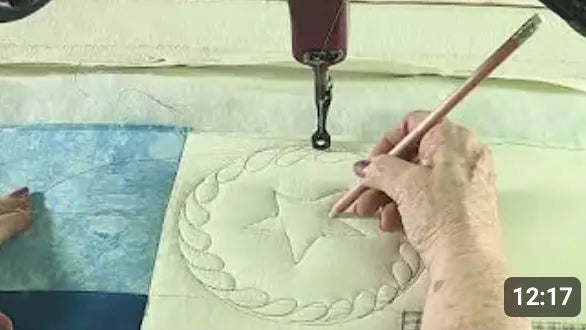
Now here's where things get really exciting – adding feathered elements to your star designs. This isn't about creating traditional feathered star blocks (though those are beautiful too). This is about incorporating feather motifs within or around your circle star templates to create unexpected depth and elegance.
Feathers add organic movement to geometric star designs. The contrast between the structured star points and the flowing feather curves creates visual tension that's absolutely captivating. It's like combining the best of both quilting worlds.
They create texture variation that makes your quilting come alive. While the star provides structure and focus, the feathers add softness and movement. The interplay between these elements creates quilting that begs to be touched.
Feathered elements can be as simple or complex as you want. Maybe it's just a few feather plumes radiating from your star points, or perhaps it's elaborate feather wreaths that surround each star. You can adapt the complexity to match your skill level and time constraints.
Getting Started: Choosing Your Templates
Not all circle star templates are created equal, and choosing the right one can make the difference between a frustrating experience and quilting magic. Here's what I've learned through trial and error (emphasis on the error part!).
Size matters more than you think. I once chose a star template that looked perfect on paper but was way too large for my actual quilt. The stars got cut off at the borders, and the whole design felt cramped. Measure your quilt sections and choose templates that will fit comfortably with room for any feathered additions.
Consider your fabric personality. Some star templates have very fine details that will get lost in busy fabrics or high-loft batting. If you're working with challenging materials, choose bolder star designs that will show up clearly.
Think about your skill level honestly. There's no shame in starting with simpler templates and working your way up. A beautifully executed simple star is infinitely better than a complex star that looks struggled-with.
Plan for the feathered elements from the beginning. If you know you want to add feathers, make sure your star template leaves appropriate space. Nothing's more frustrating than finishing your stars and realizing there's no room for the feathered surprise you had planned.
Mastering the Technique: Tips from the Trenches
Let me share some hard-won wisdom about working with circle star templates and adding feathered elements. These are the things I wish someone had told me before I started.
Mark your circles lightly but consistently. The circular framework is crucial for getting your stars positioned correctly, but heavy marking can be difficult to remove. Find a marking method that works for your fabric and stick with it throughout the project.
Start with the star, add feathers second. I learned this the hard way after trying to do everything at once and ending up with a tangled mess. Complete your star motifs first, then add the feathered elements. This approach gives you better control and more consistent results.
Practice your rhythm on scraps. Every template has its own flow and natural movement pattern. Spend some time with practice fabric figuring out the most comfortable way to navigate the design before you commit to your actual quilt.
Don't forget about thread tension. Stars and feathers often involve direction changes and curves that can mess with your thread tension. Do some test runs and adjust as needed. Consistent tension is what separates amateur-looking quilting from professional results.
Creative Variations to Explore
Once you've mastered the basic circle star template technique, there's a whole world of variations to explore. Here are some of my favorites:
Nested stars create incredible depth and dimension. Start with a large star outline, then add progressively smaller stars inside. The layered effect is stunning, especially when you vary your thread colors slightly.
Feathered star borders where the feathers extend beyond the circular boundary to create flowing connections between motifs. This technique is perfect for creating movement across your entire quilt surface.
Mixed-scale combinations using different sized circle star templates in the same quilt. Try large statement stars in the center with smaller accent stars filling the spaces. The size variation adds visual interest without being overwhelming.
Color-play opportunities where you use different thread colors for the star and feather elements. Maybe metallic thread for the stars and matching cotton for the feathers, or subtle color variations that create depth.
Common Challenges (And How to Overcome Them)
Let's be honest about the potential pitfalls, because we've all been there. Here are the challenges I see most often with circle star templates:
Rushing the setup process. Stars need to be positioned thoughtfully to look intentional rather than random. Take the time to plan your layout, even if you're doing an overall design. A few minutes of planning can save hours of regret.
Ignoring the quilt's natural flow. Your stars should enhance your quilt's design, not fight against it. If your quilt has strong directional elements, make sure your star placement works with them, not against them.
Overthinking the perfection factor. This is a big one. Stars are meant to be beautiful and inspiring, not mathematically perfect. If you're spending more time worrying about perfect points than enjoying the process, you're missing the magic.
Underestimating the feathered elements. Feathers look simple, but they require practice to execute smoothly. Don't add them to an important project until you've practiced enough to feel confident.
The Planning Process: Setting Yourself Up for Success
Great circle star quilting doesn't happen by accident. Here's how I approach the planning process to ensure magical results:
Start with your quilt's personality. What's the overall vibe you're going for? Elegant and formal? Playful and whimsical? Bold and dramatic? Your star design should support and enhance that personality.
Consider the viewing distance. Will this quilt be seen primarily from across the room or up close? Distance affects how much detail will be visible and should influence your template choices.
Think about the quilt's purpose. A wall hanging can handle more intricate detail work than a quilt that will be used and washed regularly. Match your technique complexity to the quilt's intended use.
Plan your thread strategy. Will you use matching thread for subtle texture, contrasting thread for bold definition, or a combination? This decision affects the entire visual impact of your design.
The Emotional Connection: Why This Technique Resonates
There's something special about the combination of stars and feathers that goes beyond just visual appeal. This pairing taps into something deeper in our collective quilting consciousness.
Stars represent our aspirations and dreams. When you quilt stars into a project, you're literally stitching hopes and wishes into the fabric. There's something powerful and meaningful about that process.
Feathers add softness and protection. The combination of stars (aspiration) and feathers (comfort) creates quilts that feel both inspiring and nurturing. It's no wonder this combination resonates so strongly with quilters and quilt recipients alike.
The process is meditative and centering. There's something about the rhythm of creating stars and feathers that quiets the mind and connects you to the long tradition of quilters who've found peace and purpose in their stitching.
Building Your Skills Progressively
Like any quilting technique, mastering circle star templates and feathered elements is a journey, not a destination. Here's how I recommend building your skills:
Week 1-2: Master basic circle star templates. Focus on getting comfortable with the marking, positioning, and basic stitching rhythm. Don't worry about feathers yet – just get the stars right.
Week 3-4: Add simple feather elements. Start with basic feather plumes or simple curved elements. Focus on smooth curves and consistent spacing.
Week 5-6: Experiment with combinations. Try different ways of integrating stars and feathers. Play with scale, positioning, and thread choices.
Beyond: Develop your signature style. Once you're comfortable with the basics, start developing your own variations and combinations. This is where the real magic happens.
Troubleshooting Common Issues
Even with the best planning, things sometimes go sideways. Here are solutions to the most common problems:
Stars that look wonky or uneven: Check your marking accuracy first. If the marking is correct, the issue is probably in your stitching rhythm. Slow down and focus on smooth, consistent movement.
Feathers that look stiff or mechanical: This usually means you're overthinking the curves. Feathers should flow naturally. Practice on scraps until the movement feels organic.
Thread tension problems: Stars and feathers involve lots of direction changes that can affect tension. Test on scraps and adjust your machine settings as needed.
Design elements that don't integrate well: Step back and look at the overall composition. Sometimes the solution is adding connecting elements or adjusting the scale of individual components.
The Magic Moment: When It All Comes Together
There's a moment in every successful circle star and feathered element project when everything clicks. The stars are radiating light across your quilt surface, the feathers are adding just the right amount of movement and softness, and the whole design feels cohesive and magical.
That moment is worth every minute of practice and planning. It's the moment when you realize you've created something truly special – not just a quilt, but a piece of textile art that will bring joy for generations.
It's also the moment when you start planning your next star project because once you experience this kind of quilting magic, you'll want to explore every possible variation and combination.
Your Star-Studded Journey Begins
The beautiful thing about circle star templates and feathered elements is that they're accessible to quilters at many different skill levels, but they offer enough complexity and variation to keep you interested for years.
What's calling to you right now? Maybe it's the idea of creating those perfect radiating stars, or perhaps it's the challenge of adding flowing feathered elements. Maybe it's the combination of structure and organic flow that appeals to your artistic sensibilities.
The only way to discover the magic is to try it yourself. Start with a simple circle star template, practice on some scraps, and see what happens when you add your own creative touches. You might be surprised by the magic you create.
Remember, every expert quilter started with their first star. Be patient with yourself as you learn, celebrate the small victories, and don't be afraid to experiment. The most beautiful quilting often comes from happy accidents and creative risks.
What's your experience with star quilting motifs? Have you tried circle templates before, or are you more of a freehand quilter? I'd love to hear about your star quilting adventures – and any challenges you've faced along the way. Share your experiences in the comments below!
Ready to create your own quilting magic? Subscribe to our newsletter for more template techniques, design inspiration, and step-by-step tutorials delivered straight to your inbox!
Keywords: circle star templates, feathered star quilting, star quilting motifs, quilting templates, longarm quilting designs, star quilt patterns, feather quilting techniques, quilting magic, geometric quilting, organic quilting elements, quilting design combinations, professional quilting techniques