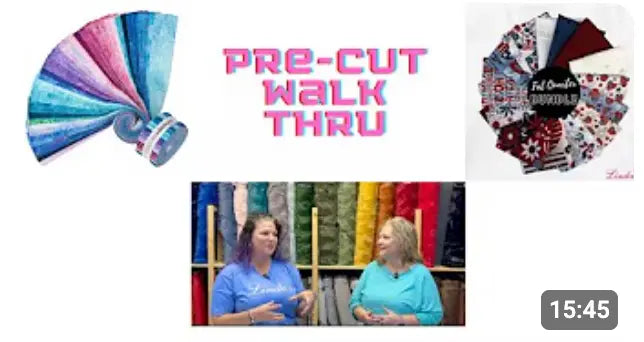
Overwhelmed by all the pre-cut fabric options? Let's decode the world of charm packs, layer cakes, and jelly rolls to help you choose the perfect pre-cuts for your next project!
Walking into the pre-cut fabric section of a quilting store can feel like entering a candy shop – so many colorful, tempting options that you hardly know where to start! Fat quarters, charm packs, layer cakes, jelly rolls, honey buns... the names alone are enough to make you hungry, but what do they all mean, and more importantly, which ones are right for your projects?
I remember my first encounter with pre-cuts. I was intimidated by all the options and honestly wasn't sure if they were worth the extra cost compared to buying yardage and cutting my own pieces. Fast forward a few years, and pre-cuts have become some of my favorite quilting tools. They're not just convenient – they're actually designed to solve specific quilting challenges and open up creative possibilities you might never have considered.
Understanding the Pre-Cut Universe
Before we dive into specific types, let's talk about why pre-cuts exist and what makes them so appealing to quilters of all skill levels.
Pre-cuts eliminate the guesswork in fabric coordination. Every piece in a pre-cut bundle has been specifically chosen to work harmoniously with every other piece. This takes the pressure off color selection and lets you focus on the fun parts of quilting – choosing patterns and creating beautiful designs.
They're perfect for trying new designers or fabric lines without committing to large yardage purchases. You can experiment with different aesthetics and color palettes without breaking the bank or ending up with fabric you're not sure how to use.
Pre-cuts are sized for specific quilting applications. Each type of pre-cut is designed with particular block sizes and quilt styles in mind, which means less waste and more efficient use of your fabric investment.
They're incredibly convenient for busy quilters. No measuring, no cutting, no second-guessing your fabric choices – just open the bundle and start creating. This convenience factor has made pre-cuts increasingly popular with quilters who want to maximize their creative time.
Charm Packs: Small Squares, Big Possibilities
Let's start with one of the most popular pre-cut options – charm packs. These little bundles of 5-inch squares might look simple, but they're incredibly versatile.
Charm packs typically contain 42 squares (though this can vary by manufacturer), with each square representing a different fabric from a designer's collection. This gives you a comprehensive sampling of an entire fabric line in perfectly coordinated 5-inch pieces.
They're perfect for traditional patchwork blocks. Many classic quilt blocks are designed around 5-inch finished squares or can be easily adapted to work with charm pack squares. Think simple nine-patches, disappearing nine-patches, or charm square quilts where the squares are the stars of the show.
Charm packs are ideal for scrappy-looking quilts without the years of fabric collecting that traditional scrappy quilts require. You get the visual variety and interest of a scrap quilt with the coordination that comes from a designed fabric collection.
They're great for beginners because the pieces are large enough to handle easily but small enough that mistakes aren't catastrophic. If you mess up one square, you've only lost a small piece rather than a large chunk of expensive fabric.
Layer Cakes: The Sweet Spot of Pre-Cuts
Layer cakes – those gorgeous stacks of 10-inch squares – might just be the most versatile pre-cut option available. The 10-inch size hits a sweet spot that works for so many different quilting applications.
Layer cakes usually contain 42 squares of 10-inch fabric pieces, giving you substantial pieces to work with while still providing the variety and coordination of a complete fabric collection.
They're perfect for larger patchwork blocks. Many traditional blocks that finish at 12 inches or larger can be made efficiently using layer cake squares as starting points. You can cut them down to the exact sizes you need while minimizing waste.
Layer cakes work beautifully for appliqué projects. The 10-inch squares provide enough fabric for most appliqué shapes while giving you a coordinated palette to work with. This is especially helpful for appliqué quilts where you want variety but also harmony.
They're excellent for modern quilting techniques like improvisational piecing or curved piecing, where you need substantial pieces of fabric to work with but want the color coordination that comes with a designed collection.
Jelly Rolls: Strips of Pure Potential
Jelly rolls – those tempting bundles of 2.5-inch strips – are probably the most recognizable pre-cut format. There's something so satisfying about unrolling a jelly roll and seeing all those coordinated strips laid out like a rainbow.
Jelly rolls typically contain 40 strips that are 2.5 inches wide by the width of fabric (usually around 44 inches). This gives you a substantial amount of fabric in strip form, perfect for specific quilting techniques.
They're designed for strip piecing techniques. Jelly rolls are perfect for quilts that use strip sets – think bargello quilts, rail fence patterns, or log cabin variations. The consistent width eliminates the cutting time and ensures accuracy.
Jelly rolls are ideal for binding. Many quilters buy jelly rolls specifically for the binding strips. You get coordinated binding options for multiple quilts, and the 2.5-inch width is perfect for double-fold binding.
They work beautifully for borders and sashing. The long strips are perfect for creating coordinated borders or sashing that ties a quilt together without requiring large yardage purchases.
Fat Quarters: The Classic Choice
Fat quarters might be the most familiar pre-cut option, and for good reason – they're incredibly versatile and work for almost any quilting application.
Fat quarters are 18" x 22" pieces (approximately), cut from a quarter-yard of fabric but in a more useful proportion than the traditional long, narrow quarter-yard cut. This gives you more flexibility in how you use the fabric.
They're perfect for appliqué work because they provide enough fabric for most appliqué shapes while giving you the variety of a complete fabric collection. Many appliqué patterns are specifically designed around fat quarter requirements.
Fat quarters work well for sampler quilts where you need a variety of fabrics but not large quantities of any single fabric. They provide enough fabric for most blocks while keeping your investment reasonable.
They're excellent for small projects like table runners, placemats, or wall hangings where you want coordinated fabrics but don't need full yardage amounts.
Mini Charm Packs and Other Specialty Cuts
The pre-cut world has expanded beyond the basic options to include specialty cuts designed for specific applications.
Mini charm packs contain 2.5-inch squares – perfect for tiny piecing, doll quilts, or adding small accents to larger quilts. They're also great for testing color combinations before committing to larger pieces.
Honey buns are 1.5-inch strips that work beautifully for miniature quilts or as accent strips in larger projects. The narrow width creates delicate lines of color that can add sophistication to your designs.
Ten-inch squares (sometimes called "stackers") are similar to layer cakes but may contain different quantities or be cut from different fabric collections. Always check the specifics when purchasing.
Fat eighths are half the size of fat quarters and perfect when you need just a small amount of several coordinated fabrics. They're popular for appliqué projects and small quilts.
Choosing the Right Pre-Cut for Your Project
With so many options available, how do you choose the right pre-cut for your specific project? Here are some guidelines to help you make the best choice:
Consider your block size and pattern requirements. If your pattern calls for 5-inch squares, charm packs are obvious choices. If you need larger pieces or want flexibility in cutting, layer cakes might be better.
Think about your skill level and available time. Pre-cuts can simplify projects significantly, but some work better for beginners than others. Charm packs and fat quarters are generally more forgiving than jelly rolls, which require more precision in strip piecing.
Evaluate the fabric collection. Not all fabric collections work equally well in all pre-cut formats. Some collections are designed specifically for certain pre-cut applications, while others are more versatile.
Consider your budget. Pre-cuts are generally more expensive per yard than buying full yardage, but they eliminate waste and provide convenience. Factor in the value of your time and the reduced risk of fabric mistakes.
Maximizing Your Pre-Cut Investment
Once you've chosen your pre-cuts, here are some strategies for getting the most value from your investment:
Plan your cutting carefully. Even though pre-cuts eliminate most cutting, you'll often need to trim or sub-cut pieces. Plan your cuts to minimize waste and maximize the number of pieces you can get from each pre-cut.
Consider buying coordinating yardage. Many quilters buy pre-cuts for the variety and then purchase additional yardage of key fabrics for backgrounds, borders, or binding. This gives you the best of both worlds.
Save your scraps. Pre-cut scraps are just as valuable as regular fabric scraps, and they're already coordinated! Save them for future projects or use them for appliqué accents.
Mix and match collections. Don't feel limited to using pre-cuts from a single collection. Many designers create collections that coordinate with their previous work, allowing you to mix pre-cuts for even more variety.
Common Pre-Cut Mistakes to Avoid
Learning from others' mistakes can save you time, money, and frustration. Here are some common pre-cut pitfalls to watch out for:
Not checking the actual piece count. Pre-cut bundles can vary in the number of pieces they contain. Always check the specifics rather than assuming all charm packs or layer cakes contain the same number of pieces.
Ignoring fabric requirements. Just because a pattern suggests using pre-cuts doesn't mean any pre-cut will work. Make sure the pre-cut format matches the pattern's requirements.
Not considering fabric directionality. Some fabrics have obvious directional prints that may not work well in certain pre-cut applications. Consider how the fabric will look when cut and pieced.
Buying pre-cuts without a plan. While it's tempting to buy beautiful pre-cuts just because they're gorgeous, having at least a general idea of how you'll use them helps ensure they don't just sit in your stash unused.
Creative Applications Beyond the Obvious
Pre-cuts aren't just for traditional applications. Creative quilters have found innovative ways to use these convenient fabric bundles:
Mixed media projects can incorporate pre-cut pieces as design elements in art quilts or textile collages. The coordinated colors provide harmony while the pre-cut format offers convenience.
Home décor projects like pillows, table runners, or wall hangings can be perfect applications for pre-cuts, especially when you want coordinated accessories without buying large amounts of fabric.
Gift projects benefit from the convenience and coordination of pre-cuts. You can create beautiful, coordinated gifts without the time investment of selecting and cutting individual fabrics.
Teaching and workshops often use pre-cuts to eliminate cutting time and ensure all students have coordinated materials. This allows more time to focus on technique instruction.
The Economics of Pre-Cuts
Let's talk honestly about the cost considerations of pre-cuts versus cutting your own fabric:
Pre-cuts cost more per square inch than buying yardage and cutting your own pieces. However, this cost difference needs to be weighed against several factors.
Time savings can be significant, especially for busy quilters. The time you save on fabric selection and cutting has value, and for many quilters, this time savings justifies the extra cost.
Reduced waste can actually make pre-cuts more economical in some situations. When you buy exactly what you need in coordinated colors, you eliminate the waste that comes from buying yardage and having leftovers that don't work with other projects.
Risk reduction is another economic factor. Pre-cuts eliminate the risk of making poor fabric choices or cutting mistakes that waste expensive fabric.
Storage and Organization Tips
Once you start collecting pre-cuts, you'll need strategies for storing and organizing them effectively:
Keep pre-cuts in their original packaging until you're ready to use them. The packaging protects the fabric and keeps coordinated pieces together.
Organize by type and color to make it easy to find what you need when inspiration strikes. Clear storage containers work well for this purpose.
Create a inventory system to keep track of what pre-cuts you have. This prevents duplicate purchases and helps you remember what's available for projects.
Consider climate control for long-term storage. Like all fabric, pre-cuts should be stored in cool, dry conditions away from direct sunlight.
The Future of Pre-Cuts
The pre-cut market continues to evolve as manufacturers respond to quilter feedback and changing trends:
New formats are regularly introduced to meet specific quilting needs. Keep an eye out for innovative pre-cut options that might be perfect for your quilting style.
Improved packaging makes pre-cuts more convenient and better protected during shipping and storage.
Expanded collections mean more choices in every pre-cut format, giving quilters more options for finding exactly what they need.
Digital integration is beginning to appear, with some manufacturers offering online tools to help quilters visualize how pre-cuts will look in different quilt layouts.
Making Pre-Cuts Work for You
The key to success with pre-cuts is understanding how they fit into your quilting style and project preferences:
Experiment with different formats to find which ones work best for your favorite quilting techniques and project types.
Don't feel obligated to use entire bundles in single projects. It's perfectly fine to use part of a pre-cut bundle for one project and save the rest for another.
Combine pre-cuts with your existing stash to create unique color combinations and extend your fabric options.
Use pre-cuts as inspiration for color schemes and fabric combinations, even if you end up cutting your own fabric for the actual project.
Your Pre-Cut Adventure Awaits
The world of pre-cut fabrics offers incredible opportunities for quilters at every skill level. Whether you're a beginner looking for foolproof fabric coordination or an experienced quilter seeking convenience and inspiration, there's a pre-cut format that can enhance your quilting experience.
What draws you to pre-cuts – the convenience, the color coordination, or the opportunity to try new fabric collections? Maybe you're still on the fence about whether pre-cuts are worth the investment, or perhaps you're a pre-cut convert with tips to share.
The key is to start experimenting and find which pre-cut formats work best for your quilting style and project preferences. Don't be afraid to try different options – you might discover a new favorite way to approach fabric selection and project planning.
What's your experience with pre-cut fabrics? Do you have a favorite format, or are you curious about trying pre-cuts for the first time? I'd love to hear about your pre-cut successes, challenges, and any questions you have about making the most of these convenient fabric options. Share your thoughts in the comments below!
Ready to dive into the wonderful world of pre-cuts? Subscribe to our newsletter for pre-cut project ideas, fabric collection spotlights, and tips for making the most of your fabric investment!
Keywords: pre-cut fabrics, charm packs, layer cakes, jelly rolls, fat quarters, quilting fabric bundles, fabric pre-cuts, quilting supplies, coordinated fabrics, fabric collections, quilting convenience, pre-cut quilting projects, fabric selection, quilting for beginners