
You're probably staring at a wall of thread right now, either online or in the shop, wondering why one spool says cotton, another says rayon, another says 40 wt polyester, and none of them clearly tells you what will stitch well on your machine. That confusion is normal. The right choice comes down to three things: how the thread is made, how your machine handles tensioning, and what finish you want on the project.
If you pick the wrong thread, you'll fight thread breaks, fuzzy buildup in the bobbin casing, skipped stitches, or a design that doesn't look the way you pictured it. If you pick the right one, the machine settles down, the stitch quality improves, and the finished work has the right hand, sheen, and coverage.
Suggested URL slug: /blog/types-of-embroidery-thread
Meta description: Learn the types of embroidery thread and choose the right one for hand, machine, or longarm work. Shop thread and finish your project today.
Your Guide to Choosing the Perfect Embroidery Thread
A lot of stitchers think thread is just color on a spool. It isn't. Thread is one of the biggest factors in how a project runs through the machine and how it looks when you're done.
In the shop here in McKinney, Texas, I see the same pattern over and over. Someone has a good design, good fabric, good stabilizer, and then they load a thread that doesn't suit the job. The result is poor coverage, shredded thread at the needle, lint packed into the tension path, or quilting that looks flat when they wanted crisp definition.
Practical rule: Match the thread to the method first, then match the color.
For hand work, texture and divisibility matter. For machine embroidery, you need a thread that can move cleanly at speed. For high-speed longarm quilting, strength, consistency, and low friction matter every bit as much as appearance.
A practical way to choose among the types of embroidery thread is to ask four questions:
-
What machine am I using
Hand needle, domestic embroidery machine, or longarm all place different demands on thread. -
What finish do I want
Matte cotton reads differently than glossy rayon or polyester. -
How dense is the stitching
Heavy fill, fine lettering, outline work, and quilting motifs don't behave the same. -
How much stress will the project take
Wall art, garments, baby quilts, and home decor all need different levels of durability.
If you're still building your thread stash, start with the workhorse choices first, then add decorative threads as your projects call for them. If you need supplies to complete the project in front of you, it's worth browsing Linda's thread and notions selection so you can match the thread, needle, and fabric before you stitch yourself into a corner.
Understanding Thread Fundamentals Fiber Weight and Ply
You can hear thread choices before you see them. A machine that was stitching cleanly starts popping, the top thread fuzzes at the needle, or a longarm line loses that crisp look halfway across the quilt. In the shop, those problems usually trace back to three basics. Fiber, weight, and ply.
Get those three right, and machine setup gets easier. Tension settles down faster, stitches form more cleanly at speed, and the finished work looks the way you intended instead of looking like a compromise.
Fiber shapes more than appearance
Fiber is the base material, but the practical question is how that material behaves once it starts running through guides, discs, needle, and fabric thousands of times per minute. Cotton gives a softer, matte line and a traditional surface. Rayon brings shine but can be less forgiving if the machine is running hot or the design is dense. Polyester handles abrasion well, holds color, and tends to be the steadier choice for high-speed machine embroidery and longarm work.
Silk, wool, and metallics have their place, but they ask more of your setup. They often need slower speed, cleaner tension, and the right needle eye if you want good results without fraying.

Weight tells you how bold or fine the stitch will read
Thread weight trips people up because the numbers run backward. Higher number, finer thread. Lower number, heavier thread.
For machine embroidery, 40 wt remains the standard working size because it gives solid coverage without getting bulky in most designs, as noted earlier. In practical terms, finer threads help with small lettering, detail, and dense stitching where bulk builds up fast. Heavier threads stand out more on the surface, but they also demand more space in the design and a setup that can handle the extra friction.
On a longarm, that trade-off shows up quickly. A finer thread can disappear into the quilt top and let the quilting texture do the talking. A heavier thread gives stronger definition, but it will show every wobble in your path and may need tension changes before the machine will run cleanly.
Ply affects structure and handling
Ply is how the thread is built. Some threads are formed from multiple strands twisted together and meant to stay intact. Others, like hand embroidery floss, can be separated for lighter or fuller coverage. According to NeedlenThread's guide to hand embroidery thread, perle cotton is a non-divisible thread, and its numbered sizes indicate relative thickness, with larger numbers being finer.
That construction changes the look of the stitch line. A tightly twisted thread gives a rounder, more defined line. A softer or divisible thread spreads more and can read flatter on the surface. For machine work, construction also affects lint, twist stability, and how consistently the thread feeds off the spool.
Here is the part many guides skip. Fiber, weight, and ply do not work independently. A shiny 40 wt rayon and a matte 40 wt cotton may share a number, but they do not tension the same, wear the same, or fill a design the same. On high-speed machines, those differences matter.
If thread starts fraying at the needle, check the needle before blaming the spool. #80/12 Titanium-Coated Topstitch Needles are available for $7.50 and currently in stock. They have a larger eye and deeper groove, which helps reduce friction on fine threads and makes them a solid choice for quilting and sewing with threads such as 50 wt.
A Deep Dive into Common Thread Materials
You can load two spools labeled 40 wt, stitch the same design at the same speed, and get two very different results. One runs clean and lays down smooth. The other starts fuzzing at the needle, pulls the top tension out of balance, or leaves a finish that looks wrong for the fabric. That usually comes back to fiber choice.
Thread material affects shine, strength, lint, heat tolerance, and how the thread behaves under speed. For hand work, that changes the look and feel of the stitches. For longarm and machine embroidery, it also changes how often you stop, retension, clean the machine, or swap needles.
Cotton for a traditional matte finish
Cotton gives a softer, quieter surface. On quilts and folk-style embroidery, that matte finish often looks more at home than a glossy thread. It also blends well into piecing and textured backgrounds, which is why many quilters keep reaching for it.
In machine use, cotton has trade-offs. It can produce more lint than polyester, and at higher speeds that means more frequent cleaning around the bobbin area and thread path. It also has less slickness, so it may need a little more attention to needle choice and tension if the design is dense.
For hand embroidery, stranded cotton floss remains the standard. The DMC thread guide explains that stranded cotton floss is made of six separable strands, which is why it works so well for controlled coverage and detail. That flexibility matters less on a machine, but for hand stitching it gives you a wide range of line weight without changing thread types.
Polyester for strength and machine reliability
Polyester earns its keep at the machine. If a customer brings in a baby quilt, a team shirt, or anything that will be washed hard and used often, polyester is usually the safer choice.
It handles abrasion well, resists fading, and tends to run with fewer interruptions on fast embroidery machines and longarms. The smoother surface helps it pass through guides, tension discs, and the needle eye with less drag than many natural fibers. In practical terms, that often means fewer thread breaks and steadier stitch formation during long runs.
Linda's team sees this constantly in production-style quilting and embroidery. Polyester is often the easiest thread to set up when the goal is clean output, solid color, and less machine fuss. For shops or hobbyists understanding 3D embroidery machines, that reliability matters even more because foam embroidery and raised designs already add variables to stitch quality.
Rayon for shine and color payoff
Rayon is still hard to beat for rich shine. It reflects light beautifully and gives filled designs that classic embroidery look many people expect on monograms, florals, and decorative motifs.
The trade-off is handling. Madeira notes in its rayon machine embroidery thread overview that rayon is prized for its luster but needs proper handling because it is less abrasion-resistant than polyester. That shows up fast on high-speed machines. A slightly rough needle, a burr in the thread path, or overly tight top tension will usually bother rayon before polyester complains.
Rayon works best when the look is worth the extra setup. Slow the machine if needed, use a fresh needle, and watch dense stitch areas closely.
Metallic for sparkle and extra setup
Metallic thread can be beautiful, especially in holiday work, heirloom details, and show quilts. It also asks for patience.
The Sulky metallic thread tips explain that metallic threads stitch best with a larger needle and reduced machine speed to limit shredding and breakage. That matches what experienced stitchers see every day. Metallics do not like heat, friction, or sharp turns through a rough thread path.
Short test runs save a lot of aggravation here. Before stitching a full border or name, test the thread with the exact stabilizer, needle, and speed you plan to use on the project.
Thread Material Comparison Cotton vs Polyester vs Rayon
| Feature | Cotton | Polyester | Rayon |
|---|---|---|---|
| Surface look | Matte to soft sheen | Smooth sheen | High-gloss sheen |
| Best use | Hand embroidery, traditional looks, quilting | Machine embroidery, longarm quilting, durable projects | Decorative machine embroidery |
| Behavior at speed | Acceptable, but can lint more and run hotter | Stable and forgiving | Attractive finish, but more sensitive to friction |
| Care | Project-dependent | Usually easy-care | Gentler handling is safer |
| Common machine issue | Lint buildup | Fewer performance complaints overall | Fraying or breaking if setup is off |
| Why choose it | Natural look and soft finish | Reliable stitching and durability | Maximum shine |
Exploring Specialty and Decorative Threads
A decorative thread can look perfect on the spool, then turn a clean stitchout into skipped stitches, loops, or shredded thread once the machine gets moving. That is why specialty thread choices need to start with performance, not just appearance, especially if you run a longarm fast or push a machine embroidery design with dense fills.

Perle cotton for raised texture
Perle cotton puts a clear, rounded line on the fabric. That raised look is the reason many stitchers reach for it in sashiko-style accents, bold outlines, heavy stems, and visible decorative mending.
It is a handwork thread first. Because it is non-divisible, the size you choose controls the whole look of the stitch. You do not have the same mid-project flexibility you get with stranded floss, but you do get a more uniform surface. For textured details, that trade-off is usually worth it.
On machine work, perle cotton is far less forgiving. Its thickness and surface can fight the tension path unless the machine is set up specifically for heavier decorative thread. If the goal is raised texture on a longarm or embroidery machine, test slowly and expect to adjust needle size, top tension, and design density before you commit to the final piece.
Floss for control in decorative handwork
Stranded cotton floss still earns its place because it gives precise control over coverage, shading, and edge definition. Pull fewer strands for fine detail. Use more when a motif needs body.
That matters most in decorative work where one area needs soft fill and the next needs a crisp outline. Floss handles that shift without forcing a thread change every few minutes.
It also works well for stitchers who like dimensional embroidery techniques but want a softer finish than heavier specialty threads produce. If you are exploring raised effects for caps or structured embroidery, this overview of understanding 3D embroidery machines gives useful context on how loft, surface height, and thread visibility change the final result.
Variegated and novelty threads for movement and surface interest
Variegated thread adds color change without constant rethreading. On vines, feathers, leaves, and open fills, that shift can do a lot of visual work on its own.
Placement matters. Small motifs can make variegation look abrupt or muddy, while longer stitch paths usually show the color change to better advantage. I tell stitchers to audition variegated thread on a scrap with the same stitch length they plan to use. A thread that looks lively in a skein can stitch out far busier than expected.
Novelty threads need even more caution on machines. Fuzzy, slubbed, ribbon-like, or heavily textured threads create drag. On a high-speed longarm, drag turns into heat and inconsistent tension fast. On a home embroidery machine, it can show up as fraying at the needle or rough coverage in satin areas. These threads are usually better for slower decorative passes, couching, or hand-applied accents than for dense, high-speed production stitching.
For stitchers who want to see specialty thread effects in motion before buying, this quick clip is worth watching:
Specialty threads earn their keep when the finish needs texture, shine, or motion that standard spools cannot give. They also ask for better setup and more testing. That is the trade-off.
Matching Thread to Your Machine and Project
A common source of frustration arises. A thread that behaves beautifully in hand embroidery can be a nuisance in a domestic embroidery machine, and a thread that looks fine at moderate speed may start shredding once a longarm is moving fast across a frame.
Hand embroidery needs flexibility
For hand stitching, control matters more than raw strength. You want a thread that lets you change thickness, build detail gradually, and respond to the fabric without fighting it.
Embroidery floss works because it's adaptable. You can choose fewer strands for fine line work or more strands for coverage. Perle cotton works when you want a stronger surface presence and a defined stitch path.
The mistake I see most often is using a machine-oriented mindset for handwork. Hand embroidery is slower and more tactile. The hand of the thread matters just as much as appearance.
Machine embroidery rewards consistency
Standard machine embroidery usually runs happiest with 40 wt polyester or rayon because that weight gives a useful balance between coverage and detail. Polyester is the steadier performer when durability and smooth running matter most. Rayon still earns its place when the sheen is part of the design goal.
Our team in McKinney, Texas, tested thread behavior on an Innova longarm and found that high-tenacity polyester gives more predictable results under speed. It tends to maintain cleaner tensioning, run with less fuss through the thread path, and create less downtime than fussier decorative fibers.
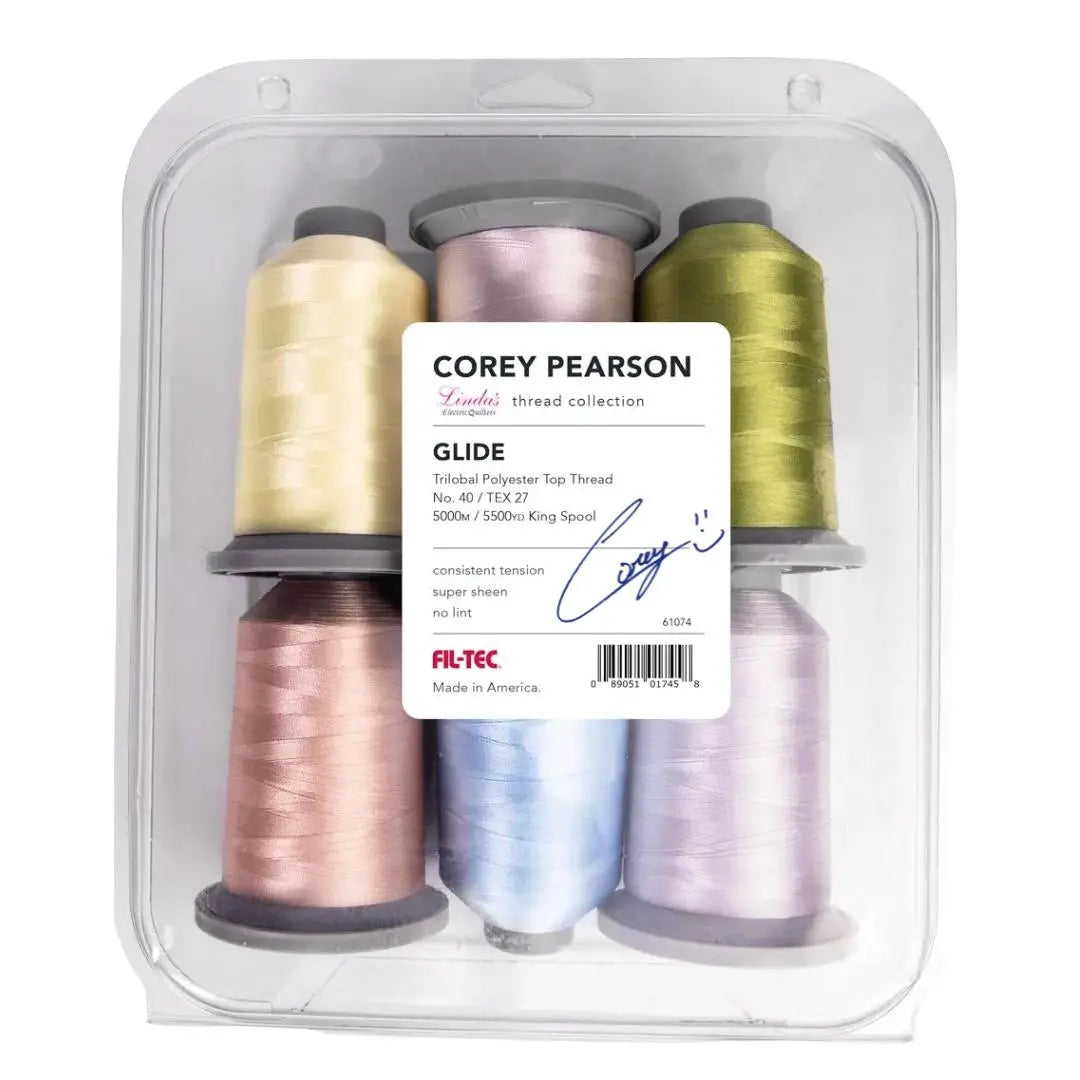
That's one reason many quilters keep a king spool of polyester in white on hand for utility and dense quilting work.

If you need a practical machine thread option for finishing a project, 10000 White Glide Polyester Thread - 5,500 yards King Spool is one example of the kind of high-capacity polyester spool many machine stitchers use for sustained quilting and embroidery sessions.
Keep one neutral polyester spool loaded for test stitching. It saves decorative thread, and it tells you quickly whether the issue is your design, your tension, or the thread itself.
High-speed longarm quilting demands the right pairing
Longarm quilting magnifies every mismatch in your setup. If the thread weight, needle size, top tension, and bobbin tension aren't working together, the machine tells on you fast.
A few practical pairings help:
-
For fine threads
Use a smaller needle so the hole doesn't overwhelm the stitch. -
For 40 wt threads
A medium needle choice is usually more appropriate than a fine one. -
For heavier decorative threads
Move up in needle size so the eye and groove can protect the thread.
Fabric matters too. Dense embroidered fabric and heavily embellished surfaces don't behave like flat quilting cotton. If you work across a range of embellished textiles, this 2026 buying guide for embroidered fabric is a useful reference for thinking through how surface detail affects handling and thread choice.
Pro tip callout box
Pro tip
If thread keeps breaking near the needle, rethread the machine, replace the needle, and test on the same fabric sandwich before changing top tension. A worn or undersized needle causes more “mystery” thread trouble than most stitchers expect.
If you're also choosing batting for the quilted project, remember that loft changes the visual depth of your stitching. Higher loft can make thread stand out more, while flatter batting keeps the surface look quieter. Matching those materials well is part of getting a polished finish.
Thread Care Storage and Finishing Your Project
Good thread can still give poor results if it's been stored badly. Dust, sunlight, and rough handling all take a toll over time, especially on decorative fibers.

Store thread so it stays usable
Direct sunlight fades thread and can weaken fibers over time. Open shelving may look pretty, but closed drawers or containers usually protect the investment better.
Dust matters more for machine users than many people think. Dust and fuzz can work their way into the tension discs and the bobbin area, then you start troubleshooting “tension problems” that are really storage and maintenance problems.
A practical storage routine looks like this:
-
Keep it covered
Closed boxes, drawers, or cabinets protect thread from dust and light. -
Wind gently
Don't pull thread tight onto cards or bobbins where it can stretch or kink. -
Separate specialty threads
Metallic, rayon, and hand-dyed threads benefit from a little extra care.
Finish the project based on the fiber
Care the finished piece according to the thread you used. Polyester is usually the easiest to live with in everyday projects. Rayon needs gentler treatment if you want to preserve that glossy finish.
Finished embroidery lasts longer when the pressing happens from the back with a protective surface between the stitches and the iron.
If you're tidying your sewing space while you organize thread, it's smart to keep your storage tools, thread, and batting together by project type. That makes future setup faster and reduces the chance of pairing the wrong thread with the wrong fabric.
Frequently Asked Questions About Embroidery Thread
Which thread is best for beginners
For hand embroidery, six-strand cotton floss is usually the easiest place to start because you can adjust thickness by separating strands. For machine work, polyester is often the more forgiving option because it tends to handle speed and routine use well.
Why does my embroidery thread keep breaking
Thread often breaks because of friction at the needle, incorrect tensioning, burrs in the thread path, or a mismatch between thread weight and needle size. Metallic and delicate shiny threads break more easily if the needle eye is too small or the stitching speed is too aggressive.
What's the difference between embroidery floss and perle cotton
Embroidery floss is divisible and usually used when you want to vary thickness across a project. Perle cotton is non-divisible, more tightly twisted, and gives a raised, defined look that suits decorative stitches and visible texture.
Is rayon or polyester better for machine embroidery
It depends on the goal. Rayon gives more shine. Polyester is usually the more practical choice when durability and smoother machine performance matter more than maximum gloss.
How do I choose the right needle for thread
Match the needle to the thread weight and the thread's personality. Fine threads need a smaller needle. Heavier or fussier decorative threads often need a larger eye and groove so the thread can pass cleanly without shredding.
If you're ready to finish your project with the right supplies, browse Linda's Electric Quilters for thread, batting, needles, and sewing essentials, then keep the momentum going with their tutorials and live shopping resources while you plan your next quilt or embroidery piece.