Every quilter and sewer knows the feeling: a growing pile of fabric scraps too beautiful to throw away, but too small for your main project. What to do with scraps of fabric is a question that sparks creativity and resourcefulness, pushing makers to find value in every last thread. This isn't just about tidying up; it's about transforming perceived waste into unique, handcrafted treasures. In this educational guide, we'll explore nine innovative and inspiring projects that will teach you how to see your scrap bin as a treasure chest of possibilities.
This listicle moves beyond generic suggestions to provide specific, actionable project ideas for your fabric remnants. From intricate patchwork quilting and custom appliqué to unconventional crafts like fabric scrap paper and garden accessories, you'll discover new ways to express your creativity. Whether you're a seasoned quilter looking to master a new technique or a beginner eager to start a low-cost project, you'll find clear instructions and practical inspiration. To ensure your projects are a success, having the right tools and supplies is essential. Linda's has the amazing products you need to finish every project with professional quality.
1. Patchwork Quilting
Patchwork quilting is the quintessential answer to the question of what to do with scraps of fabric. This time-honored technique involves sewing together small pieces of leftover material to form larger, intricate designs known as quilt blocks. These blocks are then assembled to create everything from cozy bed quilts and decorative wall hangings to pillows and table runners, turning a pile of seemingly unusable remnants into a functional masterpiece.
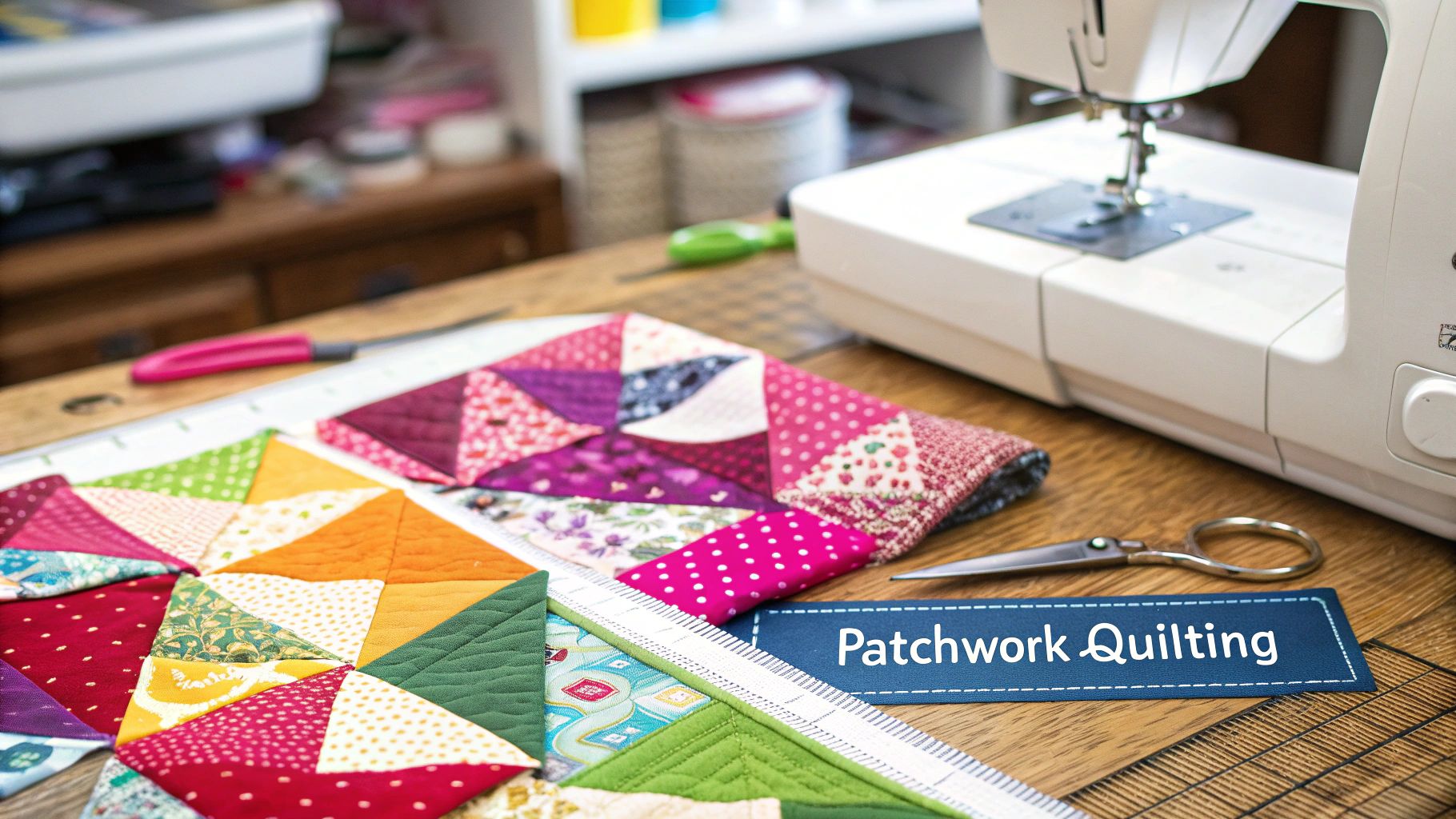
This method is a true celebration of resourcefulness, famously exemplified by the iconic Gee's Bend quilts and modernized by designers like Tula Pink. It allows you to preserve memories by incorporating fabrics from old clothing or past projects, creating a textile that tells a unique story.
Getting Started with Patchwork
To ensure your patchwork project is a success, thoughtful preparation and the right tools are key. A solid foundation will make the creative process smoother and more enjoyable.
- Sort Your Scraps: Before you begin, organize your fabric scraps by color, value (lightness or darkness), and size. This makes it easier to create a cohesive design and find the perfect piece when you need it.
- Use a Design Wall: A design wall, which can be as simple as a flannel sheet tacked to a wall, allows you to arrange and rearrange your fabric pieces. This visual planning step helps you perfect your layout before committing to sewing.
- Start with Simple Blocks: If you're new to quilting, begin with foundational patterns like the nine-patch or log cabin. These simple geometric designs are forgiving and help you master essential skills like accurate cutting and consistent seam allowances.
Pro Tip: To make your quilt truly last, the quality of your thread and batting matters. A strong, vibrant thread prevents seams from popping, while the right batting provides the perfect loft and warmth. Linda's offers an extensive selection of premium threads and batting to ensure your patchwork project becomes a durable heirloom. Stop by and find the perfect supplies to finish your quilt.
2. Fabric Scrap Jewelry and Accessories
Transforming tiny, precious offcuts into wearable art is a fantastic answer to what to do with scraps of fabric. This creative project involves turning small fabric pieces into unique jewelry and accessories, from fabric-covered beads and wrapped bangles to statement necklaces and charming hair clips. By wrapping, braiding, or stiffening fabric, you can manipulate even the smallest remnants into stunning decorative elements that require minimal material but deliver maximum impact.
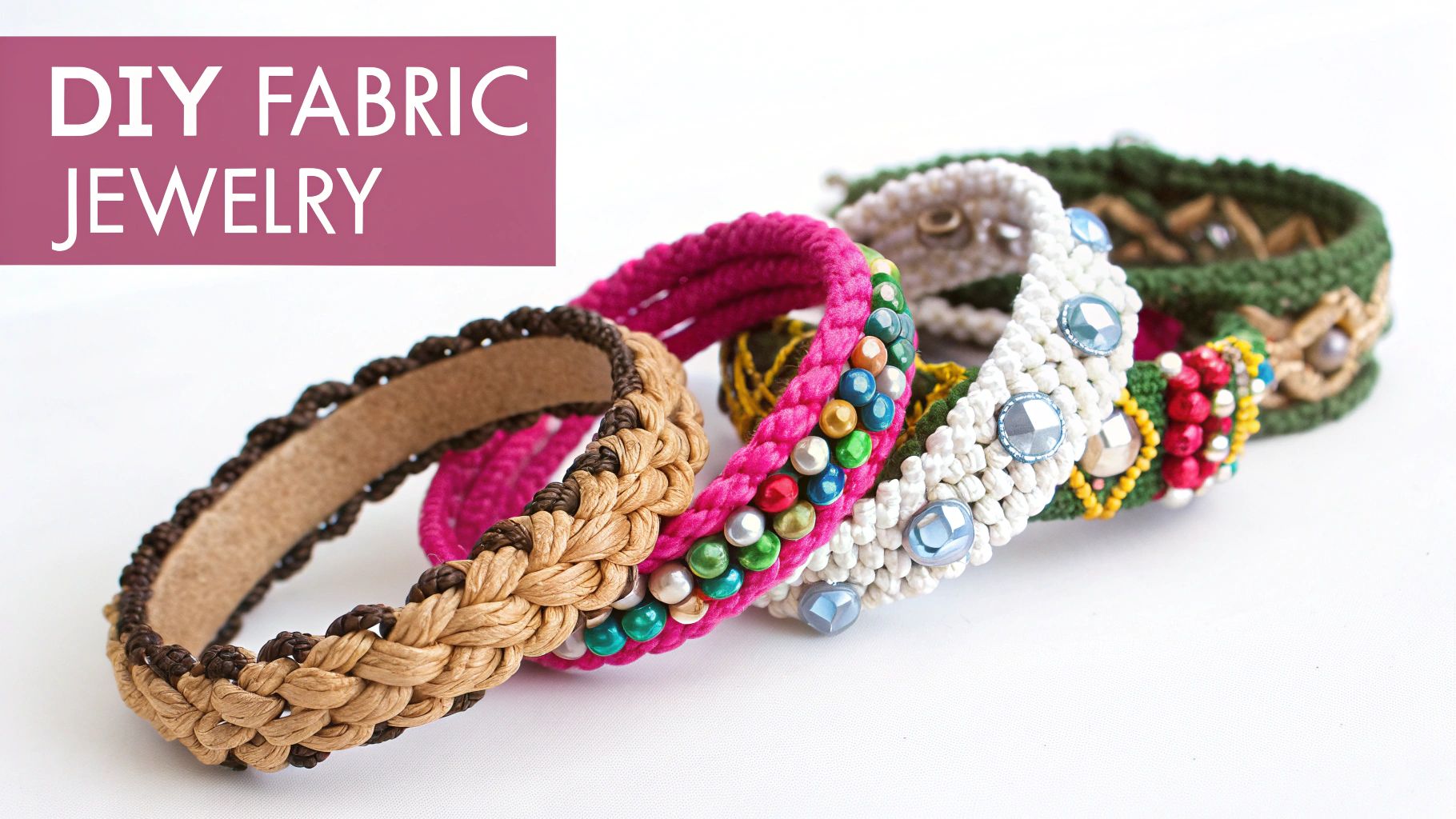
This sustainable approach to accessorizing has been widely popularized by the Pinterest DIY community and Etsy sellers, who showcase the endless possibilities of upcycled textiles. It allows you to create accessories that perfectly match an outfit, preserve sentimental fabrics, or simply craft a piece that is truly one-of-a-kind. Beyond just general accessories, consider how your fabric scraps can be used to craft one-of-a-kind statement pieces. To understand more about jewelry components, you can also learn about how to create unique pendants for jewelry making.
Getting Started with Fabric Accessories
Crafting durable and beautiful fabric jewelry is all about technique and using the right materials to give your scraps structure and longevity.
- Choose Tightly Woven Fabrics: Materials like cotton lawn, poplin, or silk are ideal because their tight weave makes them less prone to fraying and easier to manipulate into clean, defined shapes.
- Use a Fabric Stiffener: For pieces like earrings or pendants that need to hold their shape, a liquid fabric stiffener is essential. It provides the rigidity needed for a professional and durable finish.
- Seal the Edges: To prevent fraying on exposed fabric edges, especially on items that will see a lot of wear, apply a thin layer of clear-drying fabric glue or fray-check sealant for a polished look.
Pro Tip: The secret to elegant fabric jewelry lies in the details. A high-quality, sharp rotary cutter and a reliable self-healing mat are crucial for cutting precise, clean-edged strips and shapes. Linda's carries professional-grade cutting tools that will ensure your fabric components are perfectly crafted every time. Purchase yours today and elevate your next project.
3. Appliqué Art and Clothing Customization
Appliqué is a brilliant technique for using scraps of fabric to add decorative personality to a larger piece of material. This creative method involves cutting shapes from your remnants and stitching or fusing them onto clothing, bags, quilts, or home décor. It's an ideal way to upcycle a plain t-shirt, mend a beloved garment with a decorative patch, or create intricate textile art, transforming simple items into custom-designed treasures.
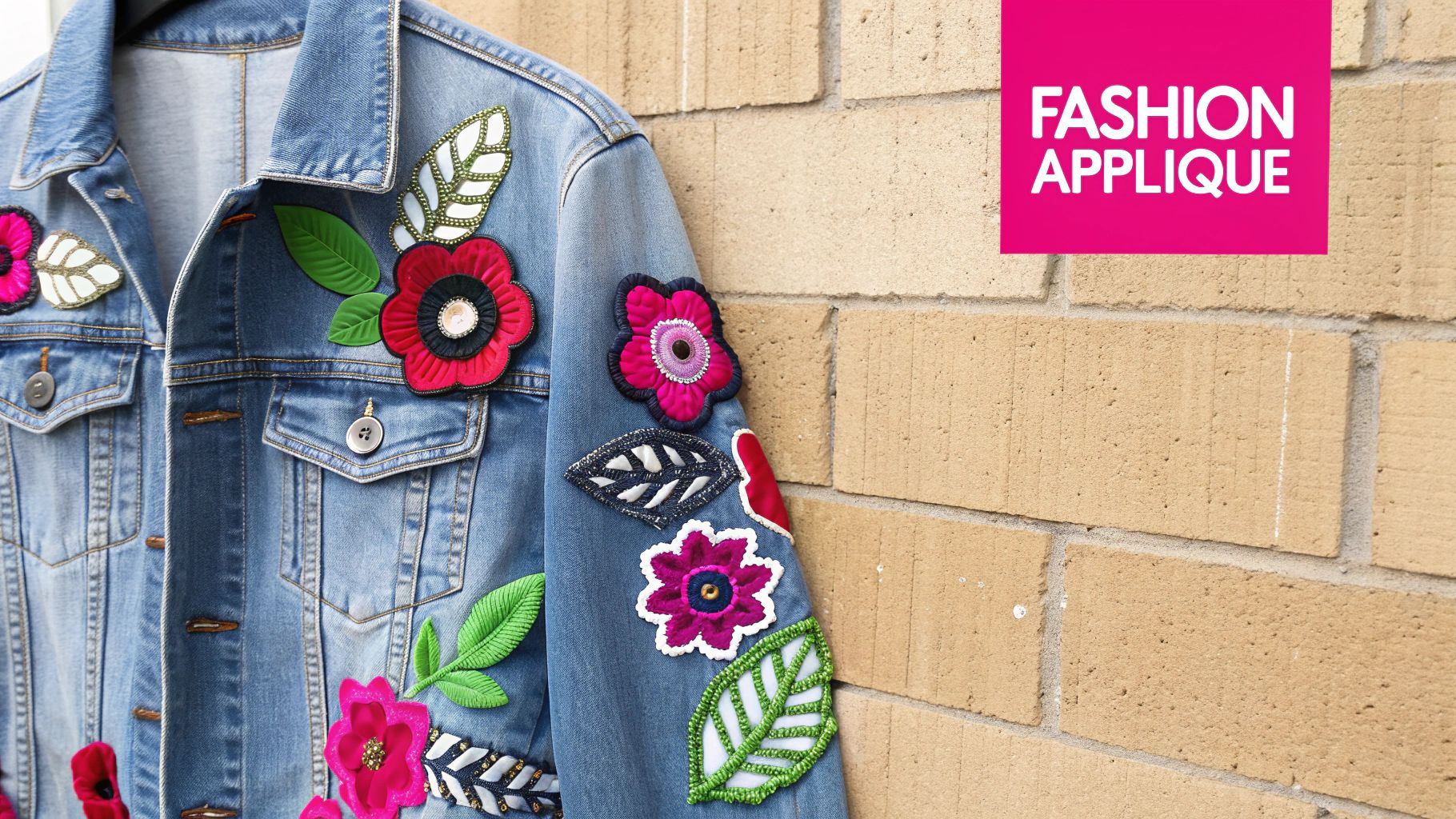
This art form is celebrated globally, seen in the vibrant designs of Otomi embroidery and the mindful mending of Japanese Boro. Modern designers like Alabama Chanin have built entire brands around hand-stitched appliqué, proving its timeless appeal. It's a fantastic way to introduce texture, color, and storytelling to any fabric canvas, making each creation uniquely yours.
Getting Started with Appliqué
A successful appliqué project relies on careful planning and the right materials to bring your vision to life cleanly and professionally.
- Use Fusible Web: For crisp, clean edges and easy placement, iron a fusible web (like HeatnBond or Wonder-Under) to the back of your fabric scraps before cutting out your shapes. This temporarily glues the design in place, preventing shifting while you stitch.
- Plan Your Placement: Lay out your appliqué pieces on the base fabric and take a photo before you start sewing. This helps you finalize the composition and ensures your design is balanced and visually appealing.
- Layer Textures: Don't be afraid to mix different fabric types. Combining a smooth cotton with a textured linen or a soft felt can add incredible depth and dimension to your appliqué art. For those looking to personalize existing garments, exploring options like those discussed in this guide to personalized Christmas jumpers can spark new ideas.
Pro Tip: Your choice of stitch can define the final look. A tight satin stitch provides a bold, finished edge, while a simple straight stitch offers a more rustic, hand-drawn feel. At Linda's, we offer a wide range of decorative threads that can elevate your appliqué from simple to stunning. Shop our collection to ensure your stitches are as beautiful as your fabric choices.
4. Fabric Scrap Paper Making
For a truly innovative answer to the question of what to do with scraps of fabric, consider turning them into beautiful, handmade paper. This artistic technique involves blending small fabric scraps, especially natural fibers like cotton and linen, into traditional paper pulp. The fabric fibers integrate with the pulp, creating unique textures, colors, and visual interest that machine-made paper cannot replicate.
This process elevates fabric remnants from waste to a new artistic medium. It's a method embraced by the sustainable craft movement and artists like Yuko Nishimura, who use it to create fine art books. You can use this special paper for wedding invitations, unique stationery, journaling, or as a mixed-media art base, giving your scraps a completely new life.
Getting Started with Fabric Paper Making
Creating your own fabric-infused paper is a rewarding process that combines recycling with creativity. With a few key steps, you can turn your tiniest scraps into stunning, tactile sheets.
- Prep Your Fibers: Cut your cotton or linen fabric scraps into very small, confetti-like pieces, no larger than a quarter-inch. Soaking them overnight in water will help the fibers break down more easily when you blend them with paper pulp.
- Experiment with Ratios: Start by adding a small amount of fabric fiber to your paper pulp and see how it affects the final texture and appearance. Gradually increase the ratio to discover the perfect blend for your desired effect.
- Add Sizing for Functionality: If you plan to write or draw on your handmade paper, add a sizing agent to the pulp mixture. This will prevent ink from feathering and bleeding, creating a smooth, usable surface.
Pro Tip: The threads you use in your sewing projects can also be incorporated into your handmade paper. Snippets of vibrant, high-quality thread can add beautiful, colorful flecks and lines to your sheets. For an amazing pop of color, consider the extensive thread collections available at Linda's, which can add a professional artistic touch to both your sewing and paper-making crafts.
5. Stuffing and Filling for Crafts
One of the most practical and eco-friendly answers to the question of what to do with scraps of fabric is to repurpose them as stuffing. This straightforward project transforms even the tiniest, most irregularly shaped remnants into a useful filling for a variety of handmade items. From cozy pet beds and decorative pillows to whimsical stuffed toys and functional draft stoppers, using fabric scraps as stuffing gives new life to textile waste and reduces the need for synthetic fillers.
This sustainable practice has deep historical roots, seen in traditional rag dolls, and is now championed by zero-waste lifestyle advocates and crafty entrepreneurs alike. By using your own fabric remnants as filler, you create a project that is truly handmade from the inside out, ensuring nothing from your sewing room goes to waste.
Getting Started with Fabric Stuffing
Creating a high-quality, evenly distributed stuffing requires a bit of preparation. Following these steps will help you achieve a soft, consistent fill for any project.
- Cut Scraps Uniformly: For the best results, chop your fabric scraps into small, consistent pieces using scissors or a rotary cutter. This prevents lumps and ensures the stuffing can be distributed evenly throughout your project.
- Mix Fabric Weights: Combine a variety of fabric types and weights. Mixing lightweight cottons with slightly heavier materials like flannel or denim can create a filling with the perfect balance of softness and supportive structure.
- Wash and Dry First: Always pre-wash and dry your scraps before using them as stuffing. This crucial step removes any residual chemicals, prevents potential color bleeding, and ensures your finished item is clean and fresh.
Pro Tip: The success of a stuffed project depends heavily on the strength of its seams. Using a durable, high-quality thread is essential to keep the filling securely contained. Linda's carries a wide variety of robust threads designed to withstand pressure, ensuring your handcrafted treasures last for years. Browse our amazing selection and get the right thread for your next project.
6. Fabric Scrap Mosaics and Mixed Media Art
For those who see fabric as a painter sees pigment, fabric scrap mosaics offer a boundless artistic medium. This technique involves arranging and adhering tiny pieces of fabric onto a base to create images, patterns, or abstract designs, much like creating a traditional mosaic with tiles. It's a fantastic way to transform your smallest, most irregularly shaped scraps into stunning visual art, blending textile craft with fine art principles.
This method moves beyond traditional sewing, allowing you to "paint" with cloth. Fiber artists like Inge Jacobsen create intricate portraits, while community art projects use this accessible technique for large-scale murals. It’s an expressive and forgiving way to answer the question of what to do with scraps of fabric, turning leftover bits into captivating artwork.
Getting Started with Fabric Mosaics
Success in fabric mosaic art lies in careful planning and a willingness to experiment with texture and color. The right approach will help you translate your vision into a textile masterpiece.
- Choose a Strong Foundation: Start with a sturdy base like canvas, a wood panel, or a piece of heavyweight fusible interfacing. This will ensure your artwork remains stable and doesn't warp as you add fabric and adhesive.
- Work from a Sketch: Lightly sketch your design onto the base first. This provides a roadmap for placing your fabric pieces, which is especially helpful for more complex images like portraits or landscapes.
- Play with Adhesives: Use a temporary adhesive spray or a glue stick to audition fabric placements before making them permanent. Once you're happy with the design, you can secure the pieces with a more permanent fabric glue or by sewing over them with decorative stitches.
Pro Tip: To add depth and secure your mosaic, consider free-motion quilting over the entire piece. Using a high-contrast or even a clear monofilament thread can add incredible texture. Linda's carries a variety of specialty threads perfect for adding that final artistic touch to your mixed media creations. Purchase the best threads to finish your art today.
7. Braided and Woven Rugs
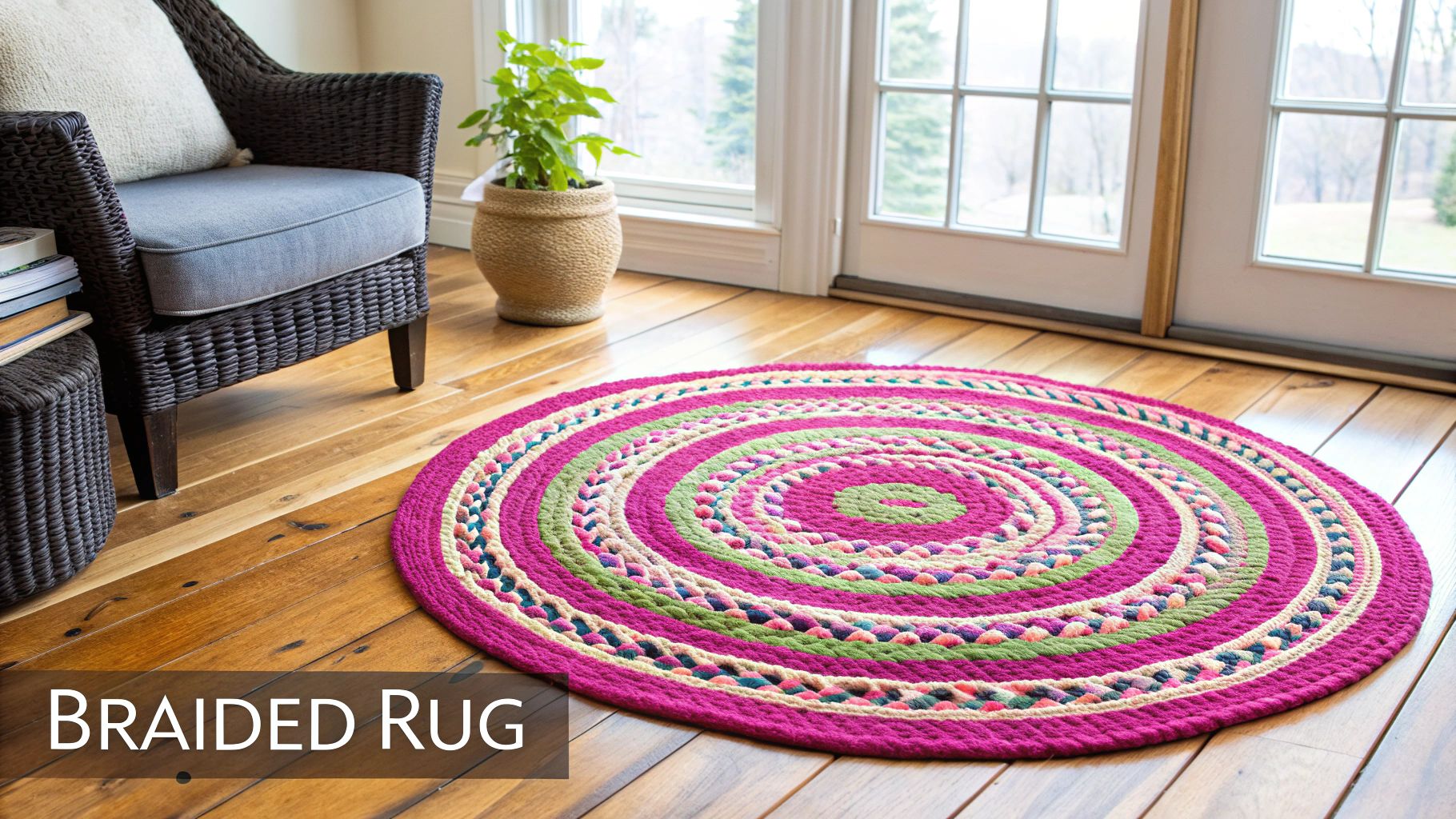
Transforming fabric scraps into braided and woven rugs is a classic, sustainable craft that turns textile remnants into durable and beautiful floor coverings. This technique involves cutting long strips of fabric, braiding them together into thick ropes, and then coiling or lacing these braids to form a sturdy rug. The result is a charming, functional piece of art that adds warmth and character to any room while giving new life to otherwise discarded materials.
This method has deep roots in history, seen in traditional American colonial braided rugs and Scandinavian rag rugs (trasmattor). It's a testament to resourcefulness, turning humble scraps into a functional item that can withstand years of use. This craft is a perfect solution for what to do with scraps of fabric that are too large to throw away but too odd-shaped for quilting.
Getting Started with Braided Rugs
Creating a beautiful braided rug requires consistency and attention to detail. Proper preparation of your materials is the secret to a long-lasting and professional-looking finished product.
- Choose Similar Weight Fabrics: To ensure your rug wears evenly and lays flat, use fabrics of a similar weight and fiber content. Mixing heavy denim with lightweight cotton can cause distortion over time.
- Cut Strips Consistently: For smooth, uniform braids, cut your fabric strips to a consistent width. While traditional methods tear the fabric, using a rotary cutter and mat will give you cleaner edges and more precise results.
- Secure Braids Tightly: As you braid and coil your rug, make sure your stitching is tight and secure. This prevents the braids from separating and ensures the rug is durable enough for foot traffic.
Pro Tip: The strength of your rug lies in how you join the braided coils together. Using a heavy-duty, upholstery-grade thread is essential to create strong, invisible seams that can withstand daily use. Linda's carries robust threads designed for high-stress projects, ensuring your handmade rug becomes a lasting treasure. Buy the supplies you need to start your rug project.
8. Seed Starter Pots and Garden Accessories
Transforming fabric scraps into garden tools is an innovative and eco-friendly answer to what to do with scraps of fabric. This sustainable project involves using untreated, natural fibers like cotton, linen, or burlap to create biodegradable seed starter pots. These fabric containers protect delicate seedlings and can be planted directly into the ground, where they decompose and enrich the soil, eliminating transplant shock.
This method bridges the gap between textile crafts and sustainable living, championed by permaculture practitioners and organic gardening advocates. It’s a brilliant way to give purely natural fabric remnants a new life cycle, turning sewing room waste into a valuable asset for your garden and contributing to a healthier planet.
Getting Started with Fabric Garden Crafts
Creating effective and durable garden accessories requires choosing the right materials and using simple techniques to ensure they function correctly and break down naturally.
- Select Natural Fibers: Only use scraps from 100% natural, undyed, and untreated fabrics like cotton, linen, or jute. Synthetic materials will not decompose and can release harmful chemicals into your soil.
- Create Simple Shapes: Cut fabric into circles or squares. Place a piece over a small jar or can, press it down to form a pot shape, and secure it with natural jute twine or a few stitches of strong cotton thread.
- Ensure Proper Drainage: Before filling with soil, poke a few small holes in the bottom of your fabric pot. This is crucial for preventing waterlogging and ensuring healthy root development for your seedlings.
Pro Tip: The success of your fabric pots depends on sturdy construction. Use a high-quality, durable cotton thread to stitch the seams, ensuring the pots hold their shape. Linda's offers a wide variety of robust cotton threads that are perfect for this eco-friendly project. Purchase yours today and start your garden crafts.
9. Fabric Scrap Greeting Cards and Stationery
Transforming your fabric scraps into custom greeting cards and stationery is an inventive way to merge textile art with paper crafting. This technique involves affixing small pieces of fabric onto cardstock to create unique, textured designs. The result is a one-of-a-kind card that adds a personal, tactile element that printed cards simply cannot replicate, turning a simple greeting into a memorable keepsake.
This method is incredibly personal, allowing you to create wedding invitations that incorporate a piece of the dress fabric or memorial cards made from a loved one's shirt. The practice has been embraced by scrapbookers, high-end stationery designers like Papyrus, and even grief counselors who use memory crafts to help process loss. It’s a beautiful answer to what to do with scraps of fabric that hold sentimental value.
Getting Started with Fabric Cards
Creating stunning fabric-embellished stationery requires attention to detail and the right supplies to ensure a polished, professional look.
- Choose the Right Adhesive: Select a strong, clear-drying glue designed for mixed media projects. A high-quality fabric glue will prevent puckering and ensure your fabric pieces adhere securely to the paper without bleeding through.
- Prevent Fraying Edges: Before gluing, you can seal the edges of your fabric scraps with a product like Fray Check or by applying a very thin line of clear-drying glue along the cut edge. This gives your design a clean, finished appearance.
- Balance Your Composition: Treat your fabric piece as the focal point. Arrange it thoughtfully on the card, leaving ample white space around it to create a balanced and elegant design. Less is often more when it comes to sophisticated card making.
Pro Tip: For intricate fabric shapes or lettering, use an iron-on fusible web to bond your scrap to the cardstock. This creates a crisp, permanent bond perfect for detailed work. Linda's carries a variety of fusible adhesives that are ideal for these delicate, no-sew projects. Find the perfect product to finish your cards with a professional touch.
Creative Uses of Fabric Scraps: 9-Item Comparison
| Technique | Implementation Complexity 🔄 | Resource Requirements ⚡ | Expected Outcomes 📊 | Ideal Use Cases 💡 | Key Advantages ⭐ |
|---|---|---|---|---|---|
| Patchwork Quilting | Moderate to High - sewing skills needed, time-intensive | Requires fabric scraps, sewing tools, batting/backing | Heirloom-quality quilts, decorative textiles | Large quilt projects, memory quilts, artistic designs | Customizable, transforms fabric waste, durable functional art |
| Fabric Scrap Jewelry and Accessories | Low to Moderate - basic crafting, some jewelry supplies | Minimal fabric, jewelry findings, other materials like beads or wire | Unique, wearable accessories with immediate results | Quick crafts, travel projects, low-fabric use designs | Fast projects, low cost, great for specialty fabrics |
| Appliqué Art and Clothing Customization | Moderate - sewing or iron-on application, design planning | Fabric scraps, sewing or fusible web supplies | Updated or personalized clothing and accessories | Revamping garments, covering stains, decorative art | Instant clothing update, artistic expression, covers damage |
| Fabric Scrap Paper Making | High - specialized equipment, lengthy drying | Natural fiber fabric scraps, blender, screens | Unique, textured, archival-quality art papers | Art projects, bookbinding, sustainable crafting | Sustainable use, unique art materials, meditative process |
| Stuffing and Filling for Crafts | Low - cutting fabric, stuffing items | Any fabric scraps; no special tools required | Eco-friendly filling for pillows, toys, pet beds | Soft furnishings, zero waste projects | Cost-effective, customizable firmness, natural filling option |
| Fabric Scrap Mosaics and Mixed Media Art | High - artistic planning, detailed work | Various fabric scraps, adhesives, possible embellishments | Detailed, textured mosaic-style artwork | Art installations, community projects, fashion illustrations | High artistic expression, uses tiny scraps, unique texture |
| Braided and Woven Rugs | High - time-consuming, requires large fabric amounts | Long fabric strips, sewing/braiding tools | Durable, functional floor coverings | Sustainable home decor, insulation, heirloom rugs | Extremely durable, functional, sentimental fabric use |
| Seed Starter Pots and Garden Accessories | Low to Moderate - crafting skills required | Natural fabrics (cotton, linen), sewing materials | Biodegradable seed pots protecting seedlings | Sustainable gardening, seed starting, eco-friendly containers | Eco-friendly, cost-effective, reduces transplant shock |
| Fabric Scrap Greeting Cards and Stationery | Moderate - crafting skills, adhesive selection | Fabric scraps, cardstock, adhesives | Textured, personalized greeting cards/stationery | Special occasion cards, memory crafts, art gifts | Uses small scraps, highly personalized, luxurious texture |
Your Scraps, Your Story: Let Your Creativity Unfold
Your fabric scrap pile is more than just leftovers; it's a vibrant palette of potential, a tangible collection of memories, and a colorful testament to your creative journey. As we've explored, the question of what to do with scraps of fabric has countless inspiring answers. Each piece, no matter how small or oddly shaped, holds the potential to become part of a new story, a new creation that is uniquely yours.
From the comforting warmth of a patchwork quilt to the delicate charm of fabric scrap jewelry, the projects we've covered demonstrate the incredible versatility hidden within your scrap bin. You've learned how even the tiniest remnants can be transformed into stunning appliqué art, unique handmade paper, or even practical items like garden seed starters. The key takeaway is to shift your perspective. Instead of seeing a problem to be managed, view your scraps as an invitation to experiment, play, and innovate without the pressure of cutting into new, pristine yardage.
Embracing the Scrap-Busting Mindset
Mastering the art of using fabric scraps is not just about sustainability or saving money, although those are significant benefits. It’s about honing your creative instincts and developing a deeper connection to your craft.
- Build Your Skills: Working with small, irregular pieces challenges you to improve your precision, color theory, and composition skills in new ways.
- Unlock Unlimited Creativity: Scraps free you from creative constraints. You can mix prints and textures you might not have otherwise combined, leading to unexpected and beautiful results.
- Tell a Story: Each scrap has a history from a previous project. Weaving them into new items creates a rich tapestry of your sewing or quilting journey, making each finished piece deeply personal.
Your Actionable Next Steps
Feeling inspired? Don't let that momentum fade. The next step is to take concrete action and dive into your scrap pile with a clear purpose.
Start by sorting your scraps. A little organization goes a long way. You can sort by color, size, or fabric type. This simple act can make it much easier to visualize possibilities and find the perfect piece when inspiration strikes. Then, choose one project from this list that genuinely excites you, whether it’s the rugged texture of a braided rug or the whimsical appeal of a fabric mosaic. Gather the necessary supplies and dedicate a small amount of time to just begin. The most important step is starting.
Ultimately, your journey with fabric scraps is a personal one. Let go of perfectionism and allow yourself the freedom to create. Mix, match, stitch, and glue. The true value lies not just in the beautiful finished product, but in the joy of the creative process itself. Let every scrap be a reminder that nothing is wasted and that beauty can be found in the smallest of pieces.
Ready to transform those scraps from forgotten remnants into your next masterpiece? Every great project needs the right finishing touches. For the perfect thread, batting, stabilizers, and notions to bring your vision to life, explore the incredible selection at Linda's Electric Quilters. With over 30,000 products, we are your dedicated partner in creativity, ensuring you have everything you need to finish your scrap-busting projects with confidence and style.