When you're standing in front of that giant wall of thread, the choices can feel overwhelming. But here's a good rule of thumb I've learned over the years: for most piecing and general quilting, you can't go wrong with a high-quality 50wt 100% cotton thread. It’s the reliable workhorse of the quilting world.
If your quilt needs a bit more muscle or you want a subtle sheen to your stitches, a 40wt polyester thread is a fantastic and incredibly durable alternative. Both are excellent starting points for any project you bring to life.
Choosing the Right Thread for Flawless Quilting
Let's be honest, the secret to a stunning quilt isn't just in the fabric choices or the perfect points—it's the thread that literally holds it all together. Picking the right thread for machine quilting is the difference between a frustrating afternoon of breaks and tension woes and a smooth, joyful session that results in beautiful stitches.
Getting a handle on the basics is your first step toward creating quilts that look professional and are built to last. We'll get into how to match the right thread to your specific project, needle, and fabric, setting you up for success before you even take that first stitch. This educational journey will ensure your next project is your best one yet.
It's a skill worth mastering, especially as more people discover this craft. The U.S. quilting industry has seen incredible growth, jumping from $1.8 billion to $4.5 billion in revenue over the last 25 years. That's a lot of quilters investing in quality materials! You can find more fascinating insights about the quilting industry and its growth over at MrsQuilty.com.
Key Thread Characteristics to Consider
Before we put different threads head-to-head, it helps to know what makes them tick. These core characteristics are what determine how a thread will behave in your machine and, ultimately, how it will look on your finished quilt.
Here’s a quick rundown of what you should be looking at on the spool:
| Characteristic | Why It Matters for Machine Quilting |
|---|---|
| Material (Fiber) | This dictates everything from strength and sheen to how much lint you'll be cleaning out of your machine. Think cotton, polyester, silk, etc. |
| Weight (wt) | This is all about thickness. It’s a bit counterintuitive: a lower number means a thicker thread, while a higher number means a finer one. |
| Construction | This refers to how the fibers are spun together. A well-constructed thread is strong, smooth, and less likely to shred. |
| Finish | Some threads get special treatments. For example, mercerized cotton gets a bath that adds luster, strength, and helps it take dye better. |
Understanding these four elements—material, weight, construction, and finish—is the foundation for selecting thread with the confidence of an expert. It transforms your selection from a guess into a strategic choice for your project.
Getting these details right is what ensures your stitches don't just look beautiful on day one, but hold up for generations. Now, let's explore the amazing products at Linda's that will help you finish your next masterpiece.
Comparing Quilting Thread Materials
When it comes to your quilt's final look, feel, and durability, the thread you choose is a huge part of the equation. Picking between cotton, polyester, and silk isn't just about personal preference—it's a tactical choice that impacts everything from stitch definition to how well your quilt holds up over time. Let’s get past the basic pro/con lists and dig into how these materials really behave on a quilt.
This visual gives you a great starting point, showing off the different textures and sheens you can expect from each thread type.
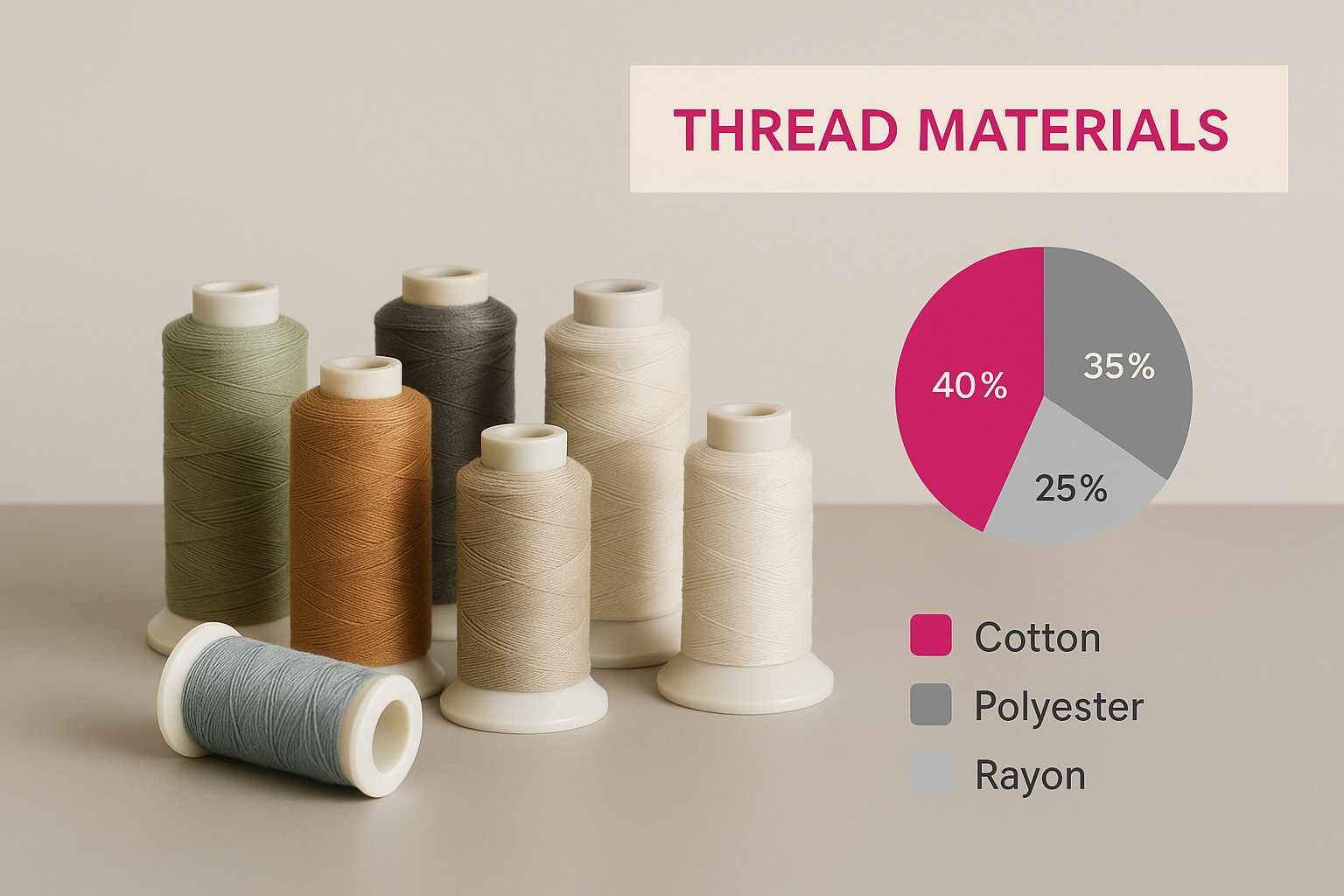
You can see right away how the finish of each material is distinct, which helps in picturing how they’ll look on your finished quilt.
The Classic: Cotton Thread
There's a good reason cotton is the traditional go-to for quilters. It gives you a lovely, soft, matte finish that nestles right into the quilt top, letting your fabric choices and piecing shine. Because it has almost no stretch, it helps create incredibly flat, crisp seams, which is why so many of us swear by it for traditional piecing.
The trade-off? Cotton is a natural fiber, so it does produce more lint than synthetics. This just means you’ll need to be diligent about cleaning out your bobbin case and machine to keep things running like a dream. For any quilt you want to have that classic, heirloom feel, the beautiful result is more than worth a little extra machine maintenance.
The Workhorse: Polyester Thread
Polyester has rightfully earned its spot as a quilting powerhouse. It’s incredibly strong and has just a bit of stretch, which makes it super resilient under the stress of high-speed machine quilting. That strength makes it the perfect choice for quilts destined for a lot of love and washing, like a kid's bed quilt or a cozy t-shirt quilt made from stretchy knits.
There's an old myth that strong polyester thread will eventually shred cotton fabric, but that's simply not an issue with today's high-quality threads. Modern polyester is engineered to be fine yet tough, posing zero risk to your fabric. Plus, the subtle sheen it has can really make your quilting stitches pop.
When I'm working on my longarm, a smooth, low-lint polyester is my secret weapon. Its strength means I spend way less time dealing with frustrating thread breaks at high speeds, which lets me get into a good rhythm and just enjoy the process.
The Luxury Finish: Silk Thread
For those projects that demand pure elegance and the finest detail work, silk thread is in a league of its own. It’s surprisingly strong for how thin it is, and it has a gorgeous, high-sheen luster that just elevates any quilt it touches. I reach for silk when I'm doing delicate appliqué, micro-stippling, or quilting on special fabrics like satin or charmeuse.
Because it's so fine, silk thread has a magical ability to almost disappear into the fabric, making it my top choice for "invisible" quilting where I want the texture, not the thread, to be the star. It is a more premium option, but for a show quilt or a special heirloom, its performance is second to none.
Quilting Thread Material Comparison at a Glance
Sometimes you just need a quick-and-dirty guide to make the right call. This table breaks down the essential differences to help you decide which thread is right for your current project.
| Thread Material | Key Characteristics | Best For | Things to Consider |
|---|---|---|---|
| Cotton | Soft, matte finish that blends in; no stretch | Traditional piecing, heirloom quilts, natural look | Tends to produce more lint in your machine |
| Polyester | Very strong and durable; slight stretch; subtle sheen | High-speed quilting, utility quilts, t-shirt quilts | Look for high-quality to avoid a stiff feel |
| Silk | Extremely fine yet strong; beautiful, high-luster sheen | Appliqué, heirloom quilting, micro-stippling, detail | Comes at a higher, premium price point |
Ultimately, there's no single "best" thread—it's all about what's best for the quilt you're making right now. The right choice will match both your creative vision and the practical demands of the project. Linda's has a fantastic selection of top-notch threads, so you can always find the perfect material to finish your project beautifully.
Matching Thread Weight to Your Project
Getting a handle on thread weight is one of those things that can take your quilting from good to great. The weight system, usually shortened to "wt," can feel a bit backward at first. Just remember that the numbers are inverse: a lower number like 30wt means a thicker, heavier thread, while a higher number like 60wt or 100wt is for a much finer, thinner thread.
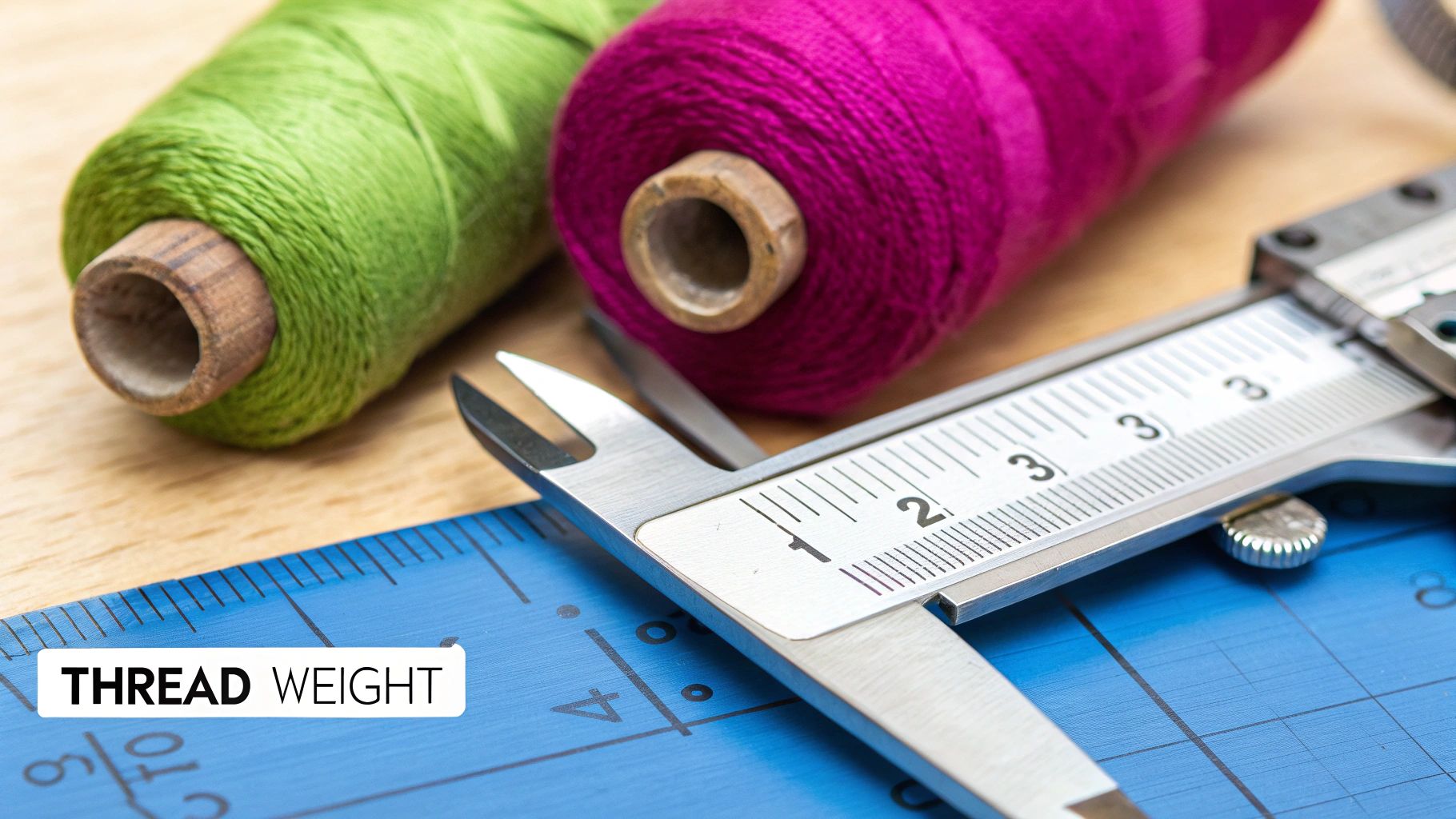
Picking the right weight isn't just about the technical stuff; it’s a creative choice. It directly shapes the final look and feel of your quilt. Every thread weight has its purpose, and getting the match right is key to bringing your vision to life.
Selecting the Right Weight for the Job
I like to think of thread weights like paintbrushes. You wouldn't grab a wide brush to paint tiny details, and the same principle applies here. Different quilting jobs need different thread thicknesses to get the effect you're after.
Here’s a quick rundown of the weights you'll see most often:
- Fine Threads (60wt, 80wt, 100wt): These delicate threads are your go-to when you want the stitches to blend in or disappear completely. They are perfect for stitch-in-the-ditch, detailed micro-stippling, and English paper piecing where the texture of the quilting, not the thread itself, is the main event.
- Medium Threads (40wt, 50wt): These are the workhorses of the quilting world. A 50wt thread is pretty much the industry standard for piecing because it creates strong, flat seams that don't add extra bulk. A 40wt thread is a fantastic all-rounder for both piecing and quilting, giving you a bit more stitch definition without being overpowering.
- Heavy Threads (30wt and lower): When your quilting needs to be front and center, this is what you reach for. A 30wt thread is wonderful for decorative topstitching or free-motion work where you really want the thread to pop and become a design element in its own right.
If you want to dive deeper into the different numbering systems, this helpful sewing thread size guide is a fantastic resource.
Balancing Tension and Needles
Using different thread weights successfully often comes down to a couple of simple but crucial adjustments on your machine. Thicker thread needs a bigger path through the needle and fabric, and it also changes the tension requirements.
Here’s a simple rule of thumb I always follow: As your thread gets heavier (lower wt number), your needle size should get bigger. This one tip will save you a world of frustration from shredded thread and skipped stitches.
For instance, a delicate 80wt thread will likely run smoothly with a 70/10 Microtex needle. On the other hand, a heavy 30wt thread will demand something like a 90/14 Topstitch needle to perform its best.
Before you ever touch your actual quilt, always do a test on a scrap sandwich of the same materials. That quick test run is your chance to dial in the tension and make sure you've got the perfect needle and thread combination for your project.
Why High-Quality Thread Is a Smart Investment
Let's be honest. When you see a bin of bargain thread, it's tempting to grab a few spools. But is saving a couple of dollars really worth it? After pouring hours—sometimes weeks—into piecing a quilt top, the thread you choose to finish it with is one of the most critical decisions you'll make for your project.
Investing in a high-quality thread is about so much more than just how it looks. It's a practical choice that protects your time, your sanity, and your sewing machine.
Think of premium thread as a precision-engineered tool. It’s manufactured to be exceptionally smooth and strong, which means it glides through your machine with minimal friction. This dramatically reduces the amount of lint that builds up in your bobbin case and feed dogs, keeping your machine happier and saving you from constant cleaning and maintenance headaches.
The Value of Superior Manufacturing
The real difference between a budget thread and a top-shelf one boils down to the manufacturing process. For instance, premium cotton threads often go through mercerization. This is a special treatment that not only strengthens the fibers but also gives them a beautiful luster and helps them take dye more evenly for incredibly rich, consistent color. The result is a silky-smooth thread that’s far less likely to fray or snap.
High-quality polyester threads get similar special treatment. They might be bonded or finished with a special glaze that reduces friction as the thread flies through the needle at high speeds. This is absolutely essential for machine quilting, where a weak, fuzzy thread will just lead to constant, frustrating breaks that completely kill your creative rhythm.
Investing in quality thread isn’t an extra expense; it's insurance for your quilt. It ensures your stitches are as strong and beautiful as the fabric they hold together, protecting your hard work for years to come.
A Growing Market for Quality
This appreciation for high-performance thread isn't just a trend among serious quilters; it's a massive global market. The sewing thread industry was valued at roughly USD 4.05 billion and is expected to keep growing. This growth is fueled by quilters and sewists like us who demand threads that can keep up with the power and speed of modern machines. You can read more about the global sewing thread market trends on ResearchAndMarkets.com.
Ultimately, choosing the best thread is an investment in a smoother quilting process and a much more durable, beautiful finished product. Your projects deserve thread that will do them justice. If you're looking for a great place to start, you can explore a curated collection of reliable, high-quality threads at Linda's to make sure your next quilt is built to last.
Pushing the Boundaries: Advanced Thread Techniques
Once you've got a good handle on the basics, the real fun begins. This is where you can start to play with thread in ways that add incredible texture and make your quilting a true standout. Moving beyond just holding the layers together lets the thread itself become a star of the show.
Diving into the world of specialty threads is how you take your quilting from a completed project to a work of art. These threads are engineered to create effects that standard spools just can't touch. It’s time to get a little adventurous and add that "wow" factor you’ve been aiming for.
Taming Variegated and Metallic Threads
Variegated threads, with their beautiful color changes on a single strand, are a quilter's dream for creating a gorgeous, organic flow of color without having to re-thread your machine every five minutes. The secret here? Lengthen your stitch. A stitch length of 3.0 to 4.0 mm gives each color segment enough space to shine, preventing them from blurring together into a muddled-looking line.
Metallic threads, on the other hand, have a reputation for being a bit… dramatic. They’re notorious for shredding and breaking because of the friction they endure. The fix is pretty simple: switch to a Metallic or Topstitch needle. These needles have a larger eye and a specially designed groove that protects the delicate thread as it stitches. I also swear by using a separate, upright thread stand. It lets the spool unwind flat, which drastically cuts down on twisting and tension problems before the thread even gets to your machine.
When you're working with specialty threads, there's no single magic formula. It's all about thoughtful experimentation. Always, always test your thread, needle, and stitch settings on a scrap quilt sandwich before you touch your actual project.
Getting Creative with Thread Weights
One of my favorite tricks is to play with different thread weights in the top and bobbin. Imagine using a bold, decorative 30wt thread in the needle to really make your quilting pop, paired with a fine 60wt thread in the bobbin. This gives you a beautiful, prominent stitch on the quilt top without adding a ton of bulk to the back. It’s also a fantastic workaround for solving tension headaches that often come with thicker threads.
While we quilters are busy mastering these techniques, some corners of the industry are exploring a different path. The global ultrasonic quilting machine market, which literally bonds fabric together with vibrations, was valued at USD 285.2 million and is on the rise. Still, for most of us, the artistry and soul of quilting will always live in a needle and thread. You can read more about how these threadless innovations are shaping the fabric industry to see how things are evolving.
Feeling inspired? Go check out the incredible selection of specialty threads over at Linda's. You're sure to find the perfect spool to bring your next creative idea to life.
Let's Find Your Perfect Thread at Linda's Fabric
Alright, you've done the homework. You now know the ins and outs of thread materials, weights, and what makes them tick. Now for the fun part: picking out that perfect spool and putting all that knowledge to work on your next quilt.
This is where we come in. Think of us as your trusted guide at the local quilt shop. We’re not just here to point you to a shelf; we want to help you make a smart, strategic choice that you'll be happy with from the first stitch to the last. We’ve personally curated our collection to include only the best thread for machine quilting—these are the spools we trust for our own projects.
Handpicked Recommendations for Your Projects
Let's walk through a couple of common scenarios. Say you’re piecing a classic Log Cabin quilt with beautiful 100% cotton fabrics. For that, I’d point you directly to a high-quality 50wt mercerized cotton thread. It’s strong, low-lint (which your machine will love), and has a subtle matte finish that melts right into the fabric, letting your patchwork shine.
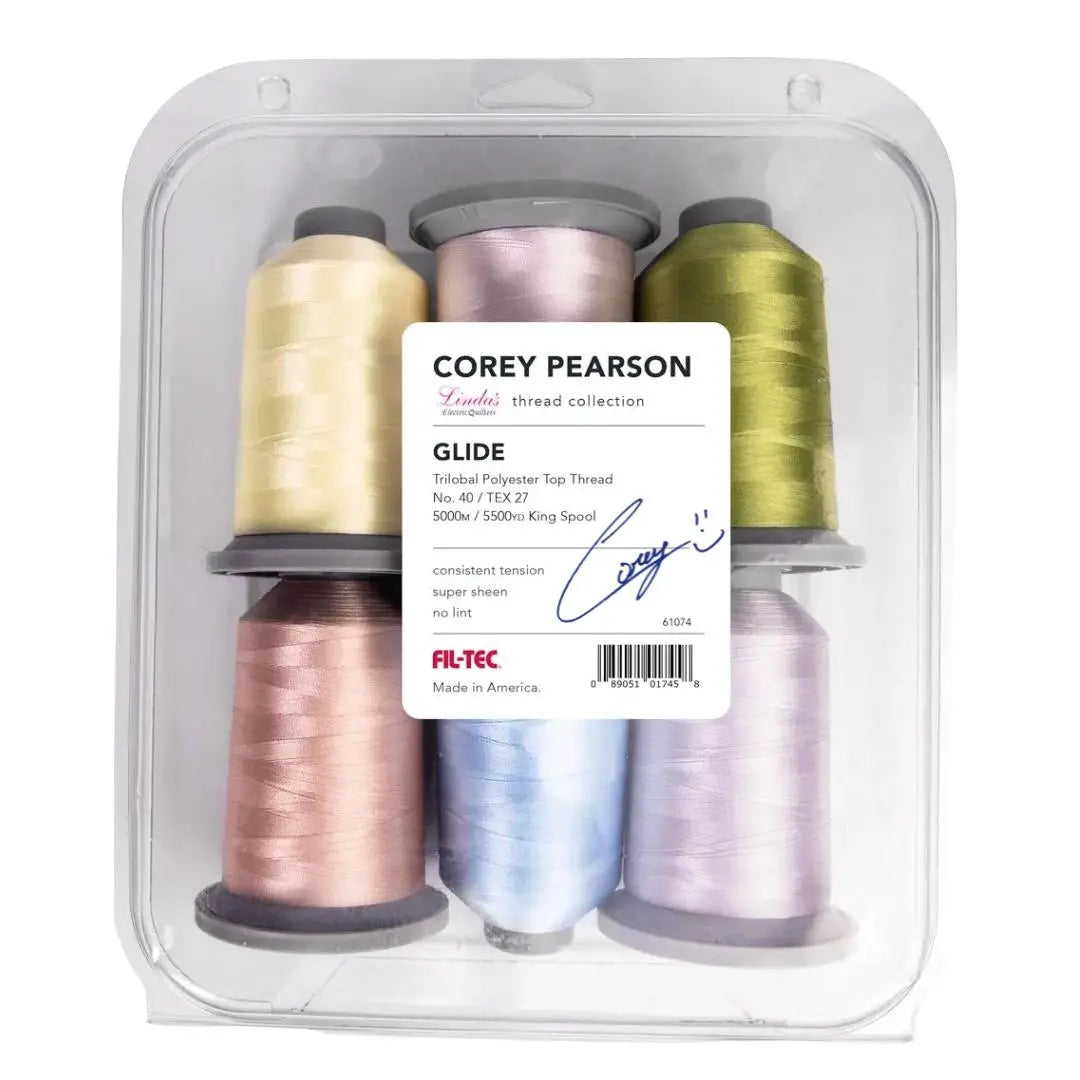
But what if you're working on something totally different, like a modern wall hanging with dense, artistic quilting? You need strength and a bit of "pop." In that case, a 40wt trilobal polyester thread is your best bet. Its gorgeous sheen will catch the light and make your quilting lines a key feature of the design. Plus, it's tough enough to handle high-speed quilting without fraying or snapping, saving you a ton of frustration.
Our goal is to empower you. When you match the right thread to the right project, the guesswork disappears, and you can quilt with total confidence.
Your Quilting Success Starts Here
Every quilt tells a story, and the thread you choose is a critical part of that narrative. It deserves to be as thoughtfully selected as your fabric. At Linda's, we provide detailed descriptions, show you true-to-life colors, and stock the threads that our quilting community has tested and loves. The right thread truly can take your work from beautiful to breathtaking.
Ready to bring your next masterpiece to life? Browse our curated selection of quilting threads at Linda's and find the perfect partner for your creative adventure. Your finished quilt will thank you for it.
Tackling Common Machine Quilting Thread Questions
Even seasoned quilters run into questions now and then. Let's clear up some of the most common ones I hear, so you can get back to your project with confidence.
Can I Really Use Polyester Thread on a 100% Cotton Quilt?
You absolutely can. This is one of those old myths that just won't quit, but modern polyester threads are a world away from the old stuff. Today’s high-quality polys are soft, flexible, and won't harm your cotton fabric.
In fact, their strength is a huge advantage for quilts that are meant to be loved and used often, like a cozy quilt for a child's bed that will see a lot of trips through the washing machine. Just be sure to stick with a reputable brand to get that smooth, consistent quality that prevents headaches.
Why Does My Quilting Thread Keep Breaking?
Oh, the frustration of shredding thread! It can stop a project in its tracks, but it's usually one of a few simple culprits. Before you get mad at the thread itself, run through this quick checklist.
- Check Your Needle: Honestly, this is the number one cause. A needle that’s dull, bent, or even the wrong size for your thread will cause endless problems. I make it a habit to change my needle after every 8-10 hours of quilting.
- Look at Your Tension: If the top tension on your machine is cranked too high, it puts way too much stress on the thread, eventually causing it to snap.
- Consider the Thread Quality: Cheaper threads might seem like a bargain, but they often have weaker spots and produce a ton of lint. Under the high-speed friction of machine quilting, they’re far more likely to shred and break.
Most of the time, the fix is simpler than you think. Just swapping in a fresh needle and switching to a trusted, high-quality thread can make all the difference and solve the breakage instantly.
Do I Need to Match My Bobbin and Top Thread?
Not at all! While using the same thread in the top and bobbin gives you a perfectly balanced look, it’s not a hard-and-fast rule. A really smart technique many quilters use is to put a finer, neutral-colored thread in the bobbin.
Using something like a 60wt polyester in the bobbin is fantastic because it reduces the bulk on the back of your quilt. This is a game-changer when you're doing dense quilting and want the back to look just as clean as the front.
With those questions out of the way, you should feel ready to pick the best thread for machine quilting your next beautiful creation. At Linda's Electric Quilters, we've gathered a collection of top-tier threads that we trust for our own projects. You can explore our selection of quilting threads and find the perfect spool for your artistic vision.