
Hey everyone. Today you will learn how to turn a thrifted quilt top into a quilted jacket you will actually wear.
Here is the thing. Thrift stores are full of beautiful quilt tops that never became quilts. Somebody pieced all those blocks. Then life happened. The top got folded up and forgotten.
You can finish that story. As a jacket.
The secret is the batting. In a bed quilt, batting is mostly about warmth. In a jacket, it does two jobs. It warms you, and it gives the fabric structure. The right batting makes a loose old top hang like a real garment. The wrong batting makes you look like you are wearing a comforter. We are not doing that.
Materials
- One thrifted quilt top, twin or throw size is plenty
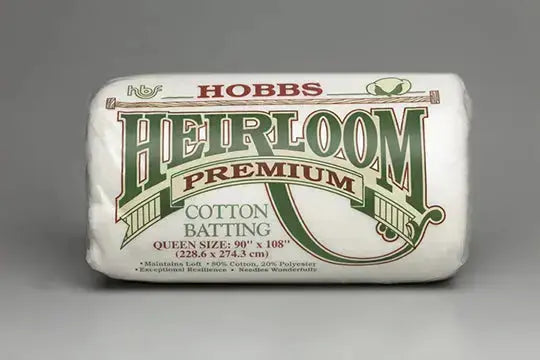
- Low-loft cotton or 80/20 cotton-poly batting, one package
- Lightweight cotton lining fabric, about 2 to 3 yards
- A simple jacket pattern, or a sweatshirt that fits you well to trace
- Double-fold bias binding, store-bought or homemade
- Walking foot, size 90/14 topstitch needle, and 50-weight thread
- Wonder clips or long pins, fabric marker, and sharp scissors
How to make it
- Wash and check the top first. Gentle cycle, cool water. Then hold it up to the light. Look for thin spots and popped seams. Mend what you find now. It is ten minutes of work that saves the whole project later.
- Pick your pattern pieces before you cut anything. Lay the top flat. Decide where the pretty blocks land. You want the best block centered on the back. Mirror your favorites on the two fronts. Take your time here. It is not a race.
- Build your sandwich in panels. Cut batting and lining about 2 inches bigger than each pattern piece. Layer lining, batting, then the quilt top section on top. Pin every 4 inches or so.
- Quilt each panel flat. Stitch in the ditch along the block seams, or echo the piecing. Keep your quilting lines 2 to 3 inches apart. Set your stitch length to 3.0 to 3.5 millimeters. That quilting is what locks the batting in as structure, so the jacket holds its shape on your shoulders.
- Cut the jacket pieces from the quilted panels. Now, and only now. Add a half inch all around for seam allowance if your pattern does not include it. Go slow around curves. Slow down or the layers shift.
- Sew the main seams. Shoulders first, then sleeves, then side seams. Use that walking foot the whole way. The layers are thicker than regular garment fabric, and the walking foot keeps everybody traveling together. Just like that.
- Finish every raw edge with binding. Quilted edges are too thick to hem nicely. Binding looks clean, and it protects the batting from working loose. Bind the front opening, the cuffs, the bottom, and the neckline.
- Add your closure. Big snaps are easy and forgiving. Buttons work too. Or skip closures completely for an open-front jacket. Completely up to you.
Tips and variations
Do the drape test before you quilt. Drape your layered panel over your arm. It should bend soft, not stand up stiff. If it stands, your batting is too lofty. Save that fluffy batting for a puff quilt.
Here's what I use and why. I reach for a low-loft 80/20 batting for jackets. It quilts flat, it washes well, and it gives the top just enough body to feel like clothing. I have made the high-loft mistake, y'all. Once was enough. The fix was a seam ripper and a Saturday.
For the sleeves, try a single thin layer of batting, or none at all. Bend your elbow in a bulky sleeve and you will understand why. Warm body, easy elbows. That is the goal.
Want pockets? Cut two squares from leftover quilted panel. Bind the top edge. Stitch them right onto the fronts. Super duper cute, and they carry your phone.
And hear me on this. Your seams do not have to be perfect. An old top has wobbles in it already. That is charm, not failure. You are your own worst critic. Nobody at the grocery store is measuring your stitch in the ditch.
If I can do this, y'all can do it. Thanks for hanging out with me today. We'll see you next time. Bye.
Shop Hobbs Heirloom 80/20 Batting Package at Linda's Electric Quilters.


