
Hey everyone. Today you'll learn how to make a quilted scrap basket with divided pockets, and how to know when you need batting, interfacing, or both.
Here we go. Every sewing table grows the same pile. Strips here. Squares there. A little heap that slides onto the floor. This basket corrals it all. Batting gives the walls soft padding. Interfacing gives them backbone. Used alone, each one does half the job. Used together, this bad boy stands up, stays open, and still feels nice to grab.
Here's the simple test I use. Squeeze the wall in your hand. If it feels thin and floppy, you need structure. That's interfacing. If it stands up but feels hard and papery, you need softness. That's batting. If it flops and feels thin, you need both. Most scrap baskets need both. Completely up to you, though. A tiny thread catcher can get by on batting alone.
Materials
- Outer fabric: two pieces, 12 x 14 inches each, plus a 12 x 12 inch base piece — quilting cotton works great
- Lining fabric: same cuts as the outer
- Batting offcuts, low to medium loft, cut to match the outer pieces — this project was made for using up scraps
- Medium-weight fusible interfacing, cut to match the outer pieces, for the walls that need to stand tall
- Pocket fabric: one piece 8 x 14 inches, plus its interfacing
- Thread, 50-weight for piecing, and your machine with a size 80/12 universal needle
- Scissors, clips, chalk, a ruler, and your iron
- Optional: two fabric handles, each 2 x 10 inches, with interfacing inside
How to Do It
- Decide your layers first. Fuse interfacing to the wrong side of each outer wall piece. Press, lift, press again for 10 to 15 seconds. Let it cool flat. That cool-down is what sets the bond.
- Lay batting behind each interfaced outer piece. Pin or clip the edges. You have just built the both-layers sandwich: fabric for looks, interfacing for shape, batting for padding.
- Quilt each wall panel. Simple straight lines every 1 inch are perfect. Use a 2.5 mm stitch length. Travel from edge to edge and tie off as you go. This quilting locks the batting in place so it never bunches in the wash.
- Make the divided pocket. Fuse interfacing to the pocket piece, fold the top edge down 1/2 inch twice, and topstitch it. Lay the pocket on one lining panel. Stitch vertical divider lines every 3 to 4 inches, backstitching at the top edge of each line. Slow down there or the needle snaps on the thick spot. Those dividers are perfect for scissors, a seam ripper, and marking pens.
- Sew the outer box. Stitch the walls to the base with a 1/4 inch seam, then sew the side seams. Box the bottom corners if you want a flatter base. Trim the batting out of the seam allowances where you can. Less bulk, cleaner corners. Just like that.
- Sew the lining box the same way, with the pocket panel facing in. Leave a 4 inch gap in one lining seam for turning.
- Put the outer basket inside the lining, right sides together. Clips all around the top. Stitch the top edge, turn it right side out through the gap, and tuck the lining in. Press the top edge nice and flat.
- Topstitch around the top, about 1/8 inch from the edge. That one row keeps the lining from rolling out. Stitch the gap closed, fill it with scraps, and stand back. Super duper cute, right?
Tips and Variations
Batting only? Choose batting alone for a soft, slouchy basket you plan to hang or squeeze onto a crowded shelf. It will fold, and that is fine.
Interfacing only? Choose interfacing alone for a crisp, lightweight basket for patterns or paper templates. You get shape, but no padding for tools that poke.
Both layers? Choose both for a working scrap basket on the table. That is my pick, and it is the version I use in McKinney. It stands open while I toss strips in all day, and the padded walls do not clang against the machine.
Make the pockets yours. One wide divider for charm packs, two narrow ones for pens. Measure your tools first. We're not reinventing the wheel here. We are just giving them a home.
And listen. Your quilting lines might wander a little. Mine do too. You're your own worst critic. This basket is here to hold scraps, not to win a ribbon. Take your time. It's not a race. If I can do this, y'all can do it.
Thanks so much for sewing along with me today. We'll see you next time. Bye.
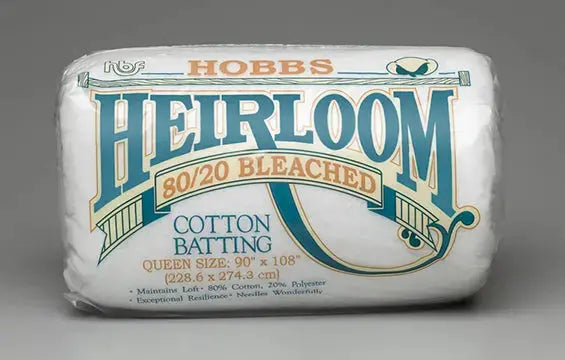
Shop Hobbs Heirloom Bleached 80/20 Batting Package at Linda's Electric Quilters.


