
Hey everyone. Today you will learn how to make a table runner that works two jobs at once. It looks pretty down the middle of your table. And it protects that table when a hot dish lands in the center.
Here is the trick. We build the layers in the right order. Interfacing goes on the fabric first. Batting goes in the middle second. Then we quilt through everything together.
That order matters, folks. Interfacing gives your fabric stability. Batting gives you the cushion and the heat buffer. Mix up that order and things get wobbly fast. Keep it in order and this bad boy lies flat and works hard.
And we are making it reversible. One side for one season. Flip it over for the next. Two runners for the work of one. Super duper fun, and practical too.
Materials
- Two runner tops, one for each season, each cut about 14 inches by 44 inches
- Light to medium fusible interfacing, cut the same size as each top
- One layer of regular low-loft batting for the full runner
- A second piece of insulated batting, cut smaller, for the center zone only — about 14 inches by 20 inches
- Backing fabric if you are not using a second top as the back
- Cotton thread, 50 weight, for piecing and quilting
- Binding strips, about 2 1/4 inches wide, joined to go all the way around
- A walking foot, safety pins or basting spray, and your usual rotary cutting tools
How to make it
- Pick your two seasons. Choose one fabric for spring or summer. Choose one for fall or the holidays. Completely up to you. I like a light floral on one side and a rich plaid on the other. Just like that, one runner covers half the year.
- Interface each top first. Fuse the interfacing to the wrong side of each seasonal top. Follow the pressing time on your interfacing. Press from the fabric side in sections. Do not slide the iron around. Sliding can shift things. Ask me how I know. Let each piece cool flat before you move it.
- Build the center zone. Find the middle of your runner length. Mark about 20 inches right in the center. That is where serving dishes actually land. That zone gets the extra layer. The ends stay single-layer so the runner drapes nicely.
- Stack in order. Lay your bottom seasonal top face down, interfacing side up. Add the full layer of low-loft batting. Center the smaller insulated batting piece in the middle zone, on top of that batting. Then add your second seasonal top face up, interfacing side down. See the sandwich? Interfacing hugs the fabric. Batting lives in the middle. That is the whole secret.
- Baste it well. Pin every 4 inches or so. Smooth from the center out. Because the center is thicker, take your time here. It is not a race. A flat baste now saves you a wavy runner later.
- Quilt it simply. Use a walking foot and a stitch length around 2.5 to 3.0. I like straight lines down the length, spaced about 2 inches apart, or a gentle stitch in the ditch grid. Slow down through that thick center. Slow down or the needle complains. Keep your quilting fairly even across both zones so one side does not pull tighter than the other.
- Square it up and bind. Trim the edges even. Bind all the way around like you would a small quilt. Miter your corners. Press the binding flat. Done.
Tips and variations
Test the heat zone first. Set a warm baking dish on the center for a few minutes. Then feel the table underneath. It should feel protected, not hot. Every dish and every table finish is different. Test yours before the big family dinner.
Skip the second season if you want. Use one pretty top and a plain backing instead. The layer order stays exactly the same. You just lose the flip-over trick.
Want more padding? Make the insulated center piece a little wider. Do not make the whole runner double-thick, though. The ends get stiff and stop draping. We are not reinventing the wheel here. Extra only where the dishes sit.
My honest mistake to share: my first one had the interfacing in the wrong spot, floating in the middle. The fabric puckered every time I washed it. Fuse it to the fabric, y'all. That is its job. The batting does the cushioning. Each layer does one job, really really well.
And remember the permission beat. If a quilting line wanders a little, it is fine. Nobody is measuring at the dinner table. You are your own worst critic. This runner will get used, loved, and probably splashed with gravy. That means it did its job.
If I can do this, y'all can do this. Thanks so much for sewing along with me. We'll see you next time. Bye.
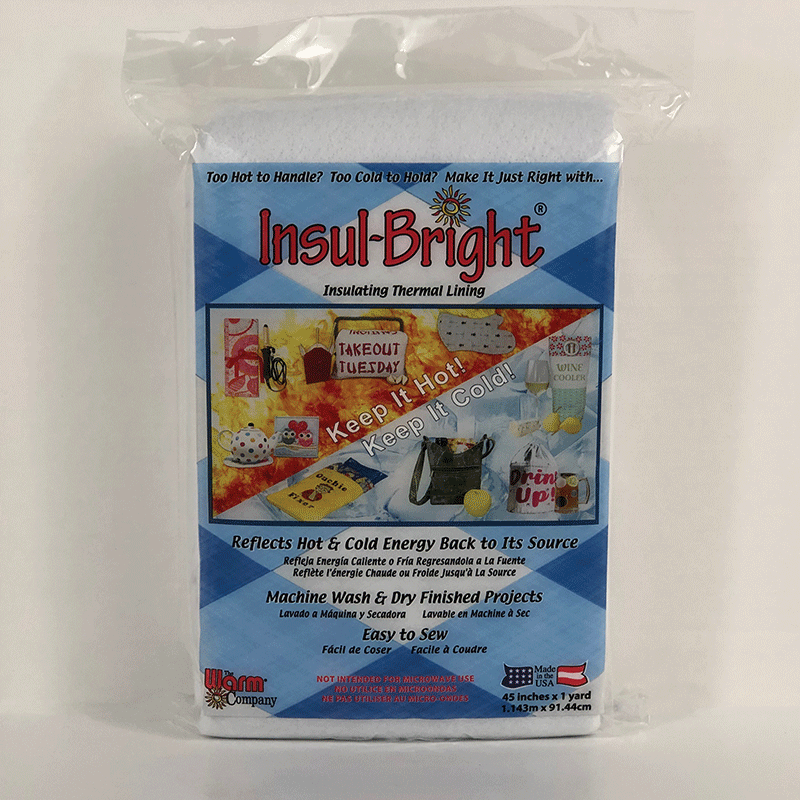
Shop Insul-Bright® Insulating Thermal Lining – 45" x 1 Yard at Linda's Electric Quilters.


