
Hey everyone. Today you will learn how to save a torn denim jacket with interfacing and sashiko stitching.
A tear in denim looks bad. Worse, it keeps growing. Every time you move, those loose threads pull a little more. Sewing straight over the rip rarely holds. The stitches have nothing solid to grip.
That is where interfacing saves the day. You fuse a patch behind the tear first. Now the denim has a backbone again. Then your sashiko stitches go through denim and backing together. They spread the stress out. The repair gets strong. And it looks really, really good doing it.
Sashiko is simple running stitch, worked in rows. It was made for mending. We're not reinventing the wheel here. Folks have patched work clothes this way for a very long time.
Materials
- Your torn denim jacket
- Lightweight to medium-weight fusible interfacing, cut at least 1 inch bigger than the tear on all sides
- A scrap of denim or cotton fabric, slightly larger than the interfacing, if the tear has a hole or missing fabric
- Sashiko thread, perle cotton, or other sturdy hand-sewing thread in a contrasting color
- A long hand-sewing needle, like a sashiko or milliner's needle
- Fabric scissors and small sharp snips
- Chalk or a fabric marker
- Pins or fabric clips
- An iron and a press cloth
- A thimble, if you like one — denim is thick, y'all
How to do it
- Turn the jacket inside out. Find the full size of the damage. Tears often run farther under the surface than they show. Gently pull the edges. Mark the weak area with chalk.
- Trim the fray, just a little. Snip long, stringy threads. Leave short fibers alone. Do not cut the hole bigger trying to make it neat. Neat comes later.
- Cut your interfacing patch. Make it at least 1 inch past the tear on every side. Round the corners with your scissors. Rounded corners peel less in the wash. Just like that, you solved a future problem.
- Fuse the patch behind the tear. Place the interfacing glue-side down on the inside of the jacket, centered over the damage. Cover it with a press cloth. Press with a hot, dry iron for 10 to 15 seconds per spot. Lift and press. Do not slide the iron. Sliding can shift the patch. Let it cool completely before you move the jacket.
- Add a fabric scrap if there is a hole. If denim is actually missing, slip a denim or cotton scrap behind the opening before fusing, or lay it over the interfacing on the outside. Trim it to a simple square or rectangle. Honest patches look best when they look intentional.
- Mark your stitch rows. Turn the jacket right side out. Use chalk to draw straight lines across the patch area, about 1/4 inch apart. Extend the lines past the tear in every direction. That overlap is what locks the patch down.
- Stitch your sashiko rows. Thread a long needle and knot the end. Work a simple running stitch along each line, about 4 to 5 stitches per inch. Load two or three stitches on the needle, then pull through. Slow down here. Denim plus interfacing is thick, and pushing too fast is how needles snap. Use a thimble to push if you need to.
- Cross the rows if you want more strength. For a jacket elbow, back, or pocket corner that takes real wear, stitch a second set of rows at right angles. You get a neat grid. You also get a repair that spreads the load twice as well.
- Tie off and press. On the inside, tie off your thread ends and trim them short. Give the whole patch a final press from the inside. Then step back and admire it. Super duper satisfying.
Tips and variations
Pick the right interfacing weight. Lightweight fusible works for a thin tear in a soft, broken-in jacket. Reach for medium-weight if the denim is stiff or the tear sits at a stress point. Too heavy, though, and the patch feels like cardboard. Test on a hem allowance first if you are unsure.
Make the stitching the star. White or cream thread on indigo denim is the classic look. Red thread makes a bold statement. Matching blue thread keeps the mend quiet. Completely up to you.
Try a visible patch on top. A plaid, floral, or contrasting denim scrap over the tear, stitched down the same way, turns a repair into a design choice. I have done this on a jacket I nearly tossed. Now it is the one everybody asks about.
Do not skip the permission beat. Your rows will not all be even. Mine never are. It does not have to be perfect. Slightly wobbly stitches are part of hand mending. You are your own worst critic here. Take your time. It is not a race.
Wash gently the first few times. Turn the jacket inside out and use a gentle cycle. That helps the fused bond and your stitching settle in together.
If I can do this, y'all can do it. Grab that jacket from the back of the closet. Give it a backing, give it some stitches, and wear it another ten years. Thanks for sewing along with me. We'll see you next time. Bye.
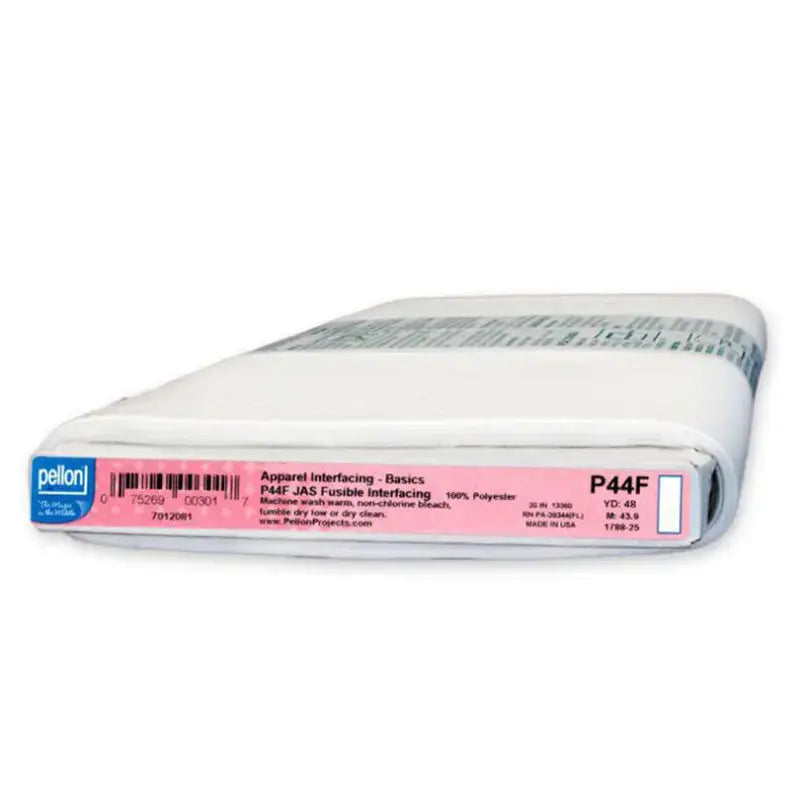
Shop Pellon Lightweight Nonwoven Fusible Interfacing 20" White By The Yard at Linda's Electric Quilters.


