
Hey everyone. Today you will learn how to make placemats that survive weekly washing and still come out flat.
Not wavy. Not curled at the corners. Flat.
Oh my goodness, I have seen this one a lot. Folks make a really really cute set. First wash looks fine. Second wash, the edges wave like a potato chip. By wash four, nobody wants to set a glass on them.
Most of the time, it is not your sewing. It is your batting choice. And your quilting distance. Get those two right, and these will wash and wash.
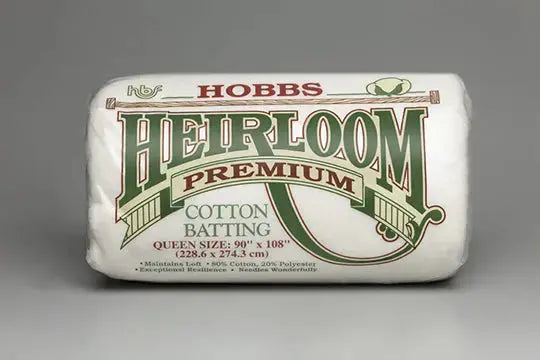
For weekly-use placemats, I reach for 80/20 cotton-poly batting — 80 percent cotton, 20 percent polyester. Here is why I use it. The cotton gives you a soft, flat, table-friendly feel. The poly gives you a little memory, so it holds its shape. Low-loft 80/20 stays thin and even, and it does not pucker the way a lofty batting can.
High-loft is fun for puff. It is not your friend here. Thick batting holds more water, shifts in the wash, and quilts up wavy if stitching is too far apart. Completely up to you, of course. But for placemats in the laundry rotation, this is my pick.
Materials
- Cotton quilting fabric for tops and backs — about one fat quarter per placemat
- 80/20 cotton-poly batting, low-loft, cut 1 inch larger than finished size on all sides
- 50-weight cotton thread for piecing and quilting
- Binding fabric, 2 1/2-inch strips
- Size 80/12 or 90/14 needle, walking foot, pins or clips, rotary cutter and ruler
- Optional: light spray baste
I make most of mine 12 by 18 inches finished. That fits a plate and a glass. Cut bigger if you like.
How to make them
- Prewash your fabric. Wash and dry top and backing fabrics the way you will wash the finished placemats. That takes surprise shrinkage out early. I do not prewash 80/20 batting for placemats — I control its small settle with dense quilting. Press everything flat. Here we go.
- Cut clean and square. Cut tops and backs to size, and batting 1 inch larger all around. It is way easier to trim a perfect rectangle after quilting than to fight a too-small batting edge.
- Layer and baste well. Backing wrong side up, batting in the middle, top right side up. Smooth from the center out. Pin every 3 to 4 inches, or use light spray baste. If it shifts now, it will wave later.
- Quilt dense enough. This is the big one, y'all. Quilt lines no more than 2 to 3 inches apart in every direction. Straight lines 1 1/2 inches apart are super duper easy and wash beautifully. A crosshatch is even stronger. Use a walking foot, about 8 to 10 stitches per inch, and slow down at the edges — slow down or the layers creep and you get a pucker at the corner. I learned that one the hard way. Dense quilting locks the batting so it cannot bunch or wave in the wash. Just like that.
- Square up after quilting. Let the sandwich rest flat, then trim to your exact finished size. Check all four corners with a square ruler. Binding will not fix a crooked mat.
- Bind it tight and flat. Attach 2 1/2-inch binding as on a quilt. Miter corners, keep tension even, and press flat before stitching down. I machine-stitch mine for weekly washing. It holds up really really well, and it is not a race. Take your time.
- Wash test before you make twelve. Make one. Wash and dry it like real life. Lay it on the table. If it lies flat, you are golden. Make the whole set exactly the same way.
Tips and variations
Quilting distance is your insurance. If you love a big, open design, save it for a wall hanging that rarely gets washed. On placemats, close quilting wins every time.
Skip the loft. If batting feels puffy when you squeeze it, save it for a throw. For placemats, ask: does this feel flat and even? That is your batting.
Try a variation. Make a reversible set — fall prints on one side, everyday stripes on the other. Or add a simple pieced strip down one side. Construction stays the same. Keep the batting low-loft and the quilting dense.
And listen. It does not have to be perfect. If one line wobbles a little, nobody at the dinner table is grading you. You are your own worst critic. If I can do this, y'all can do it. We're not reinventing the wheel here. We're just making something useful that lasts.
Thanks so much for sewing along with me, folks. We'll see you next time. Bye.
Shop Hobbs Heirloom 80/20 Batting Package at Linda's Electric Quilters.


