
Hey everyone. Today you'll learn why bubbles in your fusible are not bad luck — they're a clue about how your iron moved.
Here's the surprising part, y'all.
Ironing and pressing are not the same thing.
They look the same. Same iron. Same board.
But slide that iron across fusible interfacing, and you can create the very bubbles you were trying to avoid. Lift it, set it down, hold it, lift it again — and that same piece lies flat as can be.
Oh my goodness. I learned this one the bubbly way.
Why it happens
Fusible interfacing is fabric on one side. Glue on the other.
That glue is usually tiny dots. Heat melts them. Then they cool and grab your fabric.
Here's what sliding does.
When you push the iron sideways, the hot iron drags across those soft, half-melted dots. It shears them. It smears them sideways instead of letting them melt straight down into the fabric.
Sliding also pushes air ahead of the iron. That air gets trapped between the layers. The glue starts to set around it. Now you have a little pocket.
That pocket is your bubble.
Sometimes it shows up right away. Sometimes it shows up after the piece cools. Or after a wash. The bond was never even to begin with, so it lets go in spots.
We're not reinventing the wheel here. The glue needs still heat, not a road trip.
What to do about it
Here we go. Lift and press. That's the whole fix.
One: set up flat and leave it flat. Lay your fabric smooth on the board. Lay the fusible on top, glue side down against the fabric. Smooth it once with your hands. Then do not drag it around.
Two: cover it. Use a press cloth on top. It protects your fabric. It protects your iron, too, if a little glue peeks out at an edge.
Three: press in spots. Set the iron straight down on the first spot. Hold it there about 10 seconds. Count it out. Don't wiggle. Don't push.
Then lift the iron straight up. Move it to the next spot, overlapping the first spot just a little. Set it down. Hold about 10 seconds again.
Work across the whole piece that way. Spot by spot. Like a checkerboard.
Four: let it cool where it lies. This is the moment of risk, folks. A warm fused piece is still setting. Pick it up and wave it around, and you can break that fresh bond. Let each section cool flat before you move it.
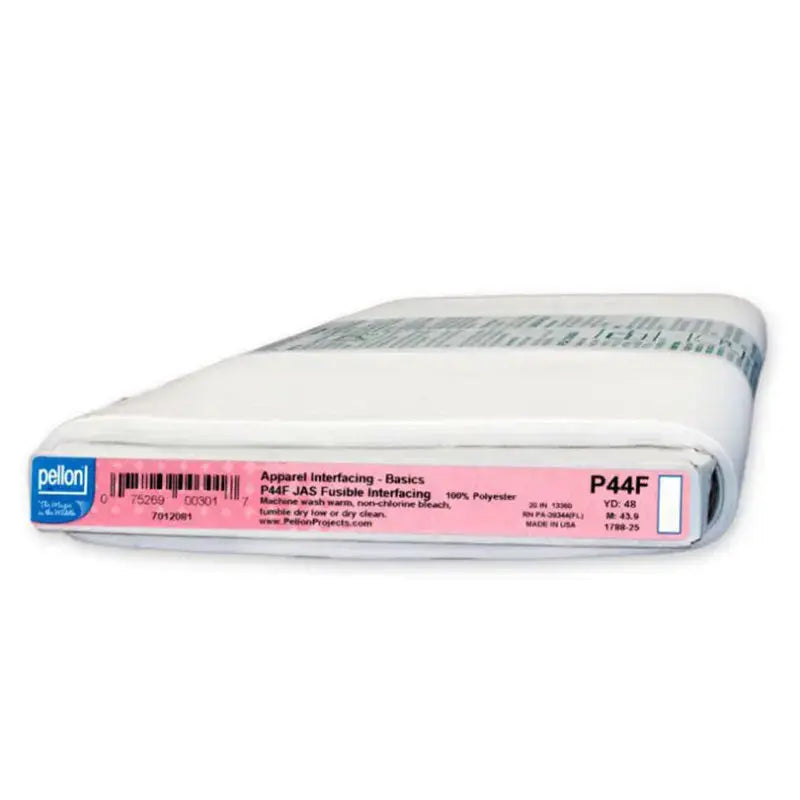
Here's what I use and why. For most quilting cottons, I reach for a lightweight fusible like this Pellon. I fuse a 4-inch test square first, with that same 10-seconds-per-spot press. If it stays smooth the next day, I trust it on the real piece.
Completely up to you on brand and weight. The pressing habit matters more than the label.
Can you rescue a bubbled fuse?
Sometimes, yes. I have done it, and you can too.
If you catch it early, re-heat that bubbled spot. Press straight down for about 10 seconds. Sometimes the glue melts again and grabs this time.
If the bubble won't settle, try peeling while it's warm. Warm the piece gently. Lift a corner while the glue is still soft. Peel slow.
Go easy here. Slow down, or you can stretch the fabric out of shape while it's warm. Ask me how I know.
Warm peeling can leave glue residue. And a re-fused bond is usually weaker than a first, clean bond. On a small lining piece, a rescue is fine. On a special block you cannot replace, a fresh piece is often cheaper in the long run.
When it matters — and project notes
It matters most where the surface has to stay smooth.
Bag panels. Garment facings and collars. T-shirt quilt blocks. Any big, flat piece where light will skim across it and show every little lift.
It matters less on a small, hidden patch inside a seam allowance. If a tiny bubble hides where nobody will ever see or feel it, you can relax a little.
Here's your permission beat.
It doesn't have to be perfect. You're your own worst critic, and a bubble is not a character flaw. It's just feedback from your iron. Take your time. It's not a race. If I can do this, y'all can do it.
Just like that. Lift. Press. Hold. Lift again.
Thanks so much for learning along with me. We'll see you next time. Bye.
Shop Pellon Lightweight Nonwoven Fusible Interfacing 20" White By The Yard at Linda's Electric Quilters.


