
Hey everyone. Today you're going to learn why the exact same fabric, fleece, and fusible can feel soft, medium, or downright stiff — and the only thing that changed was which layer got the fusible.
Here we go. Most folks think stiffness comes from the materials. Pick a stiffer interfacing, get a stiffer project. That's true, up to a point. But layer order matters just as much. Fuse the interfacing to your fashion fabric, and you get one hand. Fuse it to the fleece or batting layer instead, and you get a different one. Same stuff. Same iron. Different quilt sandwich.
Why the order changes the feel
Think about where the glue ends up. Fusible interfacing bonds two layers into one. Whatever it touches becomes a single, stiffer unit.
Fuse it to the fashion fabric, and that outer layer turns firm. It holds its shape. It resists wrinkles. But it also loses some of its soft drape, because the fabric itself is now doing the structural work.
Fuse it to the fleece or batting instead, and the picture flips. The batting layer gets the body. The fashion fabric stays free on top, so it keeps its natural softness and movement. The support is still there. It's just hiding underneath.
And there's a third option. Sandwich the fusible between layers, or fuse one layer and let the other float with pins or spray baste. Now each layer keeps more of its own character. Softest feel of the three. Least control, too.
What to do about it
Before you commit, make three little test sandwiches. Use scraps. Fuse one to the fabric. Fuse one to the fleece. Leave one unfused. Then bend them, drape them over your hand, and squeeze them.
Ten minutes. That's all it takes. And it saves you from fusing a whole tote bag the wrong way. Ask me how I know. Oh my goodness, learn from my mistakes, y'all.
A few practical notes while you test. Press from the wrong side, use a press cloth, and give each press a good 10 to 15 seconds so the glue fully melts. Half-fused layers will fool your test. Let everything cool flat before you judge the hand, because warm layers always feel softer than they really are.
Also check the edges. Fusing to the fashion fabric gives you crisper corners and cleaner turned edges. Fusing to the batting keeps edges softer and rounder. Neither one is wrong. Completely up to you. Just pick it on purpose.
When it matters most
Bags and totes? Fuse to the fashion fabric. You want that outer layer to stand up and hold a shape. Table runners and placemats usually like it that way too.
Quilts and throws? Fuse to the batting side, or skip fusing that outer fabric entirely. The top should drape and cuddle. Nobody wants a quilt that feels like a placemat.
Wall hangings sit right in the middle. A little body helps them hang flat. A little softness keeps them from looking like cardboard. Test both ways and trust your hand.
And remember the permission beat, folks. If you fused it one way and it isn't perfect, it's still a finished project. You're your own worst critic here. Take your time. It's not a race. If I can do this, y'all can do it.
Thanks for spending a little time with me. We'll see you next time. Bye.
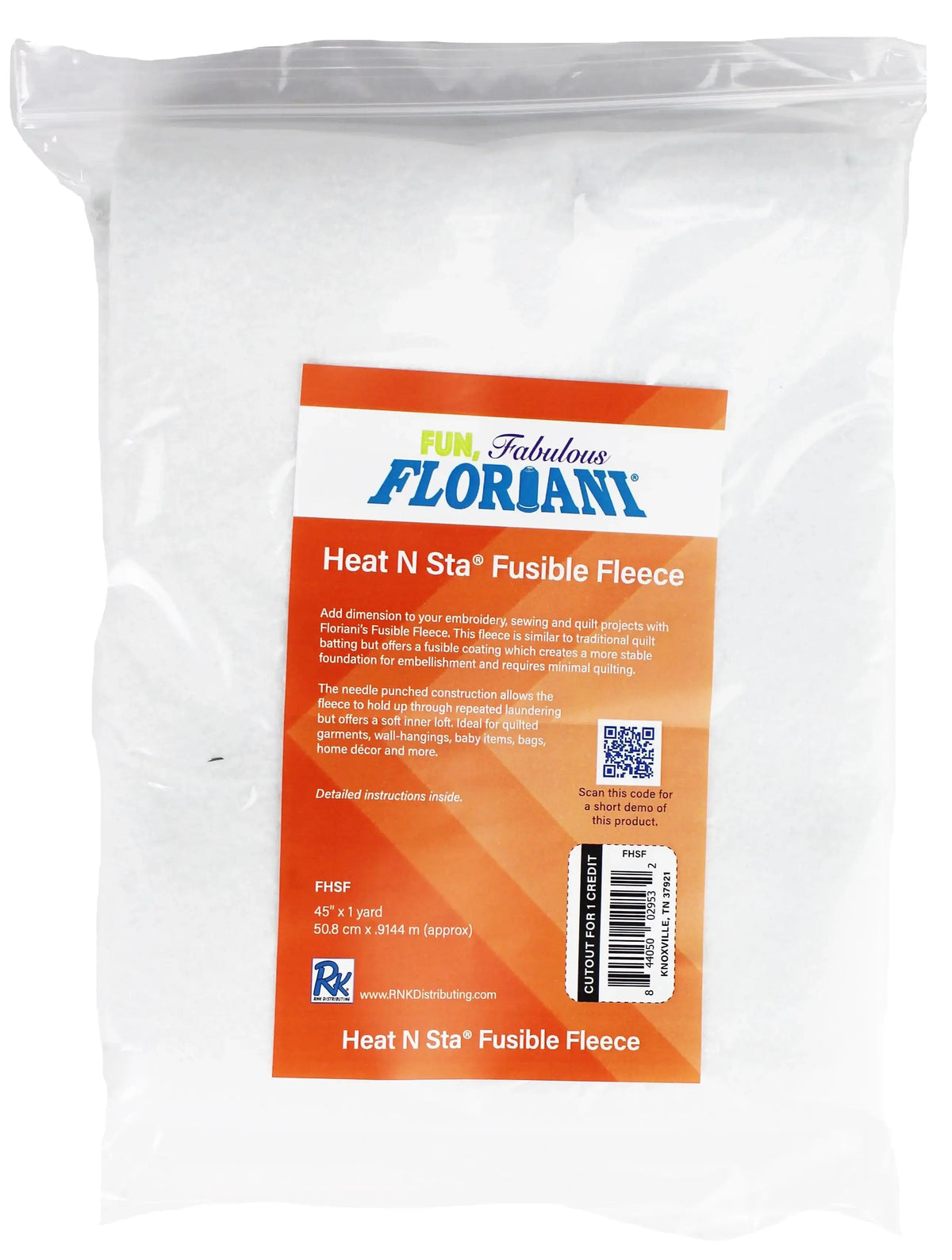
Shop Floriani Heat N Sta Fleece (Fusible) 45" x 1yd at Linda's Electric Quilters.


