
Hey everyone. Today you're going to learn how to test quilt embroidery on a batting scrap sandwich, before that design ever touches your good quilt.
Here is the short answer first. If your embroidery will stitch through a quilt sandwich, test it on scraps of the same top fabric, batting, and backing first. Match your project's stabilizer, hooping method, needle, threads, and settings. That sample can reveal puckering, tension problems, and lettering that is hard to read — while the fix is still cheap.
Here we go. Most folks test a design on plain fabric alone. It stitches out fine. Then they stitch through a real sandwich. Oh my goodness. It puckers. It pulls. The lettering sinks. And now the problem is on the good quilt, where picking it out is no fun at all.
One note on scope, from our Be the Best at Batting series. If you are embroidering a top before assembly, test that way instead. This one is for stitching through the assembled sandwich.
Why batting changes your test stitch-out
A real quilt is not one layer. It's three. Top fabric, batting, and backing, all moving together under the needle.
Batting adds thickness and drag, and gives stitches something soft to sink into. A dense fill that sits proud on flat cotton can burrow into loft. Lettering can get fuzzy once batting puffs up around it.
Tension changes, too. Your upper thread and bobbin thread are pulling through a thicker stack. If the bobbin thread is going to peek up on top, a matching test may show you first.
Puckering changes, too. Dense designs pull fabric in from all sides, and batting resists that pull differently than bare fabric. A matching scrap test is more representative. Not a guarantee — a much better preview.
How to build a representative test sandwich
Keep a test bin of clean trimming offcuts. Label each scrap on the edge. Fiber is good. Brand or product and loft, when you know them, is even better. For a real test, reach first for a scrap of the actual batting going into this quilt.
Build the sandwich like the real thing. Project-like top fabric, scrap batting, backing. Then set it up exactly like the project. Same stabilizer, if your project uses one, hooped the way your machine and design instructions call for. Same hooping method and needle. Same upper thread and same bobbin thread you plan for the quilt — they have to match your plan, not each other.
Size the sample for the job. A 10-inch square is a handy example, not a rule. If your design, hoop, or stabilizer needs more room, go bigger. A sample that is too small for the hoop tells you very little.
What to inspect before stitching the quilt
Start with a partial test if you like. Run the densest section. Run the lettering. Run one full repeat. That is a good initial check. Just know its limit. A partial test does not validate the whole design. When the full result matters, run a complete test at full size.
Look at the front. Then flip it over. Really look. Is bobbin thread showing on top? Are stitches sinking out of sight? Is fabric puckering around the design? Did anything skip? A matching test may reveal skipped stitches before you start the quilt, and that is a gift.
Check size, too. A test square helps reveal local draw-in and distortion. It does not promise a whole quilt's exact finished size. Write what you see on the sandwich — needle, threads, design size, changes — and file it. Your notes are now in stitches.
When it matters most
Dense fills matter most. So does small lettering. Names, dates, and quilt labels live or die on whether those little letters stay readable over batting.
For light, open designs — a simple redwork outline, a loose meander — a smaller scrap test is plenty. Completely up to you. Save the big, careful test for high density and precious quilts.
A test that fails is not wasted time. That scrap just saved you from finding the problem on the good quilt. Take your time. It's not a race.
Thanks for spending a little time with me. We'll see you next time. Bye.
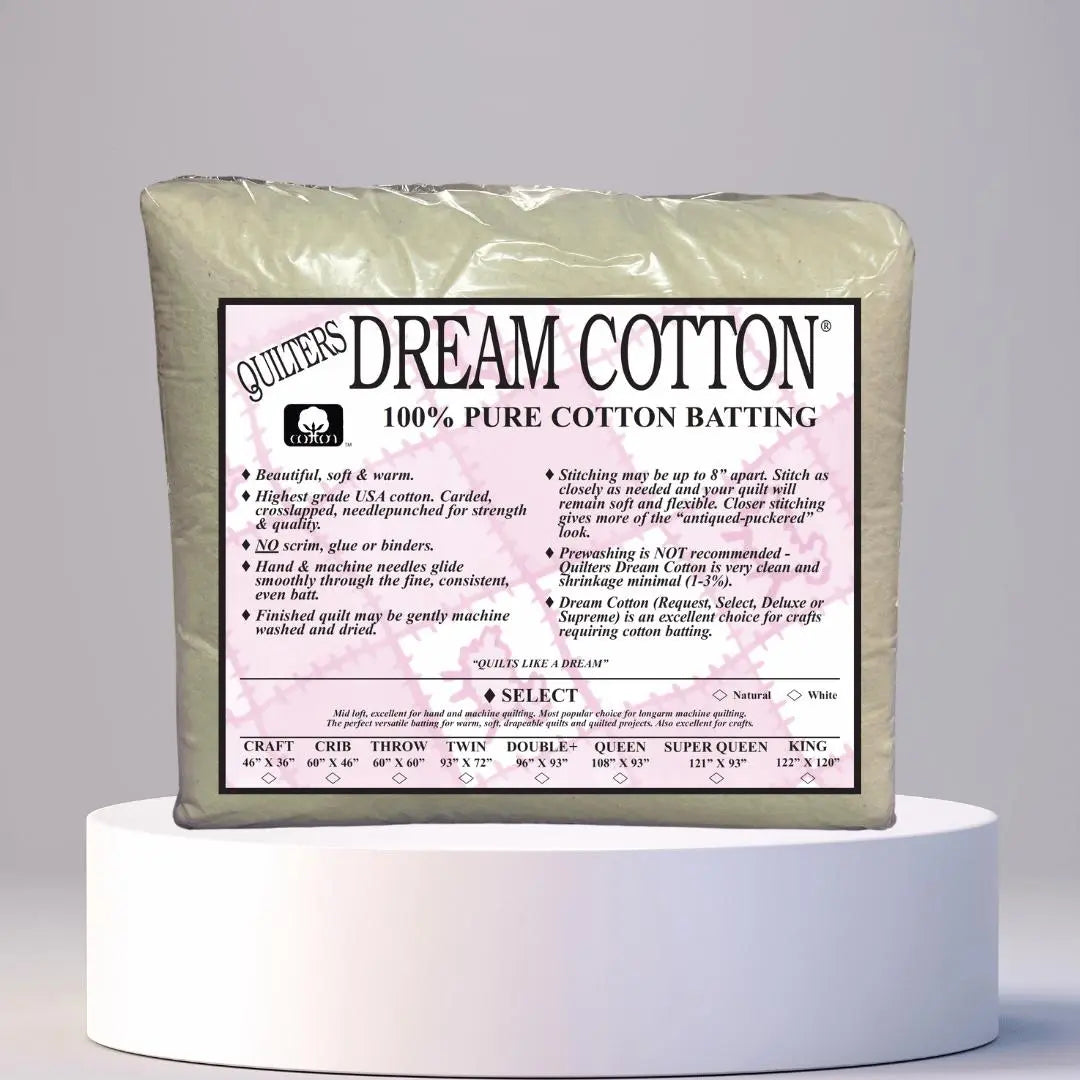
Shop Quilters Dream Select Natural Cotton Batting Package — Craft 46" × 36" at Linda's Electric Quilters.


