So, you’ve been dreaming of turning those piles of beautiful fabric into a little side hustle, or maybe even a full-time business? You're in the right place. The key to turning your sewing hobby into a profitable venture isn't about tackling the most complicated patterns; it's about starting smart and creating high-quality products.
The best easy sewing projects to sell are always the ones that combine low material costs, quick sewing times, and a high "I need that!" factor for customers. Think about things people always need: reusable tote bags, cute scrunchies, and adorable baby bibs. These are perfect for mastering your technique, building inventory fast, and ensuring your finished project is something customers will love and use for years.
Launching Your Handmade Business With Simple Sewing
Getting a handmade business off the ground starts with choosing projects that look amazing but are deceptively simple to create. This approach lets you build up your stock without feeling overwhelmed, perfect your process, and really dial in your profit margins from the get-go.
Why Start With Easy Projects?
Starting small is a powerful move. It builds your confidence and gives you a low-risk way to see what people actually want to buy. You can play around with different fabrics and styles, figure out what sells, and avoid sinking a ton of money into supplies for a product that doesn't take off.
And trust me, the timing is perfect. The market for handmade goods is absolutely booming. The global sewing supplies market—the very engine behind popular projects like tote bags and pillow covers—was valued at USD 5.24 billion in 2024 and is expected to jump to $7.81 billion by 2032. That’s a huge indicator of just how much people are loving handmade, quality items.
Just take a look at these trends in the handmade space.
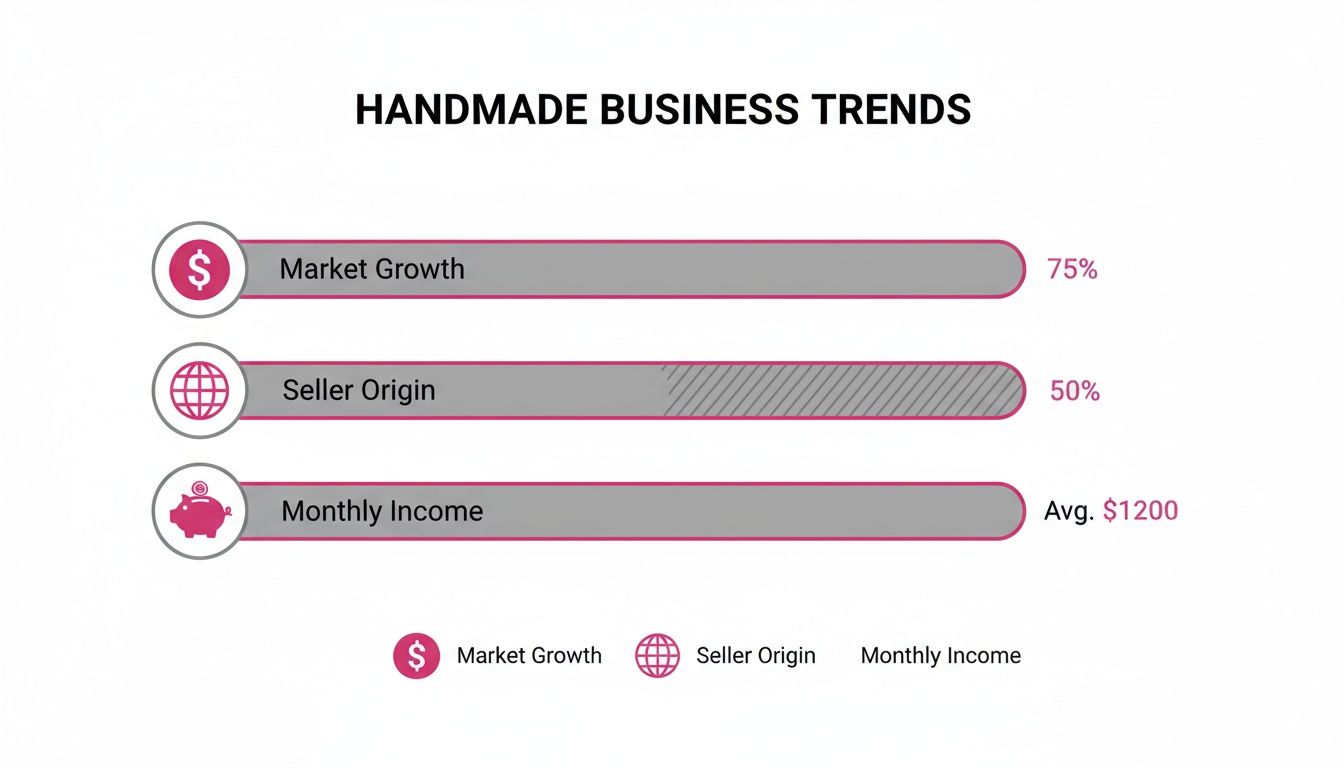
The numbers don't lie—there's a clear upward trend, making right now a fantastic time to jump in.
Setting Up For Success
Okay, let's talk strategy. First, you need a plan. Pinpoint the exact products you want to start with. Then, it's all about the materials. Sourcing high-quality fabrics and notions is a game-changer. Using beautiful, durable fabrics can elevate a simple tote from homemade to high-end, which means you can price it accordingly. This is a crucial step in building a brand known for quality.
The secret to selling handmade goods isn't just about what you make, but how you make it. Quality craftsmanship, beautiful materials, and thoughtful presentation are what turn a simple project into a must-have item.
Once you have your products, you need a place to sell them. Choosing the right online home for your shop is a huge step. This handy ecommerce platform comparison is a great resource for figuring out what's best for you. As you grow, you might even think about working with influencers to get the word out—influencer gifting platforms can be a great way to find the right people to partner with.
Top 5 Beginner Projects and Their Profit Potential
To help you get started, here's a quick look at five projects that are not only easy to make but also have fantastic profit potential. This table breaks down what you can expect in terms of costs, time, and what you could charge.
| Project Idea | Est. Material Cost (per item) | Est. Time to Make | Potential Selling Price |
|---|---|---|---|
| Reusable Tote Bag | $3.50 - $7.00 | 20-30 minutes | $20 - $35 |
| Fabric Scrunchies | $0.50 - $1.00 | 5-10 minutes | $5 - $8 |
| Zipper Pouch | $2.00 - $4.00 | 15-25 minutes | $15 - $25 |
| Baby Bibs | $2.50 - $5.00 | 15-20 minutes | $12 - $18 |
| Fabric Coasters (Set of 4) | $1.50 - $3.00 | 20-30 minutes | $15 - $22 |
As you can see, even with simple projects, the profit margins can be pretty impressive. The key is to find that sweet spot between what it costs you to make something and what customers are excited to pay for a unique, handmade item.
Five In-Demand Projects You Can Sew and Sell Today
Ready for some real-world inspiration? Let's dive into five specific projects that are consistent bestsellers, whether you're selling online or at a local craft market.
These projects hit the sweet spot: low material costs, quick to make, and always in demand. That’s the magic formula for maximizing your profit and building a successful business.
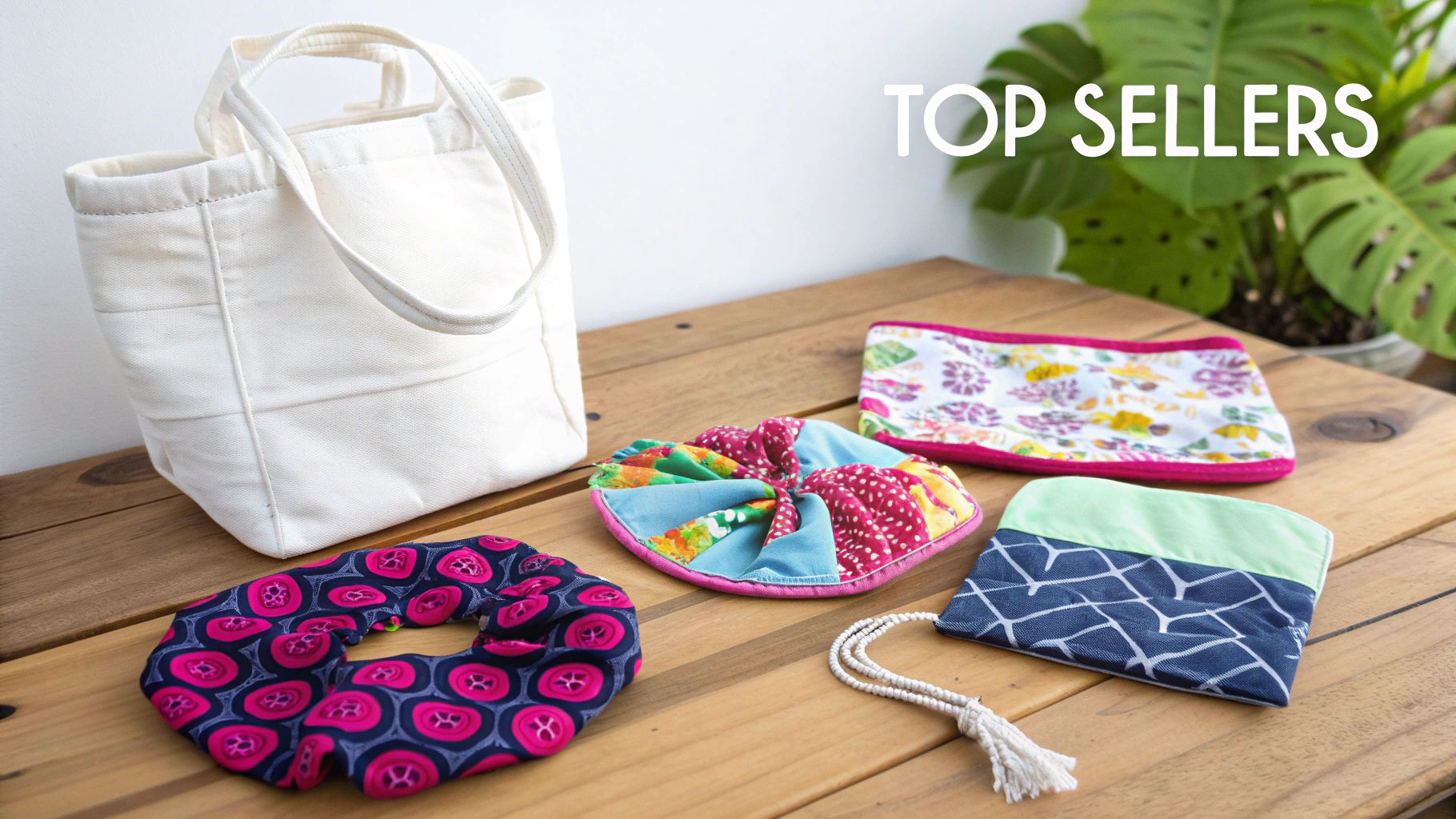
1. Reusable Tote Bags
Let’s be honest, who doesn’t need another tote bag? They are a perennial favorite and incredibly simple to construct—often just a few straight seams. This is a fantastic project for showcasing those bold, beautiful fabrics you've been eyeing.
For a really professional finish, try using a sturdy canvas for the outside and a fun, coordinating quilting cotton for the lining. A quality thread like Aurifil not only adds strength but also makes your topstitching look polished and clean. At Linda's, you can find the perfect high-quality canvas and coordinating cotton prints to make your tote bags stand out.
2. Stylish Scrunchies
Scrunchies are back in a huge way. They are easily one of the fastest and cheapest easy sewing projects to sell. They use so little fabric, which makes them perfect for raiding your scrap bin and turning leftovers into cash.
All you need is a small rectangle of fabric (quilting cotton is great, but velvet gives a luxe feel) and a piece of elastic. You’re essentially just sewing a simple tube, threading the elastic through, and closing it up. You can get incredibly efficient by batch-producing these; it’s not hard to whip up a dozen in an hour, making them a fantastic high-profit item for markets.
3. Quilted Coasters
Quilted coasters bring a touch of handmade charm to any home and sell like hotcakes in sets of four or six. This is another brilliant scrap-busting project that lets you dip your toes into basic quilting techniques without committing to a massive quilt.
Fueled by the rising popularity of DIY crafts and home-based businesses, the needlecraft patterns market—essential for guiding projects like quilted coasters—is set to grow from USD 34,026.8 million in 2025 to USD 63,872.9 million by 2035.
Here’s what you’ll need for a set:
- Fabric Scraps: Find some coordinating cotton prints for the tops.
- Backing Fabric: A solid color or simple print works great.
- Batting: I recommend a thin cotton batting like Hobbs Tuscany for a nice, low-profile finish.
- Thread: Matching or contrasting thread for the quilting lines.
The process is pretty straightforward. You'll make little "quilt sandwiches" with your fabric and batting, quilt them with simple straight lines, and then finish the edges with a binding. Linda's has an incredible selection of batting and threads perfect for making your quilted coasters look professional and last for years.
4. Versatile Zipper Pouches
From makeup bags to pencil cases, zipper pouches are just endlessly useful and always in demand. I know the zipper can seem intimidating at first, but trust me, it’s a skill that’s easy to pick up and opens up a whole new world of projects.
The key supplies are two pieces of outer fabric, two pieces of lining, a zipper, and maybe some interfacing to give it more structure. At Linda's, we carry a huge variety of zippers in every color imaginable to perfectly match your fabric. Offering pouches in a few different sizes is a smart strategy to appeal to more customers. If you want to add an extra special touch, a simple wristlet strap is a great addition.
5. Adorable Baby Bibs
The baby market is massive, and handmade bibs are a consistent top-seller. They're super quick to make and give you a chance to play with all sorts of fabric, from cute novelty prints to modern geometrics. For this project, soft and absorbent materials are key.
- Top Fabric: A high-quality, soft quilting cotton is a must.
- Backing Fabric: You can't go wrong with Chenille or flannel for absorbency.
- Closures: KAM snaps are my go-to for a secure, professional-looking closure.
You can find hundreds of free bib patterns online. The basic idea is to sew the front and back pieces with right sides together, leave a small opening for turning, and then topstitch all the way around to close the hole and give it a crisp, clean edge. Visit Linda's to find the softest flannel and cutest cotton prints to create baby bibs that parents will adore.
Gathering Your Essential Tools and Supplies
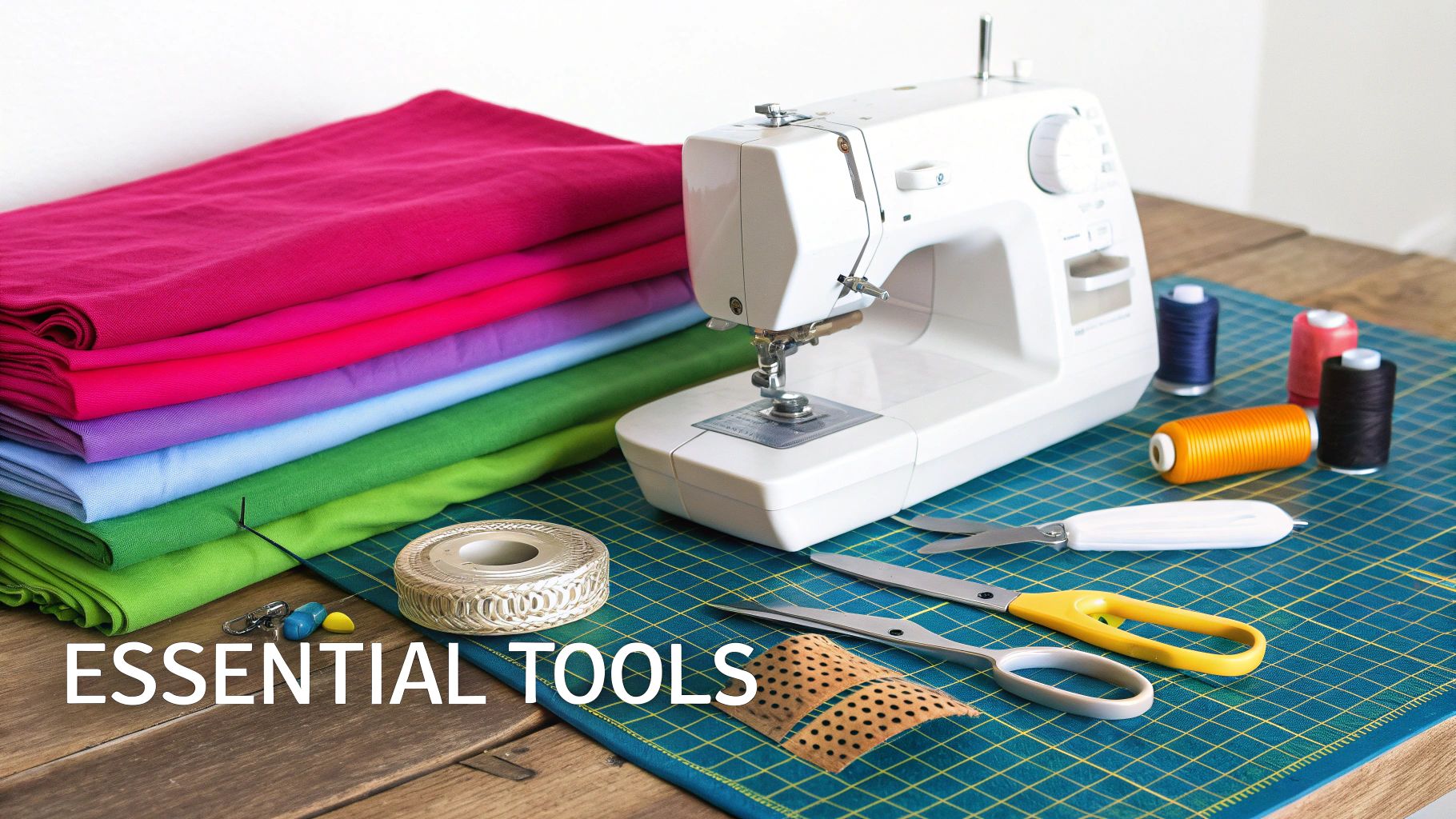
Before you sew a single stitch, let's talk about setting yourself up for success. Having the right tools on hand is what turns this from a hobby into a smooth, efficient business. You don't need a fancy, high-tech studio, but a few key items will give your projects that polished, professional finish customers are looking for.
Investing a little upfront in quality tools saves a ton of frustration later and makes a huge difference in the quality of your finished goods.
The Foundation: Your Sewing Machine
Your sewing machine is the heart of your operation. You don't need the most expensive model out there, but you absolutely need one that's reliable. Look for a sturdy machine that can handle basic stitches—like a straight stitch and a zigzag stitch—without giving you any trouble. A solid, entry-level machine is more than capable of producing beautiful, high-quality items.
It’s amazing to see how many people are turning their passion into a business. The global sewing machine market, which makes all these easy sewing projects to sell possible, was valued at USD 4.56 billion in 2024 and is expected to jump to USD 7.54 billion by 2032. It just goes to show that even a modest machine can be a powerful engine for profit. You can find out more about the sewing machine market trends if you're curious!
Essential Cutting Tools
Precision starts with the very first cut. If your pattern pieces are wonky, the whole project will be a struggle. Shabby cuts can make even the most careful sewing look amateurish, so let's get it right from the start.
- Fabric Scissors: Get yourself a high-quality pair of scissors and make them sacred—they are only for cutting fabric. Using them on paper will dull them in a heartbeat. A sharp, 8-inch pair of dressmaker's shears is a perfect place to start.
- Rotary Cutter and Self-Healing Mat: For straight cuts on projects like tote bags or coasters, nothing beats a rotary cutter. It's so much faster and more accurate than scissors. You'll need a self-healing mat to go with it to protect your table and keep the blade sharp.
Pro Tip: Think of quality cutting tools as an investment, not an expense. You're investing in your own efficiency and the professional look of your final products. Clean cuts are the first step to a beautiful result.
Notions and Finishing Touches
"Notions" is just the sewing world's term for all those small but vital supplies that bring a project to life. This is where you can really make your items stand out. High-quality thread prevents frustrating breaks and puckered seams, while using the right needle ensures smooth stitches that don't damage your fabric.
Here at Linda's Electric Quilters, we know these little details make all the difference. Stocking up on premium supplies is the secret to creating items that people are happy to pay more for. Stop by our shop or browse our collections online—we've got everything you need to give your projects that perfect, professional touch.
How to Price Your Handmade Goods for Profit
Figuring out what to charge for your beautiful handmade items can feel like the hardest part of the whole process. It's a tightrope walk, isn't it? Go too low, and you're not just cheating yourself out of money, you're telling the world your skills aren't valuable. But price too high, and you worry about scaring away those crucial first customers.
Let's cut through that anxiety. There's a simple, reliable way to figure out your pricing that takes the emotion out of it. This will help you turn those easy sewing projects to sell into a real, sustainable business that actually pays you.
The Go-To Pricing Formula for Makers
Forget pulling a number out of thin air. The most successful handmade sellers use a version of this tried-and-true formula. It removes the guesswork and makes sure all your bases are covered.
Here’s the basic structure that works for just about any handmade product:
(Material Costs + Labor Costs) x 2 = Wholesale Price
Wholesale Price x 2 = Retail Price
Why the "x 2"? That first markup gets you to the wholesale price, which covers your direct costs and time while also building in a buffer for overhead and business expenses. The second "x 2" gets you to the retail price—the price a customer would see in a shop—which ensures you have a healthy profit margin. It’s a standard model that just plain works.
Getting Real About Your Costs
For this formula to be accurate, you have to be brutally honest about every single cost. It’s the little things that sneak up and steal your profits. Let’s break it down.
- Material Costs: This isn't just the pretty fabric you bought. It’s everything. Think thread, batting, interfacing, zippers, buttons, even the wear and tear on your rotary cutter blades. Be a detective! If a spool of thread costs $5 and you know you can make about 10 zipper pouches with it, you need to add $0.50 to the cost of each pouch.
- Labor Costs: Your time is not free! You have a skill, and it deserves to be paid for. Decide on a fair hourly wage for yourself—don't dip below your local minimum wage, and frankly, you should be paying yourself more than that. If you set your rate at $15/hour and a project takes you 30 minutes to complete from start to finish, that's $7.50 in labor costs.
Don't fall into the trap of trying to be the cheapest. People who buy handmade aren't looking for a bargain-basement deal; they're paying for your unique skill and artistry. Price your work with confidence.
Let's see this in action with a real-world example.
Sample Pricing Worksheet for a Quilted Coaster Set
Here's a quick breakdown of how you might price a set of four simple quilted coasters. This shows how quickly all those "little things" can add up.
| Cost Component | Calculation/Notes | Estimated Cost |
|---|---|---|
| Fabric | 2 fat quarters @ $3 each | $6.00 |
| Batting | Small scrap piece, estimated value | $1.00 |
| Thread | Estimate for piecing and quilting | $0.50 |
| Labor | 1 hour of work @ $15/hour | $15.00 |
| Total Cost of Goods | (Materials + Labor) | $22.50 |
| Wholesale Price | Total Cost x 2 | $45.00 |
| Retail Price | Wholesale Price x 2 | $90.00 |
So, a fair retail price for this set of four handmade coasters would be $90.00. This covers your supplies, pays you for your time, and gives you a real profit to reinvest in your business.
Don't Forget the "Extras"
Your direct costs are just the beginning. The markup from wholesale to retail is designed to cover all those other business expenses that are easy to forget.
Things like packaging—your tags, twine, thank-you cards, and boxes—all have a cost. If you sell online, platforms like Etsy or Shopify take a cut of every sale. And of course, there’s shipping. Learning how to accurately calculate shipping charges is essential so you don't end up losing money on postage.
Feeling ready to get started? To stock up on all the beautiful fabrics and quality notions you'll need to create your own profitable projects, swing by Linda's Electric Quilters. We've got everything you need to start sewing and selling.
Marketing and Selling Your Handmade Creations
You've done the fun part—your sewing room is filled with beautiful, finished creations. Now comes the exciting next step: getting them into the hands of happy customers and making some money!
Selling your easy sewing projects to sell is all about great photos, telling your story, and finding the right place for your items to shine. You don't need a massive marketing budget to get started, either. Some of the best tools are probably already in your pocket.

Capturing Scroll-Stopping Product Photos
Forget the fancy camera—your smartphone is powerful enough to take incredible product photos that will make people stop scrolling. The real secret weapon? Natural light. It’s the best way to show off your fabric colors accurately and create soft, appealing shadows.
Just find a spot near a window. Grab a simple, clean background like a white poster board, a cool piece of fabric, or even a rustic wooden plank. Make sure to snap photos from a few different angles so your buyers can see every perfect stitch.
Pro Tip: Stage your items! Don't just show a zipper pouch; show it filled with makeup brushes or pens. Place your quilted coasters on a coffee table next to a steaming mug. This helps customers imagine using your product in their own homes, which is a huge step toward making a sale.
Choosing Your Sales Channels
Where you decide to sell your handmade goods will really shape your business. There's no single "best" place, and most successful sellers use a mix of platforms to reach the widest audience.
Here are the most popular options:
- Online Marketplaces: Think of sites like Etsy. They're tailor-made for handmade sellers and have a massive, built-in audience of people who are specifically looking for unique items just like yours.
- Social Media: Instagram and Facebook are your best friends for building a community. You can share behind-the-scenes peeks, tell the story of your craft, and connect directly with your followers through gorgeous photos and engaging posts.
- Local Craft Fairs: There’s nothing quite like selling in person. At a local market, customers can feel the quality of your work, see the vibrant colors up close, and connect with the person who made it—you!
Building Your Brand Through Packaging
The little details can make a huge difference. Thoughtful packaging turns a simple purchase into a memorable experience, and it's what keeps customers coming back for more.
You don't have to spend a lot to make your packages feel special. Consider these simple touches:
- A branded tag tied on with a bit of rustic twine.
- A short, handwritten thank-you note.
- Wrapping your creations in colorful tissue paper before boxing them up.
These small efforts really elevate your brand and show customers how much you care.
If you're looking to really expand your reach, you might explore how a professional influencer outreach service can connect your handmade business with a larger audience. And of course, to get all the beautiful fabrics and quality supplies you need to create these items, stop by Linda's Electric Quilters and check out our collections.
Common Questions About Selling Sewing Projects
Diving into the world of selling your handmade creations is thrilling, but it can also feel like a whole new ballgame. You've nailed the sewing part, but now a bunch of business questions are probably popping into your head. Don't sweat it—every single successful maker started out asking these exact same things.
Let's walk through some of the most common queries we get from sewers who are ready to turn their passion into a paycheck.
What Are the Most Profitable Projects?
Hands down, the easy sewing projects to sell that bring in the most profit hit a sweet spot: low material costs, quick sewing time, and major "gift-ability." Think about things like reusable tote bags, scrunchies, baby bibs, zipper pouches, and quilted coasters. There's a reason these consistently fly off the shelves.
These items are always in demand, and you can often make them from affordable fabric cuts like fat quarters. That's the secret sauce to boosting your profit margin on every single thing you sell.
How Should I Choose the Right Fabric?
For most of the beginner-friendly items we've covered, like totes and pouches, 100% quilting cotton is your absolute best friend. It’s sturdy, a dream to sew with, and comes in a dizzying array of gorgeous designs that will stop buyers in their tracks.
Now, if you're making baby items or something like cloth napkins, you'll want to pivot to a softer, more absorbent fabric like flannel. The key is to always put yourself in the customer's shoes: who is using this, and what do they need it to do?
A classic rookie mistake is grabbing the cheapest fabric on the shelf to cut costs. Trust me on this one: high-quality materials make a product that feels better, holds up longer, and absolutely justifies a higher price tag. It's an investment in your brand's reputation right from the get-go.
Do I Need an Expensive Sewing Machine?
Nope! You absolutely do not. A dependable home sewing machine that can handle a solid straight stitch and a basic zigzag is all you need to create beautiful, professional-quality products. It’s not about the price tag of the machine; it’s about knowing your machine inside and out and keeping it well-maintained.
Down the road, as your business picks up and you're sewing in higher volumes, you might think about an upgrade. But to get started? Your trusty basic machine has got you covered.
How Much Inventory Should I Start With?
It’s so tempting to go on a sewing spree and make one of everything, but a smarter strategy is to begin with a small, carefully chosen collection. This keeps you from sinking too much time and money into products before you know what people actually want to buy.
A fantastic starting point is to offer 3-5 different types of products. For each of those, try to have 5-10 items on hand in a few different fabric options. This gives you enough variety to test the waters and see what really resonates with your customers. As you start to see success, you could even explore things like a gifted collaboration application to get your products in front of a much bigger audience.
Feeling that creative spark and ready to stock up your sewing room? At Linda's Electric Quilters, we have over 30,000 high-quality fabrics, notions, and threads to bring your brilliant ideas to life. Shop our collections today and find the perfect materials for your next bestseller.