At its heart, the difference is beautifully simple: sewing machines construct, while embroidery machines decorate.
Think of it this way: the sewing machine is the architect, building a quilt or a garment from scratch. The embroidery machine is the artist, adding the beautiful, custom details that make it one-of-a-kind.
Choosing Your Creative Partner
Trying to decide between a sewing machine and an embroidery machine can feel like picking between two totally different artistic mediums. One is all about structure—joining fabrics with strong, functional seams. The other is pure flair, turning a plain piece of fabric into a personalized masterpiece.
For anyone who loves to create, especially our fellow quilters, getting this distinction right is the first step in finding the perfect tool for your sewing room.
This guide will walk you through everything you need to know about the embroidery machine vs sewing machine debate. We'll get into how they work, compare their key features, and show you the amazing projects each one opens up. Our goal is to help you confidently pick the right machine to bring your ideas to life, especially with the incredible fabrics and threads we have waiting for you at Linda's Electric Quilters.
Core Purpose At A Glance
Before we dive into the nitty-gritty details, let’s look at what each machine was truly made for. A sewing machine is your workhorse for construction. An embroidery machine is your specialist for embellishment.
This handy infographic breaks it down visually, showing their distinct roles in the crafting world.
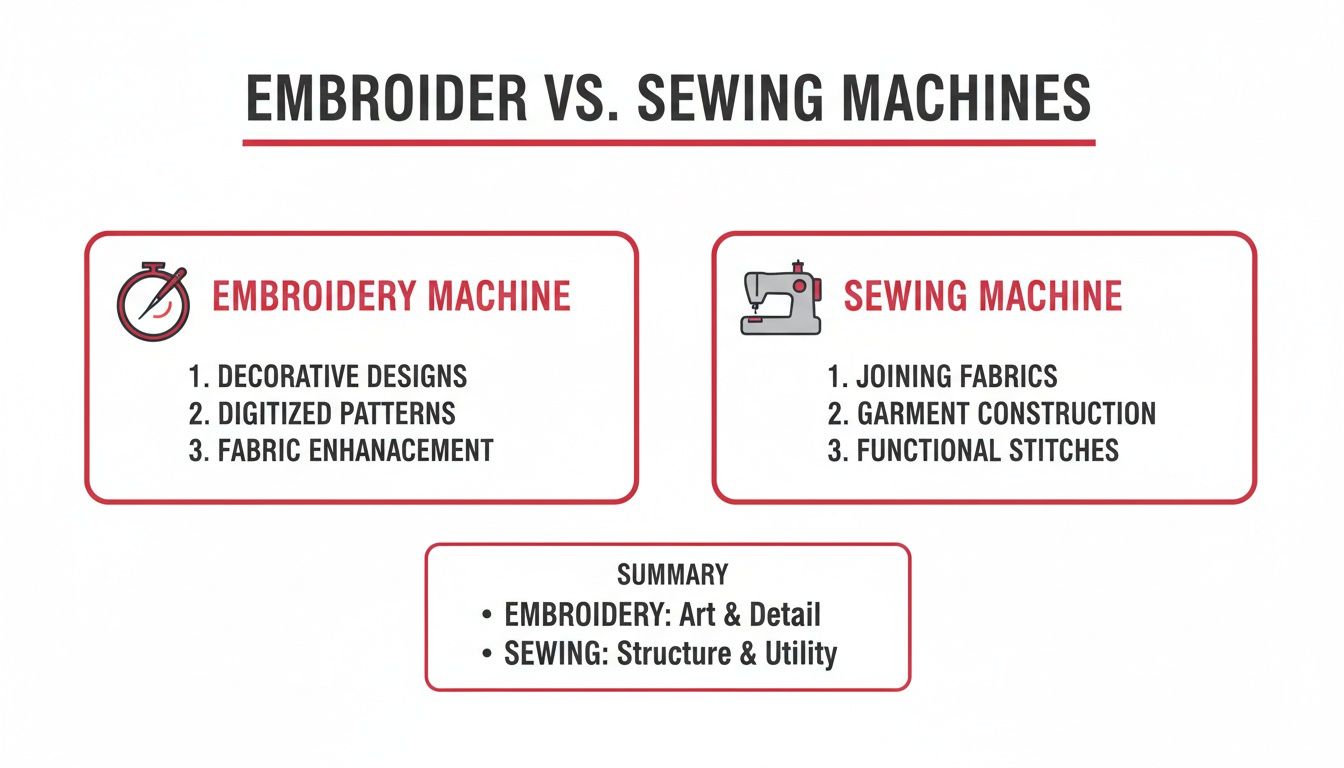
As you can see, while both use a needle and thread, they do very different jobs. But here's the best part—they also work together perfectly.
Let's imagine you're making a quilt. You'd grab your sewing machine to piece the blocks, add the sashing, and bind the edges. Then, you could switch to an embroidery machine to add a personalized label with the date, stitch delicate floral motifs into the corners, or monogram a set of initials.
Key Takeaway: It’s not about which machine is "better." It's about what you want to do. Do you want to build things from the ground up, or do you want to add that final, personal touch?
To make it even clearer, here’s a quick comparison of their main jobs.
At a Glance: Sewing vs. Embroidery Machine
This table offers a snapshot of the primary role each machine plays in your creative projects.
| Aspect | Sewing Machine | Embroidery Machine |
|---|---|---|
| Core Purpose | Construction and Assembly | Decoration and Embellishment |
| Primary Function | Joining fabric with seams, hemming, creating buttonholes. | Stitching pre-programmed digital designs onto fabric. |
| Typical Projects | Garments, quilts, curtains, bags, home décor items. | Monogrammed towels, custom logos, decorative quilt blocks. |
Seeing them side-by-side really highlights how they complement each other—one handles the heavy lifting of assembly, and the other adds the artistic finish.
Understanding the Core Mechanics
To really get to the bottom of the embroidery machine vs sewing machine debate, you have to look under the hood. It’s what’s going on inside that explains why one machine is perfect for building a sturdy quilt while the other is busy painting it with thread. Their jobs aren’t just different—they're based on completely opposite ways of handling fabric.
A sewing machine is all about construction. Its main purpose is to move fabric forward in a straight line to create a seam. This is all thanks to a genius little mechanism called the feed dog system. Those are the small, metal teeth under the needle that grab your fabric from below and pull it through as you guide it.
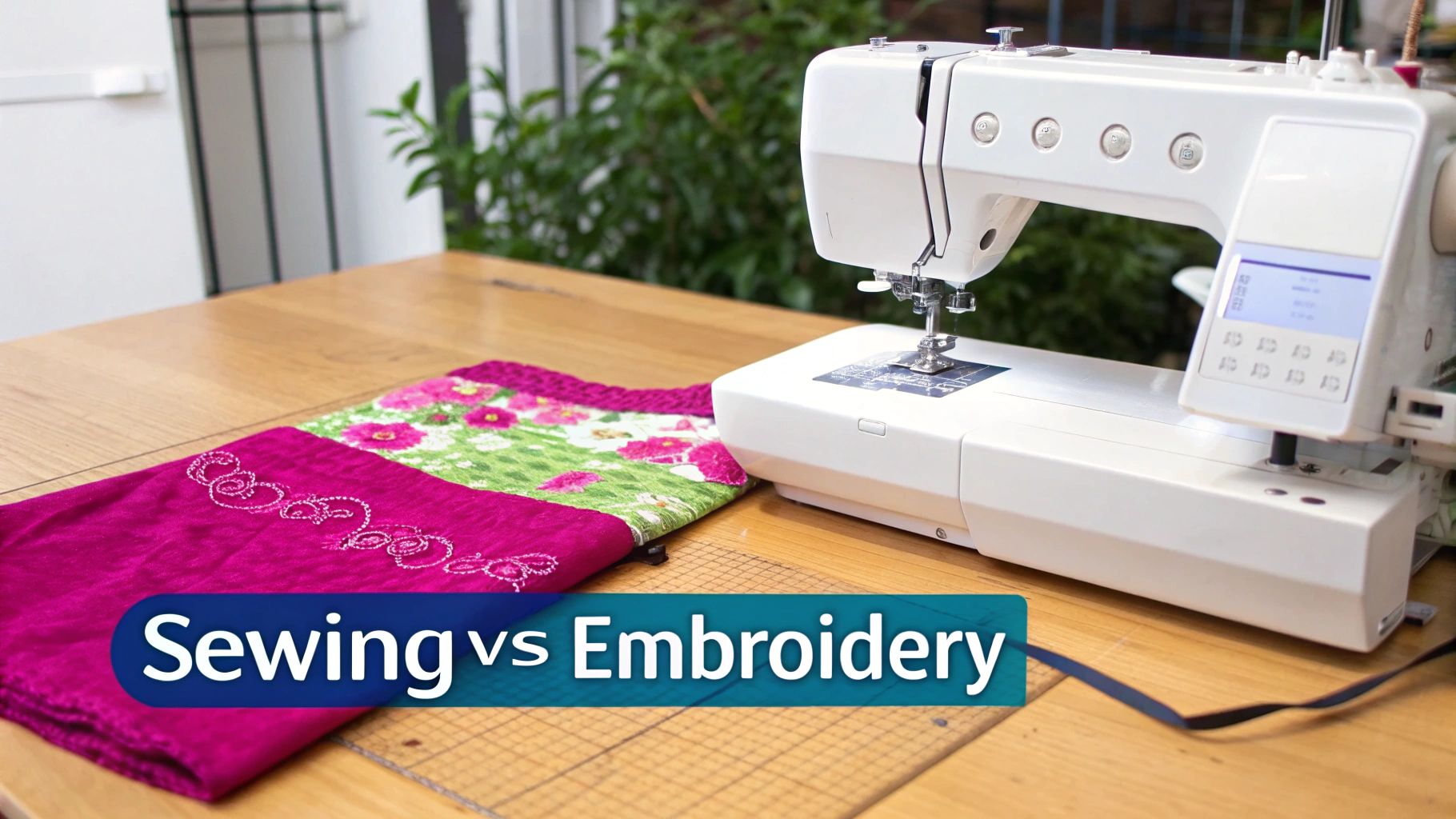
This manual, forward-moving process is why a sewing machine is the go-to for:
- Assembling Garments: Creating strong, straight seams for clothing.
- Piecing Quilts: Joining hundreds of small fabric pieces together with amazing precision.
- Topstitching: Adding those durable and decorative stitches along edges.
You are always in complete control, guiding the fabric to make curves, turn corners, or sew long, straight lines.
The Automation of Embroidery
An embroidery machine works on an entirely different principle. Instead of you moving the fabric, the machine moves the fabric for you. The feed dogs are either dropped or don't exist at all. Instead, your fabric is held tight in a hoop, and that hoop is moved around by a computer-controlled embroidery arm.
This arm shifts the hoop side-to-side and back-and-forth under the needle with incredible accuracy. This is what lets the machine create complex, multi-directional designs based on digital files, like a .PES or .JEF file. That automated, robotic movement is what makes all that intricate decoration possible.
Embroidery isn't about guiding fabric; it's about programming a design. The machine follows a set of digital instructions to "paint" with thread, moving the hooped fabric in every direction while the needle just goes up and down.
Needles, Threads, and Tension: A Tale of Two Systems
These mechanical differences go all the way down to the very tools that form the stitch. The needles, thread, and tension systems in each machine are specialized for their very different jobs.
A sewing machine uses needles designed to pierce fabric layers cleanly, creating a strong, functional lockstitch. The thread path and tension are set up for standard sewing threads that value durability over looks. You can pop in a heavy-duty thread for denim or a fine cotton for quilting, and the machine adjusts for the job.
Embroidery, on the other hand, is all about looks and speed.
- Needles: Embroidery needles have a larger eye and a special groove (called a scarf) on the back to keep the delicate embroidery thread from shredding at high speeds.
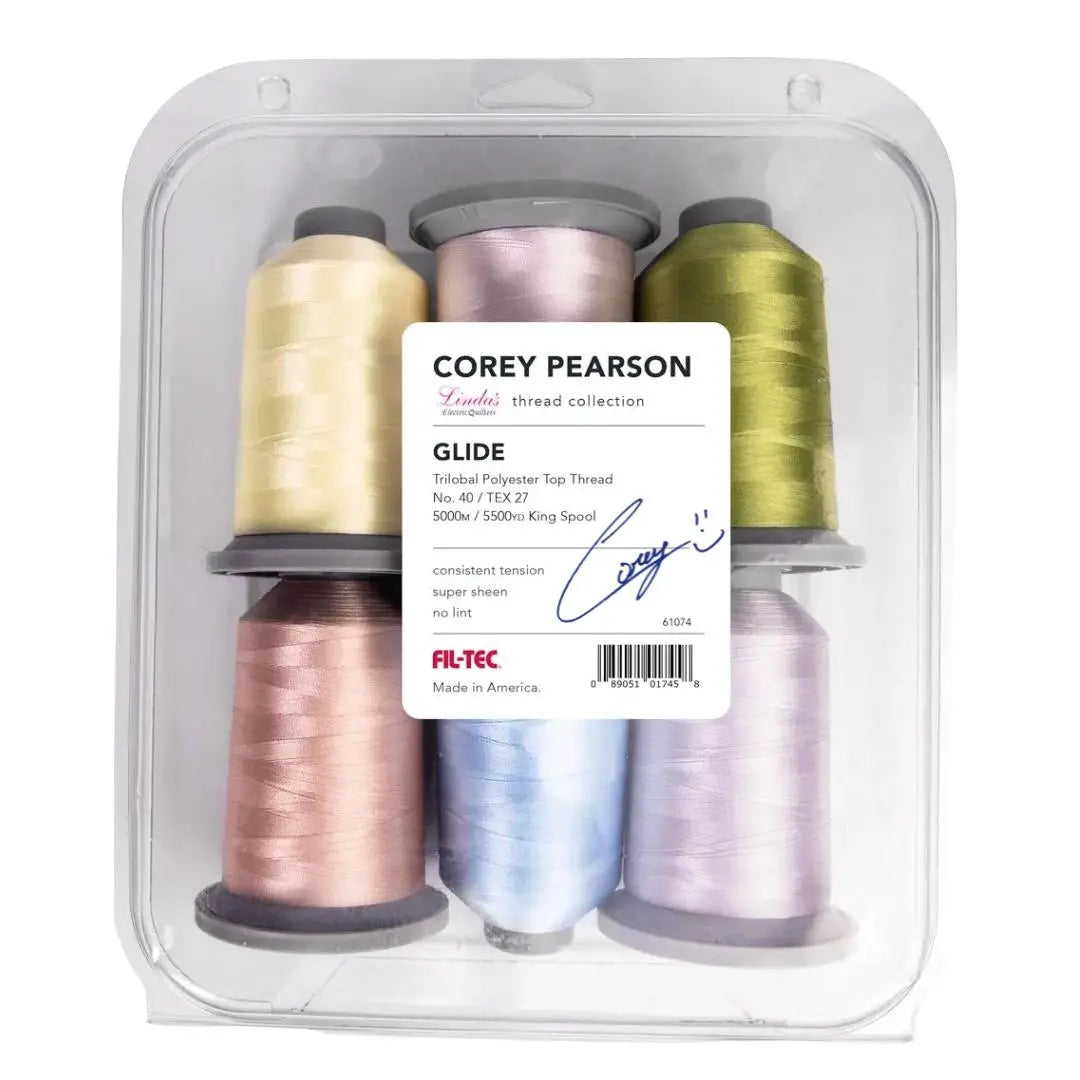
- Threads: Embroidery thread is usually made from rayon or polyester, loved for its beautiful sheen and vibrant colors. If you try to use regular sewing thread, you’ll likely face constant breakage and a dull-looking design.
- Tension: The tension is finely tuned to create smooth satin stitches that sit on top of the fabric without pulling the bobbin thread through to the front.
To support this whole process, embroidery needs a stabilizer. This special backing material gets hooped with the fabric to stop it from puckering and stretching out of shape from the thousands of stitches in a dense design. It provides the foundation you need for a professional finish—something a sewing machine's construction-focused mechanics just don't require.
Ready to see these beautiful threads in action? Explore the stunning collection of high-quality embroidery threads at Linda's Electric Quilters to find the perfect colors for your next decorative project.
A Look Under the Hood: Features and Functions
When you’re weighing an embroidery machine vs a sewing machine, it’s easy to get lost in the details. The real difference isn't just what they do, but how they do it. Each machine has a unique toolkit designed for a very specific creative purpose.
Think of a sewing machine as the ultimate tool for construction. It’s all about giving you direct, hands-on control to join pieces of fabric together. You’re the one guiding every seam, making every decision.
This hands-on control shines through in the variety of stitches it offers. You’ve got your basic straight stitch for piecing quilts, a zigzag for finishing raw edges, buttonhole stitches for garments, and a whole menu of decorative stitches for adding simple, functional flair.
Mastering Construction with Sewing Machine Features
Where a sewing machine really comes to life is with its collection of interchangeable presser feet. Your standard foot gets the basic jobs done, but swapping it out for a specialty foot is what unlocks its true potential for quilters and garment makers.
- Walking Foot: A quilter's non-negotiable. This foot grabs and feeds multiple layers of fabric and batting evenly, which is the secret to avoiding those frustrating puckers.
- Quarter-Inch Foot: Another must-have for quilters. It gives you a perfect guide for sewing those precise ¼” seams that make your quilt blocks line up perfectly.
- Free-Motion Quilting Foot: This one is pure magic. It hovers just above the fabric, letting you "draw" with thread to create your own quilting designs.
- Zipper Foot: Makes putting zippers in bags, pillows, or clothes a clean and simple process.
Modern sewing machines also give you features like speed control, so you can slow way down for tricky curves or floor it on long, straight seams. It’s this level of manual precision that makes them the champs of construction. It's no wonder the electronic sewing machine segment holds a massive 44.71% share of the global market—their features are powerful and user-friendly. You can dig deeper into these sewing machine industry findings from Maximize Market Research.
The Automated Artistry of Embroidery Machines
An embroidery machine, on the other hand, is all about automated precision. The features here aren't about hands-on control; they’re about flawlessly executing complex digital designs. You program it, and it does the work.
Here are the key features you’ll be looking at:
- Hoop Sizes: The hoop is your canvas. It determines the maximum size of any single embroidery design you can stitch out. Bigger hoops mean bigger, more dramatic designs without having to re-hoop your project.
- Built-in Designs: Most machines come loaded with a library of fonts, monograms, and cute patterns so you can start stitching right out of the box.
- Connectivity: This is huge. Look for USB ports or Wi-Fi so you can import the thousands of amazing designs you can buy or download online.
- On-Screen Editing: A life-saver! This lets you resize, rotate, mirror, or even combine designs right on the machine’s screen before you stitch a single thread.
The simplest way to think about it is this: a sewing machine gives you hands-on control to build something, while an embroidery machine offers automated precision to decorate it. One is about your skill in construction; the other is about your creativity in digital design.
The Best of Both Worlds: A Combo Machine
What if you want to do both? For the crafter who wants to construct and decorate without buying two big machines, the hybrid sewing and embroidery combo machine is a fantastic solution.
These machines are full-featured sewing machines that come with a detachable embroidery unit and hoops. When you’re done piecing a quilt top, you can attach the embroidery arm, pop on a hoop, and stitch a custom label or a beautiful design right onto your project.
This versatility makes them a smart choice if you’re short on space or a quilter who’s curious about personalization but not ready to commit to a dedicated embroidery machine. If you're ready to add that extra artistic touch to your projects, a combo machine from the amazing collection at Linda's might just be your perfect creative partner.
Exploring Your Project Possibilities
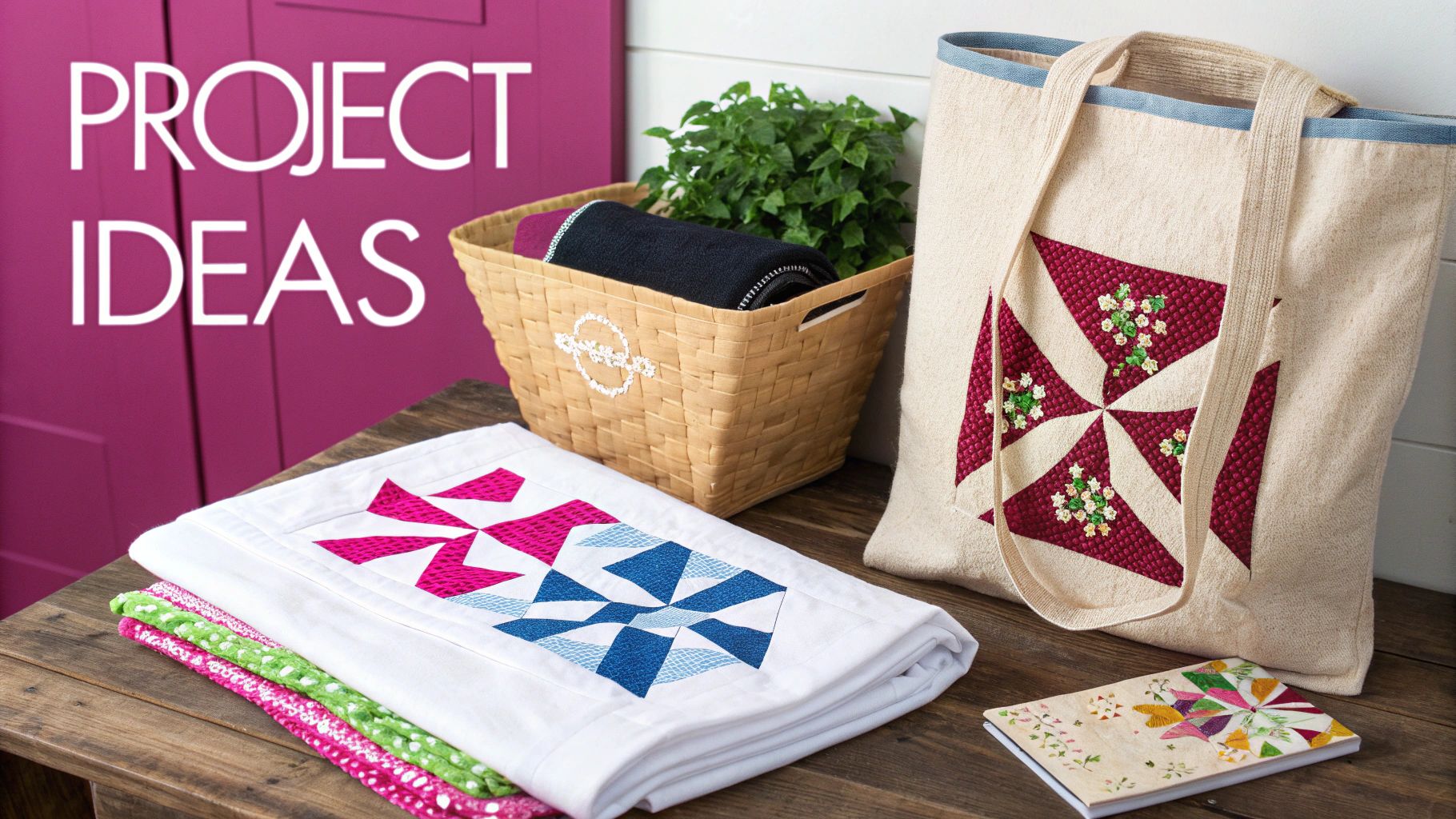
Once you really get the difference between an embroidery machine vs a sewing machine, that’s when the fun starts. The most exciting part is picturing all the incredible projects you can finally bring to life. One machine is your go-to for solid construction, while the other is all about adding beautiful, personalized art.
Let's look at some real project ideas that play to the strengths of each machine. This way, you’ll see not just what they can do, but what they were really made for.
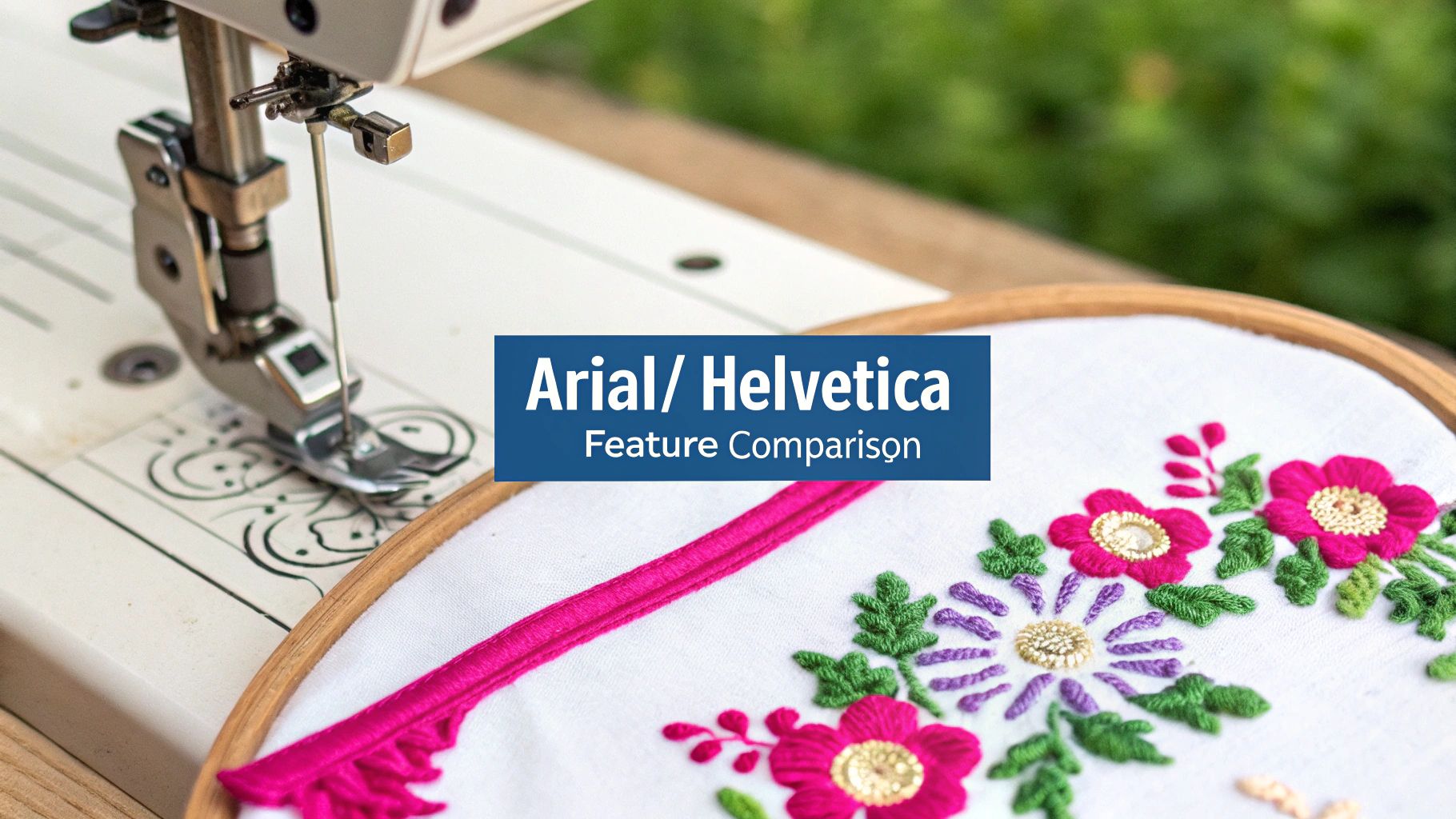
Building Your World with a Sewing Machine
Your sewing machine is your partner in construction. It's for projects that need structure, assembly, and strength. It's the tool you grab to turn flat fabric pieces into something functional and three-dimensional.
Here are a few classic projects that belong to the sewing machine:
- Quilt Piecing: This is the heart and soul of quilting. A sewing machine lets you stitch together hundreds of fabric pieces with the precision needed for those stunning, intricate quilt tops. Imagine piecing a perfect Lone Star quilt—those sharp points are all thanks to a reliable sewing machine.
- Garment Construction: From a breezy summer dress to a fitted jacket, a sewing machine is absolutely essential. It handles everything from setting in sleeves and sewing darts to hemming pants, creating strong, durable seams that can handle daily wear.
- Home Décor: Need custom throw pillows, curtains, or a fresh set of placemats? A sewing machine makes it a snap. These projects depend on straight, sturdy seams to create items that look great and hold up around the house.
For any of these projects, a great foundation is key. You can find everything you need to finish your project at Linda's Electric Quilters, from gorgeous quilting cottons to durable home décor fabrics, ensuring your creations are as beautiful as they are tough.
Adding Personality with an Embroidery Machine
An embroidery machine is all about personalization and flair. It shines when you want to add detailed, decorative designs to existing items, turning something plain into a one-of-a-kind treasure. Think of it as your embellishment expert.
The possibilities here are truly endless:
- Monogrammed Linens: Take simple bath towels, hand towels, or pillowcases and elevate them with an elegant monogram. It's a classic touch that adds a bit of luxury and makes for a fantastic personalized gift.
- Custom Apparel: Grab a plain t-shirt, denim jacket, or baby onesie and make it your own. You can stitch on a favorite quote, a delicate floral pattern, or a child’s name to create a totally unique piece of clothing.
- Decorative Quilt Blocks: Instead of traditional appliqué, you could embroider complex designs directly onto your quilt blocks. This is perfect for making detailed quilt labels or adding special thematic touches to a memory quilt.
Here's a great real-world example: making a custom tote bag. You’d start with your sewing machine to build the bag—sewing the panels, adding a lining, and attaching the straps. Then, you’d move over to your embroidery machine to add a beautiful monogram or a fun design to the front pocket. That's how you get a completely unique accessory.
The demand for this kind of custom work is blowing up. The embroidery machine market is actually projected to hit USD 1.60 billion by 2030, all because of its amazing ability to create those intricate designs. You can dig into the full embroidery machine market analysis from Mordor Intelligence to see just how fast this craft is growing.
To get going on your own personalized projects, check out the incredible rainbow of vibrant embroidery threads and stabilizers at Linda's to find the perfect supplies to make your designs pop.
Budgeting for Your Crafting Investment
Let’s talk money. Choosing between an embroidery machine and a sewing machine isn't just about what you want to make; it’s a real financial commitment to your craft. I always tell people to think of it as a long-term investment. That mindset really helps clarify which machine will give you the best value for your creative goals down the road.
We need to look at the whole picture—from the initial price tag to the ongoing supplies you'll be buying.
The upfront cost is usually the biggest hurdle, and both machines have different price tiers. Knowing what to expect in each range helps you find that sweet spot between features and what your wallet can handle.
Breaking Down the Initial Purchase Price
How much you invest can vary wildly depending on what the machine can do. As a general rule, embroidery machines have a higher starting price because of their intricate mechanics and built-in software.
- Entry-Level Sewing Machines: You can get a solid, reliable mechanical sewing machine for $150 to $400. These are fantastic for beginners and can handle all your basic mending and garment construction without a problem.
- Mid-Range Sewing Machines: In the $400 to $1,000 range, you’ll find computerized models with more stitches, automatic buttonholes, and other handy features. These are a dream for avid quilters and sewists.
- Entry-Level Embroidery Machines: A dedicated embroidery-only machine usually starts between $500 and $1,200. They're a great entry point if you know you only want to do personalization and decorative work.
- Mid-Range Combo Machines: A combination sewing and embroidery machine is where many people find the best value. They typically run from $1,000 to $3,000 and give you the best of both worlds.
- High-End Machines: For the serious hobbyist or someone running a small business, top-of-the-line embroidery or combo machines can go from $5,000 to over $15,000. These beasts offer huge hoop sizes, advanced on-screen editing, and commercial-level speed.
The market for these machines is huge and still growing. The global sewing machine market was valued at a whopping USD 4.56 billion, and it's no surprise that combo machines are a hot item—they’re projected to hit USD 8,775 million by 2034. You can dig into some fascinating complementary market trends if you’re curious.
Expert Tip: Keep an eye out for promotions! Here at Linda's, we often have special deals and financing offers that make it easier to get into a higher-quality machine. A great machine is an investment that can last for decades, so it pays to choose wisely from the start.
Accounting for Ongoing Costs and Supplies
The machine itself is just the first step. Both require supplies to keep them running, but an embroidery machine’s shopping list is a bit more specialized and can add up more quickly.
For a sewing machine, you'll need the basics: all-purpose thread, needles, and bobbins. An embroidery machine, on the other hand, needs its own dedicated toolkit.
- Embroidery Thread: You'll want a whole rainbow of colors in either rayon or polyester, which is pricier than your standard sewing thread.
- Stabilizers: This is non-negotiable for preventing puckered designs. You'll need a collection of different types—cut-away, tear-away, and water-soluble—for different fabrics.
- Specialized Needles: These are built to withstand high speeds and keep your beautiful embroidery thread from shredding.
- Designs & Software: Most machines come with built-in designs, but you'll almost certainly want to buy more. You might even invest in editing software to create your own custom masterpieces.
Planning for Maintenance and Upkeep
Every machine needs a little TLC, like regular dusting to get rid of lint and oiling the moving parts. But the high-tech electronics and the moving embroidery arm on an embroidery or combo machine mean they often need professional servicing every one or two years to keep everything perfectly aligned.
Think of an annual service check as part of the investment. It’s the best way to protect your machine and make sure it runs like a dream for years to come.
So, Which Machine Is Right for You?
After digging into the nuts and bolts, the fun features, and all the project possibilities, the big embroidery machine vs sewing machine decision really comes down to you. There's no single "best" machine—the right one is simply the one that fits the projects you're excited to make. Let's figure out the best path forward based on where you are in your creative journey.
Think about three key things: the projects you want to make most, the space you have to work in, and your budget. Nailing these down will point you straight to your perfect creative partner.
For the Absolute Beginner
If you're just starting out, a solid, reliable sewing machine is almost always the right first move. Your first goal is to learn the fundamentals of construction—how to sew a straight line, finish a raw edge, and put a project together from start to finish. A sewing machine is the tool that teaches you those core skills.
Starting here lets you build confidence while tackling a huge range of projects, from simple tote bags to your very first quilt. Once you've got the basics down, you can decide if adding the decorative magic of an embroidery machine is your next big adventure.
A great sewing machine builds the foundation. An embroidery machine adds the custom finish. For a beginner, mastering that foundation is the most important part of the journey.
For the Dedicated Quilter
As a quilter, your sewing machine is your trusted sidekick. It's essential for precise piecing, perfect seam allowances, and quilting your finished tops. But what about adding personalized quilt labels, beautiful motifs to your blocks, or custom names on a baby quilt? That's where an embroidery machine becomes a quilter's best friend.
You’ve got two great options:
- Get a Combo Machine: This is a fantastic space-saving and budget-friendly choice. A quality sewing and embroidery combo lets you do all your piecing and quilting, then easily switch over to embroidery mode for those special decorative details.
- Use Two Separate Machines: For a serious quilter, having two dedicated machines can be a total game-changer. Imagine piecing your next quilt top on your sewing machine while your embroidery machine is stitching out a detailed design on another project. It's a workflow dream!
For the Small Business Owner or Aspiring Entrepreneur
When you're selling your creations, professional results and efficiency are everything. A high-end combo machine or, even better, a dedicated embroidery machine is a smart investment. It lets you offer personalization—like monograms, logos, and custom designs—that can seriously increase the value of your products.
From creating branded apparel to offering one-of-a-kind wedding or baby gifts, an embroidery machine opens up a whole new level of commercial possibilities. The ability to produce consistent, beautiful decorative work quickly is what will make your small business stand out from the crowd.
No matter where you are in your crafting adventure, the perfect machine is waiting to bring your ideas to life. We invite you to explore the curated selection of sewing, embroidery, and combo machines at Linda's Electric Quilters. Our expert team is always here to answer your questions and help you find the perfect match for your creative ambitions. Your next amazing project starts here.
Your Top Questions Answered
When you're diving into the world of sewing and embroidery, a few questions always seem to pop up. Let's tackle some of the most common ones we hear from crafters just like you.
Can I Use an Embroidery Machine for Regular Sewing?
The short answer is no, not if it's an embroidery-only machine. These machines are specialists and don't have the feed dogs needed to move fabric forward for constructing seams. You can't hem pants or piece a quilt top on one.
But a sewing and embroidery combo machine is the best of both worlds. You get a fully functional sewing machine that transforms into an embroidery powerhouse just by attaching the embroidery unit. It’s designed to handle both jobs beautifully.
Do I Need Special Thread for My Embroidery Machine?
Absolutely, and this is a big one. Embroidery thread is engineered completely differently from your standard all-purpose thread. It’s built to withstand incredibly high stitching speeds without fraying or breaking, and it has a unique, high-sheen finish that gives designs that professional, vibrant look.
If you try to use regular sewing thread, you'll likely run into a frustrating mess of snapped threads and fuzzy, dull-looking stitches. It's just not worth the headache.
Think of it this way: the right thread is just as crucial as the design itself. That beautiful sheen is what makes your embroidery come alive, while the thread's strength ensures your machine can do its job without a hitch.
What Is a Stabilizer and Why Is It Necessary?
A stabilizer is your secret weapon for perfect embroidery. It's a special backing material you hoop with your fabric to give it support. Without it, the dense, pulling action of thousands of stitches would pucker, stretch, and distort your fabric.
Stabilizers come in different types—like tear-away, cut-away, and water-soluble—and you choose one based on your fabric. Getting this right is the key to achieving crisp, clean results every single time.
Should Quilters Get a Combo or Two Separate Machines?
This really boils down to your personal workflow, how much space you have, and your budget. For a quilter who just wants to add an embroidered quilt label or a few decorative blocks here and there, a combo machine is a fantastic, space-saving solution.
However, if you're a serious multitasker, having two separate machines is a game-changer. You can have your sewing machine piecing a quilt while your embroidery machine stitches out a design simultaneously. It’s all about creating the smoothest, most efficient process for your craft room.
Ready to find the machine that will bring your next idea to life? At Linda's Electric Quilters, our team is here to help you pick the perfect tools and supplies for your creative journey.
Explore Our Curated Collection of Machines and Crafting Supplies