
Stamped Cross-Stitch Quilt Blocks Explained: Planning a Cabin & Bears Quilt, From One Block to a King
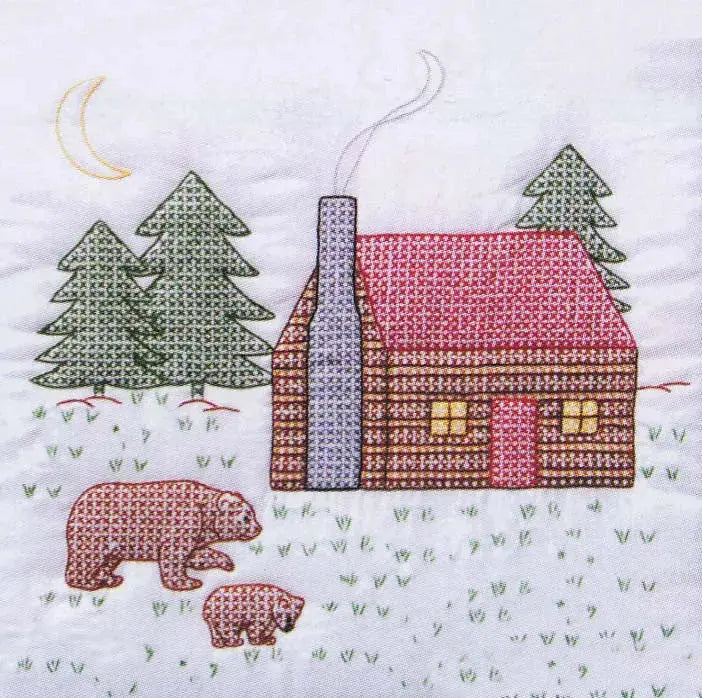
Some quilts start with a stack of fabric and a rotary cutter. This one starts with a needle. The Cabin & Bears Quilt Block Set is a pre-printed embroidery pattern: the cabin-and-bears design is already stamped on the blocks, so there is nothing to trace or transfer. You hoop a block, stitch the design, follow the printed quilting marks, and repeat until you have enough blocks for a quilt with a cozy, rustic lodge feel.
What This Set Makes
Each block measures 18 inches by 18 inches and is printed on white cotton/poly broadcloth. The design is cross stitch only, with quilting marks included, so the stitching and the quilting lines are both laid out for you on the fabric. One package contains six blocks — enough for a small wall hanging, a table topper, or the start of a larger quilt.
How far the set goes depends on the quilt size you want. The package guidance lists approximate requirements of 3 packages for a twin, 4 for a full, and 5 each for a queen or a king — 18 to 30 blocks in all. Decide your finished size before you start stitching, and buy your packages up front so every block comes from the same printing.
What's Included — and What You Will Need to Add
Inside the package are six 18-inch pre-printed quilt blocks, plus the floss requirements, so you know exactly which colors and how much floss the design calls for before you shop — no guessing at shades for a scene built on browns and neutrals.
This is a block set, not an all-in-one kit, so plan on supplying the rest yourself: backing, batting, a hoop, a needle, floss, and thread are all listed as additional materials needed to complete the project. There is no binding included either. Think of those extras as creative control — you choose the backing fabric and batting weight that suit whether your finished quilt will hang on a cabin wall or work as a bed quilt.
Skill Level and Time
Because the design is printed on the broadcloth and worked in cross stitch only, there are no piecing seams, appliqué edges, or design transfers to manage. If you can make a consistent cross stitch and follow a printed line, you have the core skills; if you are newer to embroidery, the first block is a forgiving place to find your rhythm. Experienced stitchers will appreciate skipping the marking step and going straight to the needlework.
Hand stitching sets the pace. An 18-inch block is a generous piece of handwork, and a bed quilt needs 18 to 30 of them, so treat this as a long-term project built one block at a time — an evening here, a weekend afternoon there — rather than a weekend finish.
Tips for Success With These Materials
Keep your tension even. A hoop is on the required-supplies list for a reason: broadcloth held taut and flat keeps cross stitches uniform and stops the fabric puckering around dense areas of stitching.
Make every cross in the same direction. Consistent stitch direction is the simplest way to make a stamped design look polished. Pick your order — bottom legs first, then top legs — on the first block and keep it for all 30.
Work from the floss requirements list. Buy your floss before block one, not as you go. That avoids dye-lot surprises in the middle of a bear, and lets you lay out your palette against the white broadcloth before committing.
Stitch first, quilt second. Finish the cross stitch, then use the printed quilting marks as your guide when the blocks are assembled with batting and backing. Keep finished blocks stored flat and clean — white broadcloth shows every smudge, and clean hands at the hoop protect months of work.
Shop the Cabin & Bears Quilt Block Set at Linda's Electric Quilters.


