
How to Change and Care for 45mm Rotary Cutter Blades: Tips for Quilters
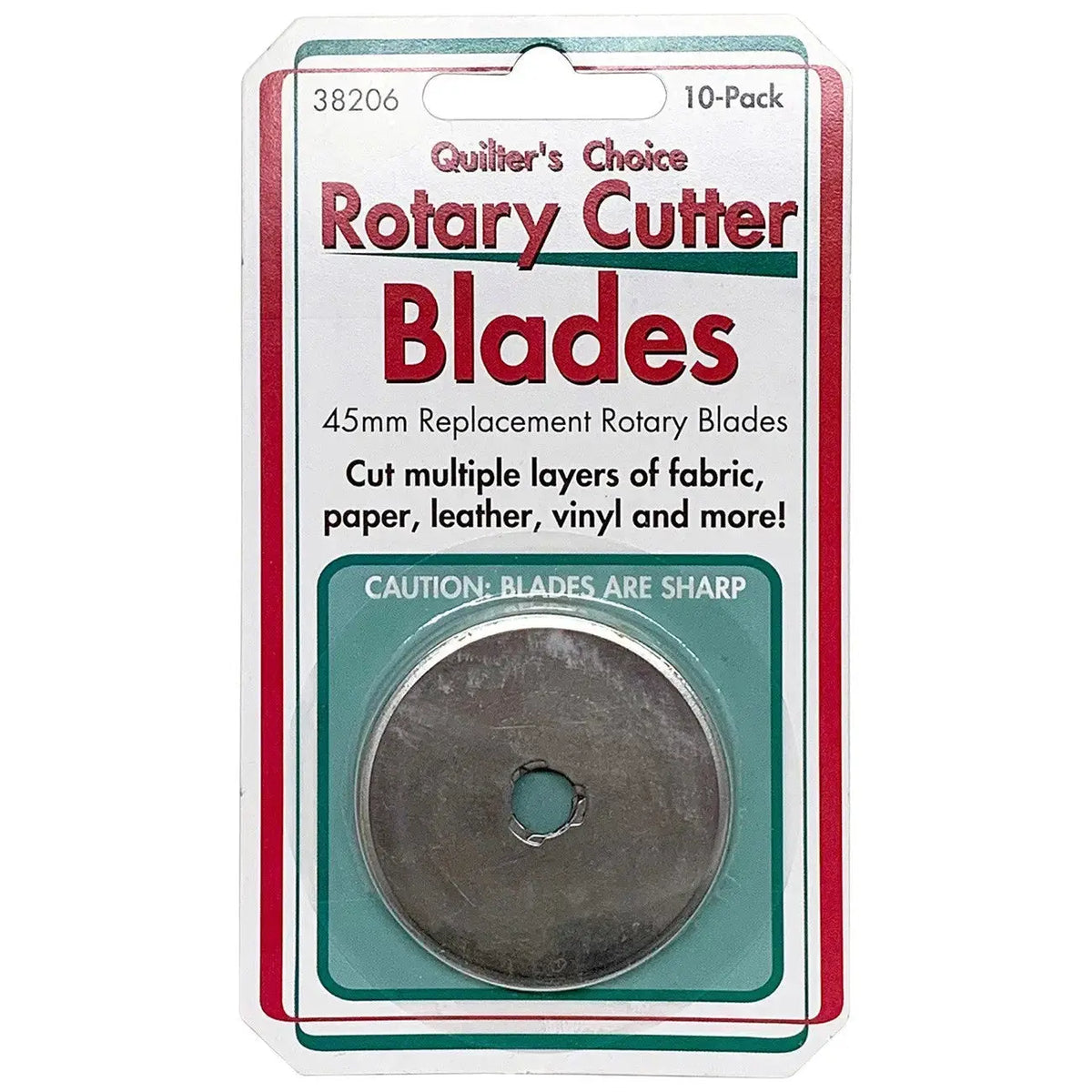
Every quilter knows the moment: a cut that used to glide through fabric in one smooth pass suddenly needs a second try, leaves a few threads uncut, or starts to feel like work. Most of the time the cutter is not the problem — the blade is. The Quilter's Choice Rotary Cutter Blades 45mm 10ct are premium quality stainless steel replacement blades for all standard cutters. This pack includes 10 blades, each 45mm, so you can refresh your cutter whenever cutting stops feeling effortless.
What These Blades Are and Why Quilters Use Them
A rotary cutter is only as good as the edge doing the cutting. The 45mm size is the workhorse diameter most quilters reach for: large enough to cut accurately through the fabric layers in everyday piecing, yet easy to control along a ruler for strips, squares, and long straight cuts. As the product description puts it, these blades help you cut with accuracy and save time and fabric — and that is exactly what a fresh, sharp edge does. A dull blade drags, skips, and tempts you to press harder, which leads to wavy cuts, frayed edges, and wasted fabric. A sharp stainless steel blade rolls cleanly, so the cut is right the first time. A pack of 10 also means you are never caught mid-project with a tired edge and no replacement in the drawer.
How to Change a Blade, Step by Step
- Close and secure the cutter. Retract or cover the blade, set the cutter on a flat surface, and keep your fingers well away from the edge at all times. Treat every blade — new or used — as extremely sharp.
- Open the cutter assembly. Following your cutter's own design, loosen and remove the nut or screw that holds the blade, and lay the parts out in the order you removed them so reassembly is simple.
- Remove the old blade carefully. Lift it out by its center hole or edges without touching the cutting rim, and set it straight into a safe container for used blades.
- Seat the new blade. Take one fresh 45mm blade from the pack, place it on the cutter aligned with the center post, and make sure it sits flat.
- Reassemble and test. Replace any washers and the nut or screw in order, tighten until the blade rolls freely without wobbling, then make a test cut on scrap fabric. It should cut cleanly in a single pass with light, even pressure.
Practical Tips for Success
Change the blade at the first signs of skipping or uncut threads rather than pushing through — extra pressure is hard on your hands, your ruler, and your cutting mat, and it cannot restore a worn edge. Always cut on a proper mat, keep the blade perpendicular to the fabric, and roll away from your body with the ruler held firmly. If a brand-new blade seems to skip, check that it is seated flat and tightened correctly before assuming the blade is at fault. When in doubt, a fresh blade from a 10-count pack is the simpler, safer answer.
Care and Storage
Store unused blades together in their original pack, in a dry place away from children and pets, and never loose in a drawer where a hand could find the edge. Keep a dedicated, closable container for spent blades and dispose of the full container safely rather than dropping a bare blade in the trash. Wipe a blade free of lint if fabric dust builds up around the cutter's center, and retract or guard the blade every time you set the cutter down.
Project Ideas
Fresh 45mm blades earn their keep anywhere accurate cutting matters: cutting strips and binding, squaring up blocks and quilt tops, trimming pieced units to size, and batch-cutting pieces for a whole quilt top in one session. Start a big cutting day with a new blade and you will feel the difference from the first strip to the last.
Shop the Quilter's Choice Rotary Cutter Blades 45mm 10ct at Linda's Electric Quilters.


