
How to Join Batting Scraps with Fusible Seam Tape: Tips for Quilters
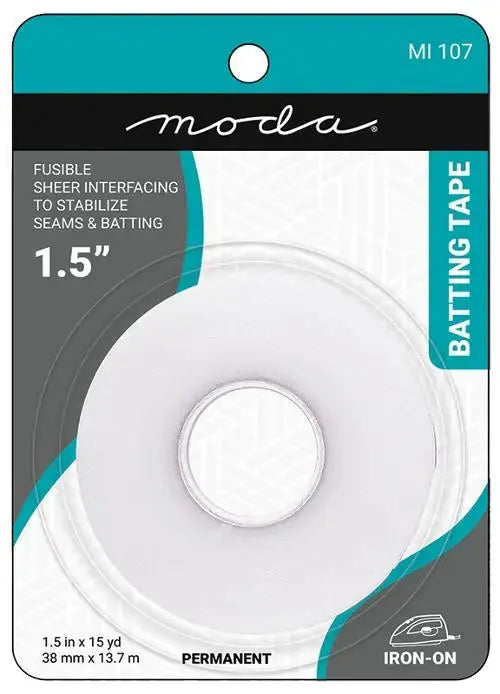
Every quilter ends up with a bin of batting offcuts that are too good to throw away but too small to use on their own. Fusible Seam Batting Tape 1.5" MI 107 from Moda Interfacing is made for exactly that problem. This sheer, lightweight iron-on tape lets you fuse batting edges together to create one usable piece — no pinning, no zigzag stitching, and no lumpy seam to quilt through.
What This Batting Tape Is
This is a 100% polyester, sheer, lightweight fusible tape, 1.5 inches wide and supplied on a 15-yard roll. The adhesive is on one side of the tape, and once fused, the bond is permanent. It is made in the USA by Moda Interfacing, stock number MI 107.
Because the tape is sheer and lightweight, it adds very little bulk at the join. According to the product description, it is easy to machine or hand quilt through and will not gum up your needle — an important detail, since some fusibles leave residue that can cause skipped stitches and frustration mid-quilt.
Why Quilters and Sewists Use It
The main reason is simple: waste less batting. Instead of buying a new batt when you are a few inches short, or discarding long, narrow strips left from trimming a quilt, you can butt two straight edges together and fuse them into a single, flat piece sized for your project.
It is also useful for enlarging a batting that is slightly too small, and for reinforcing or stabilizing a join before layering. After fusing, the joined batting is machine washable, dryable, and dry cleanable, so the tape is suitable for quilts that will be laundered and used, not just wall hangings.
How to Use It, Step by Step
- Start with straight edges. Trim the edges you plan to join so they are clean and straight. Lay the two batting pieces on your ironing surface so the edges butt together without overlapping and without a gap. Overlapping creates a ridge; a gap creates a weak spot.
- Cut your tape. Cut a length of the 1.5-inch tape a little longer than the seam you are joining, so the join is supported end to end.
- Center the tape over the join. Place the tape adhesive side down, centered over the butted edges so it covers both pieces evenly.
- Fuse with your iron. Press according to the tape and your batting's tolerance, working along the length of the tape until the adhesive bonds. Let the join cool briefly before moving the batting, so the permanent bond sets flat.
- Check the join. Gently tug either side. The pieces should hold as one flat sheet. If an end lifts, re-press that spot before layering your quilt.
Practical Tips
Test first on a small scrap, especially with lofty or heat-sensitive batting, to confirm your iron setting fuses the tape without flattening or damaging the batting. Use the tape on flat joins in the body of the batting rather than relying on it to hold a join under heavy stress during loading or basting. Keep joins away from where you plan dense quilting if you can — although the tape is designed to be quilted through by hand or machine, any join is happiest with even support. Finally, label any leftover pieced batting with its approximate size so you remember it is ready to use next time.
Care and Storage
Store the roll in a dry place away from heat so the adhesive stays on the tape until you need it. Keep the roll together so the sheer tape does not unwind and tangle. Once a join is fused, no special care is needed for the tape itself — the finished quilt can be machine washed, dried, and dry cleaned as noted in the product description, following the care needs of your fabrics and batting.
Project Ideas
Piece together strips for table runners, placemats, and small throws. Build a crib- or lap-size batt from the offcuts of a larger quilt. Use joined batting for quilt-as-you-go blocks, bag panels, mug rugs, and practice sandwiches for testing quilting designs or tension. It is a quiet, money-saving notion that turns a scrap bin into a ready supply.
Shop the Fusible Seam Batting Tape 1.5" MI 107 Moda #1 at Linda's Electric Quilters.


