
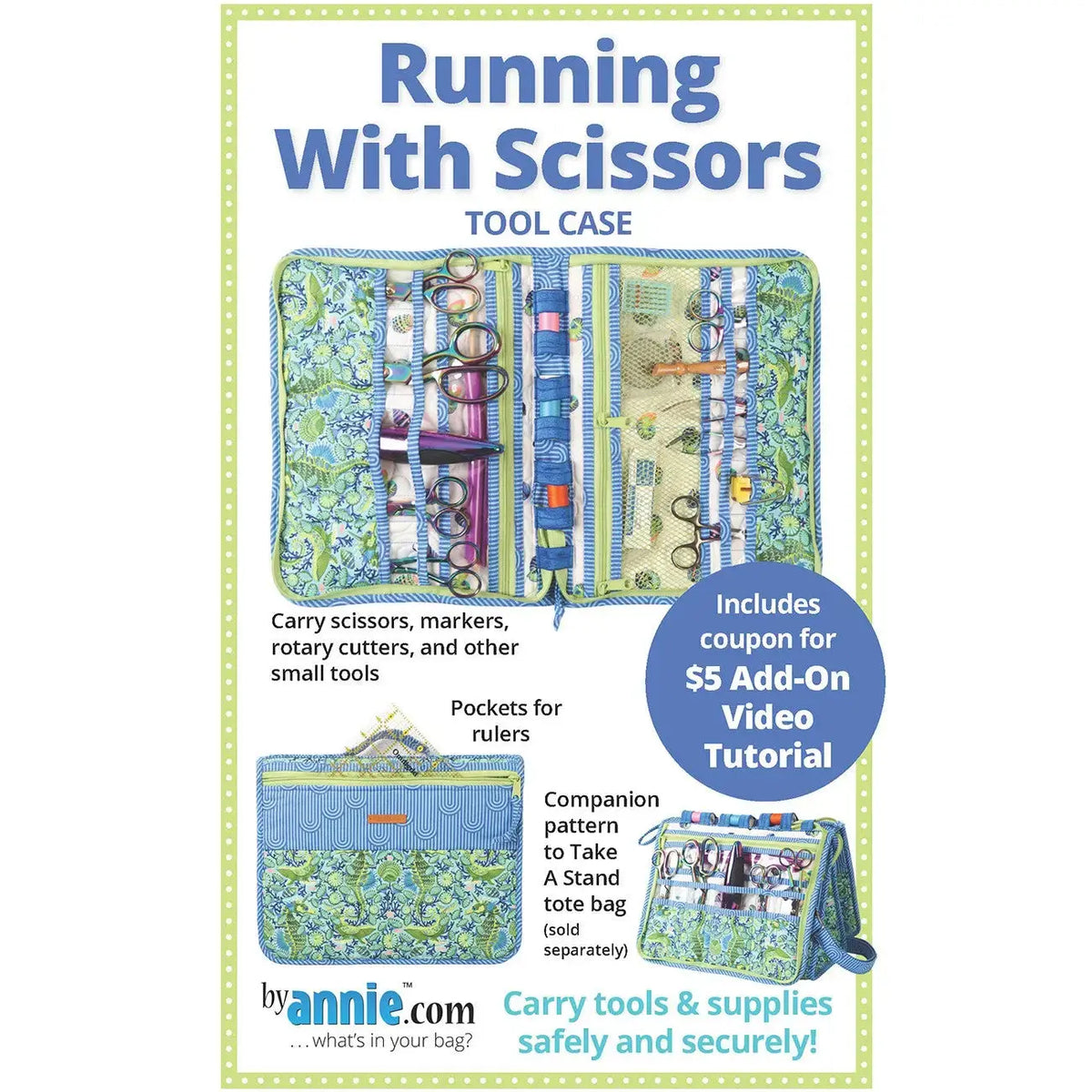
If your rotary cutter lives in one tote, your scissors in another, and your favorite marking pen disappears right before class, you need a better system. Running With Scissors is a sewing pattern for a zip-up tool case designed to store and carry the tools quilters reach for every day — rotary cutters, scissors, markers, turning tools, small rulers, and more. Designed in collaboration with popular fabric designer Tula Pink, the case will hold Tula's hardware collection, or it can be customized to fit tools from most manufacturers.
What the Tool Case Is
This is a pattern, so you sew the case yourself and finish with gear that reflects your own style and toolkit. When closed, the Tool Case measures 10 inches high by 12-1/2 inches wide by 1-1/2 inches deep — compact enough to slip into a project tote. Zipped open, it spreads to 12-1/2 inches high by 20-1/2 inches wide, laying out your tools where you can see and reach every one.
Inside, a variety of easy-to-access pockets in vinyl, mesh, and quilted fabric hold different kinds of tools. Clear vinyl pockets let you spot small items at a glance, mesh keeps things visible, and quilted fabric pockets add soft protection for treasured tools.
Why Quilters and Sewists Use It
Good tools are an investment, and loose tools rolling around in a bag get dull, damaged, or lost. A dedicated case keeps sharp edges contained, keeps each tool in its own place, and makes packing for a retreat, class, or sew day a five-minute job instead of a scavenger hunt. Because the pockets can be customized to fit the tools you use and love, the case is built around your real habits rather than someone else's layout.
How to Make and Use Your Case
- Start with your toolkit. Gather the rotary cutters, scissors, markers, turning tools, and small rulers you actually carry, and lay them out. That lineup tells you what the case needs to hold.
- Choose fabrics you love. Pick fabrics that suit the mix of vinyl, mesh, and quilted fabric pockets in the design.
- Customize the pockets as you sew. Follow the pattern, adjusting pocket sizes and placement to fit your specific tools so each one has a snug, sensible home.
- Load it thoughtfully. Place sharp tools like cutters and scissors in the most protected pockets, and put your most-used tools where your hand falls first.
- Zip, carry, and open flat to work. Zip the case closed for travel, then open it fully at your sewing station so everything is visible and within reach.
Practical Tips
Build the case around the tools you own now, but leave a little flexibility — one pocket that can take a new ruler or a second pair of snips saves you from outgrowing it. Keep blades closed and guarded before zipping up, and do a quick inventory before leaving a class; a case with a place for everything makes a missing tool obvious at a glance.
Want a workstation, too? The pattern notes a clever companion: the Take A Stand pattern, featuring stand-up totes in two sizes. The small tote makes a perfect stand for the Tool Case — fold the case over so the inner pockets are exposed and place it billboard-style over the upright tote for stability and easy access. The large tote will hold the Running With Scissors Tool Case itself, along with fabric, tools, and more.
Care and Storage
Store the case zipped closed so tools stay put and dust stays out. Keep it in your sewing room or travel bag so your core kit is always packed and ready. Empty and shake out lint and thread snippets now and then, and check that sharp tools are still seated in their pockets before carrying it anywhere.
Project Ideas
Make one case as your everyday kit and a second as a dedicated travel kit for retreats and classes. A handmade case filled with starter tools makes a thoughtful gift for a new quilter. And because you choose the fabrics, it is a wonderful way to showcase a favorite designer collection.
Shop the Running With Scissors at Linda's Electric Quilters.


