
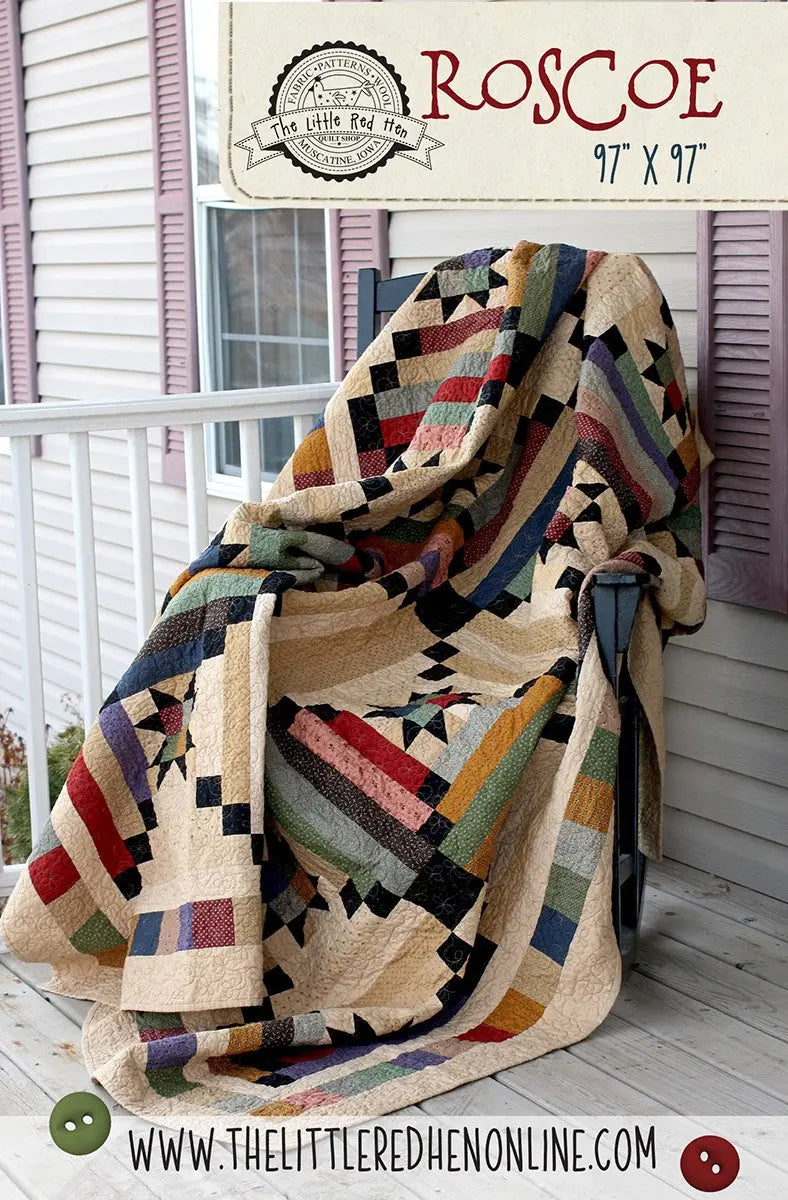
How to Make the Roscoe Quilt: A Scrap-Friendly 97-Inch Pattern for Quilters
Every quilter has a scrap bin that keeps growing — leftover strips, partial fat quarters, and pieces too good to throw away but too small for a yardage-based project. The Roscoe pattern is designed for exactly that stash. It is a scrap-friendly quilt that finishes at 97 inches by 97 inches, a generous square size for a bed quilt or an oversized throw.
What Is the Roscoe Quilt?
Roscoe is a quilt pattern from Checker Distributor. Its defining features, as described for the pattern, are that it is scrap friendly and that the finished quilt measures 97 inches by 97 inches. That square format is easy to place on a bed or sofa, and you can rotate the top in any direction while checking balance.
Because the pattern is built around scraps, it does not ask you to start with a single coordinated bundle. Instead, it gives fabric you already own a job to do, turning leftovers from earlier projects into one cohesive, full-size quilt.
Why Quilters Use a Scrap-Friendly Pattern
First, it makes good use of fabric you already own. Scraps represent money already spent and memories from quilts you have already made, and a scrap-friendly design puts both back to work.
Second, it creates a lively, personal look. Each scrap can remind you of the project it came from, in a way a single fabric collection cannot.
Third, the size makes it practical. At 97 inches square, Roscoe is large enough for real everyday use, so the time you invest in sorting and sewing scraps results in a quilt that can be used and enjoyed daily.
How to Make It, Step by Step
- Read the pattern through first. Understand the construction order, the finished size, and how your scraps will be used before you cut anything.
- Sort your scraps. Sort leftovers by color family, by light and dark value, or by print scale.
- Press and prepare. Press scraps flat and trim frayed or uneven edges as needed. Clean, flat pieces are easier to cut accurately and sew with consistent seams.
- Cut as directed. Follow the pattern instructions for cutting, and keep cut pieces grouped and labeled so the layout stays organized.
- Lay out before you sew. Arrange pieces on a design wall or large flat surface, step back, and move anything that clusters too heavily in one area until the balance feels right.
- Sew, press, and finish. Join the pieces in the order given, pressing as you go. When the top is complete, layer, quilt, and bind it using your preferred methods.
Practical Tips for Success
Work with value as well as color. A mix of light, medium, and dark scraps helps a scrap quilt read clearly from a distance, even when the prints are very different. A phone photo viewed in black and white helps check value balance.
Keep cutting and seam allowances consistent. Scrap quilts often involve many seams, and small inaccuracies add up across a 97-inch top. A consistent quarter-inch seam and careful pressing will help the top lie flat. Do not feel you must use every scrap — choosing pieces that work together gives a stronger result.
Care and Storage
Store the printed pattern flat in a sheet protector or project folder, away from direct sunlight, so it stays clean and readable for future quilts. Keep leftover scraps in labeled clear bins. For the finished quilt, follow the care needs of the fabrics and batting you used, wash gently when needed, and store it folded loosely or rolled in a clean, dry place out of strong light.
Project Ideas
Make Roscoe as a memory quilt from scraps left over from a year of sewing. Try a calmer version by limiting your pull to two or three color families, or go fully scrappy for maximum contrast. Its generous size also makes it a thoughtful gift for a housewarming or wedding. Make it again with a completely different scrap pull and the same pattern will look entirely new.
Shop the Roscoe at Linda's Electric Quilters.


