
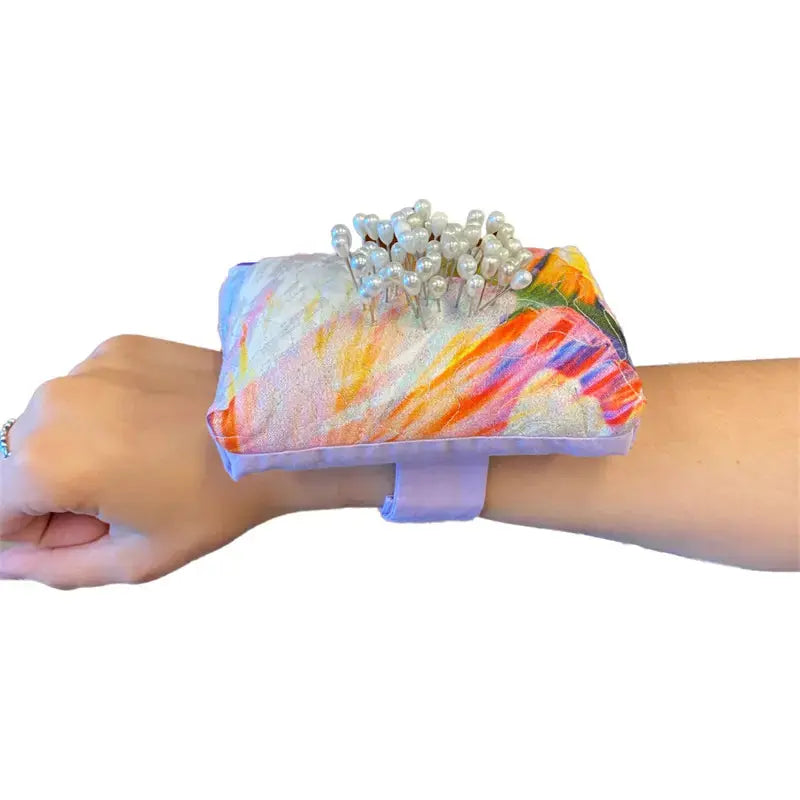
How to Use a Wool Filled Pin Cushion Wristlet: Keep Pins Sharp and Within Reach
If you have ever set a pin down on the cutting table, turned for your rotary cutter, and then spent two minutes searching for that same pin, a wrist pin cushion solves the problem simply. The Wool Filled Pin Cushion Wristlet is a quilted pin cushion you wear on your wrist, so your pins travel with you from cutting table to sewing machine to ironing board. It is custom made with wool filling, a Velcro-type enclosure for an adjustable fit, and it is sized to hold enough pins for large quilts — including longer corsage pins.
What Is a Wool Filled Pin Cushion Wristlet?
A pin cushion wristlet is exactly what it sounds like: a small cushion on a wrist strap. Instead of reaching across your workspace or hunting through a magnetic dish, you bring your free hand to your wrist and pull or replace a pin. The quilted construction gives the cushion body and durability for everyday studio use.
The wool filling matters, too. Wool is a traditional pin cushion filling because its natural fibers help keep pins sharp and smooth as they slide in and out. Rather than dulling against synthetic stuffing, your pins get a gentle honing effect with regular use, helping them glide through cotton, batting, and layered quilt sandwiches more easily.
This wristlet is designed to fit corsage pins, the long, sturdy pins many quilters prefer for pinning quilt backing and tops to canvas leaders and for managing large quilts. Note that corsage pins are sold separately, and because each wristlet is custom made, designs vary — part of its handmade charm.
Why Quilters and Sewists Love Wearing Their Pins
Pinning is not a sit-still job. You pin at the design wall, at the frame, at the machine, and while easing borders. A wearable cushion means fewer dropped pins on carpet or in batting, fewer interruptions, and a safer workspace — especially if children or pets wander into the sewing room. It also speeds up repetitive work like appliqué placement and pin-basting, where you are constantly taking pins out and putting them back.
How to Use It, Step by Step
- Put it on: Wrap the strap around your wrist and secure the Velcro-type enclosure so it feels snug but not tight.
- Load your pins: Push your most-used pins into the cushion at a slight angle, points fully buried in the wool. For a large quilt, load a good supply of corsage pins.
- Work as usual: As you remove a pin, return it straight to your wrist instead of setting it on the table. As you need a new pin, pull one without looking away from your fabric.
- Unload safely: When you finish, either leave pins stored in the cushion for next time or transfer them to a covered container if young helpers frequent your space.
Practical Tips
Wear it on your non-dominant wrist so your sewing hand stays free to pull pins. Rotate which side of the cushion you use so the wool wears evenly, and if a pin starts to feel draggy, work it in and out of the wool a few times. Finally, do a quick wrist check before you leave the room — it is the easiest way to make sure no pins were left in the quilt itself.
Care and Storage
Store the wristlet flat or hanging by its strap in a dry spot, away from direct heat. Spot clean the quilted fabric as needed and let it air dry completely before reloading pins, since moisture is the enemy of sharp steel. Periodically check pins for burrs or rust and discard any that are damaged — even the best wool cannot rescue a bent pin.
Project Ideas
Reach for your wristlet when loading a quilt on a frame, pin-basting a throw, fitting garments, arranging appliqué blocks on a design wall, or teaching a class where you move between students. It is a small notion that earns its keep on almost every project.
Shop the Wool Filled Pin Cushion Wristlet at Linda's Electric Quilters.


