
How to Use Small Micro-Serrated Scissors: Precise Cuts for Appliqué and Detail Work
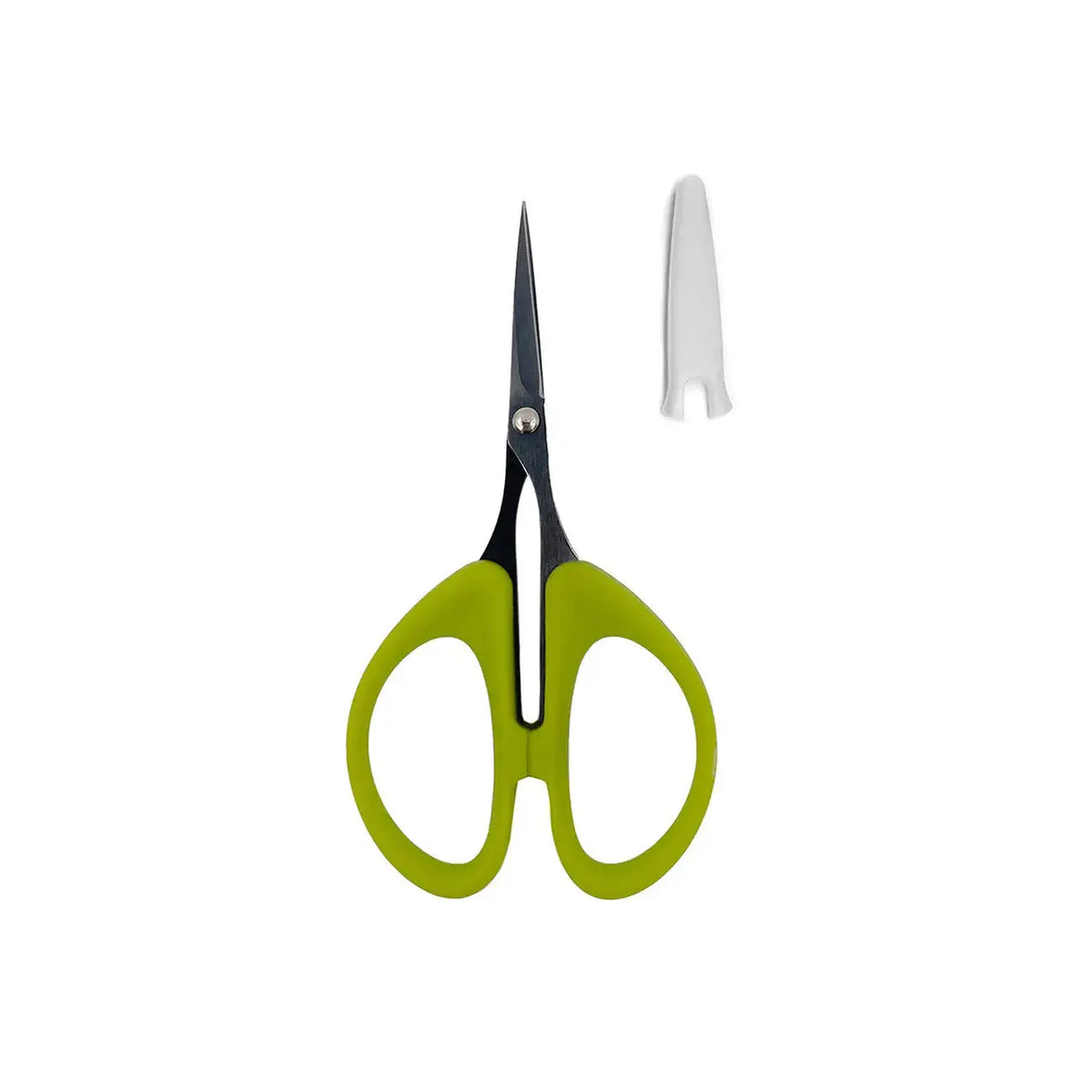
Some cutting jobs are simply too small for your big fabric shears. Tiny appliqué leaves, tight inside curves, and fussy-cut motifs all need a short blade you can control with your fingertips — and a blade that holds the fabric still instead of pushing it away. That is exactly what the Perfect Scissors Green 4-3/16in Small Micro-Serrated Non-Slip Blade, from Karen Kay Buckley, are made for.
What Are Small Micro-Serrated Scissors?
These are compact detail scissors measuring just 4-3/16 inches overall, with a short 1-1/4 inch blade. The blade is micro-serrated: instead of a perfectly smooth edge, it has very fine serrations that lightly grip the fabric as you cut. The scissors are made with plastic comfort handles and a Japanese high carbon steel blade — green handles with a black micro-serrated blade — and each pair comes with a protective blade cover.
Why Quilters and Sewists Use Them
The micro-serrated blade keeps fabric from slipping, which ensures a smooth, accurate cut every time — especially helpful on the tiniest detailed shapes, where even a millimeter of drift changes the shape. The scissors cut sharp right to the points, so you can snip into corners and clip points cleanly without overshooting. The comfort handles are designed for both right- and left-hand cutting, making them a friendly option for left-handed stitchers and for anyone who switches hands during long appliqué sessions.
How to Use Them, Step by Step
- Start with your shape marked or fused. Draw your appliqué shape on the fabric or fuse it in place first, so you are cutting to a clear line rather than guessing.
- Hold the scissors in your fingertips. With a blade this short, small movements do the work. Support the fabric with your other hand close to the cutting line, keeping your fingers well away from the points.
- Take small snips. Open and close the blades in short bites, letting the serrations grip the fabric. Turn the fabric — not the scissors — as you follow curves.
- Use the points for corners. Because the scissors cut sharp to the points, you can snip right into an inside corner or notch, then turn and cut back out for a crisp angle.
- Check as you go. After each shape, hold it against your pattern or placement guide. Trimming a sliver at a time is far easier than trying to fix an over-cut edge.
Practical Tips for Success
Reserve these scissors for fabric and thread detail work rather than paper, which dulls fine blades faster. When cutting layered appliqué, go slowly so the serrated edge can grip every layer evenly. For slippery fabrics, the micro-serrations do much of the holding for you — resist the urge to pull the fabric taut, which can distort the shape. And because the blade is short, these are snipping scissors, not yardage scissors: switch back to your large shears for long, straight cuts.
Care and Storage
Oil the blades periodically and wipe them with a soft cloth to prolong the life of your scissors. Keep the scissors closed when not in use, and always store them with the protective cover in place, in a safe spot out of reach of children. A small notions pouch or a dedicated slot in your sewing kit keeps the points protected and easy to find at retreat.
Project Ideas
Reach for these scissors when cutting wool or cotton appliqué shapes for blocks and wall hangings, fussy-cutting small motifs for English paper piecing, trimming embroidery appliqué close to the stitching line, and snipping jump stitches and thread tails on finished work. They are also handy for clipping curves and notching seam allowances on small sewn projects like ornaments, pincushions, and doll clothes.
Shop the Perfect Scissors Green 4-3/16in Small Micro-Serrated Non-Slip Blade at Linda's Electric Quilters.


