
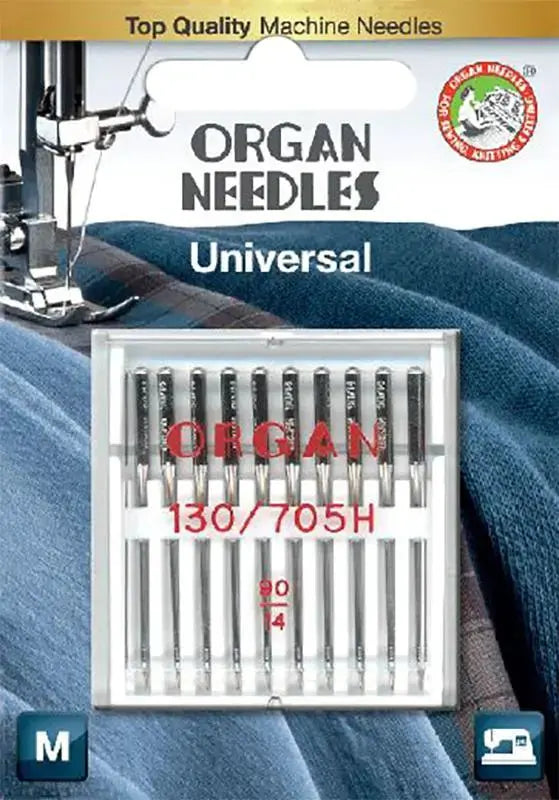
How to Use Universal 90/14 Machine Needles: Tips for Quilters
A fresh needle is one of the smallest, cheapest changes you can make to a sewing machine — and one of the most noticeable. The Universal 90/14 Needles by Organ Needles come in a 10-count pack, giving you a ready supply of general-purpose needles for everyday quilting and sewing. If your stitches skip, your thread shreds, or your machine sounds like it is punching rather than gliding, the needle is the first thing to check.
What a Universal 90/14 Needle Is
The numbers tell you the size: 90 is the metric diameter and 14 is the American size designation for the same needle. It sits in the middle-to-heavier part of the general sewing range — sturdier than a fine needle meant for lightweight fabrics, and a practical choice when you are sewing through the layered thickness of pieced seams, batting, and backing.
"Universal" describes the point. A universal point is slightly rounded rather than needle-sharp or fully ballpoint, which lets it work across a broad range of woven fabrics and some knits. That versatility is why universal needles are the workhorse in most sewing rooms: they handle the quilting cottons that make up most quilting projects.
Why Quilters Keep a Pack on Hand
Needles wear out gradually, so the damage is easy to miss. A dull or slightly bent needle can cause skipped stitches, uneven tension, frayed thread, and snags — problems often blamed on the machine or the thread. Starting a new project with a fresh needle removes a whole category of frustration before it starts. A 10-count pack makes that habit easy, because the next needle is always within reach.
How to Use Them, Step by Step
- Confirm compatibility. Check your machine manual for the needle system and sizes your machine accepts before installing any new needle.
- Turn the machine off. Power down before changing a needle, and raise the needle bar to its highest position using the handwheel.
- Remove the old needle. Loosen the needle clamp screw, lower the old needle out, and set it aside for safe disposal — never leave a loose used needle on your sewing table.
- Seat the new needle correctly. Insert the new needle up into the clamp as far as it will go, with the flat side of the shank facing the direction your manual specifies (usually the back), and tighten the clamp screw firmly.
- Thread and test. Thread the machine as usual, then sew a short test seam on scraps of your project fabric and batting. Check for balanced, even stitches with no skips or thread damage.
- Adjust if needed. If the test seam struggles — skipped stitches on a knit, for example — switch to the needle type made for that fabric rather than forcing a universal point to do a specialist's job.
Practical Tips
Start each major project with a fresh needle, and replace one right away if you hit a pin, hear a clicking sound as it pierces the fabric, or notice thread shredding. Never sew with a bent needle: even a bend you cannot see can throw off stitch formation and risk striking the needle plate. Match needle size to thread and fabric — if you move to much heavier or finer materials than quilting cotton, test first and change size accordingly.
Care and Storage
Store unused needles in their original pack so the size stays identified and the points stay protected, away from loose pins that could nick them. Dispose of used needles safely — slip them into an old needle pack or a small lidded container rather than dropping them loose into a trash bin.
Project Ideas
Reach for a Universal 90/14 for piecing and quilting quilting-cotton projects, sewing tote bags and table runners, stitching through layered seams and quilt sandwiches, and general sewing on medium-weight woven fabrics. It is the needle to try first for most everyday jobs.
Shop the Universal 90/14 Needles - 10 count by Organ Needles at Linda's Electric Quilters.


