
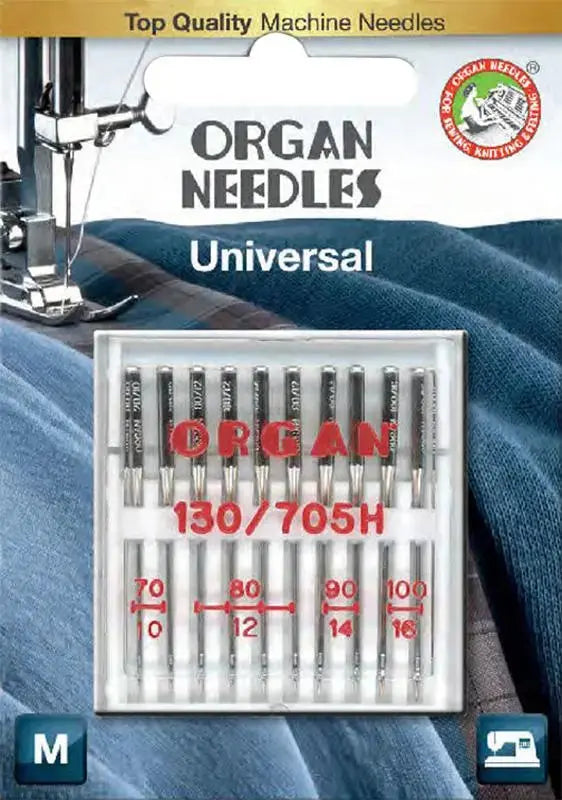
How to Use Universal Machine Needles: Tips for Quilters
Skipped stitches, frayed thread, and tiny pulls in your fabric are often blamed on the machine or the thread — but the culprit is often a dull, bent, or wrong-size needle. The Universal Needles Assorted 10-count pack by Organ Needles is a simple, sensible staple for any sewing room: a set of general-purpose machine needles in assorted sizes, so you can match the needle to the fabric and thread in front of you instead of making do with whatever happens to be in the machine.
What a Universal Needle Is and Why Quilters Use It
A universal needle is the everyday workhorse of machine needles. It has a slightly rounded point that lets it pass between the fibers of woven fabrics — including the quilting cottons most quilters use every day — and also handle many knits and synthetics without the sharply pointed profile of some specialty needles or the strongly rounded profile of a ballpoint. That middle-ground design is exactly why it is called universal: it is a good starting point for piecing, general sewing, and many quilting tasks.
An assorted pack makes that versatility practical. Rather than a single size, you have a range on hand — a lighter needle for finer fabrics, a sturdier one for heavier layers. This 10-count pack from Organ Needles gives you spares as well as choice.
How to Use Them, Step by Step
- Check the size on the pack. Needles are sized for fabric weight: smaller numbers suit lighter fabrics, larger numbers suit heavier fabrics and thicker layers. Choose the finest size that will handle your fabric and thread without bending or breaking.
- Turn the machine off and raise the needle bar. Bring the needle to its highest position with the handwheel, turning it toward you as your machine manual directs.
- Remove the old needle. Loosen the needle clamp screw, support the old needle as it comes free, and set it aside safely for disposal — never loose on the table.
- Insert the new needle correctly. In most domestic machines the flat side of the shank faces the back. Push the needle up into the clamp as far as it will go, hold it there, and tighten the clamp screw firmly.
- Re-thread and test on scrap. Thread the machine as usual, then sew a short test seam on a scrap of the same fabric and batting you plan to use. Look for even stitches with no skips, loops, or puckering.
- Adjust if needed. If stitches skip or thread shreds, try the next size, re-thread, and test again before changing any machine settings.
Practical Tips
Start every new quilt with a fresh needle — it is one of the cheapest improvements you can make to stitch quality. Change the needle whenever you notice skipped stitches, thread breakage, snagged fibers, or a needle that has struck a pin. Match needle and thread together: heavy thread squeezed through a small eye will shred, while fine thread in an oversized needle can leave visible holes and wobbly stitches.
Care and Storage
Keep unused needles in their original pack so the sizes stay identified, and store the pack flat in a drawer or notions box away from moisture. Never sew with a bent needle — check by rolling the needle on a flat surface, and discard it safely in an old pill bottle or sharps container if it wobbles, feels burred at the tip, or has hit a pin or plate. A used needle that still looks fine belongs in a labeled container, not back in the new pack.
Project Ideas
Use universal needles for piecing quilting cotton, sewing quilt tops, making tote bags and simple garments, hemming, and everyday mending. An assorted pack is especially handy at retreats, where a project may move from lightweight cotton to a layered quilt sandwich.
Shop the Universal Needles Assorted - 10 count by Organ Needles at Linda's Electric Quilters.


