
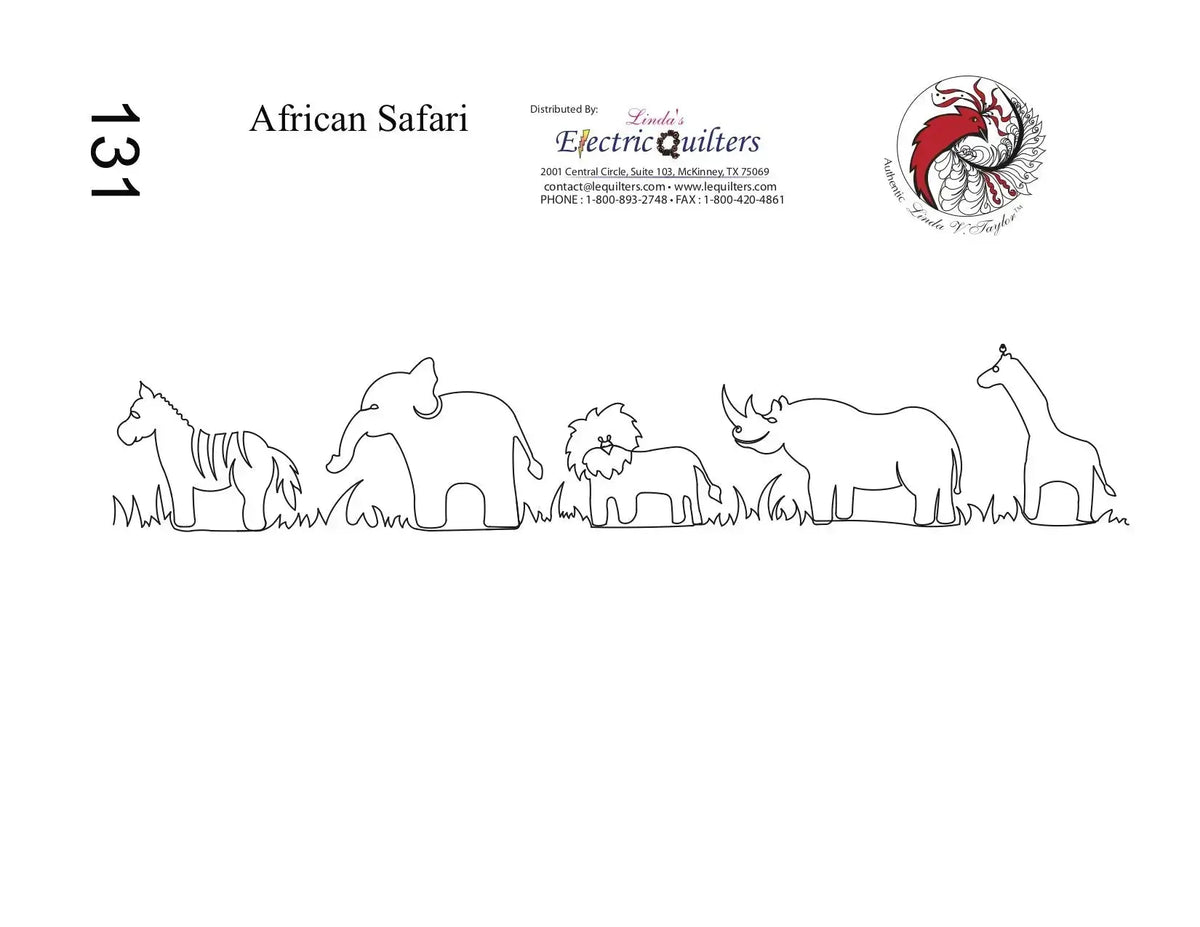
African Safari: Elephants, Giraffes and Lions in a Playful Pantograph for Animal Quilts
The 131 African Safari Pantograph by Linda V. Taylor brings the savanna to your quilting frame. This continuous-line paper pantograph measures 121 inches long and comes in three row options — 4 inches, 6 inches, and a Double 6-inch size that stitches as a 12-inch row — so you can match the scale of the animals to the quilt you are finishing.
What the Design Is
A paper pantograph is a printed, continuous-line pattern used from the back of the quilting frame. You lay the paper flat on the pantograph table, follow the printed line with a laser light or a stylus, and the needle reproduces that same path on the quilt top. Because the line never breaks, you can stitch a full pass in one smooth run, then advance the quilt and stitch the next row.
African Safari is built around the animals quilters reach for again and again: elephants, giraffes, and lions. Worked into a continuous row, the safari figures travel across the quilt instead of sitting in stiff blocks, so the finished quilting reads as a lively, storybook texture from a distance and rewards a closer look with recognizable animal shapes a child — or a grown-up animal lover — will love tracing with a fingertip.
What Quilts It Suits
This is a natural choice for animal and zoo-themed tops: safari print quilts, nursery and baby quilts, kids' bed quilts, and any project built around jungle or savanna fabrics. The animal motifs echo the theme of the top instead of fighting it, which makes the quilting feel like part of the story.
As an all-over, it suits crib quilts, throws, and twin quilts where you want even coverage with a playful personality. On busy safari prints it adds texture without competing; on solids and simple patchwork, the stitched elephants, giraffes, and lions become the feature. It is also a cheerful pick for charity and donation quilts for children, where a fun finish matters as much as a fast one.
Row-Height Choice: 4, 6, or Double 6 Inches?
The pattern comes in a 4-inch size, a 6-inch size, and a Double 6-inch (12-inch) size, and choosing between them is mostly about scale and density. The 4-inch row gives the densest quilting and the smallest animal repeat — a good match for baby quilts, small throws, and tops where you want the quilting close and even.
The 6-inch row is the versatile middle ground: the animals stitch at a clear, readable scale without taking over, and each pass still covers ground at a comfortable pace. Choose it for most kids' quilts and lap quilts.
The Double 6-inch (12-inch) row opens the design right up. The safari figures stitch larger, each pass covers twice the ground, and the finished quilt stays softer and drapier. Choose the double size for larger bed quilts and any project where you want the animals to make a bold, visible statement without heavy stitch density.
Whichever size you pick, plan first: divide the quilt's length by your row height to estimate the passes needed, and check how the first and last rows will land at the edges.
How to Use It on a Longarm
Unroll the paper smoothly on the pantograph table and secure it so it cannot shift mid-pass. Position your laser or stylus, check that the pointer tracks the printed line accurately, and do a short dry run without stitching to confirm the row starts and ends where you expect. Stitch at a steady, even speed so your stitch length stays consistent around the curves and corners of each animal.
When a pass is finished, advance the quilt by exactly one row height, re-align your pointer with the start of the next row, and check the spacing before you stitch. Consistent advancing is what keeps the safari rows evenly spaced from the top of the quilt to the bottom.
Need the pattern to be longer than 121 inches? Find where the pattern repeats, mark that point on your pattern shield, and shift the pattern down to make it meet up. That simple trick lets you extend the pattern to accommodate larger quilts.
Tips for a Clean Finish
Slow down on the tightest details of each animal — ears, trunks, and tails are where rushing shows up as wobbles. Keep thread close to the background when you want texture first, or use a gentle contrast when you want the safari figures to stand out as the feature. Step back after the first row and check spacing and scale; catching an alignment issue after one row is far easier than after five.
Shop the 131 African Safari Pantograph by Linda V. Taylor at Linda's Electric Quilters.


