
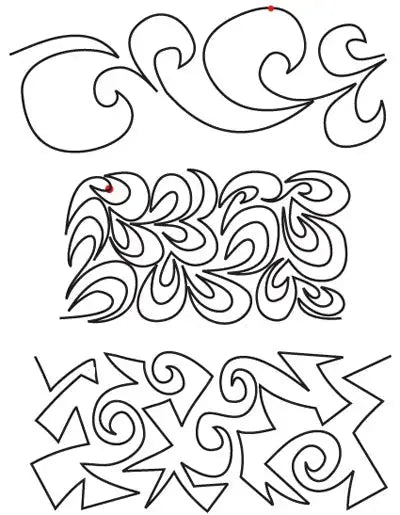
Some pantographs earn their place in a studio because they do one job beautifully. The 811 Combo Pantograph by Linda V. Taylor earns its place because it does three. This continuous-line paper roll carries three different patterns in a single design: two patterns measure 6 1/2 inches wide, and the middle pattern measures 7 1/4 inches wide. That gives a quilter built-in choices for texture and scale without changing rolls between projects — or even between parts of the same quilt.
What the Design Is
The 811 Combo is part of Linda V. Taylor's 800 series, continuous-line pantographs designed exclusively for mid-arm, short-arm, and domestic machines set up for pantograph work. Because the quilting follows one unbroken path, there are no stops and starts built into the design. You trace the line, the machine stitches it, and the quilting flows across the quilt in even, repeating rows.
Having three patterns on one roll changes how you use it. Use one of the narrower 6 1/2-inch patterns for a tighter repeat and denser texture. Choose the wider 7 1/4-inch middle pattern when a larger quilt or simpler piecing calls for a more open scale.
What Quilts It Suits — and Why It Shines on Borders
As an all-over choice, this pantograph suits quilts where you want consistent texture without committing the whole top to one repeat. It is a practical pick for everyday and donation quilts, and for tops that benefit from even, continuous quilting rather than custom work in every block.
The 800 series patterns are also wonderful for borders. A border often needs a narrower repeat that can travel cleanly along a long edge. With two 6 1/2-inch options on the roll, you can select the band that fits your border width and visual weight. One roll can serve both the body of a quilt and its frame.
Choosing Your Row Height
Row height here is simply the width of the band you choose to stitch. Let the quilt decide. Measure your quilting space, then compare it with the 6 1/2-inch and 7 1/4-inch options. On a smaller quilt or narrow border, the smaller repeat keeps the quilting in proportion. On a larger top, the wider middle pattern covers ground more efficiently and keeps the texture from feeling too busy. Before you commit, check how the scale looks against your block size.
Using It on a Longarm
Place the paper roll on your pantograph table, smoothing it flat so it will not drift as you work. Follow the chosen band with your laser light or stylus, keeping your eyes just ahead of the point so your movements stay smooth. Move at a steady pace; continuous-line designs reward rhythm more than speed.
When you finish a row, advance the quilt by the width of the band you are stitching, then realign the pattern carefully before the next pass. Take a moment at each advance to check side-to-side alignment — small drifts compound across a quilt, and a quick check keeps rows even from top to bottom.
Extending the Pattern Beyond 121 Inches
The roll measures 121 inches long, which covers most quilts comfortably. For an extra-long quilt or border run, Linda's own pro tip extends it: find where the pattern repeats, mark that point on your pattern shield, and shift the pattern down to make it meet up. Lining up the repeat lets you continue the same continuous line beyond the printed length, so the join disappears into the design instead of showing as a break.
Tips for a Clean Result
Decide which of the three bands you are tracing before you start, and stay with it for the whole section — consistency makes the quilting read as intentional. Keep the paper flat and secure, advance in measured steps, and use the repeat-marking trick whenever length runs short. With three patterns ready on one roll, the 811 Combo is less a single pantograph than a small toolkit for quilts and borders alike.
Shop the 811 Combo Pantograph by Linda V. Taylor at Linda's Electric Quilters.


