
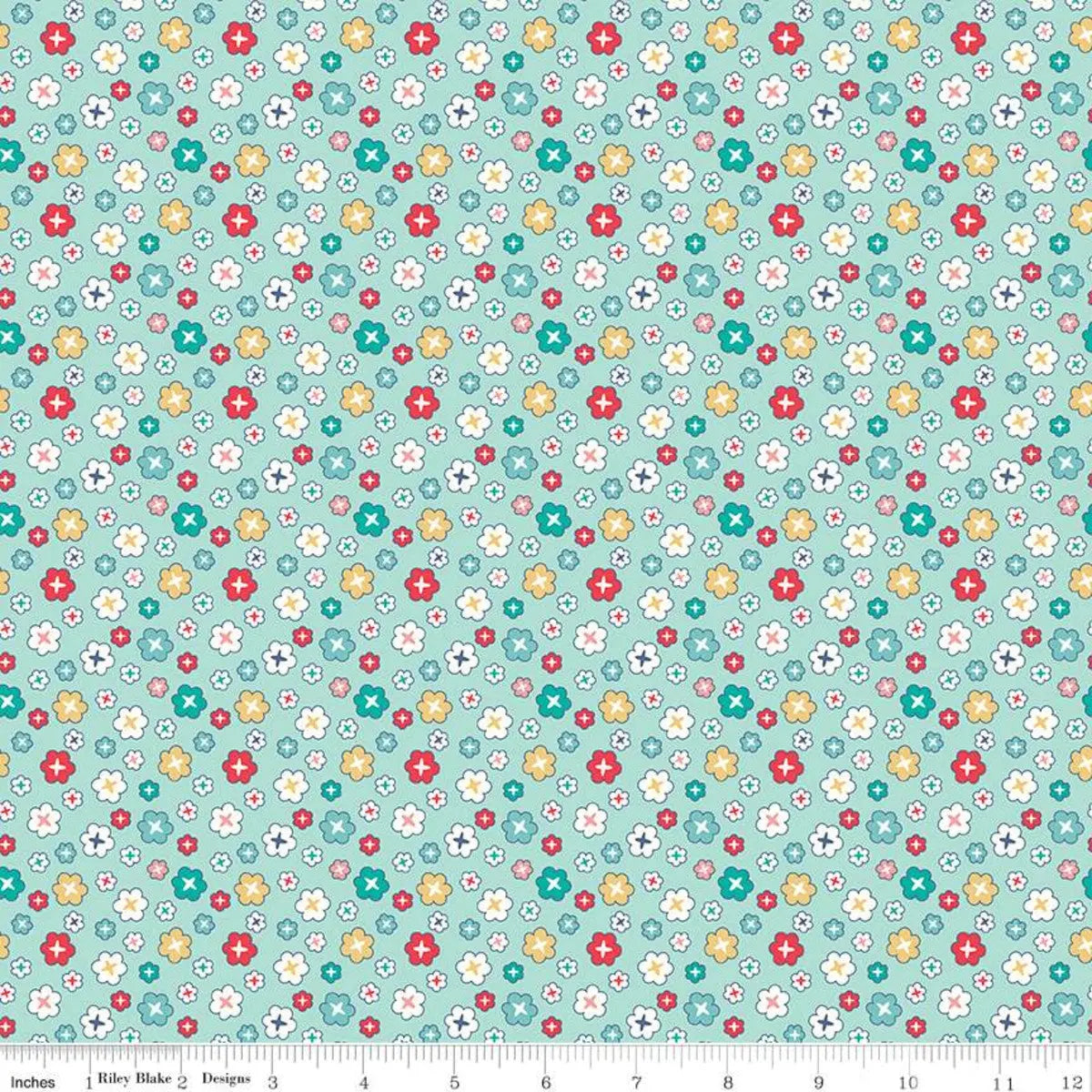
How to Back a Quilt in One Piece: Blue Vintage Happy Blossom Wideback
Piecing a quilt back from standard 44-inch fabric means sewing long panels together, pressing a seam that runs the full length of your quilt, and hoping that seam stays flat inside the sandwich. A wideback removes that step entirely. The Blue Vintage Happy 2 Blossom Wideback Fabric from Riley Blake Designs is 107/108 inches wide and made of cotton, so a single length of yardage backs most throw, twin, and many queen quilts with no center seam at all — and it does it with a cheerful blossom print instead of a plain solid.
What this fabric is
This is a quilting cotton wideback printed with a mixed flower blossom design in soft blue tones — the product is listed in baby blue and iced blue shades, part of the Vintage Happy range associated with Lori Holt. Florals are a natural fit for a quilt back: a blossom print feels intentional rather than leftover, it echoes garden, spring, and farmhouse-style quilt tops beautifully, and its all-over repeat hides quilting stitches gracefully. Because the pattern runs across the full width, you don't have to match motifs at a seam — there is no seam to match.
The math is simple. One yard gives you a piece about 36 inches long by 108 inches wide. Two yards give you roughly 72 by 108 inches, and three yards about 108 by 108 inches, before trimming. Measure your finished quilt top, add the overage your quilter requires — commonly 4 inches on each side for longarm quilting — and order the length that covers that total.
Best uses beyond quilt backs
- Wholecloth quilts and throws: Let the blossoms be the show. Layer a single piece with batting and a solid backing for a fast, finished quilt.
- Duvet covers and bed covers: The extra width covers a bed without piecing panels together.
- Tablecloths and curtains: A 108-inch width drapes a table or window in one clean piece.
- Home decor: Cushion covers, tote bags, and other accessories cut from wide yardage produce less waste and fewer awkward seams.
How to work with wideback fabric
1. Square it before you load it. Wide fabrics can come off the bolt slightly skewed. Fold selvage to selvage, check the print runs straight, and trim a clean, square edge before basting or loading the fabric on a longarm frame.
2. Press and inspect the full width. Unroll the whole piece under good light, check for flaws, and press out bolt creases — especially the center fold — so the fabric lies flat in the quilt sandwich.
3. Mind the grain. Keep the selvages running along the sides of the quilt, as your pattern or longarmer directs, so the back stretches and settles the same way as the top.
4. Use the trimmings. Offcuts from a 108-inch width are generous. Save them for binding strips, sashing, pillow shams, or a scrappy project — blue floral scraps mix easily with solids and other prints.
Color pairing ideas
Soft blue blossom is an easy partner. Pair it with white and cream for a fresh, airy back, with denim or navy for contrast, with pale yellow or soft green for a garden feel, or behind a mostly white quilt top where the blue back becomes a quiet surprise when the quilt is folded back. If your top is busy with many colors, the gentle blue repeat calms it; if your top is mostly solid, the blossoms add pattern without extra piecing.
Care
This is cotton fabric, made to be washed and used. As with most quilting cottons, washing cold and drying low helps preserve the print's color, and pre-washing is worth considering if your quilt top fabrics were pre-washed too — treating every layer the same way keeps the finished quilt from puckering unevenly.
If you are tired of piecing backs, a floral wideback is one of the simplest upgrades in quilting: less sewing, a smoother sandwich, and a back pretty enough to show off.
Shop the Blue Vintage Happy 2 Blossom Wideback Fabric Per Yard at Linda's Electric Quilters.


