
How to Back a Quilt in One Seamless Piece with Tonal Floral Wideback Fabric
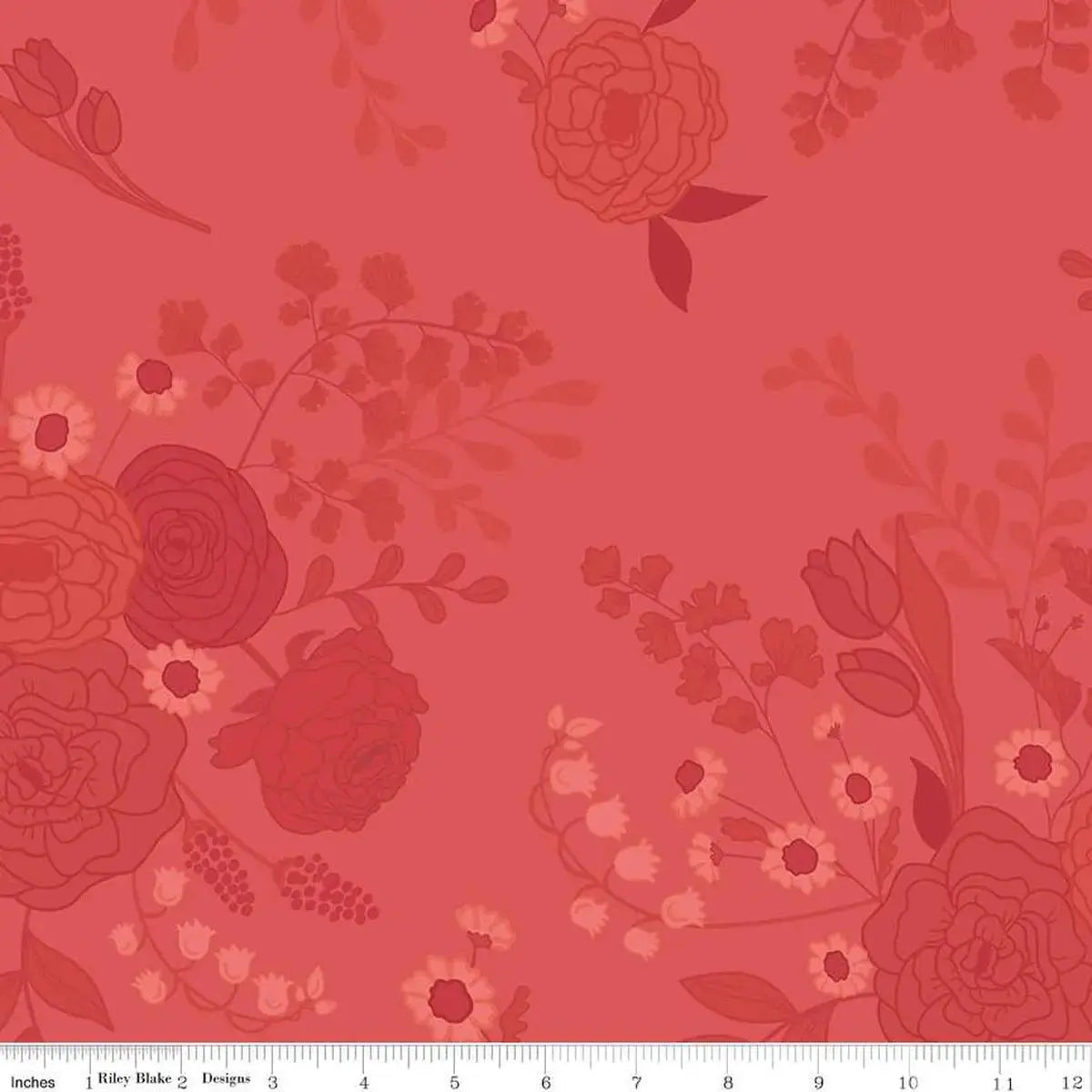
A beautiful quilt top deserves a back that feels just as intentional, and a wideback makes that easy. The First Blooms Tonal Floral Berry Cotton Wideback Fabric is a 100% cotton fabric from Riley Blake Designs, designed by Heather Peterson for the First Blooms collection. It features tonal floral bouquets in a rich berry colorway, and at 107"/108" wide it is made to accommodate most quilt backs in a single, unpieced length — no joining narrower cuts, no seam running down the middle, and no pattern matching to line up.
Because the bouquets are tonal, the print adds texture and interest without fighting for attention. Berry tones shift gently across the surface, so the back of your quilt reads as a soft floral field up close and a warm, unified color from across the room. That balance makes it a smart partner for busy patchwork tops that need a calm, coordinated finish.
What a Tonal Wideback Is Best For
Its first job is quilt backing. Standard quilting cotton is much narrower, so backing a generous throw or bed quilt usually means piecing two or three lengths together and pressing a long seam. A 107"/108" wideback covers most quilt tops from one cut, which means less measuring, less sewing, and a smooth back with no seam ridge to show through the quilting or catch on a longarm frame.
The First Blooms collection is described as great for quilting, apparel, and home decor, so leftover yardage is never wasted. The same wide cut that backs a quilt can become a duvet cover, curtain panels, a tablecloth, or other wide projects where a narrower fabric would need an awkward join.
Measuring and Cutting Your Backing
Start by measuring your finished quilt top, then plan the backing a few inches larger on all sides to allow for quilting take-up and final trimming. If you are sending your quilt to a longarmer, check their extra-allowance requirements before you cut. With this width, many quilts need only a single length ordered by the yard: square up one end, cut straight across, and you are ready to layer.
Press the fabric flat before basting, working out any fold lines from the bolt. Lay the quilt top centered over the backing so the floral bouquets sit evenly around the edges. Without a center seam, basting is straightforward and the layers stay smooth, which helps quilting stitches travel evenly across the whole surface.
Pairing Berry Florals with Your Quilt Top
Berry is a generous color to pair. It sits happily beside pinks, plums, deep reds, and soft creams, and it gives fresh contrast against sage, teal, navy, and charcoal. If your top uses First Blooms prints by Heather Peterson, this backing keeps the whole quilt inside one color story. If your top comes from another collection, look for at least one berry or floral note on the front and let the back echo it.
Tonal prints are also forgiving partners for high-contrast patchwork. A busy top in many colors gains a resting place on the reverse, while a simple, low-volume top gets depth and warmth when it is flipped over. For binding, pull a berry or plum tone that appears in both the top and the bouquets — that frame makes the two sides feel deliberately connected.
Project Ideas Beyond the Quilt Back
Order a little extra and put the width to work around the house: pillow shams that coordinate with your quilt, a spring table runner, cushion covers, or a light curtain panel where the floral bouquets can show at full scale. The print is pretty enough to be the feature fabric, not just the finishing layer.
Care
Care follows the instructions given for this fabric: machine wash cold and tumble dry low. Washing cold and drying on low helps protect the cotton fibers and keep the berry tones rich over time. Press with a warm iron after washing for a crisp, flat surface before cutting or layering.
Shop the First Blooms Tonal Floral Berry Cotton Wideback Fabric per yard at Linda's Electric Quilters.


