
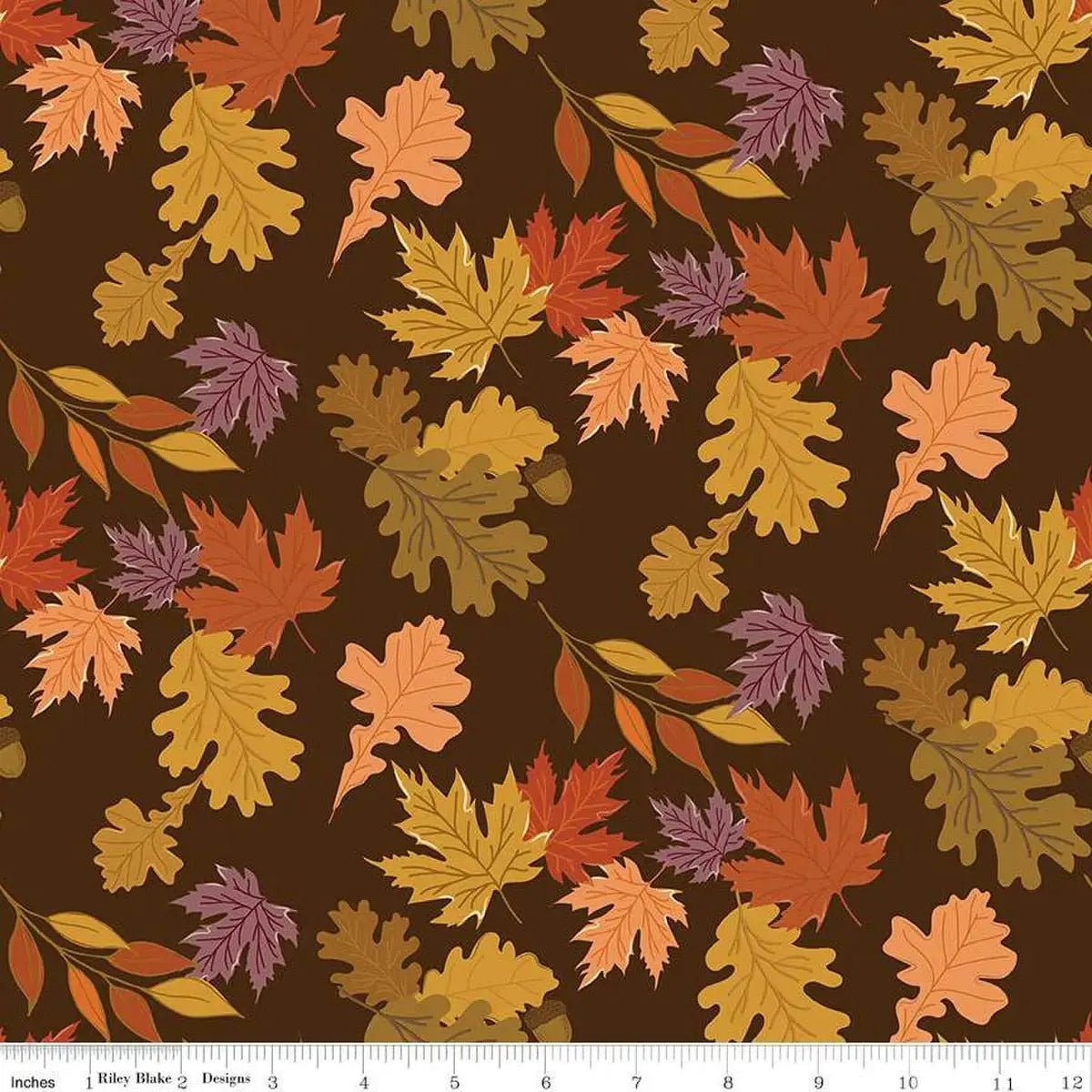
How to Back an Autumn Quilt Without Piecing Seams: Wideback Fabric with Scattered Fall Leaves
Every quilt top deserves a back that looks as considered as the front, and nothing finishes a fall quilt more simply than a wideback. The Awe of Autumn Leaves Brown Cotton Wideback Fabric is a 100% cotton fabric from Riley Blake Designs, designed by Sandy Gervais for The Awe of Autumn collection. At 107"/108" wide, it is made to accommodate most quilt backs in a single, unpieced length — no joining strips, no seam down the middle, and no pattern matching to fuss over.
The print itself is scattered fall leaves on a rich brown ground. That warm, earthy color does real work in a project: it hides quilting stitches gracefully, echoes the colors of autumn patchwork on the front, and gives the finished quilt a cozy, finished look every time it is folded back over a bed or sofa.
What a Wideback Is Best For
A wideback's first job is quilt backing, and this one is sized for it. Standard quilting cotton is roughly 44" wide, so backing even a generous throw usually means piecing two or three lengths together. A 107"/108" wideback covers most throw, twin, and many larger quilt tops from a single cut, which means less measuring, less sewing, and a smooth surface that quilts evenly on a domestic machine or a longarm frame.
Because the collection is described as great for quilting, apparel, and home decor, the same fabric earns its keep beyond the back of a quilt. Try it for wide, unseamed projects where a standard width falls short: duvet covers, curtain panels, and tablecloths for harvest gatherings. The scattered-leaf design reads well at any scale, so it works as a feature fabric, not just a hidden layer.
Measuring and Cutting a Wideback Backing
Start by measuring your finished quilt top, then add extra on all sides for quilting take-up and trimming — a common approach is to make the backing several inches larger than the top in both directions, and to check your longarmer's requirements if you are sending the quilt out. With a 107"/108" width, many tops need only the length cut from the roll: order by the yard, square up one end, and cut a single straight length.
Press the fabric flat before layering, paying attention to fold lines from the bolt. Center your quilt top over the backing so the leaf print sits evenly. Because there is no center seam, basting is straightforward — the back stays smooth, with no seam ridge to show through or interfere with quilting stitches.
Pairing Brown Leaves with Autumn Color
Brown is a natural anchor for fall palettes. Pair this backing with quilt tops built from The Awe of Autumn coordinates by Sandy Gervais so the front and back share the same color story, or let it ground other autumn fabrics: rust, gold, pumpkin orange, deep red, olive, and cream all sit comfortably against it. If your top is bright and busy, a warm brown back gives the eye a rest; if your top is soft and low-volume, the richer back adds the depth the project needs.
Binding is where you can tie the two sides together. Pull a color that appears on both the top and in the leaves — a rust or gold binding, for example, will frame the quilt and make the brown backing look intentional from every angle.
Project Ideas Beyond the Quilt Back
Keep a yard or two on hand for seasonal home decor: a fall table runner, placemats that coordinate with your autumn quilt, cushion covers, or a simple gathered curtain. The leaf scatter suits all of them, and the generous width means even wide projects come from one clean cut.
Care
Care follows the instructions given for this fabric: machine wash cold and tumble dry low. Cold washing and low drying help protect the cotton fibers and keep the brown ground and leaf colors looking rich wash after wash. Press with a warm iron after washing for a crisp finish before cutting or layering.
Shop the The Awe of Autumn Leaves Brown Cotton Wideback Fabric per yard at Linda's Electric Quilters.


