
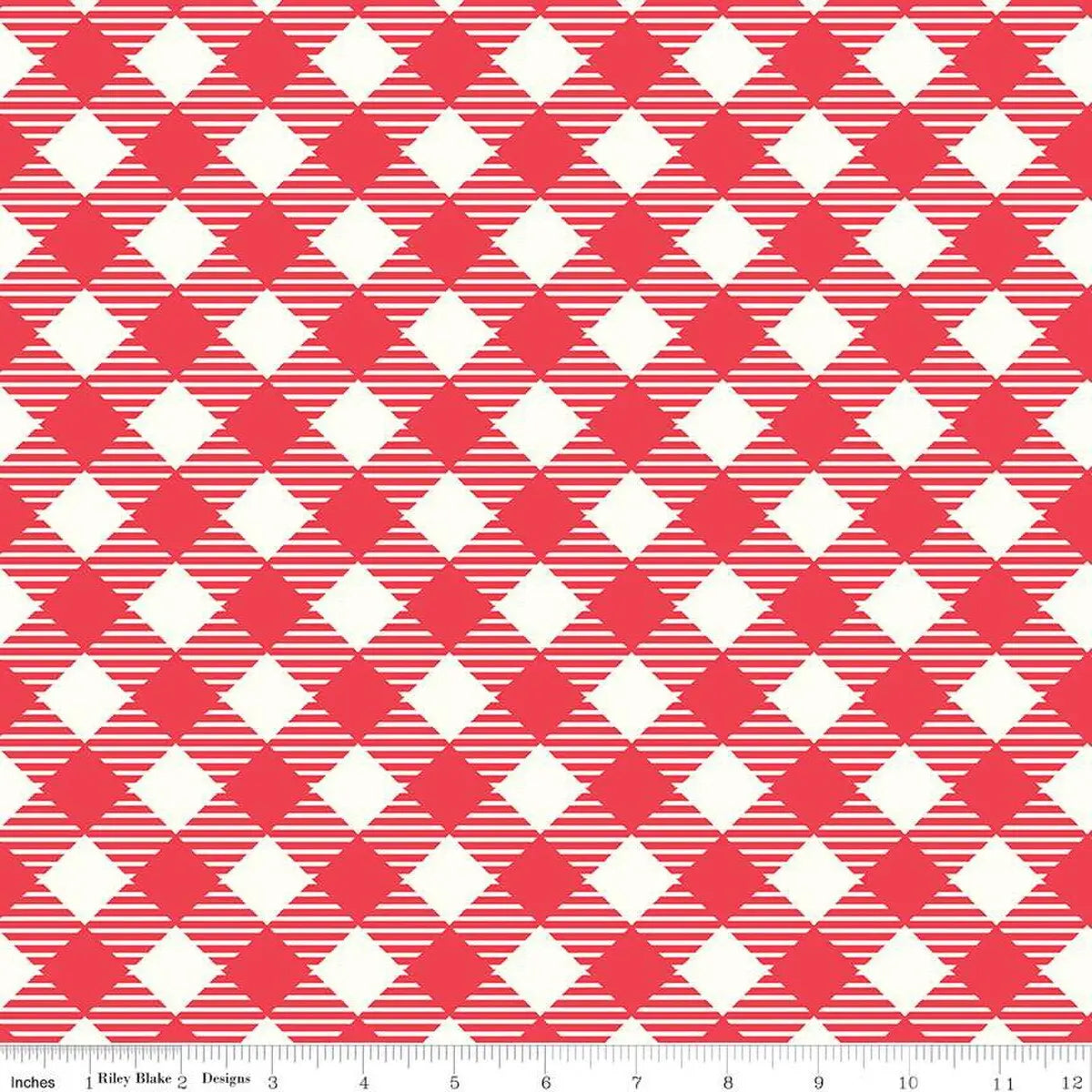
How to Back a Quilt Seam-Free with Red Cayenne Bee Ginghams Wideback
A quilt back should support the top, not compete with it — and it should not add a wrestling match at the longarm or sewing table. The Red Cayenne Bee Ginghams Cotton Wideback Fabric, by Lori Holt for Riley Blake Designs, solves the most common backing problem in one cut: at 107/108 inches wide, it is more than twice the width of standard quilting cotton, so most quilts can be backed with a single, seamless panel. Add a classic gingham check in a warm, spicy red cayenne, and you get a backing that looks intentional from every angle.
What This Fabric Is
This is a 100% cotton wideback fabric sold by the yard, from Lori Holt's Bee Ginghams line for Riley Blake Designs. Instead of the familiar small-scale print on a 44/45-inch bolt, the gingham check is woven into a generous 107/108-inch width designed specifically for quilt backs and other large projects. Gingham is a timeless choice: its even, repeating check reads as texture from a distance, hides quilting stitches gracefully, and never goes out of style. The red cayenne colorway brings warmth that pairs especially well with farmhouse, vintage-inspired, and Lori Holt-style quilt tops.
Why Width Matters
With standard-width fabric, backing a twin, queen, or even a generous throw usually means piecing two or three lengths together — measuring, matching, sewing long seams, and pressing them flat, all before you can sandwich the quilt. A centered seam can also create a ridge under quilting and a weak spot that gets extra wear in the wash. One length of 107/108-inch wideback eliminates that step entirely for most quilt sizes. You simply cut the length you need, and the back is ready. That saves time, saves fabric lost to seam allowances, and gives you a smooth, even surface that quilts and drapes beautifully.
How to Use It for a Quilt Back
1. Measure your top, then add margin. Measure the finished width and length of your quilt top and add at least 4 inches on all sides — more if your longarmer requests it. Because the fabric is 107/108 inches wide, check whether your quilt's shorter dimension fits within that width; if it does, you only need to order the longer dimension plus margin, cut by the yard.
2. Square and press. Wide fabric can shift on the bolt, so lay it out flat, square up the cut ends with a long ruler and rotary cutter, and give it a good press before layering. Check that the gingham checks run straight — that grid is a built-in guide for keeping your layers aligned.
3. Layer and baste as usual. Sandwich the backing, batting, and top, then baste or load onto the frame. The even check pattern makes it easy to spot if the back is drifting as you quilt, and it forgives a multitude of stitch styles, from dense free-motion to simple straight-line quilting that follows the gingham grid itself.
Beyond the Quilt Back
The same width that makes this fabric a backing hero makes it useful all over the house. The product notes highlight upholstery projects, drapings, and table cloths — anywhere you need broad, unbroken coverage. A gingham tablecloth in red cayenne is a picnic and farmhouse-table classic, and the generous width means no seam down the middle of the table. It also works for duvet covers, bed skirts, and large pillow shams.
Color Pairing and Care
Red cayenne gingham loves company: pair it with cream, white, denim blue, and soft aqua tops for a fresh vintage look, or let it back black-and-white and scrappy quilts for a cheerful surprise when the quilt is flipped over. If your top is already busy, the small, regular check still reads calm on the back. For care, this cotton wideback is described as easy to wash and maintain, retaining its charm through repeated use and washes — treat it like your other quilting cottons, and your finished quilt will stay bright and serviceable for years.
Shop the Red Cayenne Lori Holt Bee Ginghams Cotton Wideback Fabric per yard at Linda's Electric Quilters.


