
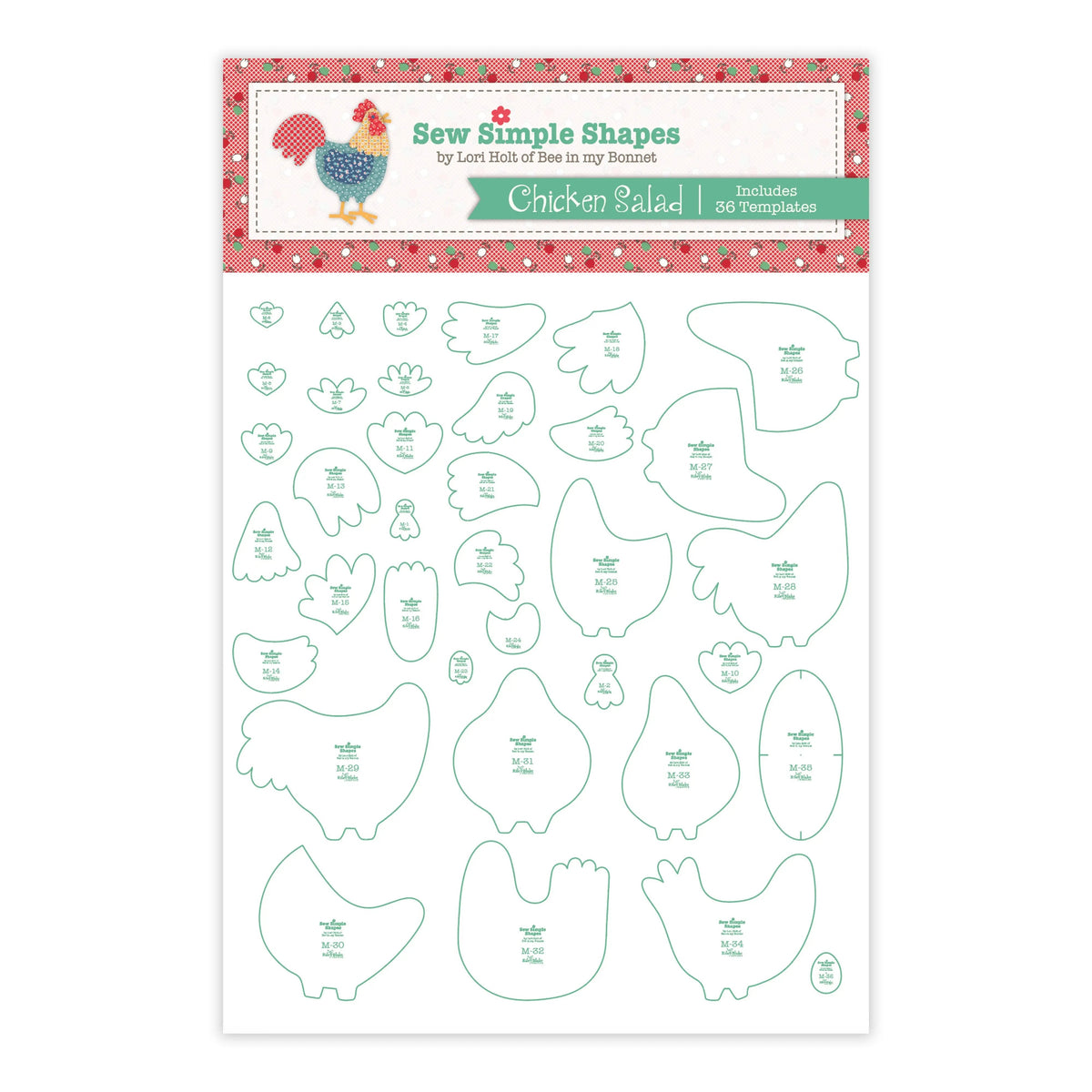
How to Use Chicken Salad Simple Shapes Templates for Perfect Appliqué
Appliqué is much easier when every piece starts the same size and shape. The Cook Book Chicken Salad Simple Shapes, created by Lori Holt of Bee in my Bonnet, give you a set of 36 Chicken Salad templates designed for the Chicken Salad Quilt Sew Along and the feature fabric from Lori Holt's Cook Book collection. Instead of drafting shapes by hand — and discovering halfway through a block that two matching pieces are not actually matching — you trace, cut, and place from sturdy, reusable templates made for the job.
What These Templates Are
This is a template set, not a finished quilt and not fabric. You get 36 Chicken Salad templates in assorted sizes, made of sturdy clear plastic. Two details make them especially practical. First, each template has center marks, so you can line a shape up on a block, a background square, or a seam line with confidence instead of eyeballing placement. Second, the plastic is see-through, which makes fussy cutting possible: you can position the template over a specific motif in your fabric, preview exactly what will show, and only then trace and cut.
The templates work with the appliqué method of your choice. Lori Holt designed them for use with her appliqué methods, but the shapes themselves are simply accurate guides — how you turn, fuse, glue, or stitch the edges down is up to you and the technique you prefer.
Step by Step: From Template to Block
1. Choose and preview. Pick the template for the piece you need, then lay it over your fabric. Because it is see-through, slide it around until the print sits exactly where you want it inside the shape. This is where fussy cutting shines: a flower, a check, or a small motif from the Cook Book feature fabric can be centered on purpose rather than by luck.
2. Mark with the center lines. Use the center marks to orient the shape on the grain and to note where its middle falls. Tracing around a sturdy plastic edge gives you a clean, repeatable outline, so the second, tenth, and thirtieth pieces all match the first.
3. Cut and prepare your pieces. Cut out the traced shape, then prepare it using your chosen appliqué method. Consistency matters most here: prepare every piece the same way so edges behave the same way when you stitch them down.
4. Position before you commit. Lay out the full block first, using the center marks to align pieces against the center of your background. Step back and check spacing and balance before anything is fused or stitched. Templates make repositioning easy at this stage because every piece is true to size.
5. Stitch it down. Appliqué the pieces in place, working from background pieces toward foreground pieces so overlaps sit correctly. The endless variety Lori Holt built into the 36 shapes means you can rearrange elements from block to block and still keep a cohesive look across the quilt.
Project Ideas Beyond the Sew Along
These shapes were designed for the Chicken Salad Quilt Sew Along, the natural place to start, especially paired with the Cook Book collection's feature fabric. But a good template set earns its keep long after one project ends. Use individual shapes for a kitchen-themed table runner, appliquéd tea towels, or a framed block for a farmhouse-style wall hanging. Smaller groupings work well on tote bags and project pouches. Because the templates are durable plastic, you can return to them whenever a project calls for a cheerful chicken-themed accent.
Tips for Best Results
Keep your templates stored flat and together so the full set of 36 is ready when you need it. When fussy cutting, take the extra minute to preview the motif through the plastic — that pause is the difference between a random cut and a deliberate one. Finally, let the center marks do the measuring for you: aligning centers first, then edges, keeps blocks square and placement even across a whole quilt.
Shop the Cook Book Chicken Salad Simple Shapes at Linda's Electric Quilters.


