
How to Back a Quilt Without Seams Using Red Wideback Fabric
The back of a quilt deserves as much thought as the top, and a wideback makes that job much simpler. The Red Wideback Shabby Cherry Fabric Per Yard is a Riley Blake Designs Basic by Lori Holt of Bee in my Bonnet. At 107"/108" wide, it is made to accommodate most quilt backs in a single panel — no piecing a backing seam, no matching a seam down the middle, and no wrestling several lengths of standard-width fabric into alignment. If you have ever had a backing seam land slightly off-center or pucker under quilting, you will appreciate what one wide, continuous piece can do.
What This Fabric Is
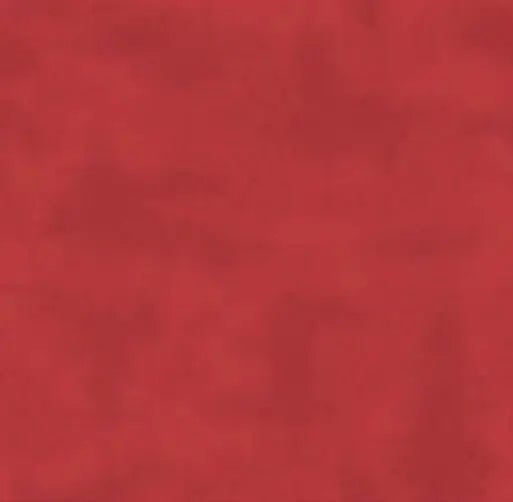
This is a 100% cotton wideback fabric, sold by the yard. As a Riley Blake Designs Basic, it has the versatile, textured look Lori Holt is known for: thin crosshatched lines and scattered specks on a shaded background. That subtle texture is the point. It gives a rich red backing real depth and movement, hides everyday quilting stitches gracefully, and reads as a solid from a distance while staying interesting up close.
Because it is a basic rather than a novelty print, it does not fight with the quilt top for attention. Use it when the top is busy, scrappy, or multi-colored and needs a strong, unified finish underneath, or when you simply want a backing that will still look good if the quilt is folded back over a bed, draped over a sofa, or used as a lap quilt.
Sizing and Cutting a Seamless Backing
Start by measuring your finished quilt top across its widest and longest points. For most quilting methods, you want the backing to extend beyond the top on all sides — a common working allowance is about 4 inches extra on each side, with more if your longarm quilter requests it. Check your quilter's requirements first, before you cut.
With a 107"/108" width, many throw, twin, and even larger tops can be backed across the width without a seam, and you order length by the yard to suit the other dimension. Lay the fabric flat, straighten one cut edge so it is on grain, and trim square. A long ruler and a large cutting surface help here. Press out fold lines before layering, because a crease left in a wide backing can quilt in as a ridge.
If your quilt is wider than the fabric, you can still use it — simply piece it with a horizontal seam placed off to one side rather than through the center, and press that seam open and flat so it does not create bulk under quilting.
Color Pairing and Project Ideas
A warm red backing pairs naturally with cream, white, denim blue, sage, and other Lori Holt-style vintage palettes, and it makes a confident binding partner too. Try a cream or natural binding for a clean frame, or bind in the same red for a seamless edge. If the quilt top uses lots of red, check the tones together in daylight — a backing that is slightly deeper or softer than the top often looks more intentional than an almost-match.
Beyond quilt backs, a wide cotton like this is useful for other large, flat projects where width saves piecing: duvet covers, bed skirts, tablecloths, curtains, and whole-cloth quilts where the quilting itself is the design. Its soft cotton hand also makes it suitable for apparel pieces cut from wider layouts, though for garments you will want to consider grain and drape for the pattern you choose.
Care
Follow the care given for this fabric: machine wash cold and tumble dry low. Washing before layering is a personal choice many quilters make with a strong red, so any excess dye is handled before the backing meets a light-colored top — if you prewash, wash it separately the first time and check that the water runs clear. Store leftover yardage folded loosely out of direct sunlight to keep the red looking fresh for the next project.
Shop the Red Wideback Shabby Cherry Fabric Per Yard at Linda's Electric Quilters.


