
Warm Amber on the Back: Using a Mottled Blender Wideback Without Fighting Your Quilt Top
Some quilt tops already do all the talking, with bold prints or busy piecing that do not need a second star on the back. That is where a mottled blender shines. The Orange Amber Mottled Blender Wideback Cotton Fabric, from QT Fabrics, gives you colour and texture without a competing motif, so the back supports the quilt instead of arguing with it.
What This Fabric Actually Is
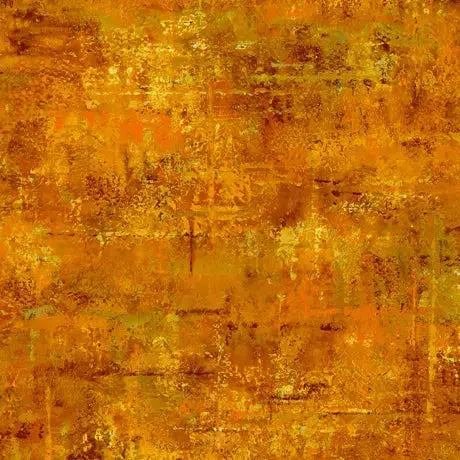
This is a 108-inch cotton wideback from QT Fabrics' Vibe 108" collection. The print is Mottled Blender-108, in Amber, described as orange and yellow. Instead of a sharp, repeating design, a mottled blender has soft variation across the surface. From a distance it reads as a warm, rich amber; up close you see gentle shifts in tone that hide quilting stitches better than a flat solid can.
It is sold by the yard as cotton wideback quilting fabric. The product notes say the Vibe 108" backings come in 14 richly coloured combinations. Because it is 108 inches wide, most tops can be backed in one seamless piece, with no centre seam to align.
How to Choose a Backing: Size Math First
Start with measurements, not guesses. Take your finished quilt top and add 8 inches to both width and length. That gives you 4 inches of extra backing on every side — room for longarm loading and insurance against shifting at home.
For example, a 60 by 72 inch throw needs a backing at least 68 by 80 inches. The 68-inch width fits easily across 108 inches, so one width is plenty. For the 80-inch length, divide by 36: about 2.25 yards, so order 2.5 yards to allow for squaring up. A 90 by 96 inch queen top needs 98 by 104 inches. The width still fits within 108 inches, and the length calls for about 3 yards. If your top plus 8 inches is wider than 108 inches, you will need to piece the backing — let the numbers tell you before you order.
Cotton, Minky, or Flannel?
Cotton wideback like this one is the most versatile choice. It presses flat, feeds evenly, and works for domestic-machine and longarm quilting, while keeping the quilt lighter than a plush back. Minky adds warmth and a cuddly feel, but it has stretch and pile, so it needs more care when loading. Flannel sits between them: cotton, brushed for softness and warmth, but prone to more shrinkage. Amber works especially well behind autumn prints, warm neutrals, and earth tones, where white or cream would feel too stark.
Working Tips: Pressing, Prewashing, and Loading
Widebacks arrive folded, and that centre fold can be stubborn. Open the fabric fully, press from the wrong side with steam, and work the crease in sections. A light mist of water usually helps it relax. Check that the fabric is square before you cut, using the selvages and a large ruler to true up the ends.
Prewashing is your choice, but be consistent. Cotton can shrink a little, and warm colours such as orange and yellow deserve a colour check. If you plan to wash the finished quilt often, washing the backing first reduces surprises later. If your top fabrics were not prewashed, many quilters skip prewashing the back so everything shrinks together.
For longarm loading, centre the backing, keep the selvages parallel, and confirm that extra 4 inches is present on all sides before basting the top in place. A mottled print is forgiving if you are slightly off-centre, because there is no directional motif to keep straight.
Care and the Finished Quilt
Treat the finished quilt as you would other cotton quilts: gentle washing, and dry or air it as suits your batting and top fabrics. The mottled surface is forgiving — its tonal variation shows lint and quilting irregularities less than a plain solid.
If your top is warm, busy, or in need of a back with depth but no drama, this amber blender is a sensible, good-looking answer.
Shop the Orange Amber Mottled Blender Wideback Cotton Fabric per yard at Linda's Electric Quilters.


