Table of Contents
- What Is Glide Thread?
- Glide Thread for Quilting: Strength and Coverage
- Glide Thread for Embroidery: Sheen and Stitch Quality
- Glide Thread vs. Cotton Thread: Key Differences
- Glide Thread Tension Settings and Machine Setup
- Durability, Care, and Long-Term Performance
- Conclusion: Is Glide Thread Right for Your Projects?
- Frequently Asked Questions
Last Updated: October 5, 2026
What Is Glide Thread?
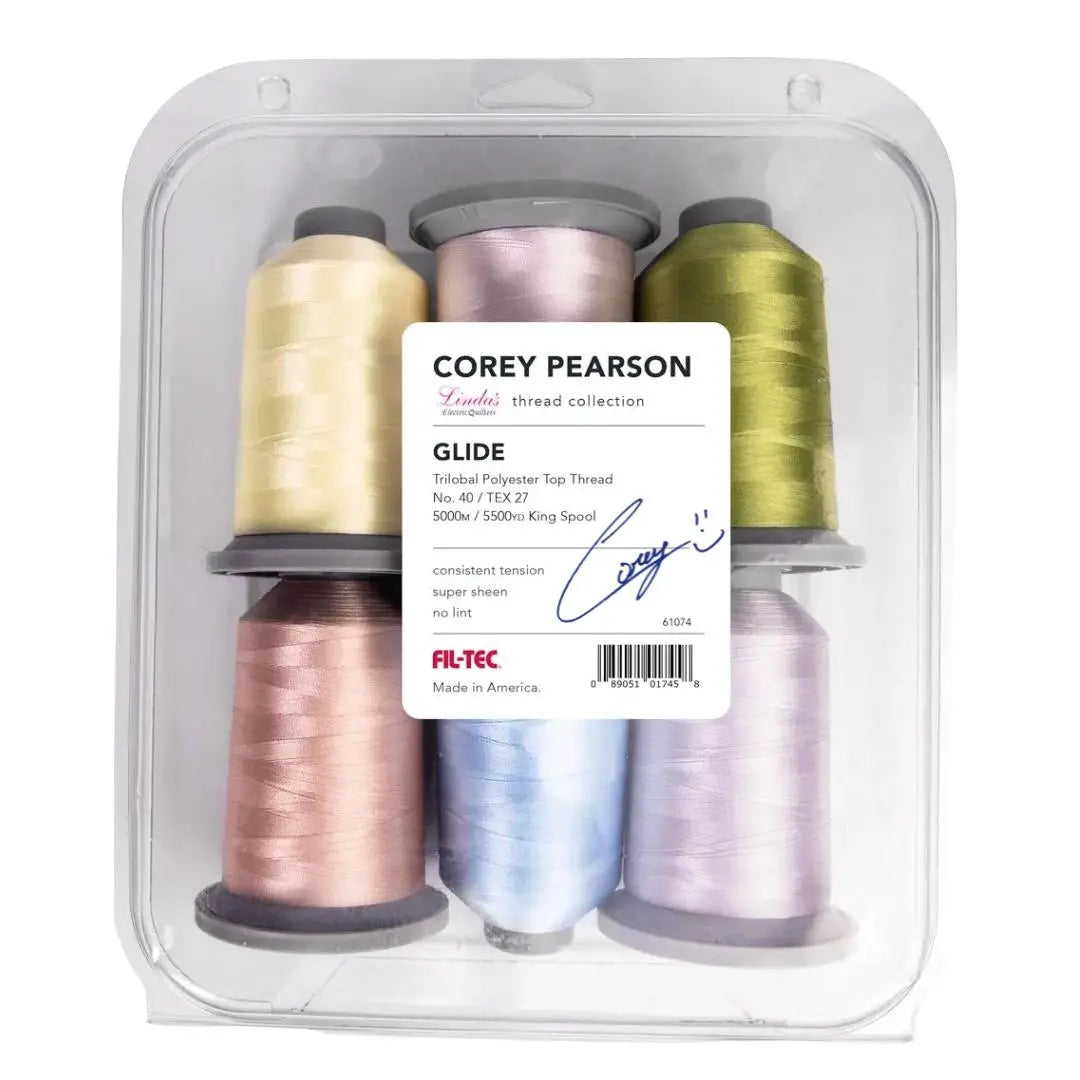
Glide thread is a polyester thread made from high-tenacity filament yarn with trilobal polyester construction.
The trilobal design, three-sided fibers rather than round ones, creates that signature luster while maintaining strength. The most common format is the 40-weight cone, which holds 5,500 yards and costs $13.30 per spool at Linda's Electric Quilters.
What makes Glide thread stand out is consistency. The trilobal technology maintains even tension throughout each spool, translating to fewer thread breaks and more reliable stitch formation.
Glide Thread for Quilting: Strength and Coverage
Glide thread excels in quilting because it delivers superior coverage.
Glide thread's strength is particularly valuable in production environments, where quilters report fewer machine stops and less downtime than with weaker threads. Its lint-free finish also runs cleanly through needle and tensioners without residue buildup.
Quilting with Glide thread typically requires a slight tension adjustment from cotton. Because it's smoother and more slippery, many quilters tighten tension slightly, with most machines settling around the 6-7 range.
Glide's color range makes it ideal for matching fabrics precisely, whether you're doing stitch-in-the-ditch work that needs to disappear or decorative quilting that should pop. Linda's Electric Quilters stocks shades including Pomegranate, Pepper, Stone, Cashmere, and Putty.

Glide Thread for Embroidery: Sheen and Stitch Quality
In embroidery, Glide thread's high sheen is the main draw.
Embroiderers often compare Glide to rayon, which also delivers sheen, but Glide wins on durability and consistency.
Thread weight matters in embroidery. Standard 40-weight Glide works well for most machines and design densities; step down to a finer weight for very intricate designs.
One thing to watch: Glide's smooth finish can slip slightly in bobbins if bobbin tension isn't set correctly. If you notice skipped stitches or loops on the back of embroidered pieces, check bobbin tension first.
Glide Thread vs. Cotton Thread: Key Differences
Cotton thread has been the quilting standard for decades: familiar, affordable, and reliable on most machines.
| Aspect | Glide Thread | Cotton Thread |
|---|---|---|
| Sheen & Appearance | High, silky luster | Matte finish |
| Strength | Superior, fewer breaks | Good for most uses |
| Lint Production | Virtually lint-free | Produces lint buildup |
| Color Range | 200+ stocked colors | More limited selection |
| Machine Compatibility | Requires slight tension adjustment | Works with standard settings |
| Best For | Decorative, visible stitching | All-purpose sewing |
| Durability After Washing | Colorfast polyester | Can fade with repeated washing |
Cotton works perfectly well for piecing and basic quilting, and for stitch-in-the-ditch work where thread disappears into seams, it's economical and effective.
The lint issue is real. Cotton's microscopic fibers accumulate in tension discs and needle plate, causing tension inconsistency and skipped stitches over time.
Cost-wise, Glide and cotton are comparable at retail. The difference is what you get: cotton gives reliable basics, while Glide adds durability plus visual distinction.
Glide Thread Tension Settings and Machine Setup
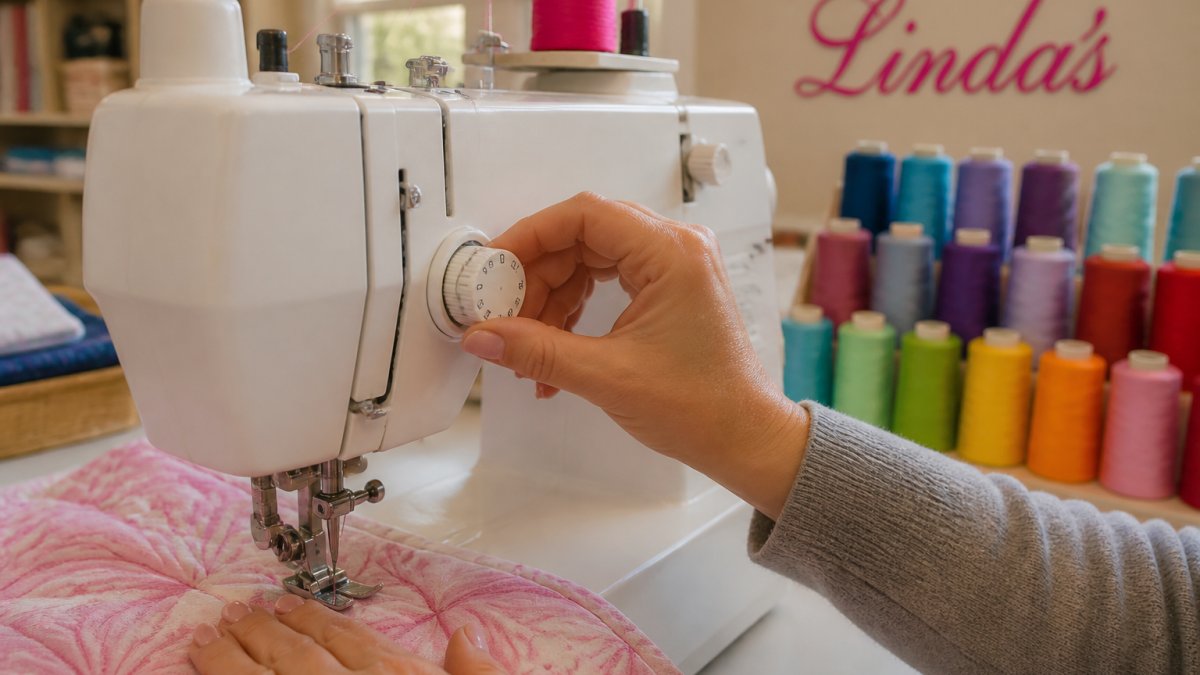
Getting tension right is the difference between beautiful stitching and frustration. Glide thread requires different tension than cotton because its smooth, slippery filament construction pulls through the tension discs more easily, so most practitioners find it needs slightly more top tension to keep the stitch balanced.
A Diagnostic Sequence That Actually Works
Instead of guessing at a number, run this order of operations, which isolates one variable at a time.
- Reset to a known baseline. Set top tension to the middle of your machine's range (often 4 or 5 on a 0-9 dial) and set bobbin tension to the factory default. Do not chase a problem by adjusting both at once.
- Stitch a test sandwich. Use the same fabric, batting, and backing as your real project. Stitch a 6-inch line of straight stitches, then a curve, then a tight stipple. Different stitch geometries stress tension differently.
- Read the stitch, not the dial. If loops or loose stitches appear on the back, top tension is too loose, increase it a half-step at a time. If the bobbin thread is pulling to the top, top tension is too tight, decrease it. If both sides look slightly loose, the bobbin tension is the likely culprit.
- Re-test after every change. A half-step on the dial can be the difference between a balanced stitch and a bird's nest. Change one thing, stitch, evaluate, repeat.
Most longarm and domestic machines settle between 6 and 8 on the top tension dial for 40-weight Glide, but that's a starting point, not a rule. Different tension disc designs, bobbin cases, and needle sizes land at different numbers. The stitch itself is the only reliable gauge.
77402 Pomegranate Glide Polyester Thread - 5,500 yards King Spool →
Needle Choice Matters as Much as Tension
A worn or wrong needle causes more thread problems than thread quality ever will. For 40-weight Glide on quilting cotton, pair a 90/14 or 100/16 quilting needle; for embroidery on stable fabric, a 75/11 embroidery needle often works well; for fine fabrics, step down to a 70/10 or 80/12.
Replace your needle every 8 hours of stitching, or sooner if you notice skipped stitches, shredding, or a popping sound. A bent needle creates a burr that snags filament thread and causes breaks that look like a thread defect.
Bobbin Pairing
Glide is commonly paired with a 60-weight polyester bobbin thread, which keeps the back of the quilt soft and reduces bulk in dense quilting. Some quilters use the same 40-weight Glide in the bobbin for a reversible look, but that requires more careful bobbin tension adjustment and can add stiffness. If you switch bobbin thread weights, re-check bobbin tension first, the bobbin is the variable that changed.
Thread Path and Machine Cleanliness
Before switching to Glide or any new thread, clean the machine. Brush lint and dust from the tension discs, needle plate, and bobbin area, a clean machine is far more forgiving of thread changes. Also check the thread path: a spool not seated squarely, a thread stand too far from the machine, or a guide the thread has jumped out of all cause tension symptoms no dial adjustment can fix.
Durability, Care, and Long-Term Performance
Glide thread holds up remarkably well to washing and wear, but how you launder and store finished projects determines whether that durability shows up over years of use. This is where Glide's polyester chemistry gives it a real edge over cotton and rayon.
Laundering Quilts and Embroidered Pieces
Polyester filament thread is colorfast and resists fading, but the fabric and batting around it may not be. A conservative routine protects both:
- Water temperature: Cool to warm (around 80-90°F) is safe for Glide. Hot water is the bigger risk to the batting and fabric than to the thread itself.
- Detergent: Use a gentle, pH-neutral detergent. Avoid bleach and fabric softener. Softener leaves a residue that can dull the sheen that makes Glide desirable in the first place.
- Agitation: A gentle or delicate cycle reduces stress on stitches. For heavily quilted pieces, a front-loading machine or a hand-wash in a bathtub is gentler than a top-loader with a center agitator.
- Drying: Air dry flat or on a line when possible. If you use a dryer, use low heat and remove the piece while slightly damp. High heat is the main threat to polyester thread over time, it can cause the filament to relax and the stitch to lose its crispness.
- Frequency: Every wash cycles the fabric and thread together. Quilts that are washed frequently will show wear at the stitch lines eventually, regardless of thread type. Rotating quilts and spot-cleaning when possible extends their life.
One practical advantage of Glide in the wash: because it is virtually lint-free, you will not see the thread particles in your wash water or lint trap that cotton produces. That also means less lint transfer to other fabrics in the same load.
Heat, Sunlight, and Storage
Polyester resists UV degradation better than cotton or rayon, but it is not immune. Prolonged direct sunlight weakens any thread and fades the fabric around it long before the thread fails.
For thread storage, keep spools cool, dry, and out of direct sunlight. Sealed plastic boxes or zip-top bags protect against dust and humidity. Avoid hot garages or attics, sustained heat above roughly 100°F can make polyester filament brittle over time. A closet or interior shelf is ideal.
How Glide Compares to Cotton and Rayon Over Time
| Factor | Glide (Polyester) | Cotton | Rayon |
|---|---|---|---|
| Colorfastness | High | Moderate; can fade | Moderate; can fade |
| Strength retention with age | High | Moderate | Low; can become brittle |
| Lint in machine and wash | Virtually none | High | Low |
| Heat sensitivity | Moderate | Low | High |
| UV resistance | High | Moderate | Low |
| Best long-term use | Quilts, wearables, heirloom pieces | Utility quilts, piecing | Decorative pieces with limited washing |
Rayon is the thread most likely to degrade with age, becoming weak and brittle over years, especially in dry or hot storage. For quilts or embroidered pieces stored long-term or passed down, Glide is the more preservation-friendly choice. Cotton is fine for piecing and utility quilting but produces lint and fades more readily than polyester.
Strength-to-Weight and Machine Longevity
Glide's high-tenacity filament construction means a thinner thread carries more load than comparable cotton, translating to less stress on your machine over thousands of stitches: fewer tension fluctuations, less needle deflection, and less wear on tension discs and bobbin case. In high-production environments, that shows up as fewer machine stops and longer service intervals.
Conclusion: Is Glide Thread Right for Your Projects?
Glide thread is the right choice when visual impact and durability matter. For quilting designs meant to be seen, embroidering decorative details, or creating pieces that endure repeated washing and wear, Glide delivers.
For basic piecing or utility stitching where the thread won't be visible, cotton remains economical and effective. But for anything decorative, longarm quilting, machine embroidery, appliqué, or embellishment, Glide outperforms. The key is matching thread choice to your project's purpose.
At Linda's Electric Quilters, we stock Glide thread in popular 5,500-yard king spools at $13.30 each. Whether you're starting with Glide for the first time or restocking your favorites like Pomegranate, Pepper, or Stone, you'll find everything you need in one place.

Frequently Asked Questions
What is Glide thread made of?
Glide thread is a 40-weight polyester thread made with advanced trilobal polyester construction using high-tenacity filament yarn. The trilobal design creates a brilliant, silky sheen and ensures consistent tension throughout each spool. This polyester composition gives Glide its strength, lint-free performance, and smooth feeding through machine needles, making it suitable for quilting, embroidery, and decorative stitching applications.
Is Glide thread stronger than cotton thread?
Yes, Glide polyester thread is stronger than most cotton threads. The high-tenacity filament construction in Glide delivers superior strength, which translates to fewer thread breaks and less machine downtime, especially in production environments. Cotton thread, while popular for piecing, lacks the tensile strength of polyester. For projects requiring durability and consistent stitch quality, Glide's strength advantage makes it the better choice for longarm quilting and high-speed machine work.
Can you use Glide thread in a longarm quilting machine?
Yes, Glide thread is specifically designed for longarm quilting machines. Its lint-free finish, consistent tension, and strength make it ideal for the fast-paced demands of longarm work. The thread feeds smoothly through machine tensioners and needles without buildup, and its superior durability means fewer breaks during extended quilting sessions. Many longarm quilters rely on Glide for the high-quality, consistent stitch formation it provides across large projects.
What tension settings should I use with Glide thread?
Start at your machine's default tension setting and adjust slightly if needed. Because of its consistent tension properties and trilobal polyester construction, Glide maintains even stitch quality across the spool. If you experience thread breakage or loose stitches, check for a burr on your needle, ensure your needle is inserted correctly, and adjust tension in small increments.
Choose Glide thread when durability and visual distinction matter for your quilting and embroidery projects. Shop our full selection at Linda's Electric Quilters and explore our 700+ educational videos to master tension settings, machine setup, and thread selection for flawless results on every project.