Table of Contents
- How to Vet Quilting Expert Credentials
- Best Online Quilting Tutorials for Every Skill Level
- Online Quilting Communities for Feedback and Peer Advice
- How to Troubleshoot Quilting Machine Issues With Online Resources
- Curated Learning Paths vs. Random Tutorial Browsing
- Matching Online Advice to Your Specific Quilting Goals
- Conclusion
- Frequently Asked Questions
Last Updated: September 18, 2026
How to Vet Quilting Expert Credentials
Learning how to find expert quilting advice online starts with one hard truth: a large following does not equal real expertise. The Craft Industry Alliance released its Quilting Industry Consumer Survey Results 2026 to fill a real gap, since solid consumer data in the craft world is scarce. That same gap exists in advice quality.
What Counts as a Credential in the Quilting World
A quilting credential is verifiable evidence that someone has mastered the craft and can teach it.
Real credentials include:
- Published patterns or books with an ISBN
- Teaching history at quilt shows or shops
- Recognition from groups like the American Quilt Study Group, which helps hobbyists grow into recognized quilt experts
- Consistent, well-lit demonstration videos with clear instruction
Red Flags That Signal Unreliable Advice
The biggest problem online is not bad advice. It is too much advice. A common complaint in the r/quilting community is that beginners cannot tell high-quality instruction from common mistakes.
Watch for these warning signs:
- No finished projects shown, only talking
- Vague steps like "just quilt it" with no demonstration
- No troubleshooting section for when things go wrong
- Pressure to buy a specific product with no explanation
Best Online Quilting Tutorials for Every Skill Level
The best online quilting tutorials match your skill level and show the full process, not just the pretty result. Sort them by level:
- Beginner: Look for full project walkthroughs with fabric selection and cutting shown
- Intermediate: Seek tutorials on piecing accuracy and block assembly
- Advanced: Find content on machine quilting, free-motion work, and professional finishing
Evaluating Video Quality and Teaching Depth
Good instruction shows the hard parts; bad instruction hides them. Check these things before committing an hour to a video:
- Is the camera close enough to see the needle and fabric?
- Does the teacher explain why, not just how?
- Are mistakes shown and fixed on camera?
- Is there a written pattern to follow along?
If a tutorial skips the troubleshooting, it is only half a lesson. The Nova Southeastern University study in The Qualitative Report found that case study methods work best for answering "how" and "why" questions. The same logic applies here. A tutorial that walks through a real project, mistakes included, teaches more than one that only shows perfection.
Online Quilting Communities for Feedback and Peer Advice
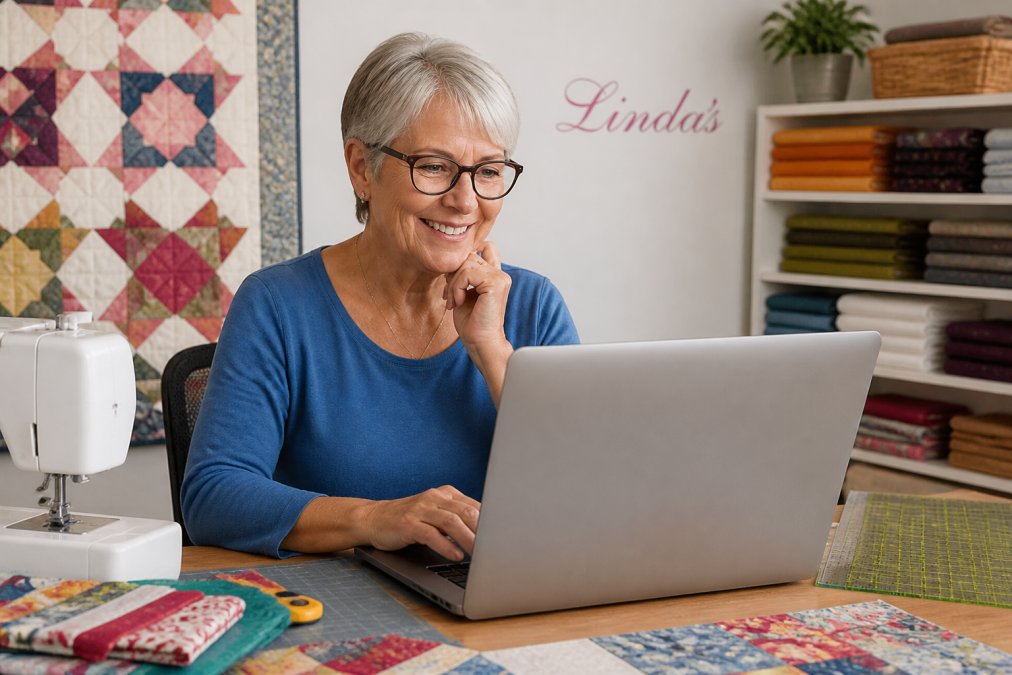
Online quilting communities give you something tutorials cannot: a second set of eyes on your work. But feedback quality depends on structure, not size.
Where to Find Communities That Actually Help
The most useful communities fall into four types, each solving a different problem:
- Large open forums (for example, the r/quilting community on Reddit) are best for quick troubleshooting, but threads move fast and answers vary in quality.
- Specialty guild-affiliated groups, including local and regional guilds with online chapters, have experienced members and structured show-and-tell threads, slower responses, more reliable critique.
- Pattern-designer communities built around a single teacher or shop offer the most consistent advice because everyone works from the same method, though perspective is limited.
- Small paid or invite-only groups often produce the highest-quality feedback per post because members share a commitment; you trade reach for depth.
How to Ask for Feedback That Is Actually Useful
"What do you think?" gets compliments. Specific questions get fixes.
Compare these two posts:
- Weak: "Here is my quilt top, thoughts?"
- Strong: "My nine-patch blocks are finishing at 6 1/4 inches instead of 6 1/2. I pressed seams open and used a scant 1/4-inch foot. Where is the loss coming from?"
Digital Safety and Community Etiquette
Most quilters never think about this, and that is the problem. Sharing photos of your work is fun; sharing too much is risky.
Follow these basics:
- Never post your home address or full name in public threads
- Use a username, not your legal name, in large open groups
- Strip location data from photos before posting, most phones embed GPS coordinates by default, and a quilt photo taken on your porch can reveal where you live
- Ask before sharing another member's pattern or photos
- Keep payment for swaps or sales inside platforms with buyer protection
- Report pushy direct messages instead of engaging
- Do not repost a tutorial video or pattern image without credit and permission; most designers rely on that work for income
When to Move From Peer Advice to an Expert
Peer feedback is excellent for catching mistakes and building confidence, but it is no substitute for instruction when learning a new technique from scratch. If three members give three different answers, find one trusted teacher and follow a single method to completion before comparing alternatives.
Doodle School A Daily Design Challenge →
How to Troubleshoot Quilting Machine Issues With Online Resources
Knowing how to troubleshoot quilting machine issues saves you a repair bill and a ruined project. Most problems have simple fixes you can find online in minutes, but only if you search in the right order. Searching by symptom alone pulls up generic advice that may not match your machine.
The Diagnostic Order That Saves Time
Work through these steps before searching anything. Half of all "machine problems" are setup problems.
- Rethread completely, top and bobbin. Remove the thread and start over rather than assuming it is still threaded correctly. Most skipped-stitch and shredding complaints trace back to a thread that slipped out of the tension discs.
- Change the needle. A bent, dull, or wrong-type needle causes skipped stitches, popped thread, and small holes in fabric. Needles are cheap; replace rather than inspect.
- Clean the bobbin area. Lint packed under the bobbin case changes tension and causes jamming. Brush it out and reinsert the case until it clicks.
- Check the thread path against your manual. Even experienced quilters route thread around the wrong guide after switching machines.
- Test on scrap fabric with the same batting and thread you plan to use. Problems that appear on a quilt sandwich often do not appear on two layers of cotton.
Searching by Symptom and Machine Model
Use your exact machine model in the search, not just the brand, generic advice often does not match your machine's threading path or bobbin system.
- Skipped stitches: search your model plus "skipped stitches" and "needle type." Also try "timing", on many machines, skipped stitches that persist after a needle change point to a timing issue that needs a technician.
- Tension problems: look for a close-up video of tension dial adjustment on your model. Tension is the single most-searched quilting machine problem, and the fix is almost always in the top thread, not the bobbin.
- Broken or shredded thread: search "thread shredding" plus your thread brand and your machine model. Thread quality and needle size interact, so a brand change can solve what looks like a machine fault.
- Loud noise or jamming: stop the machine immediately and search the model number plus "jam." Continuing to run a jammed machine can bend the hook and turn a five-minute fix into a repair.
- Uneven stitches on a quilt sandwich: this is usually a technique issue, not a machine issue. Search "quilting tension sandwich" rather than your machine model.
How to Tell a Trustworthy Troubleshooting Source
Not every video or forum answer is safe to follow. Before adjusting anything, check these signals:
- The presenter shows the same machine model or a mechanically similar one
- The fix is demonstrated on camera, not just described
- The source explains why the adjustment works, not only which dial to turn
- The advice does not require opening the machine case or bypassing a safety feature
When Online Advice Is Not Enough
Some problems genuinely require a technician: timing that will not hold, a machine that runs but will not stitch, or any issue that returns within hours of a fix. Then the fastest path is the manufacturer's support line, with your model and serial number ready. Online troubleshooting is for problems you can solve at the table, not ones that need a bench.
Curated Learning Paths vs. Random Tutorial Browsing
A curated learning path beats random browsing because it builds skills in order. Jumping between unrelated tutorials creates gaps you will not notice until a project fails.
Here is the difference in practice:
| Approach | How It Works | Best For | Main Risk |
|---|---|---|---|
| Curated path | Ordered lessons, one skill builds on the next | Beginners and skill builders | Slower start |
| Random browsing | Watch whatever looks interesting | Quick fixes and inspiration | Skill gaps, mixed advice |
Build your own path in four steps:
- List the skills you need for your next three projects
- Order them from basic to advanced
- Find one trusted source per skill
- Practice each skill on a small project before moving on
Matching Online Advice to Your Specific Quilting Goals
The right advice depends on your goal, not on what is trending. A beginner making a baby quilt needs different guidance than a professional finishing a queen-size show quilt.
Match your source to your goal:
- Learning basics: full project tutorials with slow demonstration
- Improving precision: tutorials on piecing and flat blocks
- Machine quilting mastery: free-motion and walking foot instruction
- Large-scale projects: advice on batting and wideback fabric selection
Conclusion
The hard part of finding expert quilting advice online is not access but filtering. With thousands of tutorials competing for attention, the quilters who improve fastest vet credentials, follow a structured path, and practice on real projects.
Frequently Asked Questions
How can I verify if a quilting tutorial is accurate?
Check whether the instructor shows the full process, including potential mistakes, rather than only polished results. Look for credentials like teaching experience, published patterns, or recognition from established quilting organizations. Cross-reference the technique against at least two other sources. The 2026 Craft Industry Alliance survey found that consumer data in the craft sector remains limited, so relying on multiple verified voices matters more than trusting a single popular creator.
What are the most reliable online communities for quilters?
Look for groups with active moderation, clear posting guidelines, and a mix of skill levels. Prioritize communities where members show their work in progress and explain their reasoning, not just final photos.
How do I find professional quilting mentors online?
Start with instructors who publish detailed tutorials and respond to comments thoughtfully. Podcasts like Crafters Roundtable feature quilters, sewists, and industry experts discussing techniques, which gives you a sense of their teaching style before committing. Many experienced quilters offer one-on-one virtual sessions or structured courses. Look for mentors who explain the why behind each step, not just the how, and who can point you to resources for troubleshooting when things go wrong.
What should I look for in an online quilting course?
Check that the course covers fabric selection, piecing, machine quilting, and finishing with equal depth. A well-structured course includes troubleshooting guides, downloadable patterns, and opportunities for feedback. The 2026 trend toward professional-grade finishing means demand is growing for tutorials on perfect piecing and flat blocks. Courses that offer a curated learning path, moving from basic blocks to advanced techniques, will build your skills more effectively than random tutorial browsing.