

Good morning, quilters!
You've probably seen 40wt, 50wt, 60wt printed on a spool of thread…
But what do those numbers actually mean?
Here's the easy rule:
LOWER NUMBER = THICKER THREAD
HIGHER NUMBER = FINER THREAD
That little number on your spool can change how your stitches look — and once you understand it, choosing the right thread becomes second nature.
Here's an Easy Way to Choose
Don't start with:
"What thread weight should I use?"
Start with:
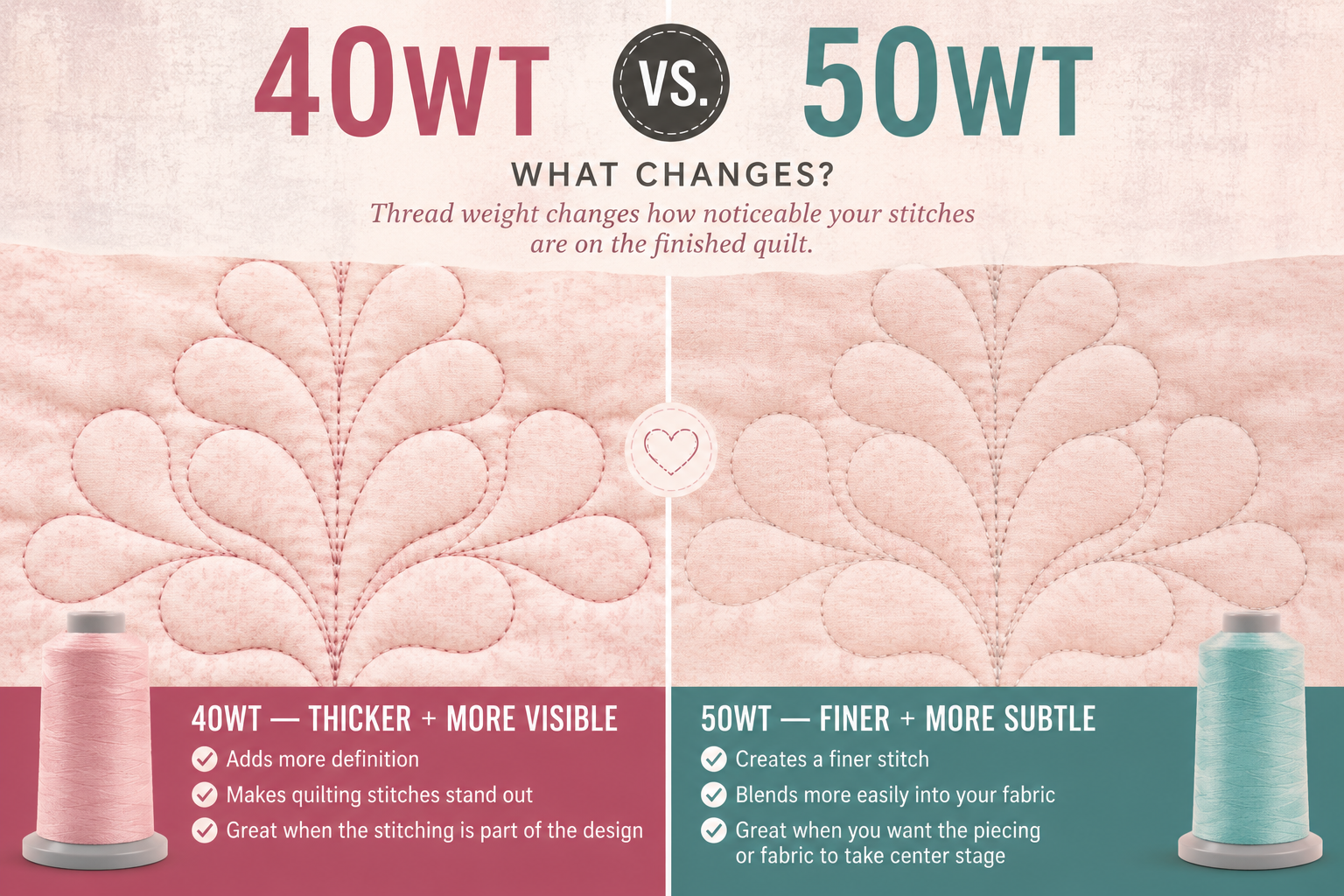
"Do I want my stitches to BLEND or POP?"
🧵 Blend → 50wt
Finer thread means more subtle stitches. The thread sinks into the fabric and lets your piecing and fabric do the talking. This is why 50wt is the go-to for piecing and quilting designs you want to stay quiet.
✨ Pop → 40wt
Thicker thread means more visible stitches. If you want your quilting motifs to stand out and become part of the design, 40wt puts your stitch work on display.
That one question can make choosing from our thread collection a whole lot easier.
And Yes… Your Needle Matters, Too
Changing thread weight may mean adjusting your needle size and tension to get the best stitch.
If your thread is shredding, breaking, or your stitches just don't look right, don't immediately blame your machine.
Your thread + needle + tension all work together. A heavier 40wt thread usually wants a larger needle eye, while fine 50wt and 60wt threads run beautifully through smaller needles with slightly relaxed tension.
Corey's Quilting Tip 💡
Now look at your next quilt and ask yourself:
- Do you want the thread to disappear into the design? Reach for a finer weight like 50wt.
- Or do you want the stitching itself to become part of the design? Go bolder with 40wt.
Once you know that, choosing your thread gets much easier.
Remember This
The number on the spool isn't just a spec — it's a design decision. Your stitches will tell you when you've got it right.
Happy Quilting!
— Corey


