Good morning, quilters! Corey here.
Ever finish a quilting session only to find puckers, wrinkles, or layers that no longer line up? Fabric shifting is one of the most common quilting frustrations—and one of the most discouraging, because it tends to show up after you've put in the work.
Here's the good news: it usually isn't caused by your quilting technique. It's most often the result of a few small setup mistakes that are easy to correct.
Avoid these common mistakes
Many quilters assume fabric shifting is just part of the quilting process. In reality, most puckers, wrinkles, and misaligned blocks can be traced back to a few preventable setup mistakes:
- Too few pins. If your basting pins are spaced more than a fist-width apart, the layers have room to creep between them. Sparse pinning is the number-one cause of shifting.
- Skipping the smoothing step. A backing that isn't pulled taut and smooth—or a batting that goes in wrinkled straight from the package—builds slack into the sandwich before you've sewn a single stitch.
- Pushing and pulling while you stitch. Forcing the quilt through the machine with bare hands means uneven pressure, and uneven pressure means layers that slide against each other.

The simple fix
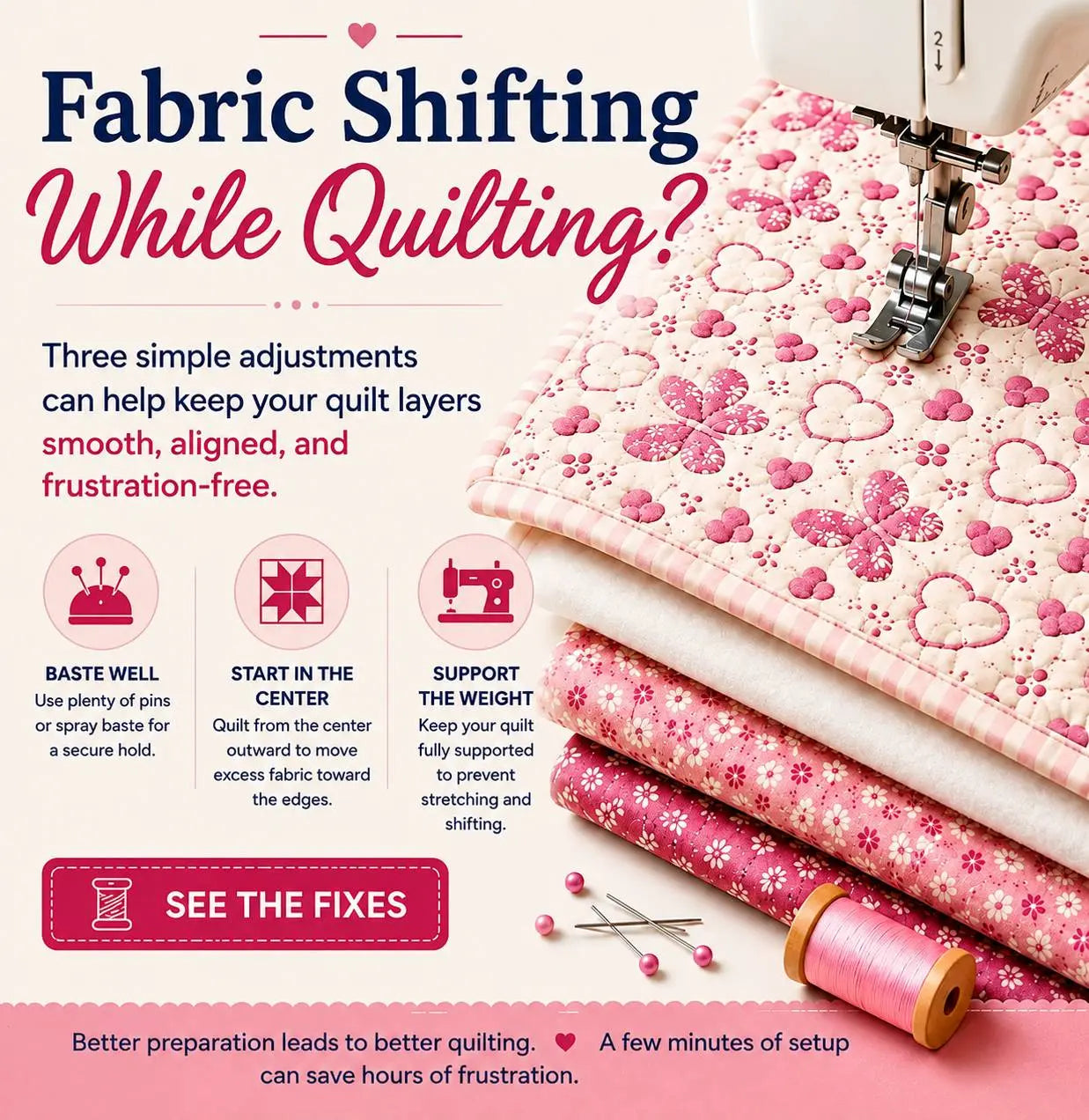
Small adjustments before you start quilting can save hours of frustration later. Before your next project, try these three fixes:
- Build a stable quilt sandwich. Press your top and backing, smooth each layer from the center out, and secure the backing so it stays taut while you baste.
- Baste generously. Pin every 3–4 inches—more than you think you need. A well-basted quilt behaves like a single layer of fabric instead of three separate ones.
- Guide, don't drag. Let the machine feed the quilt and use your hands (ideally with grip gloves) to steer with light, even pressure.

Our favorite stability helpers
A few simple notions make all of the above easier:
- Quilting gloves give your fingertips a sure grip so you can guide the quilt evenly without pushing or pulling.
- Sulky Sticky+ self-adhesive tear-away stabilizer holds fabric firmly in place while you stitch, then tears away cleanly when you're done.
- A magnetic pin cup keeps all those basting pins point-down and within easy reach—because generous pinning shouldn't slow you down.
Remember
The smoother your quilt sandwich, the smoother your quilting experience—and most importantly, the less chance of fabric shifting.
Happy Quilting!
From Corey.