

You've squared your backing. You've loaded it carefully. You've checked your rollers.
So why do wrinkles still show up on the back of your quilt?
For many quilters, the culprit is actually too much tension.
It's easy to assume tighter is better. But when backing fabric is stretched too tightly on the frame, it can relax after quilting and create unwanted wrinkles.
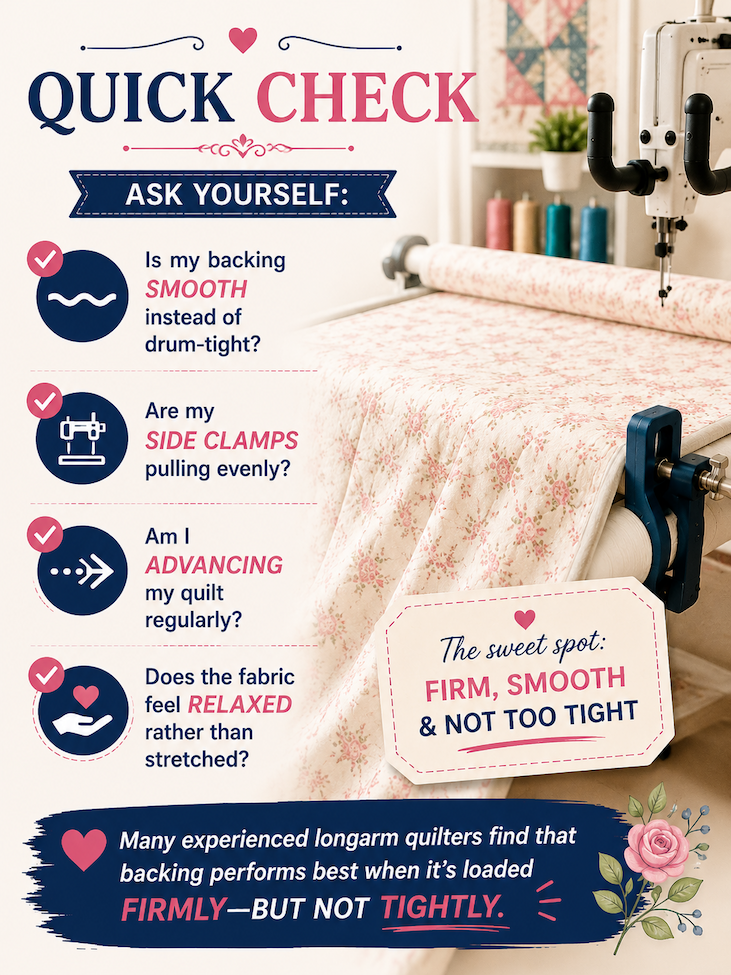
Think of Your Backing Like a Bed Sheet
Pull it too loosely and you'll get folds. Pull it too tightly and it will distort.
The sweet spot is right in the middle.
The goal:
- 🌿 Smooth backing
- ⚖️ Consistent tension
- ✨ Beautiful results
- ❤️ Every quilt. Every time.

The Best Quilters Never Stop Learning
Every quilt teaches us something new.
If backing wrinkles have been frustrating you, try easing your backing tension on your next project. You may be surprised how much of a difference this small adjustment can make.
Here's to smoother backs, straighter stitches, and more enjoyable quilting.
Happy Quilting,
— Corey