Fabric Shifting While Quilting? Try These Simple Fixes – Morning with Corey

Ever finish a quilting session only to find puckers, wrinkles, or layers that no longer line up? Fabric shifting is one of the most common quilting frustrations.

The good news? It usually isn't caused by your quilting technique. It's often the result of a few small setup mistakes that are easy to correct.
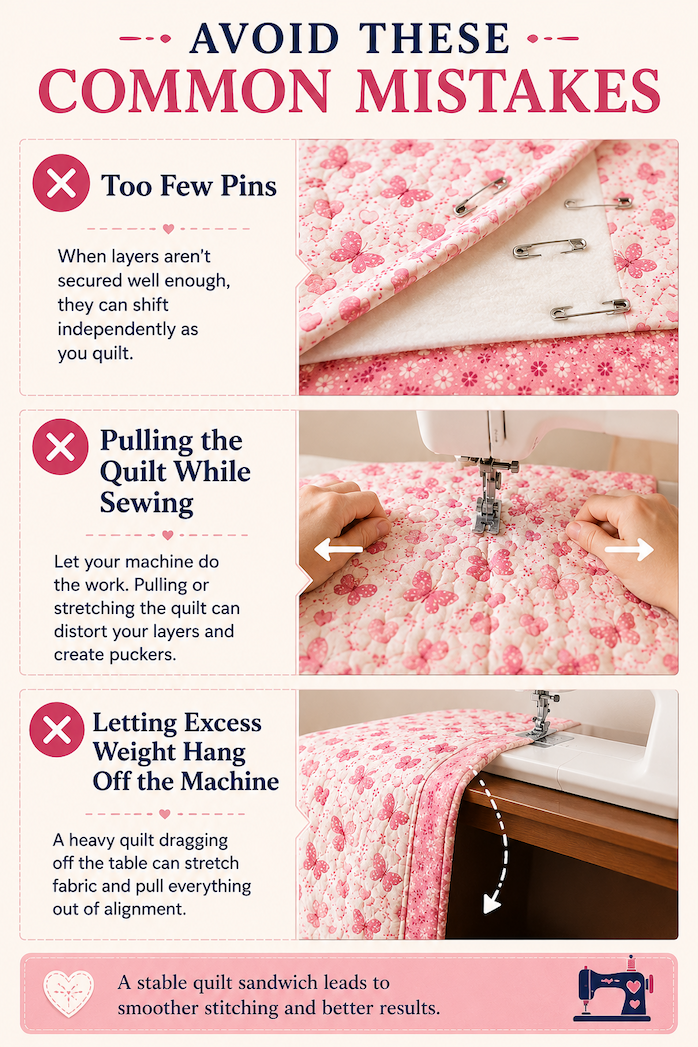
Fabric shifting fixes

Improve Your Quilting

Many quilters assume fabric shifting is just part of the quilting process.

In reality, most puckers, wrinkles, and misaligned blocks can be traced back to a few preventable setup mistakes.

The good news? A stable quilt sandwich can help keep your layers aligned from the first stitch to the final binding.

Before your next project, try these three fixes:
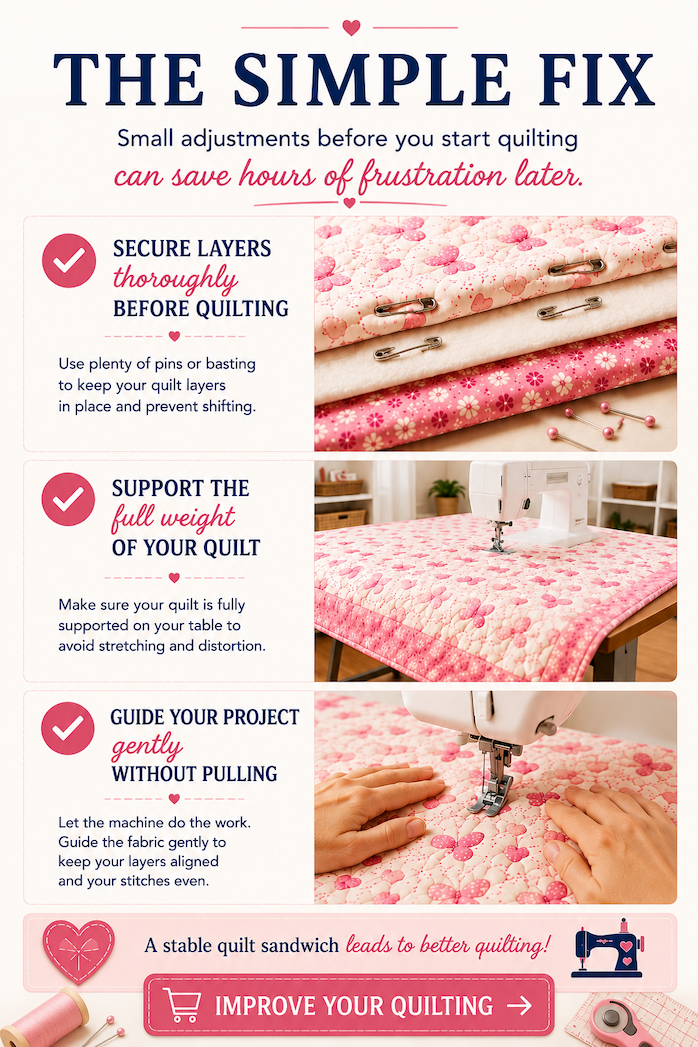
Three fixes for fabric shifting

Our Favorite Stability Helpers

Quilting gloves

Grippy non-slip coating

Walk 2.0 walking foot book

Remember

The smoother your quilt sandwich, the smoother your quilting experience, and most importantly, the less chance of fabric shifting.

Explore favorites →

Happy Quilting,

— Corey

Frequently Asked Questions

Why does my fabric shift while quilting?

The three layers feed at different rates under a standard presser foot. A walking foot (or engaged dual-feed), thorough basting, and a slower stitching speed keep the layers moving together.

What is a walking foot and do I need one?

A walking foot adds feed dogs on top of the fabric so the top layer advances at the same rate as the bottom. For straight-line quilting on a domestic machine, it's the single biggest fix for shifting and puckering.

How should I baste a quilt to prevent shifting?

Baste from the center outward every 3-4 inches, whether you use pins, spray, or thread. Sparse basting at the edges only is the most common reason layers creep during quilting.

Related on Lindas.com:Shop Notions →