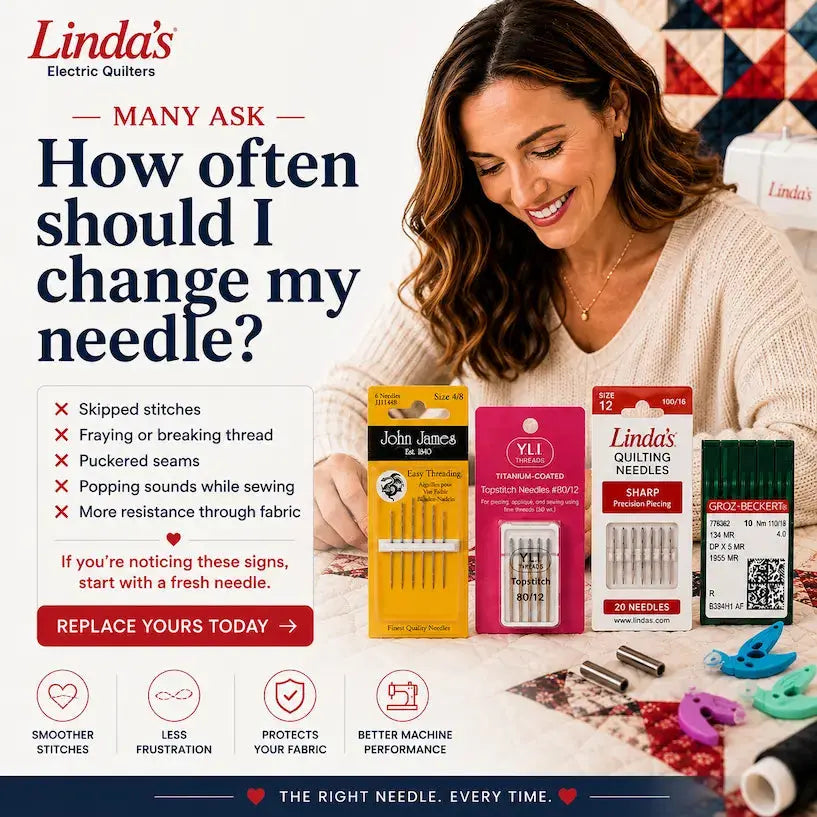
When stitch quality suddenly changes, most quilters start adjusting tension, changing thread, or wondering if something is wrong with their machine.
But often, the simplest solution is the right one:
Replace your needle first.
A needle gradually dulls with use. Even when damage isn't visible, it can affect stitch formation, fabric penetration, and thread performance.
Before you spend time troubleshooting your machine, try replacing your needle. You may be surprised by the difference.
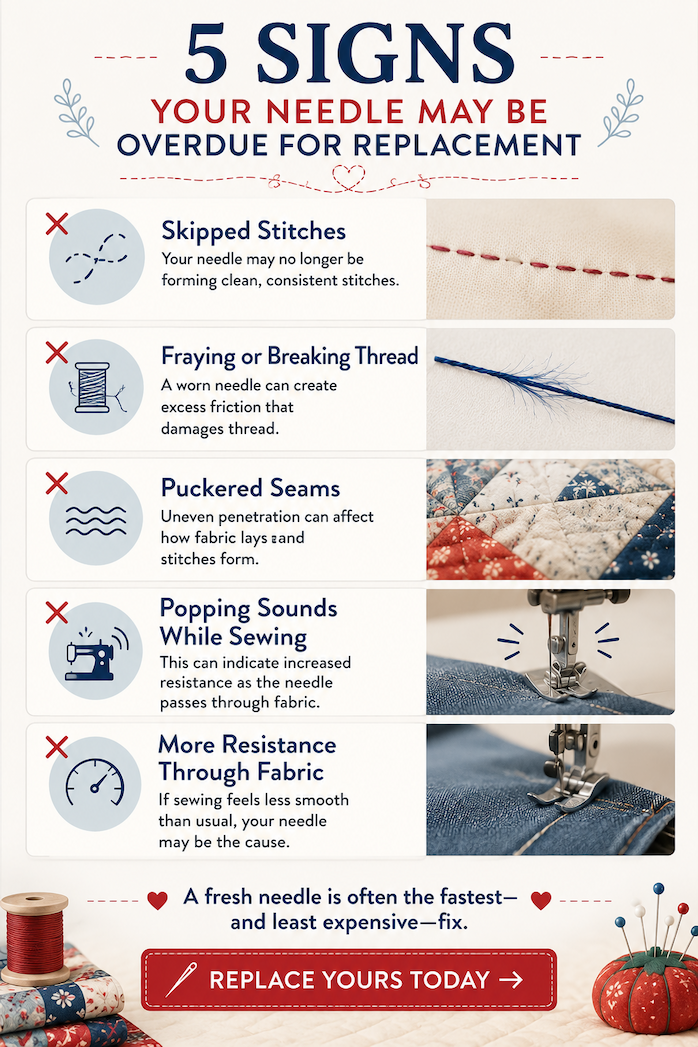
Find the Right Needle for Your Next Project
Quilting Needles — Best for piecing, machine quilting, and cotton quilting fabrics. Their sharp, tapered point helps penetrate multiple fabric layers cleanly, making them a favorite for accurate piecing and smooth quilting.
Topstitch Needles — Best for decorative stitching and specialty threads. A larger eye allows thread to move more freely through the needle, reducing friction and helping create cleaner, more professional-looking stitches.
Easy Threading Needles — Best for everyday hand sewing and easier threading. Designed with a special threading slot, these needles make setup quicker and more convenient, especially for those who find traditional needle eyes difficult to thread.
Specialty Machine Needles — Best for challenging fabrics and specialized sewing techniques. Different fabrics require different needle designs. Specialty needles help your machine sew more efficiently while improving stitch quality and reducing fabric damage.
Remember
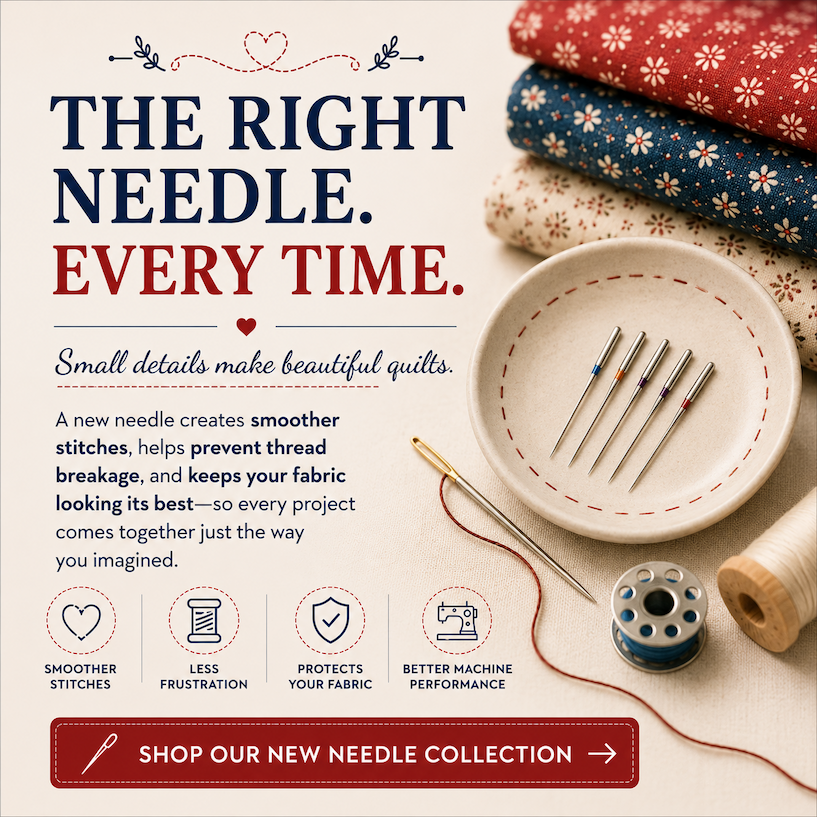
Replacing your needle regularly helps improve stitch quality, reduce frustration, and protect your fabric, so you can spend less time troubleshooting and more time creating.
Watch out for the signs, don't wait until the needle breaks.
Happy Quilting!
— Corey