Hi Bestie,
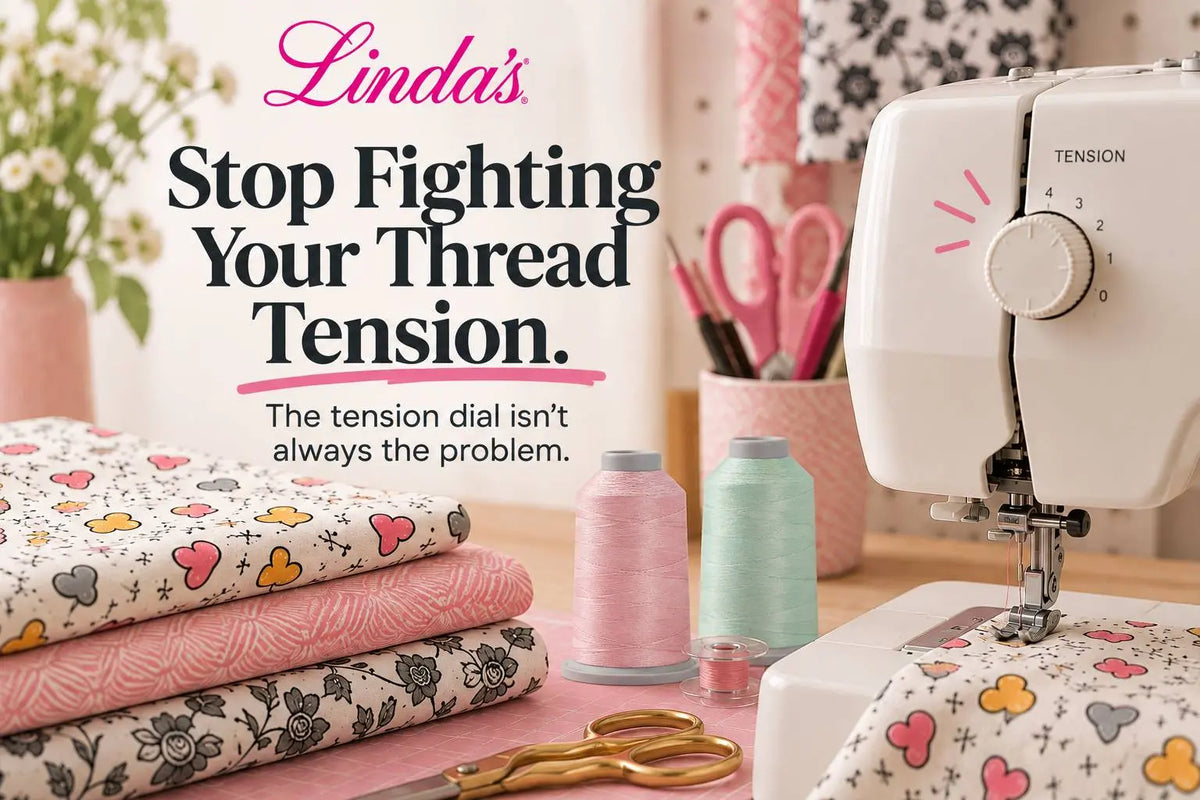
You’re sewing along just fine… and suddenly your stitches start looking weird.
Loops underneath. Thread breaking. Uneven stitches.
So naturally, you reach for the tension dial and start turning.
But here’s the thing: your tension might have been perfectly fine.
Before changing a setting that was already working, it’s worth checking a few surprisingly simple things first.
Before You Touch the Dial…
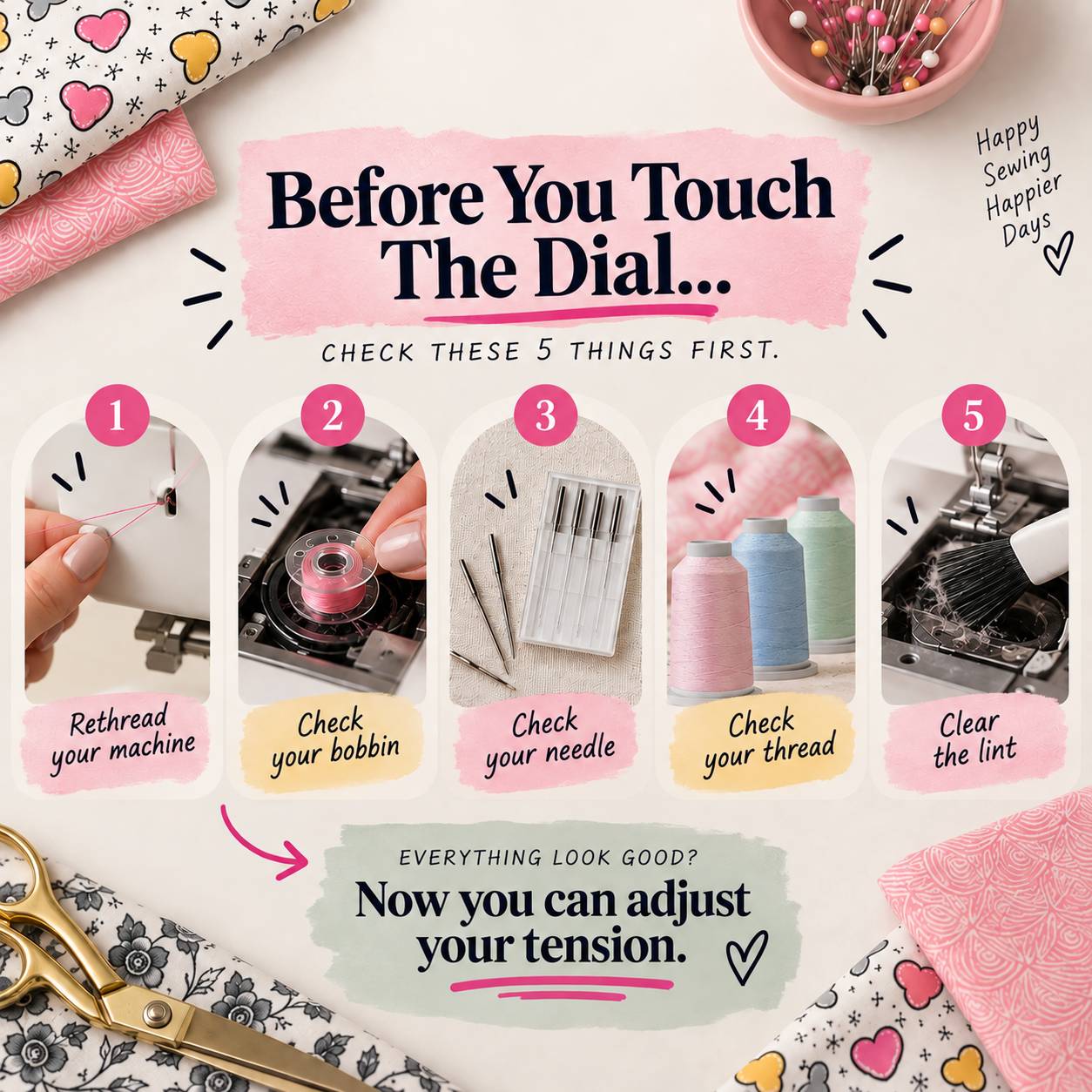
1. Start by rethreading
It sounds almost too simple, but improper threading can create problems that look exactly like bad tension. Raise your presser foot and completely rethread the machine. (I walked through a few more rethreading tips in Before You Rethread Your Machine…)
2. Give your bobbin a quick check
Make sure it’s seated correctly, wound evenly, and feeding in the proper direction. One tiny bobbin issue can show up as a very messy stitch.
3. When did you last change your needle?
Be honest. A dull, bent, or incorrectly sized needle can cause skipped stitches, breakage, and inconsistent results. Not sure which size you need? Here’s what those needle numbers actually mean.
4. Take a look at your thread
Old, fuzzy, inconsistent, or poor-quality thread doesn’t always move smoothly through your machine, and sometimes the “tension problem” is really a thread problem.
5. Check for hidden fuzz
Lint loves hiding around the bobbin area and thread path. A quick clean can sometimes solve the mystery without touching a single setting.
Why These Little Things Look Like Tension Problems
Your top thread only gets its tension when it’s pulled snugly between the tension discs. When the presser foot is down, those discs are clamped shut, so if you thread with the foot down, the thread can sit outside the discs entirely. With almost no drag on the top thread, the bobbin pulls it straight through the fabric, and you get those loops on the underside. That’s why rethreading with the foot up fixes so many “tension” problems.
Everything else on this list changes the drag on your thread in the same way. Lint packed between the discs or in the bobbin case adds or removes resistance. A burred needle eye or rough, linty thread creates friction that snaps thread and makes stitches uneven. Fix the thread path first, and the dial setting that was working yesterday usually works again today.
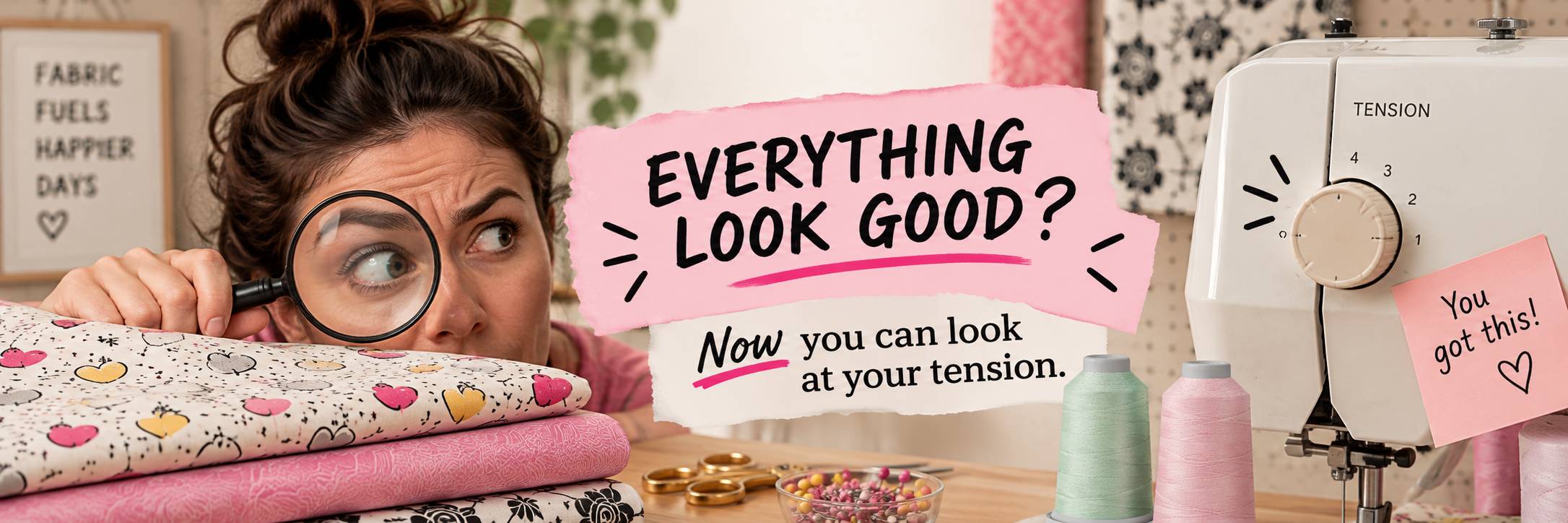
Everything Look Good?
Now you can look at your tension.
Make one small adjustment → stitch on scrap fabric → check the result → repeat if needed.
No wild dial-spinning required. (And if you do adjust, here’s the tension fix that creates another problem, so you can avoid it.) For a full walkthrough of the settings themselves, see Sewing Machine Tension Settings Made Simple.
Remember,
Sometimes, the simplest fix is the right one. A fresh needle. Smooth, reliable thread. The right bobbin. They may not be the most exciting things in your sewing room, but when your stitches start acting up, they’re some of the first things worth checking. 💗
Happy Quilting!
From Corey.

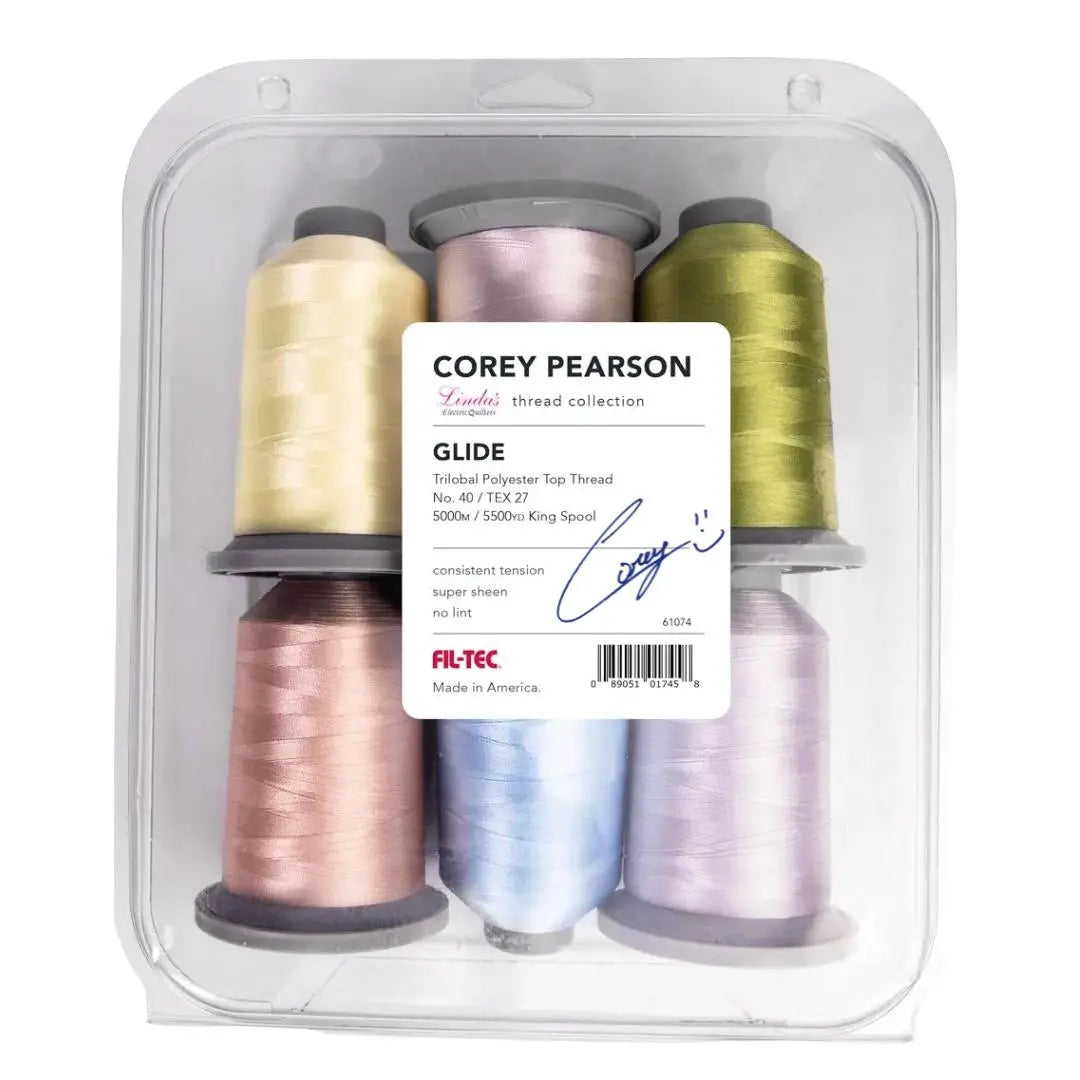
Smooth thread makes for happy stitches. Shop all Glide threads at Linda’s.
Frequently Asked Questions
Why are there loops on the bottom of my quilt?
Loops on the underside almost always mean the top thread isn’t getting enough tension, and the most common cause is that it isn’t seated in the tension discs. Raise the presser foot and rethread the machine completely before you touch the dial. If the loops continue, check for lint in the thread path. Our post Before You Rethread Your Machine… covers more.
Should I adjust the top tension or the bobbin tension first?
Start with the top tension, in small steps, testing on scrap fabric after each change. Bobbin tension usually only needs adjusting when you change thread types or the bobbin case has been disturbed. When it does, see How to Adjust Bobbin Tension for Perfect Stitches. Longarm quilters can take the guesswork out with a Towa bobbin case tension gauge.
How often should I change my sewing machine needle?
A common rule of thumb is to start each new project with a fresh needle, or to change it after roughly six to eight hours of sewing. Change it right away if you hit a pin, hear a thumping sound, or see skipped stitches. Shop machine needles, or read our Groz-Beckert longarm needle guide if you quilt on a longarm.
Can old or cheap thread cause tension problems?
Yes. Thread that is fuzzy, uneven in thickness, or dried out from age creates inconsistent drag as it moves through the tension discs and needle, which leads to breakage and uneven stitches. A smooth, consistent thread such as one from our thread collection runs more predictably. To make sure you buy enough of it, see The Thread Math Every Quilter Should Know.
How do I clean lint out of my sewing machine?
Unplug the machine, remove the needle plate and bobbin case, and brush lint out of the feed dogs, bobbin area, and the thread path with a small lint brush. Avoid blowing into the machine, since breath adds moisture. Check your manual for oiling instructions. Regular cleaning is one of the reasons covered in The Hidden Reason Your Machine Isn’t Sewing Like It Used To.