
Quick Answer
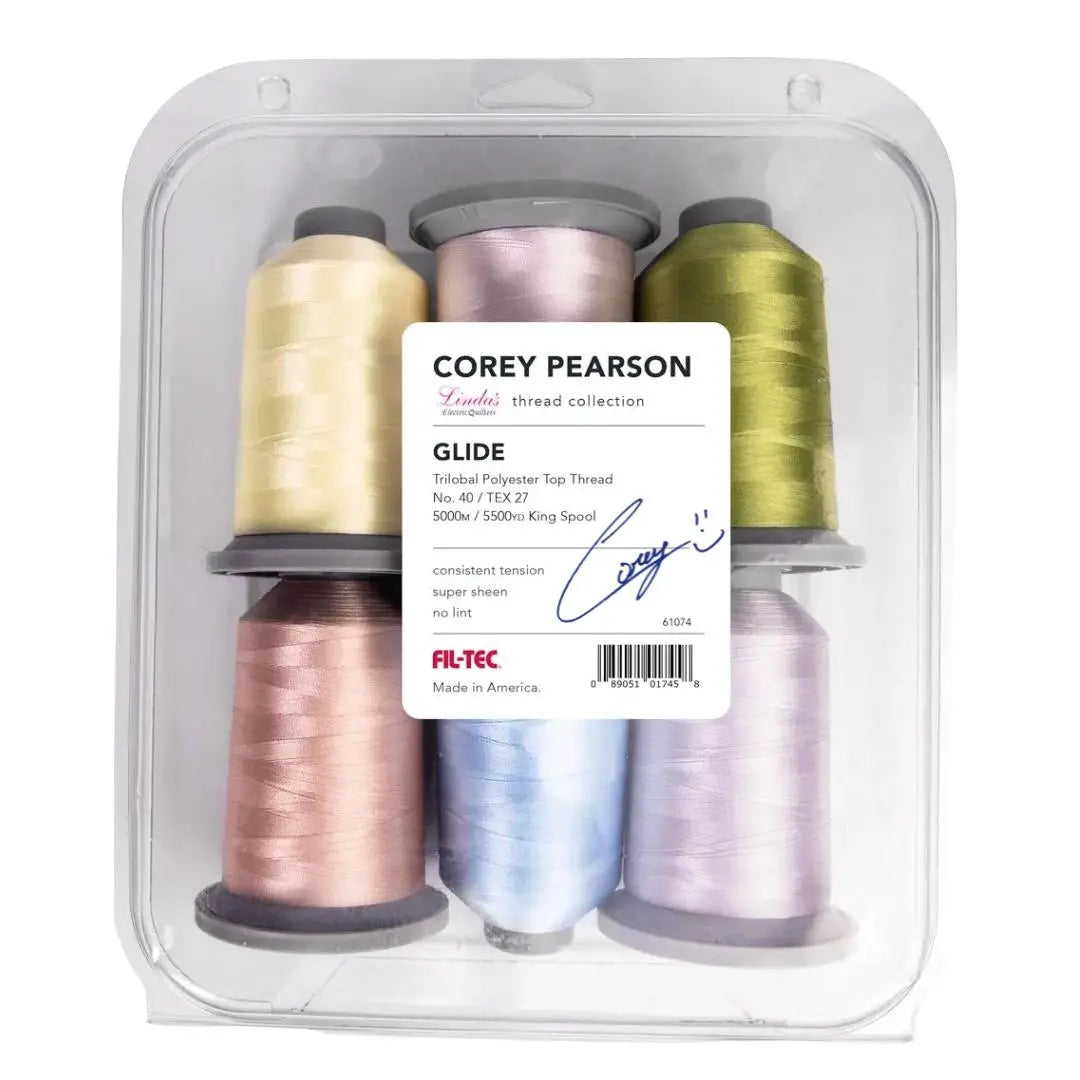
For most sewing on quilting cotton, set your sewing machine tension in the middle of the dial — usually 4 to 5, or "auto" — and adjust in small steps from there. Loops on the underside of the fabric mean the upper tension is too loose; puckering, tight stitches, or thread breaks mean it is too tight. The tension chart and test-sewing steps below show how to balance your stitches on any fabric, with the right quality thread and a fresh needle from our sewing notions.
Perfecting your sewing machine tension matters.
It may not be the most exciting part of sewing, but it’s an essential skill to learn.
When tension is balanced, everything comes together. Your stitches look clean. Your seams hold strong. Moreover, your finished projects have that polished quality that’s hard to miss.
When it’s off (even slightly), you’ll notice right away. Your seams won’t sit flat. The stitching loses consistency. The result looks less refined.
The good news? Mastering tension isn’t hard. Once you understand how it works and how stitches behave, fixing issues becomes easier.
Let’s walk through it step by step!
Understanding Sewing Machine Tension

Sewing machine tension is all about balance.
Every stitch your machine makes is formed by two threads:
-
the top thread coming from the spool
-
the bobbin thread coming from below
These threads meet, loop together, and lock inside the fabric. When everything aligns, that connection point sits right in the middle of your fabric layers. You get a stitch that’s both strong and visually clean.
When that balance shifts, loops start forming. Fabric begins to pucker. Stitches look uneven or distorted.
What’s helpful is that these issues are signals. Once you learn to interpret them, tension becomes much easier to manage.
How Thread Tension Actually Works
Inside your sewing machine is a simple but precise system that controls how thread moves.
The top thread passes through a set of tension discs. These discs apply pressure. They control how tightly the thread is held as it feeds through the machine. Your tension dial adjusts this pressure.
The bobbin thread is controlled by a small spring in the bobbin case. This tension is set at the factory. It remains consistent unless you adjust it.
As you sew, the needle carries the top thread down through the fabric. The bobbin thread loops around it from below. The two threads tighten together and form a stitch.
If both threads apply equal force, the stitch locks neatly in the center. If one pulls harder, the stitch shifts. That causes visible issues.
The Tug-of-War Analogy (That Actually Helps)

Think of tension as a gentle tug-of-war.
The top thread pulls downward. The bobbin thread pulls upward. When both sides pull evenly, the knot stays hidden between the fabric layers.
The problem starts when one side overpowers the other.
When one side pulls too strongly, the stitch shifts out of position. This results in:
-
Loops underneath if the top thread is too loose
-
Bobbin thread appearing on top if the top thread is too tight
This simple example makes tension troubleshooting more intuitive. Instead of guessing, you’re just restoring balance.
What a Balanced Stitch Should Look Like
A balanced stitch is easy to spot. Both sides of the fabric should look almost identical. The stitches should be even in length and spacing. There should be no visible pulling from either thread. Of course, the fabric itself should lie flat.
Most importantly, the point where the threads interlock should be completely hidden inside the fabric. That’s what gives the stitch its strength and clean appearance.
When you see that combination of symmetry and smoothness, your tension is right where it needs to be.
Why Tension Matters More Than You Think
Take a few minutes to get tension right from the start. Doing this can save you hours of frustration later.
-
Tension determines seam strength.
Balanced stitches lock secure within the fabric. Their seams handle wear, movement, and repeated washing. When tension is wrong, seams weaken over time or come apart at stress points. -
Tension shapes your stitches’ appearance.
Clean lines come from balanced tension. When it’s off, you’ll see loops, uneven spacing, or visible thread inconsistencies that make a project look unfinished. -
Tension influences fabric behavior.
Too much tension pulls fabric inward. It causes puckering and distortion. Meanwhile, too little tension lets the fabric shift. As a result, you get unstable seams and uneven edges. This is especially noticeable in quilting and lightweight materials. -
Tension affects your overall workflow.
When tension is correct, sewing feels smooth and predictable. When it’s not, you end up stopping frequently. You’ll have to redo seams and waste time troubleshooting.
Testing Your Tension the Right Way

Skipping tension testing is one of the most common mistakes.
Besides, every project creates a slightly different sewing environment for your machine. Considerations include:
-
Fabric type
-
Thickness
-
Thread weight
-
Layering
Relying on previous settings alone often leads to frustration.
To test properly, create a sample with the exact materials from your project. Use the same fabric, thread, and number of layers. For quilting, make a small quilt sandwich with top fabric, batting, and backing.
Sew multiple lines. Do straight stitches, curves, and even zig-zags. Tension issues show up more when the thread changes direction or passes through multiple layers.
Make small adjustments, one number at a time. Then sew a new line after each change. This creates a visual comparison that helps you clearly see what works best.
Good lighting also helps here. Subtle issues are easier to spot when you can clearly see the thread.
Matching Tension to Fabric and Thread
One of the most important things to understand is that tension is never universal.
Every time you change your fabric or thread, you’re creating a new set of conditions. What worked perfectly on your last project might behave completely differently on the next.
Fabric Weight
Lightweight fabrics (chiffon, voile) have very little structure. If tension is too tight, the thread pulls aggressively, causing puckering and distortion. Lower tension allows the fabric to remain relaxed and smooth.
Medium-weight fabrics (quilting cotton) are more stable and forgiving. These typically work well with standard tension settings. This is why most machines are calibrated around this range.
Heavier fabrics (denim, canvas) require more force to form a secure stitch. If tension is too loose, stitches may not lock properly. Increasing tension slightly helps create a stable stitch.
Thread Weight
Fine threads need less tension. They can’t handle much stress. Heavier threads require more control but can still break with tight tension. Standard threads work well for general sewing.
Ultimately, what really matters is how fabric and thread interact. A heavy thread on delicate fabric can cause puckering. A fine thread on thick material results in weak seams. Understanding this relationship helps you make better adjustments before problems appear.
Layered projects, like quilts, add complexity. Multiple layers increase resistance. This can affect how threads interlock. Slight tension adjustments are often recommended to maintain consistency across all layers.
Specialty Threads: What Changes
Specialty threads behave differently and often require adjustments.
Metallic threads are delicate and prone to breaking under high tension. Lowering tension, using a larger-eye needle. Also, sewing at a slower speed helps reduce friction.
Elastic thread requires a different setup. The bobbin tension is usually loosened. That way, the thread can stretch properly. The upper tension may need slight adjustment.
Monofilament thread is smooth and slightly stretchy. If tension is too tight, it can create puckering. Lower tension helps it settle more naturally.
Fabric and Tension Reference Chart
Here’s a quick reference you can use as a starting point:
|
Fabric Type |
Suggested Tension |
Needle Type |
|
Sheer/Delicate (chiffon, organza) |
2.0 – 3.5 |
Microtex 60/8 or 70/10 |
|
Lightweight (cotton lawn, voile) |
3.0 – 4.0 |
Universal 70/10 or 80/12 |
|
Medium weight (quilting cotton, linen) |
4.0 – 5.0 |
Universal 80/12 or 90/14 |
|
Heavyweight (denim, canvas, twill) |
5.0 – 6.0 |
Jeans/Denim 90/14 or 100/16 |
|
Knits/Stretchy Fabrics (jersey, spandex) |
3.5 – 4.5 |
Ballpoint or Stretch 75/11 |
When to Adjust Bobbin Tension
For most projects, you don’t need to touch bobbin tension. It’s set at the factory to work with standard threads and fabrics.
Adjustments are only necessary in specific situations. For example, using elastic threads, heavy decorative threads, or certain specialty techniques may necessitate it.
If you need to adjust it, make very small changes. Don’t go beyond a quarter turn. Mark the original position so you can return to it if needed.
Common Beginner Mistakes
Most issues beginners face come from skipped steps or rushed adjustments.
Here are the most common mistakes to watch for:
-
Skipping test stitches
Without testing, you’re essentially guessing your tension settings. A quick test on scrap fabric gives you a clear starting point and prevents avoidable mistakes. -
Making large tension adjustments
Turning the dial too far, too quickly is a common reaction when something looks off. Unfortunately, this creates a new problem instead of fixing the original one.
Tension adjustments work best in small increments, typically one number at a time. That way, you can clearly see what’s changing and why. -
Ignoring needle condition and type
A dull or incorrect needle can cause issues that look exactly like tension problems. You might see skipped stitches, puckering, or uneven lines. You might assume it’s a tension issue but in reality, the needle may be: -
worn out
-
the wrong size for your fabric
-
not suited for the material (e.g., using a universal needle on knits)
Changing the needle is often the quickest fix.
-
Using low-quality or mismatched thread
Thread quality plays a huge role in sewing. Cheap or inconsistent threads break easily. They also create lint buildup and/or feed unevenly through the machine.
This makes tension harder to control. Use good-quality threads to maintain consistent stitch formation.
-
Threading the machine incorrectly
A small mistake in threading can throw off tension completely. One of the most common issues is threading with the presser foot down. This prevents the thread from seating properly in the tension discs.
Always:-
raise the presser foot when threading
-
follow the full thread path carefully
-
-
Neglecting machine maintenance
Lint and dust eventually build up in the bobbin area and tension system. This creates resistance in the thread path. They can mimic tension problems. Regularly cleaning your machine helps it run smoothly.
Frequently Asked Questions
Why are there loops underneath my fabric?
Loops on the underside of your fabric mean your upper tension is too loose. The bobbin thread is pulling too much of the top thread downward.
Before adjusting the tension dial, double-check that your machine is threaded correctly with the presser foot raised. If everything is threaded properly, increase the upper tension slightly and test again on scrap fabric.
Why does my thread keep breaking while sewing?
Thread breakage happens for several reasons. Tension is only one of them.
High tension can put too much stress on the thread. Poor-quality thread or a damaged needle can also create the same problem. Also, check your threading path to make sure there are no snags or missed guides.
Should I adjust my bobbin tension?
In most cases, no. Bobbin tension is typically set at the factory. IT works well for standard sewing projects. Most tension issues can be solved by adjusting the upper tension or correcting threading and needle problems.
Make very small changes if you adjust it. Mark the original position so you can return to it as needed.
Can the wrong needle affect my tension?
Yes, and it’s more common than many beginners realize. A needle that’s too large, too small, dull, or the wrong type for your fabric can interfere with how the thread moves through the material. Always match your needle type and size to your fabric and thread. If something feels off, change your needle right away.
Why does my fabric pucker when I sew?
Puckering is usually a sign that your tension is too tight. This happens often when you’re working with lightweight or delicate fabrics. When the top thread pulls too strongly, it draws the fabric inward.
Additionally, it can be caused by using the wrong needle or thread for the fabric. To fix it, lower your tension slightly, use a finer needle, or switch to a lighter thread. Testing on scrap fabric helps you find the right combination before sewing your final piece.
Final Thoughts
Tension is one of those quiet skills that shapes everything you make. It works in the background. It keeps your stitches balanced and your seams secure.
What makes it valuable isn’t just knowing how to make adjustments. It’s learning how to understand it. Tension has a way of teaching patience. It asks you to observe closely. It encourages you to respond with intention rather than guesswork.
Over time, that awareness becomes instinct. You stop chasing “perfect” settings.
Instead, you start trusting how your machine behaves. And that’s when sewing shifts. You go from constant troubleshooting to a smoother, more confident rhythm that feels natural to follow.
Tension Questions, Answered
What tension should my sewing machine be on?
For most sewing on quilting cotton, start in the middle of the tension dial — usually 4 to 5, or the “auto” setting — and adjust in small steps from there. Loops on the underside of the fabric mean the upper tension is too loose; puckering, tight stitches, or thread breaks mean it is too tight.
How do I know if my sewing machine tension is balanced?
Sew a test seam on two layers of your project fabric. Balanced tension looks the same on the top and the bottom of the seam, with no loops, puckers, or bobbin thread showing on top.