Hand Quilting vs Machine Quilting: Choosing Your Method
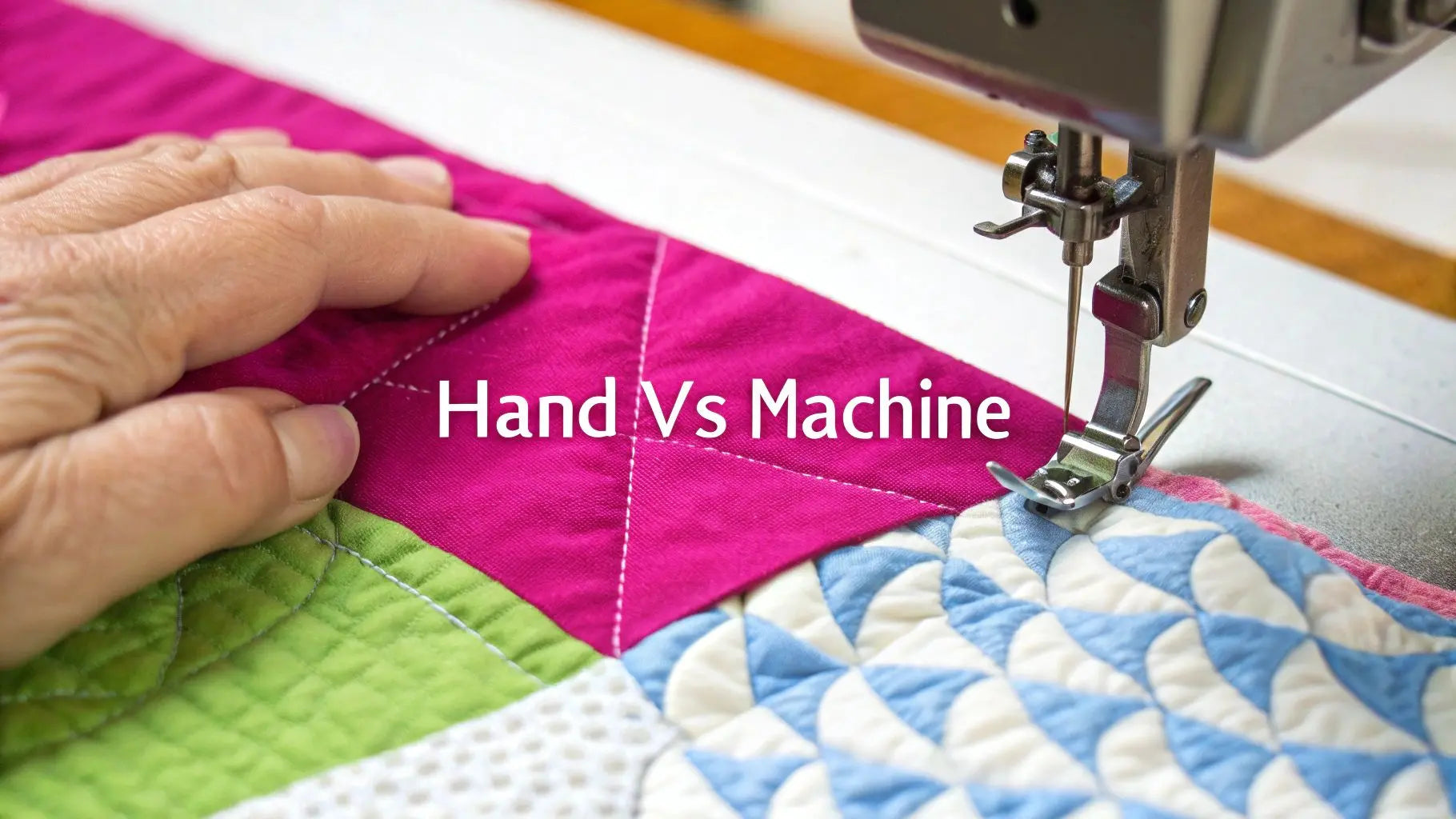
Hand Quilting vs Machine Quilting: Choosing Your Method: When you're standing at a crossroads, wondering whether to go with hand quilting vs machine quilting, it really boils down to two things: the look you want for your project and the creative journey you want to take to get there.
Hand quilting is the classic, time-honored way. It’s a slower dance that gives your quilt a soft, wonderfully crinkled texture, with stitches that have a charm all their own. It’s the kind of work that screams “heirloom.” On the flip side, machine quilting is all about speed and laser-like precision, creating a quilt that’s flatter, crisper, and tough enough for everyday snuggles on the couch.
Understanding Core Quilting Differences
Choosing between hand and machine quilting isn't just a minor detail—it completely shapes the feel of your project from start to finish. We're not just talking about how fast you get it done. It's about the texture, the way the quilt drapes, and the soul of the final piece.
Think of it this way: one path is a quiet, meditative craft that connects you to generations of quilters before. The other is a modern, powerful approach that gives you incredible efficiency and control. Neither is better than the other; the right choice is simply the one that matches the vision you have for your quilt.
Defining the Techniques
No matter how you slice it, quilting is about stitching together the three layers of your quilt sandwich—the top, the batting, and the backing. How you make those stitches is what sets these two methods apart.
- Hand Quilting: This is you, a needle, and thread, making rhythmic running stitches through all three layers. It's a very tactile process where you feel every single stitch, creating a look that is unmistakably handmade.
- Machine Quilting: Here, a sewing machine does the heavy lifting. Whether it’s your trusty domestic machine or a specialized longarm, you're guiding the fabric to create everything from simple straight lines to breathtakingly complex patterns with incredible speed.
At a Glance: Hand Quilting vs Machine Quilting
To make things a little clearer, here’s a quick rundown of what makes each method unique. Think of it as a cheat sheet to help you see the biggest differences side-by-side.
| Attribute | Hand Quilting | Machine Quilting |
|---|---|---|
| Final Look | Soft, puckered, heirloom texture | Flatter, crisp, modern finish |
| Speed | Slow and meditative; can take months | Fast and efficient; can take hours or days |
| Stitch Style | Charming, slightly irregular stitches | Uniform, precise, and consistent stitches |
| Durability | More delicate; best for heirlooms | Highly durable; ideal for everyday use |
| Initial Cost | Low; requires basic needles and thread | Higher; requires a sewing machine |
| Skill Focus | Patience and stitch consistency | Machine control and tension management |
No matter which path you choose, having the right gear is what sets you up for success. You can find all the essential threads, needles, and machine accessories you need to bring your next beautiful project to life right here at Linda's Electric Quilters.
The Artisanal Appeal of Hand Quilting
Hand quilting is so much more than a technique; it’s a way to connect with a long and rich history of artistry. It's a slow, deliberate process where every single stitch is a mark you've made, a personal touch. This method gives a quilt that wonderful, gentle, puckered texture and subtle variations that make each piece a true one-of-a-kind heirloom.
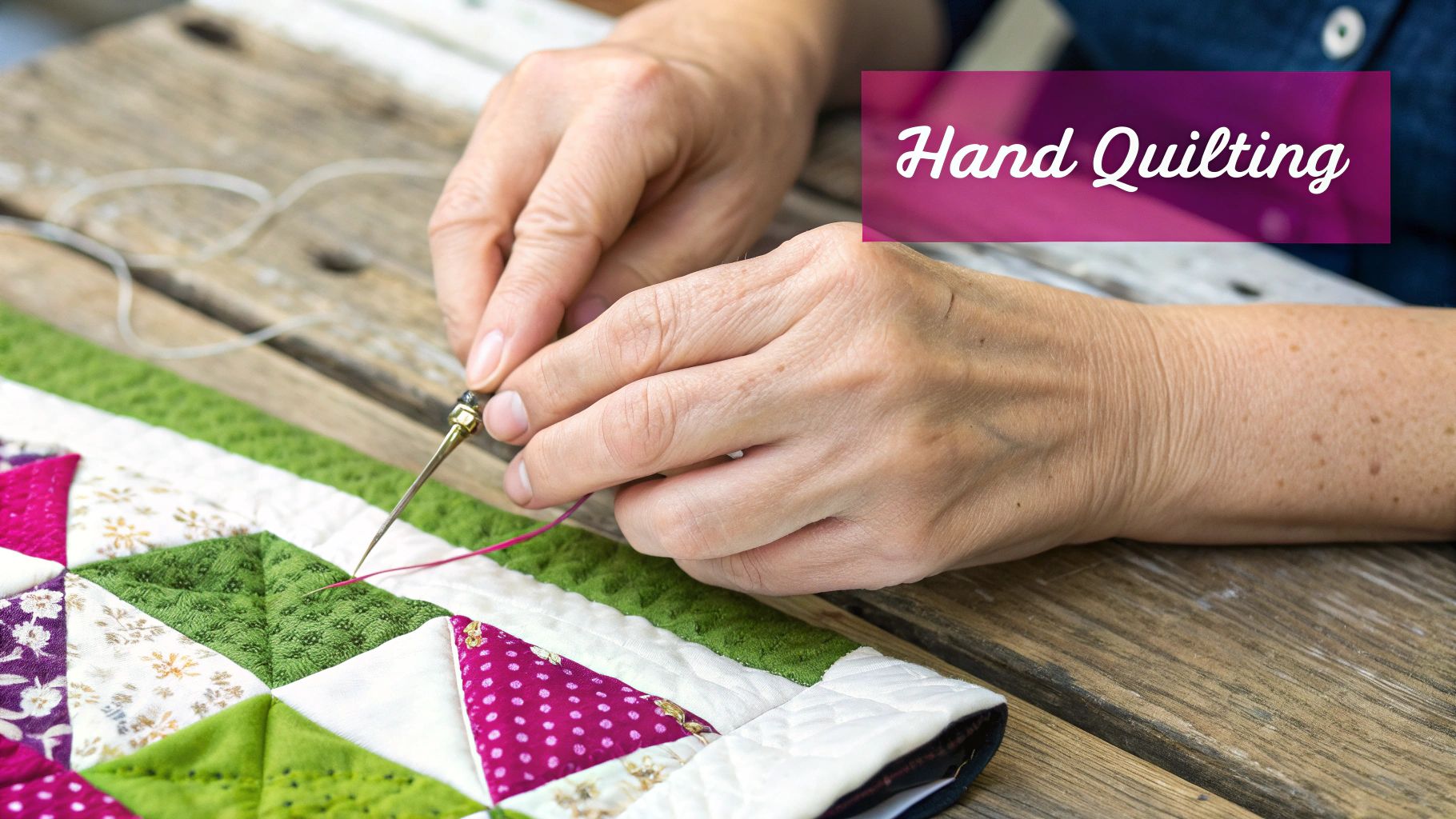
Honestly, the real charm is in the "imperfections." Unlike the perfect, uniform stitches from a machine, hand stitches have their own rhythm and soul—they tell a story. This unique craftsmanship is something millions of quilters cherish, seeing their work as both a cozy blanket and a piece of art. A recent market survey even confirmed that these traditional methods are holding strong precisely because of their distinctiveness and the connection they offer to the craft's roots. You can read more about the quilting market and its trends to see just how vibrant it is.
The Meditative Rhythm of the Process
So many quilters I know are drawn to hand quilting for its meditative, almost therapeutic, qualities. The simple, repetitive motion of the needle gliding through the fabric can be incredibly calming. It's a chance to slow down in a world that’s always rushing, focus on the moment, and pour your heart into what you’re making. It's the perfect slow craft for anyone who loves the journey as much as the destination.
In our fast-paced world, hand quilting is like a quiet retreat. The simple act of creating with your hands lets you disconnect from the day's stress and reconnect with a timeless skill.
This process really does transform a simple blanket into a treasured keepsake. Your time, care, and story get woven right into the fabric, creating a quilt that feels deeply personal and meaningful.
Essential Tools for Your Hand Quilting Project
You don't need a ton of equipment to start hand quilting, but having the right tools makes a world of difference in your comfort and the quality of your stitches.
- Needles: Look for specialized hand quilting needles, often called "betweens." They're short and strong, which helps you make precise, even stitches.
- Thimbles: A good thimble is a must-have. It protects your finger as you push the needle through all those layers. Whether you prefer leather or metal, find one that fits you well.
- Hoops or Frames: A quilting hoop is your best friend for keeping the fabric taut. This makes it so much easier to create consistent stitches without the fabric puckering up.
- Thread: Hand quilting thread is usually a bit thicker than what you'd use in a machine. It's often waxed or glazed to help it slide smoothly through the fabric and keep it from tangling.
For any project where every stitch counts, getting high-quality supplies is key. Here at Linda's Electric Quilters, we have a curated selection of needles, thimbles, and threads to help you finish your project with confidence and beautiful results.
Best Projects for Hand Quilting
While you can hand quilt just about anything, the method really shines on those special pieces meant to be admired and cherished for years. Think of beautiful wall hangings with intricate details, delicate baby quilts, or heirloom coverlets. The gentle drape and soft texture you get from hand stitching are just perfect for items where comfort and artistry are the main goals, settling the hand quilting vs machine quilting debate for those truly special projects.
The Power and Precision of Machine Quilting
For quilters who want speed, strength, and the ability to stitch stunningly complex designs, machine quilting is the perfect answer. It brings the craft into the modern era, letting you finish quilts in a tiny fraction of the time it would take by hand. Whether you’re working on a home sewing machine or a massive longarm, the results are always consistent, strong, and precise.
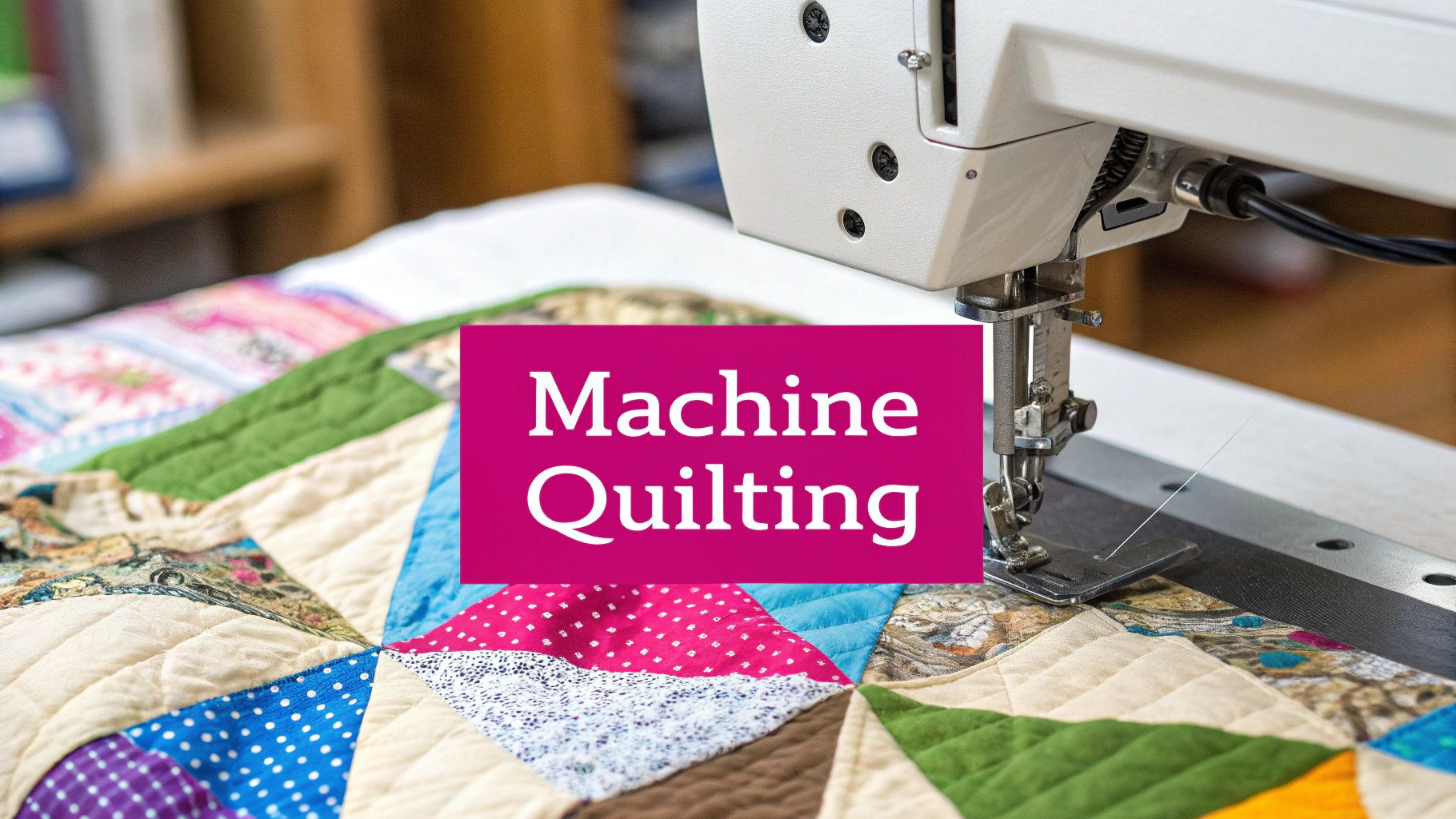
This approach delivers a crisp, polished look that’s ideal for quilts meant to be used and loved every day. The even tension and interlocking stitches create an incredibly durable finish that holds up beautifully to washing. That makes it the go-to choice for bedspreads, couch throws, and especially quilts for kids.
The technology behind it all is booming. The global market for industrial quilting machines was valued at an incredible USD 2.1 billion in 2023 and is only expected to grow. This trend shows just how popular computerized machines have become, making quilting faster and more approachable than ever before. If you're curious, you can learn more about trends in the quilting machine market and see how technology is pushing the craft forward.
Speed and Intricate Designs
The biggest, most obvious win for machine quilting is its breathtaking speed. I’m talking about a quilt that could take months to finish by hand getting done in just a few days, or sometimes even hours. That kind of efficiency means you can finally tackle those huge projects on your wish list or simply make more quilts!
But it’s not just about speed. Machines are masters of executing intricate, perfectly uniform patterns. From ruler-straight geometric lines to swirling free-motion stipples and elegant pantographs, a machine can lay down stitches with a consistency that’s nearly impossible to match by hand. This precision is a huge factor when you’re weighing hand quilting vs machine quilting for a project that needs a sharp, professional finish.
Machine quilting transforms the process from a slow, meditative craft into a dynamic and powerful form of artistic expression. It allows for a level of detail and complexity that can elevate a simple quilt top into a stunning work of art.
Essential Machine Quilting Accessories
To really get the most out of your machine, a few key accessories are non-negotiable. Setting yourself up with the right tools from the start will give you smoother quilting and a much more professional-looking result.
- Walking Foot: This is your best friend for any kind of straight-line quilting. It works by feeding all three layers of your quilt sandwich through the machine at the same time, which completely prevents the fabric from puckering or shifting. Perfect parallel lines, every time.
- Free-Motion Foot: You might also hear this called a darning foot. This little gadget lets you move the quilt in any direction you want under the needle. It's an absolute must-have for creating those beautiful, curvy designs like feathers, swirls, and stippling.
- Quilting Gloves: Don't underestimate these! The grippy fingertips give you so much more control over the fabric. You'll find it’s way easier to guide your quilt smoothly and accurately, especially when you're doing detailed free-motion work.
Having the right gear really does make all the difference. To find the best accessories for your machine, you have to check out the amazing selection of walking feet, free-motion feet, and other essential notions over at Linda's Electric Quilters.
Comparing Time, Cost, and Skill Requirements
When you're trying to decide between hand quilting and machine quilting, it really comes down to the practical stuff: your time, your budget, and the skills you're willing to learn. The differences here are huge, and for most quilters, this is where the final decision gets made. Let's dig into how each method stacks up in these key areas.
The most shocking difference is the time commitment. Hand quilting is a slow, meditative process. A queen-sized quilt can easily demand several hundred hours to finish by hand, making every stitch a true labor of love. On the flip side, a machine can blaze through that same project in just a few hours or days, depending on how fancy you get with the design.
The Financial Investment
Your wallet will definitely have a say in this decision. Hand quilting has an incredibly low barrier to entry. Honestly, all you need to get started is a handful of quality needles, a good thimble, some thread, and a hoop. Your initial investment could be as low as $30 to $50.
Machine quilting, however, requires a much bigger upfront investment. You can certainly start with your domestic sewing machine, but you'll need extra gear like a walking foot or a free-motion foot. And if you really catch the bug, you might find yourself dreaming of a dedicated longarm quilting machine, which can run into the thousands. This cost difference is a major point to consider.
This handy visual breaks down the trade-offs between the average time and cost for each method.
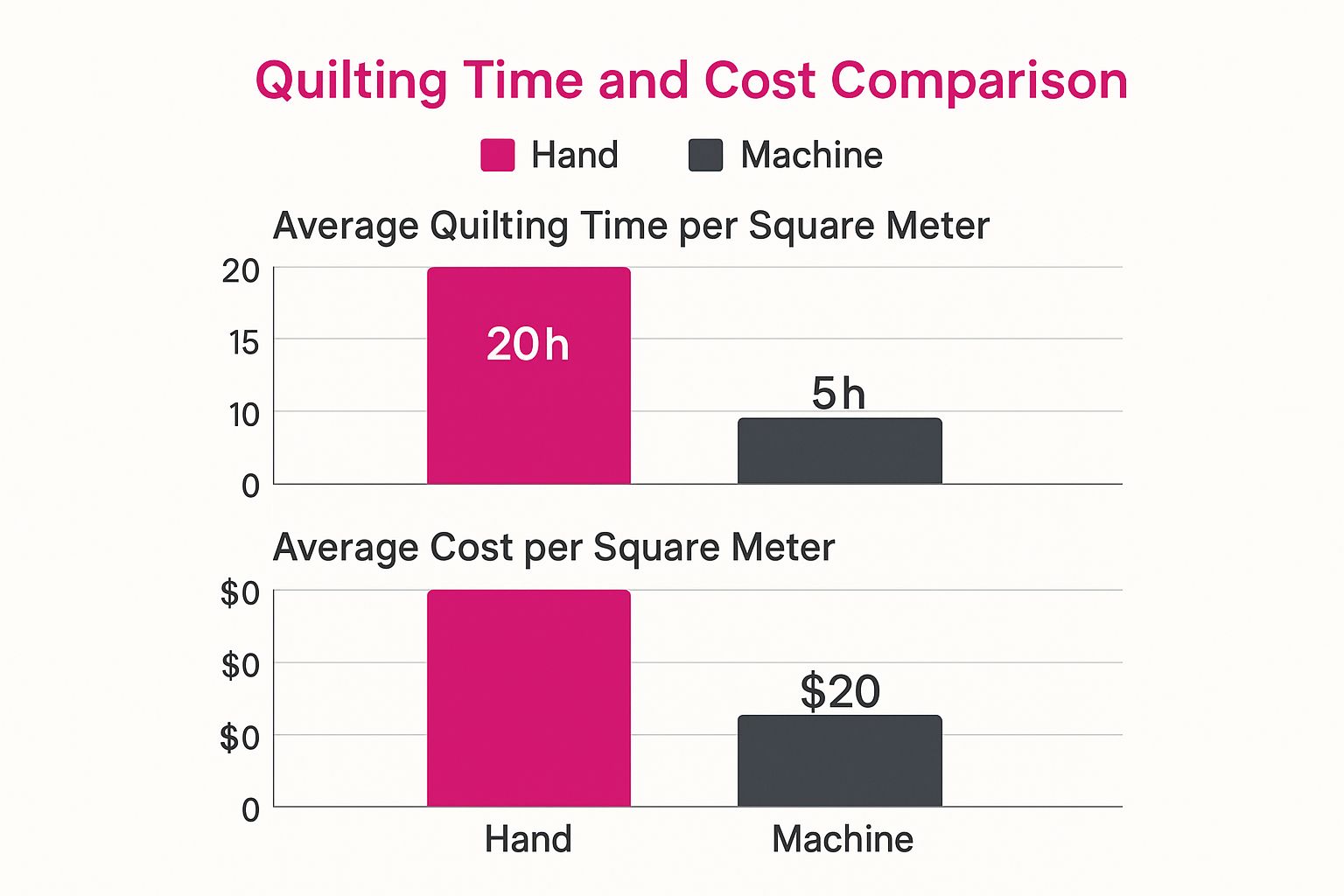
As you can see, while hand quilting takes way more time, its cost per square meter can actually be higher if you were to commission a piece—that's all skilled labor! Machine quilting, on the other hand, is the go-to for getting larger projects done more affordably.
Evaluating the Learning Curve
Each technique demands its own unique set of skills that you build over time. Neither one is necessarily "easier" than the other; they just require different types of practice and patience.
Hand quilting skill is all in your hands—finding that consistent rhythm and stitch length. With machine quilting, the skill shifts to taming the machine—controlling its speed, tension, and how you guide the fabric.
With hand quilting, it’s all about fine motor control and building muscle memory. The biggest hurdle at first is making those tiny, evenly spaced stitches over and over again. It takes a while to train your hands to smoothly "rock" the needle through all the layers.
Machine quilting is a whole different ball game. You’ll need to become an expert on your machine's settings, especially thread tension and stitch regulation. If you dive into free-motion quilting, you'll be practicing how to move the fabric smoothly to create fluid designs—it feels a lot like learning to draw with a sewing machine.
In the end, choosing your path is about matching your personal resources—time, money, and how you like to learn—with what you want to create. Whether you're picking up simple hand tools or investing in a powerful machine, Linda's Electric Quilters has all the amazing products you need to finish your project beautifully.
Matching the Method to Your Quilting Project
The real secret to a successful quilt isn't just about picking the right fabrics or pattern—it's about matching your quilting technique to the project's purpose. The whole "hand quilting vs machine quilting" debate isn't about which one is better overall. It's about which one is better for this specific quilt.
Let's walk through some common projects to help you figure out when to pick up a needle and when to fire up the machine.
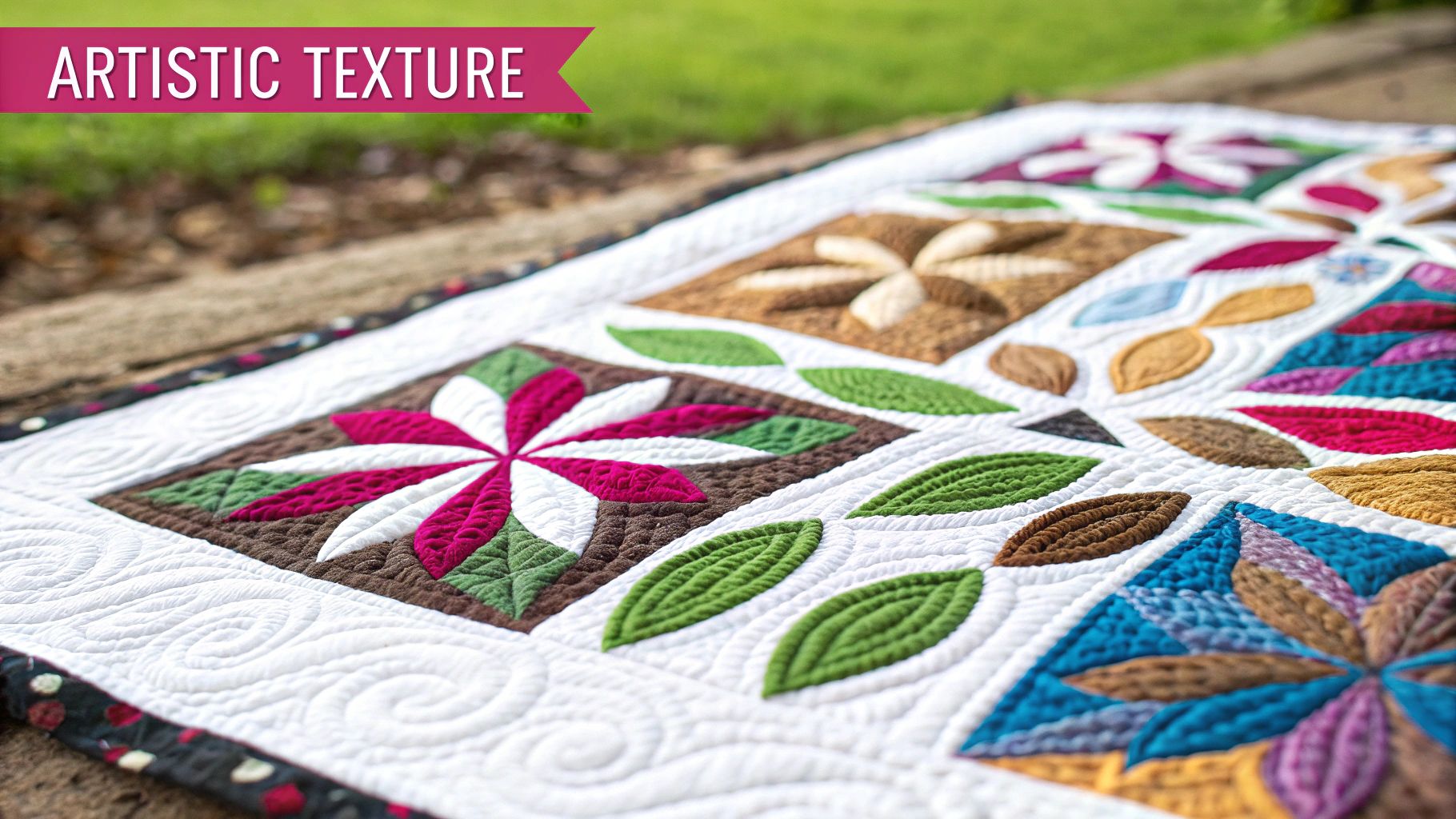
First, just think about where your quilt is going to live. Is it destined for a gallery wall? Or will it be dragged around the house and snuggled under by a toddler? The answer is your biggest clue.
When to Choose Hand Quilting
Hand quilting is all about heart and artistry. It shines brightest when you're making something meant to be treasured, an heirloom piece where the story is as important as the stitches. The soft texture and charming, imperfect stitches give a quilt a soul that a machine just can't replicate.
I always recommend hand quilting for projects like these:
- Decorative Wall Hangings: When a quilt is pure art, the gentle puckering and handmade feel of hand stitches add incredible visual texture and depth. It just draws you in.
- Heirloom Coverlets: If you're pouring your time into a quilt meant to be passed down for generations, the tradition and unique character of hand quilting make it a truly meaningful choice.
- Delicate Baby Quilts: For that extra-special baby gift, the soft drape you get from hand quilting is second to none. It creates a wonderfully gentle and cuddly quilt, and the process itself feels like you’re stitching love into every single fiber.
Hand quilting is the perfect choice when the story behind the stitches is just as important as the quilt itself. It transforms a project into a personal statement of care and patience.
When Machine Quilting is the Clear Winner
On the other hand, machine quilting is the undisputed champ for any project that needs to be tough, durable, and finished in this lifetime. Its strong, uniform stitches create a rock-solid finish that can handle daily use and countless trips through the washing machine.
It’s time to turn to your machine for these workhorse projects:
- Large Bed Quilts: Let’s be real, for a queen or king-sized quilt, machine quilting is almost a necessity. It gives you the speed to actually finish a massive project and the strength to ensure it holds up to years of use.
- Functional Items: Think tote bags, placemats, pillows—anything that needs to hold its shape and withstand some wear and tear. Machine quilting provides that essential reinforcement.
- Quilts for Kids: Children's quilts have a tough life. The secure, interlocking stitches from a machine are built to handle everything from epic fort-building sessions to emergency wash cycles.
At the end of the day, lining up your quilting method with the project's job is the key to a happy result. Whether you're dreaming of an artistic wall hanging or a durable bedspread, let its final destination guide your hands.
And no matter which path you choose, you can find all the perfect project kits and high-quality supplies to get you started at Linda's Electric Quilters.
Blending Techniques for Hybrid Quilting
But what if you didn't have to choose? In the big hand quilting vs machine quilting debate, some of the most stunning quilts come from quilters who decide to do both. This "hybrid" approach is all about playing to the strengths of each method.
You get the solid structure and speed from your machine, paired with the beautiful, personal detail that only comes from stitching by hand. It’s a way to create a quilt that’s not just durable but also full of artisan character—a piece that’s uniquely yours.
A Practical Approach to Hybrid Quilting
Diving into a hybrid project is actually pretty straightforward. A really popular strategy is to first anchor your quilt sandwich with the machine. My go-to method for this is "stitching in the ditch," which just means machine stitching right along the seam lines of your pieced top. It’s fast, secure, and gets all three layers locked down.
Once that structural work is done, you can slow down and get creative. This is your moment to add gorgeous, decorative motifs with hand stitching. These stitches aren’t holding the quilt together anymore; they’re pure embellishment. They add texture and become the star of the show, all without you having to worry about the quilt's underlying strength.
This mix-and-match method gives you so much creative freedom. You can make quilts that feel both modern and timeless. It’s the perfect answer for anyone who loves the efficiency of machine quilting but still craves that soulful, handmade touch.
Combining machine and hand quilting isn’t a compromise; it's a creative elevation. You get the strength and speed where you need it, and the artistry where you want it to be seen.
Of course, to blend these two techniques, you’ll want the right tools for each part of the job. You'll need a solid, reliable machine thread for the heavy lifting and a beautiful, high-quality hand quilting thread to make your decorative stitches pop. You can find the perfect supplies for your next hybrid project at Linda's Electric Quilters.
Your Top Quilting Questions, Answered
As you weigh the options between hand and machine quilting, a few common questions always seem to pop up. Getting these sorted out can really help you figure out the best path for your project and your own creative flow. Let’s dive into some of the questions we hear all the time.
Is Hand Quilting Stronger Than Machine Quilting?
This is a great question, and the short answer is that machine quilting is typically stronger and built to last. A machine creates a tight, interlocking stitch with consistent tension that holds up incredibly well to daily use and frequent washing.
Hand quilting, with its charming running stitch, is absolutely beautiful but can be a bit more delicate. That makes it a perfect choice for heirloom quilts, wall hangings, or other decorative pieces that won't be put through the wringer.
Can I Start Machine Quilting on My Regular Sewing Machine?
You bet! There's a common misconception that you need a huge, expensive longarm machine to get started, but that's just not true. Your trusty domestic sewing machine is more than capable of handling the job.
All you really need are a couple of specialty feet: a walking foot for beautiful straight-line quilting and a darning foot for when you're ready to try your hand at free-motion designs.
What Is the Best Thread for Each Method?
Choosing the right thread is a game-changer. For hand quilting, you'll want a thicker thread, often something waxed or glazed like a 12wt or 28wt cotton. This type of thread is sturdy, glides through the fabric with ease, and creates those gorgeous, defined stitches we all love.
When you're quilting by machine, it's a different story. You'll want a smoother, finer thread—usually a 40wt or 50wt—to keep up with the machine's speed. Thinner threads prevent frustrating lint buildup and are much less likely to snap while you're in the zone.
Ready to tackle your next project with the perfect tools? Linda's Electric Quilters has an amazing selection of threads, feet, and notions to help you finish your quilt beautifully, no matter which method you choose. Explore our collection at https://lindas.com.