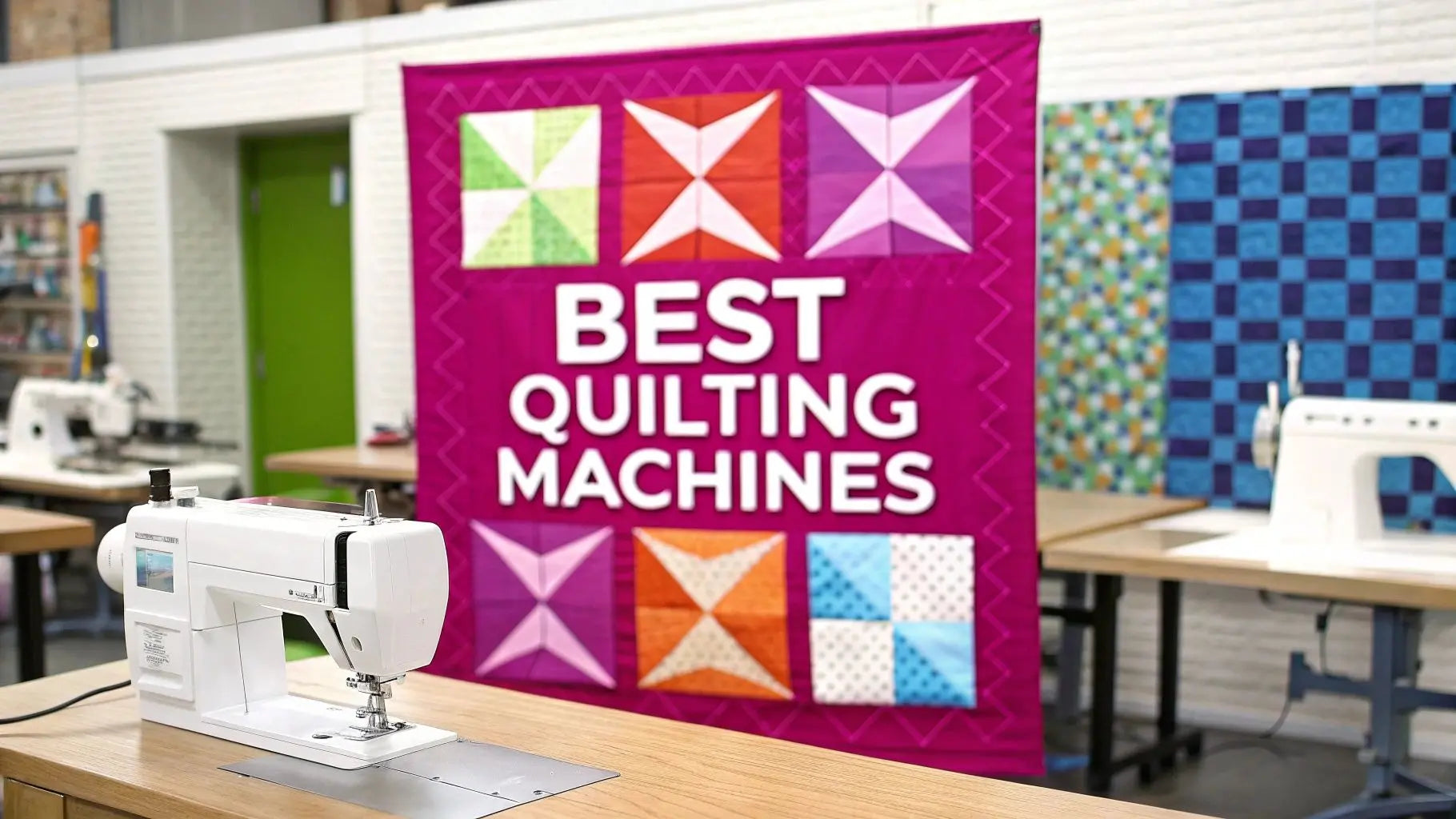
When you're ready to start your next quilting project, finding the best sewing machine for quilting boils down to identifying the features that will bring your vision to life. For most quilting projects, that means a machine with a huge throat space to manage large quilts, a rock-solid walking foot that feeds fabric layers like a dream, and stitch control that’s precise enough for those tiny, perfect details. It's no surprise that models like the Bernina 770 QE or the Juki TL-2010Q are always at the top of everyone's list—they’re built to help you finish your projects beautifully.
Why a Dedicated Quilting Machine Helps You Finish Your Projects
Choosing the right sewing machine for quilting can completely change your project workflow, turning a frustrating struggle into pure joy. Sure, you can piece a quilt top on a standard machine, but a dedicated quilting machine is engineered to handle the unique challenge of stitching through layers of fabric, batting, and backing. It becomes a true partner in your craft. This guide is here to help you sort through the options and find the perfect match for your quilting journey, so you can spend more time creating and less time fighting with your tools.
The quilting world is booming, and it's a community that relies on these specialized machines to complete their projects. The market was valued at a whopping USD 5.32 billion in 2024 and is expected to climb to USD 7.8 billion by 2031. This isn't just a number; it shows how much quilters are investing in machines with computerized controls, programmable stitches, and better fabric handling to boost the quality and speed of their work. You can dive deeper into these numbers and see the full analysis of quilting industry growth.
Core Differences at a Glance
So, what really sets a quilting machine apart for your projects? Let's break down the fundamental differences between a standard sewing machine and one built specifically for a quilter's needs.
| Feature | Standard Sewing Machine | Quilting Sewing Machine |
|---|---|---|
| Throat Space | Typically 5-7 inches. Good luck wrestling a queen-size quilt project through that. | A generous 9-12 inches or more, giving you plenty of room to work. |
| Motor Power | Built for basic sewing. It can really struggle with thick quilt sandwiches. | Packs a powerful motor for higher speeds and punching through multiple layers with ease. |
| Included Feet | Comes with the basics—zipper foot, buttonhole foot, maybe a few others. | Loaded with specialty feet you'll actually use for quilting, like a walking foot and a free-motion foot. |
| Table Space | Usually just a small, standard sewing bed with zero extra support for your quilt. | Often includes a large extension table to support the quilt's weight and prevent drag. |
This chart should help you think about what you truly need for your projects, whether you're just starting with simple piecing or you're an expert tackling complex free-motion designs. Our goal is to give you the confidence to pick a machine that not only works for your current projects but also grows with you as your skills develop. Pair the right machine with the quality quilting supplies from Linda's, and you'll have everything you need to finish your next masterpiece.
What Really Makes a Great Quilting Machine?
Walking into the world of quilting machines can feel overwhelming. But when you cut through the noise, a few key features separate a standard sewing machine from a true quilting powerhouse. It’s less about the techy specs and more about how a machine feels and how it helps (or hinders) your creative process on a real project.
The number one thing quilters talk about is throat space, sometimes called harp space. This is simply the open area to the right of your needle. It dictates how big of a project you can work on comfortably. Your average sewing machine might give you 5-7 inches, which is totally fine for piecing, but you'll hit a wall fast when you try to stuff a full quilt sandwich in there.
If you’re serious about finishing your own quilts, you want a machine with at least 9 to 11 inches of throat space. That extra room is a total game-changer for your projects. It means you can actually roll and shift a big quilt without fighting the machine itself, which is the secret to avoiding those dreaded puckers and fabric drag.
Power and Precision: The Heart of the Machine
Beyond sheer size, you need some muscle under the hood for demanding quilt projects. A quilt is a thick sandwich of fabric and batting, and punching a needle through those layers over and over requires a strong motor. A wimpy motor will skip stitches or just plain give up. Look for a machine with a high stitches-per-minute (SPM) rating—this isn't just about speed, it's a good indicator of a motor that won't back down from a challenge.
Precision comes from having the right tools for the job, and that means specialized presser feet. Your machine should come with more than just the basics to help you complete your projects.
- Walking Foot: This is non-negotiable for straight-line quilting. It has its own little set of feed dogs on top that move in sync with the machine's feed dogs below. This dream team grips all your layers—top, batting, and backing—and pulls them through evenly, preventing any shifting or bunching.
- Free-Motion (or Darning) Foot: For beautiful stippling, feathers, or any other free-hand design, you need this foot. It floats just above the fabric, giving you total freedom to move the quilt in any direction your heart desires.
Features That Just Make Life Easier
The best quilting machines are packed with thoughtful features that let you stay in your creative zone instead of fiddling with the machine. An automatic thread cutter is one of those things you don't think you need until you have one. Just tap a button, and it snips both the top and bobbin threads cleanly. Think of all the time you'll save not trimming threads on a huge quilt project!
For anyone diving into free-motion quilting, a stitch regulator is pure magic. This clever piece of tech uses sensors to read how fast you're moving the fabric and adjusts the machine's speed to match. You move fast, it stitches fast. You slow down for a tricky curve, it slows down with you. The result? Gorgeous, even stitches every single time.
A stitch regulator is the great equalizer in free-motion quilting. It bridges the gap between your creative ideas and a professional-looking finish, giving you confidence right from the start of your project.
Finally, don't underestimate the importance of a solid, heavy-duty frame. A big quilt has some real weight to it, and when you're stitching at high speeds, a lightweight machine will vibrate and bounce all over the place. A stable, low-vibration machine makes the whole process smoother, quieter, and way more enjoyable. Once you have your dream machine, you'll be ready to explore the amazing quilting fabrics and notions at Linda's to get your next project started.
Comparing Top Quilting Machines for Different Needs
Let’s be honest, picking a sewing machine for quilting isn’t about finding the "best" one—it’s about finding the right one for you and your projects. It’s a creative partner, and the perfect match depends entirely on where you are in your quilting journey. To get past the generic feature lists, we're going to look at top-tier machines through the eyes of three different quilters: The Aspiring Beginner, The Passionate Hobbyist, and The Professional Artisan. This way, we can see exactly how certain features solve the real-world problems you’re facing right now.
This visual guide gives you a quick look at some top picks, highlighting the kinds of advanced features that can really take your quilting projects to the next level.
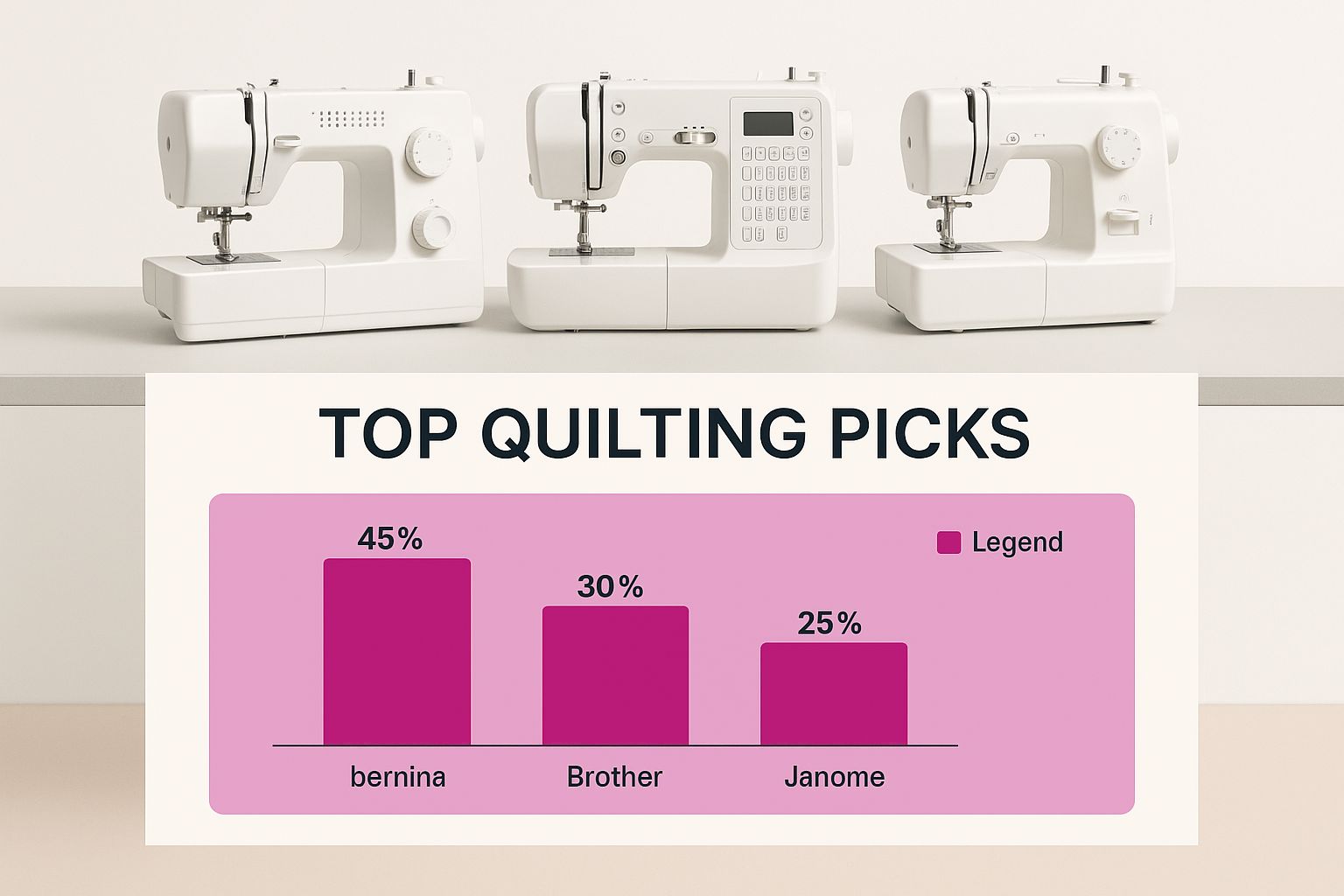
As you can see, today’s machines are incredible tools, blending raw power with delicate precision for every type of quilting project.
The Aspiring Beginner Machine Profile
When you're just starting, the sheer number of options can feel overwhelming. A great beginner machine cuts through the noise. It prioritizes simplicity and features that build your confidence for your first projects, rather than throwing a hundred stitches at you that you'll never use. The goal is to get you comfortable with the essentials, like accurate piecing and straight-line quilting.
What you're looking for is an intuitive machine, maybe with a clean LCD screen that makes picking a stitch feel easy. A quality walking foot should absolutely be included right in the box; it’s the most important tool for keeping your fabric layers from shifting around on your first quilting project. Another non-negotiable is a needle-down function. This tiny feature is a lifesaver, letting you pivot at corners with perfect precision, which makes a huge difference in how your quilt blocks turn out.
For beginners, the most important feature isn't speed or a thousand stitch options. It's clarity. A machine that is easy to understand and operate builds the confidence needed to tackle that first big quilt project.
Look for a model with a decent throat space, around 8-9 inches. That’s plenty of room to practice on smaller projects like baby quilts or table runners without feeling like you're wrestling with the fabric, and it prepares you for bigger projects later on.
The Passionate Hobbyist Machine Profile
Okay, you've got the basics down and you're hooked. Now you want to stretch your creative wings. You’re tackling larger quilt projects, dipping your toes into free-motion quilting, and you need a machine that can keep pace with your ambition—but maybe without the industrial price tag.
This is where you see a big jump in both power and features. A hobbyist-level machine needs a much larger throat space, usually 11 inches or more. This is a must for handling the bulk of a queen-sized quilt project. The motor will also be stronger, giving you higher stitches-per-minute for faster quilting and the power to punch through thick seams without a whimper.
The real game-changer at this level is a stitch regulator. This amazing feature senses how fast you’re moving the fabric and adjusts the stitch length on the fly. It’s the secret to getting smooth, professional-looking free-motion quilting instead of choppy, uneven stitches. You’ll also find awesome workflow upgrades like an automatic presser foot lift and a programmable thread cutter. Once you have a machine that can handle these techniques, you’ll be ready to stock up on gorgeous quilting fabrics and threads from Linda’s to complete your project.
The Professional Artisan Machine Profile
For the professional quilter or textile artist, the machine is more than a tool—it's an extension of their hands. It has to be a rock-solid workhorse, delivering perfect stitch quality, speed, and durability for hours of daily work. These machines are built to produce, whether it’s for client projects or for creating intricate, award-winning art quilts.
At this tier, we're talking about machines with industrial-grade DNA. They often have heavy-duty cast-metal frames to eliminate vibration, even when flying along at 1,500 stitches per minute or more. The throat space is massive, often 12 inches or more, and some models are even designed to be mounted on a quilting frame, blurring the line between a domestic machine and a long-arm.
What really sets these machines apart are the pro-level features for complex projects:
- Laser Guidance: Some models project a laser line onto the fabric, giving you a perfect guide for straight-line quilting without ever having to mark your quilt.
- Advanced Stitch Control: Beyond simple regulation, these machines offer granular control over tension and stitch formation, letting you work with tricky threads and materials flawlessly.
- Digital Integration: Many can connect to design software, allowing you to import complex quilting patterns and have the machine execute them with robotic precision.
Quilting Machine Feature Comparison
To help you visualize where you fit, here's a quick side-by-side breakdown of how key features scale up with your project needs. This table simplifies the decision-making process by showing what to prioritize at each level.
| Feature | Beginner-Friendly Model (Example) | Mid-Range Hobbyist Model (Example) | High-End Professional Model (Example) |
|---|---|---|---|
| Throat Space | 8-9 inches: Great for learning on smaller projects like lap quilts. | 11+ inches: Crucial for comfortably quilting bed-sized projects. | 12+ inches: Maximum room for large quilts and frame compatibility. |
| Key Function | Needle Up/Down: The secret to accurate piecing and crisp corners. | Stitch Regulator: A must-have for smooth, professional free-motion. | Industrial Speed & Durability: Built for all-day use with no vibration. |
| Included Feet | Walking Foot & 1/4" Foot: The essential duo for piecing and quilting. | Full Quilting Foot Set: Includes various free-motion and ruler feet. | Specialty Application Feet: Advanced feet for micro-stippling, etc. |
| User Interface | Simple & Intuitive: Clear buttons and an easy-to-read screen. | Customizable Settings: Lets you save favorite stitches and settings. | Programmable & Digital: Advanced controls and software integration. |
Ultimately, finding the right machine is about empowering your creativity. No matter what project you dream up, the perfect partner is out there. Take a look at the incredible selection of quilting machines and supplies at Linda's to find yours.
How Machine Choice Impacts Real Quilting Projects
Talking about technical specs is one thing, but seeing how a machine actually handles a real project? That's what separates a decent machine from the best sewing machine quilting experience you can have. The right features can turn a project you’re dreading into one you can't wait to finish. Let's walk through a few common quilting projects to see just how much a machine's capabilities matter.
Every quilt project has its own personality and its own set of demands. Your machine can either be your best friend or your biggest enemy in the process. When you match your machine's strengths to what you want to create, you’re already halfway to a beautiful finish.
Scenario One: The King-Sized Free-Motion Quilt
We’ve all been there—staring at a massive, basted quilt top and wondering how we’re going to wrestle it through the machine. When you're tackling a king-sized quilt with free-motion designs, the machine's physical build and tech features aren't just nice to have; they're essential to completing the project successfully.
The absolute game-changer here is a large throat space. Having 11 inches or more of room to the right of the needle means you can actually maneuver that giant quilt sandwich without feeling like you’re in a wrestling match. Try this on a standard machine, and you'll fight fabric drag, skipped stitches, and some serious shoulder pain.
Just as critical is a good stitch regulator. As you push that huge quilt around, your speed is going to be all over the place. A stitch regulator senses how fast your hands are moving and adjusts the machine's speed to match, keeping every single stitch perfectly even. It doesn't matter if you're doing big, swooping curves or tiny, detailed stipples—they'll all look flawless.
A stitch regulator is the secret sauce for professional-looking free-motion quilting on a big quilt. It takes all the guesswork out of the project, so you can just focus on your design instead of constantly worrying about your speed.
Without these two features, quilting a big project is a battle. You end up with puckers, wonky stitches, and a finished quilt that just doesn't show off your hard work. Once you've got the right machine, all you need are some quality quilting threads and notions from Linda's to get started on your project.
Scenario Two: The Precision-Pieced Geometric Quilt
Geometric quilt projects are all about those perfect points and crisp, intersecting seams. For these quilts, you don't need a beast of a machine; you need a surgeon. It's not about speed, it's about absolute, unwavering accuracy.
The heart of a precision-piecing machine is its superior straight-stitch quality. You need a machine that lays down a perfectly straight stitch with zero wobble. A straight stitch needle plate helps immensely here; its tiny round hole keeps the fabric from getting pushed down into the machine, giving you a sharp, clean stitch every time.
There are a few other must-haves for this kind of project:
- A Needle-Down Function: This is non-negotiable for piecing. When you stop sewing, the needle stays in the fabric. You can lift the presser foot, pivot at a corner perfectly, and never lose your spot.
- An Accurate Quarter-Inch Foot: Getting that consistent quarter-inch seam is what makes your blocks line up. A foot designed specifically for this is your best bet for perfect results.
- Excellent Feed Dog Control: The machine needs to start and stop smoothly, gripping the fabric firmly but gently so nothing shifts. A responsive feed system makes all the difference.
These small details add up to a huge impact, making it easy to build complex blocks with confidence and nail those sharp points that make a geometric quilt project truly pop.
Scenario Three: The Intricate Art Quilt
Art quilt projects are where you get to play with texture, detail, and pure creativity. You might be stitching through silk, wool, or even sheer fabrics, so you need a machine that’s both an artist and a workhorse.
This is where a big library of decorative stitches really shines. You can use them to add texture, outline shapes, or even couch down yarns and fibers. A machine that lets you edit and combine stitches gives you an incredible palette for creating one-of-a-kind designs. It’s no wonder the global sewing machine market, valued at around USD 4.56 billion in 2024, is booming as quilters demand more creative tools. That number is expected to hit USD 5.53 billion by 2030, all driven by our desire for more capable machines for our projects. You can find more details on these sewing machine market growth trends.
Beyond the fancy stitches, the machine has to handle all sorts of materials. A strong motor and adjustable presser foot pressure are key for going from delicate sheers to thick wool without puckering the fabric or skipping stitches. And, of course, the ability to drop the feed dogs for free-motion "thread painting" is a must for creating those stunning, textured effects.
No matter which project you're dreaming up, having the right supplies is just as important as the machine. Linda's has a beautiful collection of specialty fabrics and batting to bring your next masterpiece to life.
Making a Smart Investment in Your Quilting Future
Picking the right quilting machine is a huge deal. It’s a serious investment in your craft, and the right choice pays you back with every project you complete. To make a purchase you’ll love for years, you have to look past the spec sheet and think about the long-term relationship you’re building with your machine. This isn’t just about buying a tool; it's about choosing a creative partner.
The decision really boils down to more than just features. It’s about finding a reliable machine from a trusted brand that can grow with your skills. A dependable partner means you get to spend more time quilting and way less time pulling your hair out over technical glitches.
Understanding Your Budget and the Upgrade Path
Quilting machines come in a wide range of prices, and knowing what you get for your money is the key to investing wisely. Moving up from an entry-level machine to a mid-range or premium model isn't just about getting more decorative stitches—it's about real, tangible upgrades in performance for your projects.
- Entry-Level Machines: These are perfect when you're just starting. They give you the foundational features you need, like a decent throat space and the essential quilting feet, letting you nail your piecing and basic quilting techniques on your first projects.
- Mid-Range Machines: Here’s where things get exciting. You’ll see major upgrades in power and convenience, like much larger throat spaces (11+ inches), stronger motors for faster stitching, and absolute game-changers like stitch regulators for more advanced projects.
- Premium Machines: Built for the quilter who means business. These machines pack industrial-grade parts, stay rock-steady with minimal vibration even at high speeds, and offer advanced digital controls for incredible project precision.
My advice? Invest in the best sewing machine quilting model you can comfortably afford. It often saves you money down the road because you won't feel the need to upgrade so quickly as your projects become more ambitious.
The Power of Dealer Support and Warranty
I can't stress this enough: the value of buying from a knowledgeable dealer like Linda's is immense. When you buy from a big-box store, you get a machine in a box. Period. When you buy from a specialty dealer, you get an entire support system for all your future projects.
The real value of a great machine isn’t just in its features, but in the peace of mind that comes with knowing expert help is available when you need it. A strong warranty and reliable dealer support are your insurance against frustration.
This support means having someone to call for expert advice, maintenance tips, and troubleshooting help when you're stuck. A comprehensive warranty is your safety net, covering repairs and making sure your machine stays a reliable workhorse for project after project.
Exploring the Machine’s Accessory Ecosystem
A quilting machine is more than just the machine itself; it's the heart of a whole ecosystem of accessories that can totally transform what it can do for your projects. Before you pull the trigger, take a look at the add-ons available for it.
A deep lineup of accessories means the machine can adapt as your skills grow and you want to try new things. Make sure you check for:
- Specialty Presser Feet: Look for feet for ruler work, a variety of free-motion feet, and other specialized tools that unlock new creative possibilities for your projects.
- Extension Tables: A big, sturdy extension table is a must-have. It supports the weight of your quilt and stops the fabric from dragging, which can mess up your stitches.
- Quilting Frames: Some high-end domestic machines are compatible with quilting frames, which can turn your machine into a sit-down longarm system. It’s a whole new way to tackle large projects.
The quilting community is incredibly dedicated. Did you know that research shows the average quilter is often a tech-savvy woman in her 60s who owns about four different machines for various techniques? It just goes to show how much we value having the right tool for the job. You can read more about these fascinating quilting market trends.
Ultimately, choosing your next machine is a personal journey. By balancing your budget, the features you need, the support you'll get, and where you see your quilting projects going in the future, you can pick a machine that will not only serve you well today but inspire you for years. When you're ready, come explore the amazing selection of quilting machines and supplies at Linda's to find your perfect match.
Answering Your Quilting Machine Questions
Picking the right sewing machine for quilting is a big commitment, and it’s smart to have questions before you dive in. We get it. To help you feel totally confident, we’ve put together answers to the most common things quilters ask us. Think of this as the final check-in to clear up any doubts before you find the perfect machine for your projects.
Do I Really Need a Dedicated Machine for Quilting?
Honestly, you can piece a quilt top on just about any sewing machine. But a machine built for quilting gives you advantages that are tough to live without once you've tried them on a project. The biggest game-changer is the generous throat space. This is the room to the right of the needle, and having more of it means you can manage a bulky quilt without a constant wrestling match. Trying to stuff a queen-sized quilt through a tiny opening is a fast track to frustration and puckered stitches.
Beyond just the space, quilting machines are packed with features that make a real difference for your projects:
- A walking foot: This is your best friend for straight-line quilting. It grabs all three layers of your quilt sandwich and feeds them through evenly, preventing shifting and bunching.
- A stitch regulator: If you love free-motion quilting projects, this is non-negotiable. It magically keeps your stitches consistent and beautiful by adjusting to how fast you move the fabric.
- A needle-down function: This handy feature keeps the needle in the fabric when you stop, which is crucial for pivoting perfectly at corners. It’s a must for accurate piecing.
- A sturdy, low-vibration frame: A heavier, well-built machine can handle the weight of a big quilt and high-speed stitching without bouncing all over your table.
For anyone who’s serious about quilting, stepping up to a dedicated machine will not only improve the quality of your work but also make the whole process so much more fun.
What Is the Difference Between a Long Arm and a Domestic Quilting Machine?
The main difference comes down to which part moves for the project—the fabric or the machine. With a domestic quilting machine, even a big one, the machine stays put while you guide the fabric under the needle. This makes it incredibly versatile; you can do everything from piecing blocks to quilting the final sandwich.
A long-arm machine flips that whole process around. Your quilt gets stretched out on a large frame, and you move the machine's "head" over the stationary fabric to draw your quilting designs. Long-arms are specialists built for one job: quilting the finished top. You don't use them for piecing.
For the vast majority of home quilters, a high-quality domestic machine is the sweet spot. It gives you the power and versatility to handle every single step of making a quilt project, from cutting the first square to sewing the final stitch, all on one machine.
How Much Should I Budget for a Good Quilting Machine?
Quilting machine prices can be all over the map, depending on the features, size, and motor you need for your projects. You can generally break the market down into a few tiers:
- Entry-Level ($400 - $800): These are great starter machines that offer the basic features you need to get into quilting without a huge investment.
- Mid-Range ($1,500 - $5,000): This is where serious hobbyists often land. These machines offer more throat space, stronger motors, and advanced features like stitch regulation for more ambitious projects.
- High-End (Over $5,000): For the quilter who quilts constantly, these are professional-level workhorses built for incredible speed, precision, and durability.
Think about your budget in terms of your current skills and where you want to go as a quilter. It’s often a good idea to invest in the best machine you can comfortably afford, as it will grow with you and your projects for years to come.
What Are the Most Essential Quilting Accessories?
A few key accessories will make a world of difference in your quilting projects. At the top of the list is a walking foot for any straight-line quilting and a darning or free-motion foot for creating beautiful, curvy designs.
Next up is an extension table. This gives you a large, flat surface that supports the weight of your quilt, preventing it from dragging on the needle and causing uneven stitches. Finally, a 1/4-inch piecing foot is the secret weapon for getting those scant, accurate seams that make your quilt blocks line up perfectly. Many of the best quilting machines include these in the box, but it’s always a good idea to double-check.
With your questions answered, you're ready to find the perfect creative partner for your quilting journey. At Linda's Electric Quilters, we have an amazing selection of machines, fabrics, and notions to bring your projects to life. Explore our collection and start creating today at https://lindas.com.