Hi Bestie,
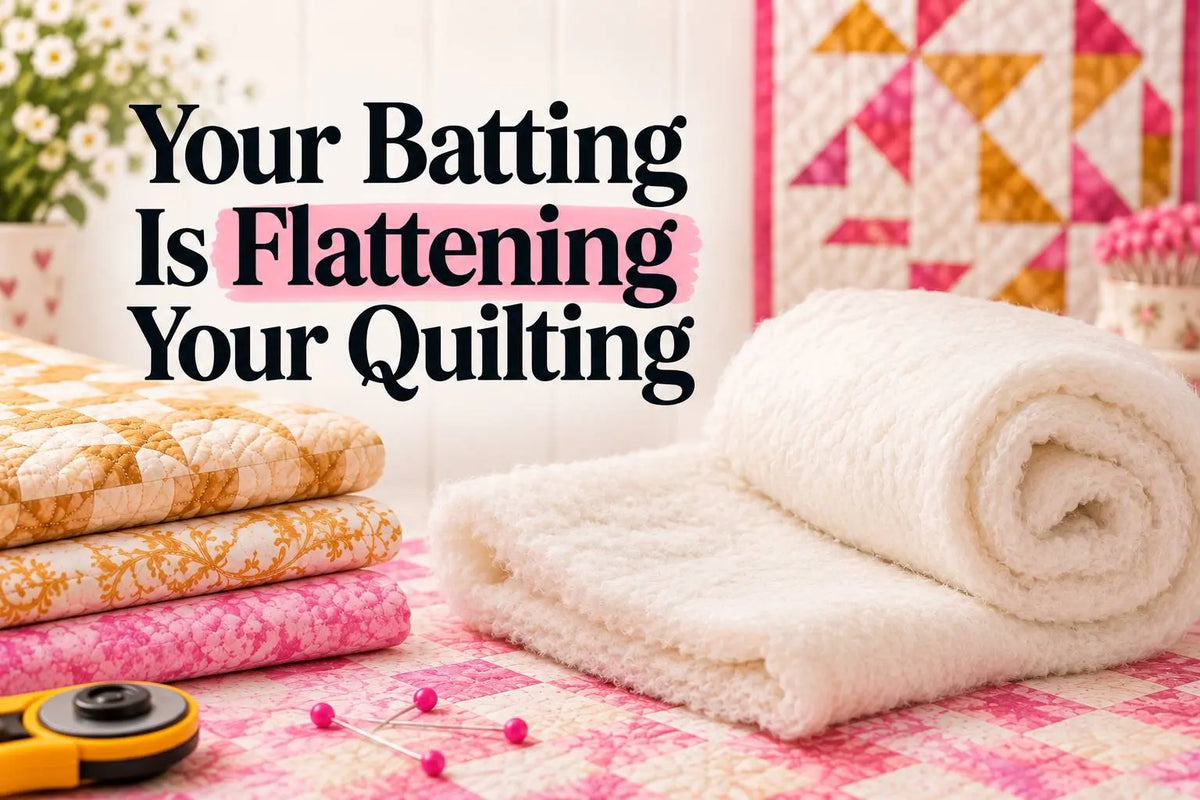
Here's the part we quilters sometimes forget: batting isn't just filling.
It's part of the design.
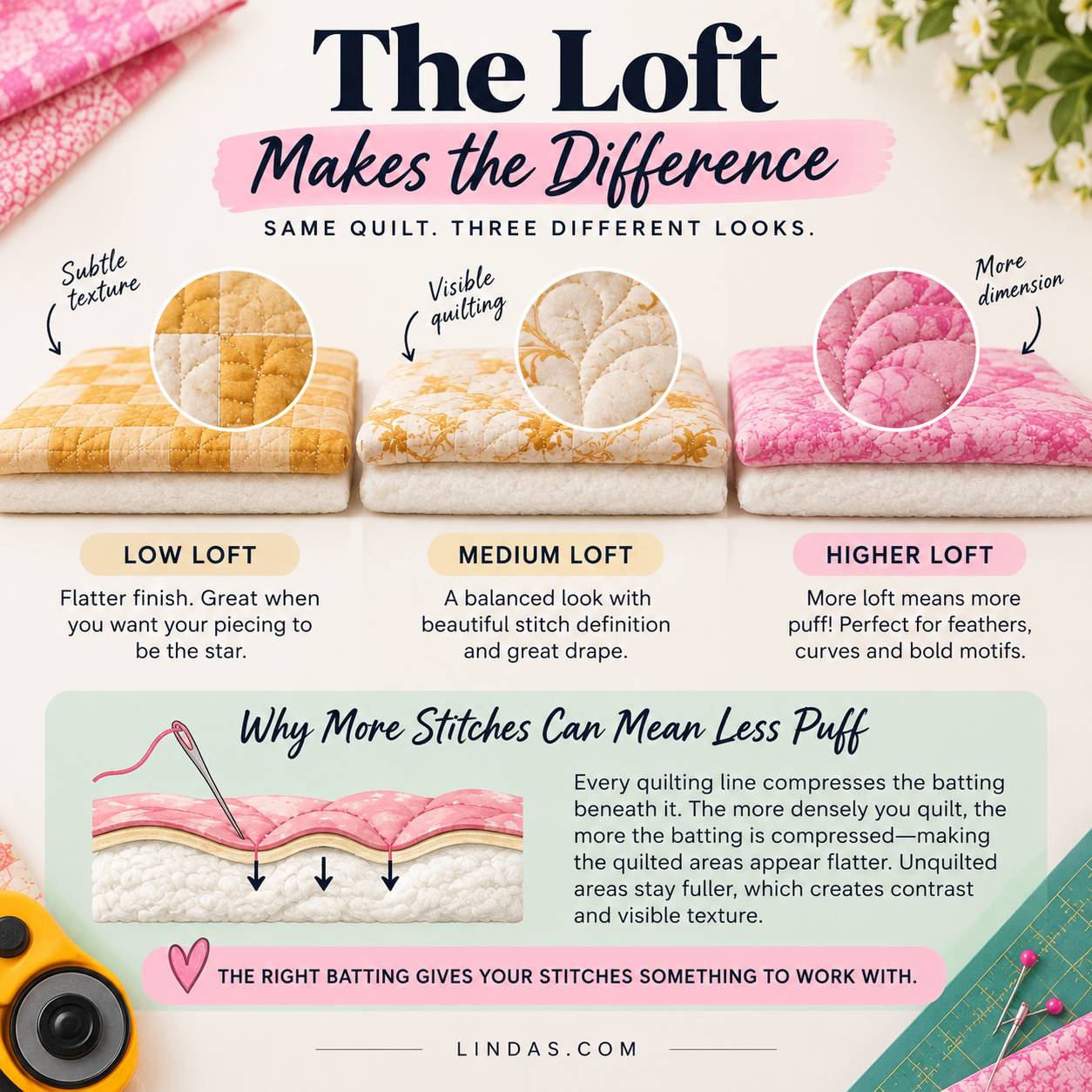
Loft Decides How Much Texture Your Quilting Can Have
The loft you choose affects how much dimension your quilting has to work with before you ever take the first stitch.
Lower-loft batting creates a flatter, more traditional finish that lets beautiful piecing take center stage.
Higher loft creates more depth, giving feathers, curves, and other motifs room to stand away from the quilt top.
So if your quilting looks flatter than you pictured, the answer might not be more stitches, it might be what's underneath them.
Before You Blame Your Machine
So before you blame your tension… Or rethread the machine. Or change your needle. Or stare suspiciously at your longarm for 10 minutes. 😅
Take a look at your batting.
If you want dramatic texture, your batting needs to give those stitches something to sculpt.
Why Loft Changes What Your Stitches Can Do
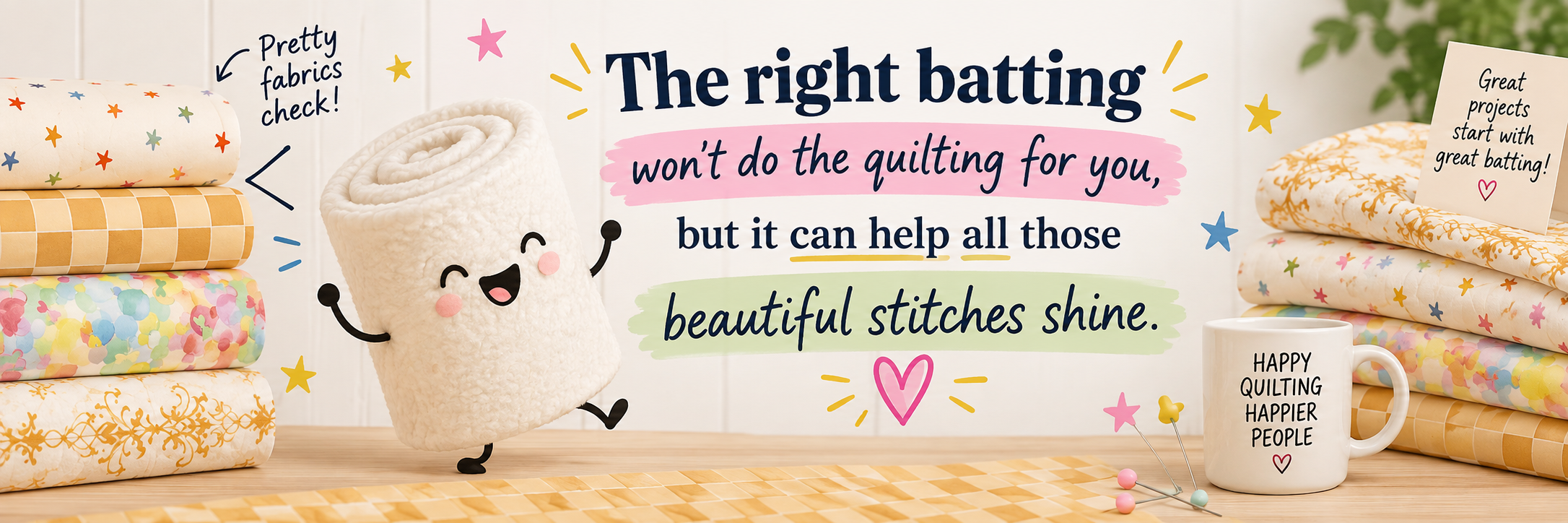
Every line of quilting presses the batting down where the needle goes in. The areas you leave unstitched stay puffy. That contrast, compressed lines next to raised spaces, is what your eye reads as texture.
With a thin, low-loft batting there isn't much to compress, so the difference between stitched and unstitched areas is small and the quilt reads flat and smooth. With a higher-loft batting, the same motif has more height to play with: a feather stitched over dense background fill will pop forward because the fill flattens everything around it.
That's also why adding more quilting to a low-loft quilt usually makes it flatter, not more textured. If you're not loving how your stitches look, it's worth reading Not Loving How Your Quilting Looks? too. And if you're working on a dark top, pair this with The Batting Question We Don't Ask Enough and Your Batting Is Showing.
Remember,
Before your next quilt goes on the frame, take a moment to think about the finish you're dreaming of: soft and subtle, beautifully balanced, or full of dimension. Choosing your batting with that finished look in mind can make all the difference, and give every feather, curve, and carefully stitched detail the chance to really come to life. 💗
Happy Quilting!
From Corey.
Want a balanced, beautifully textured finish? Shop Hobbs Heirloom 80/20 Batting Packages, pre-cut for individual quilts, or browse our full batting collection.
Frequently Asked Questions
What does loft mean in quilt batting?
Loft is the thickness and springiness of the batting. Low-loft batting is thin and lies flat, which gives a traditional, smooth finish. High-loft batting is thicker and puffier, which gives quilting motifs more height and dimension. Our guide to types of quilt batting breaks down how each fiber behaves.
Why does my machine quilting look flat?
Usually it's the batting, not the machine. Quilting creates texture by compressing the batting along stitch lines while unstitched areas stay raised. A thin, low-loft batting doesn't have much height to compress, so even dense quilting stays flat. Check your batting before adjusting tension or rethreading.
What batting is best for showing off feathers and custom quilting?
Choose a higher-loft batting when you want motifs like feathers and curves to stand out. Polyester battings such as Hobbs Polyester 6oz add noticeable loft, and our Hobbs Polydown vs Hobbs 80/20 comparison shows how a loftier poly compares to a classic blend.
Is low-loft batting better for quilts that showcase piecing?
Often, yes. A low-loft or mid-loft batting keeps the surface smooth so the piecing and fabric take center stage instead of the quilting texture. A cotton/poly blend like Hobbs 80/20 Heirloom is a popular balanced choice.
Will adding more quilting give my quilt more texture?
Not on its own. More stitching compresses more of the batting, which can actually flatten the quilt further. Texture comes from contrast between stitched and unstitched areas, so pairing the right loft with intentional open space works better than simply adding stitches. Compare options in our quilt batting comparison chart.