
Hi Bestie,
Ever notice tiny batting fibers working their way through your quilt top?
That’s called bearding.
It happens when fibers from inside your quilt migrate through the fabric and become visible on the surface.
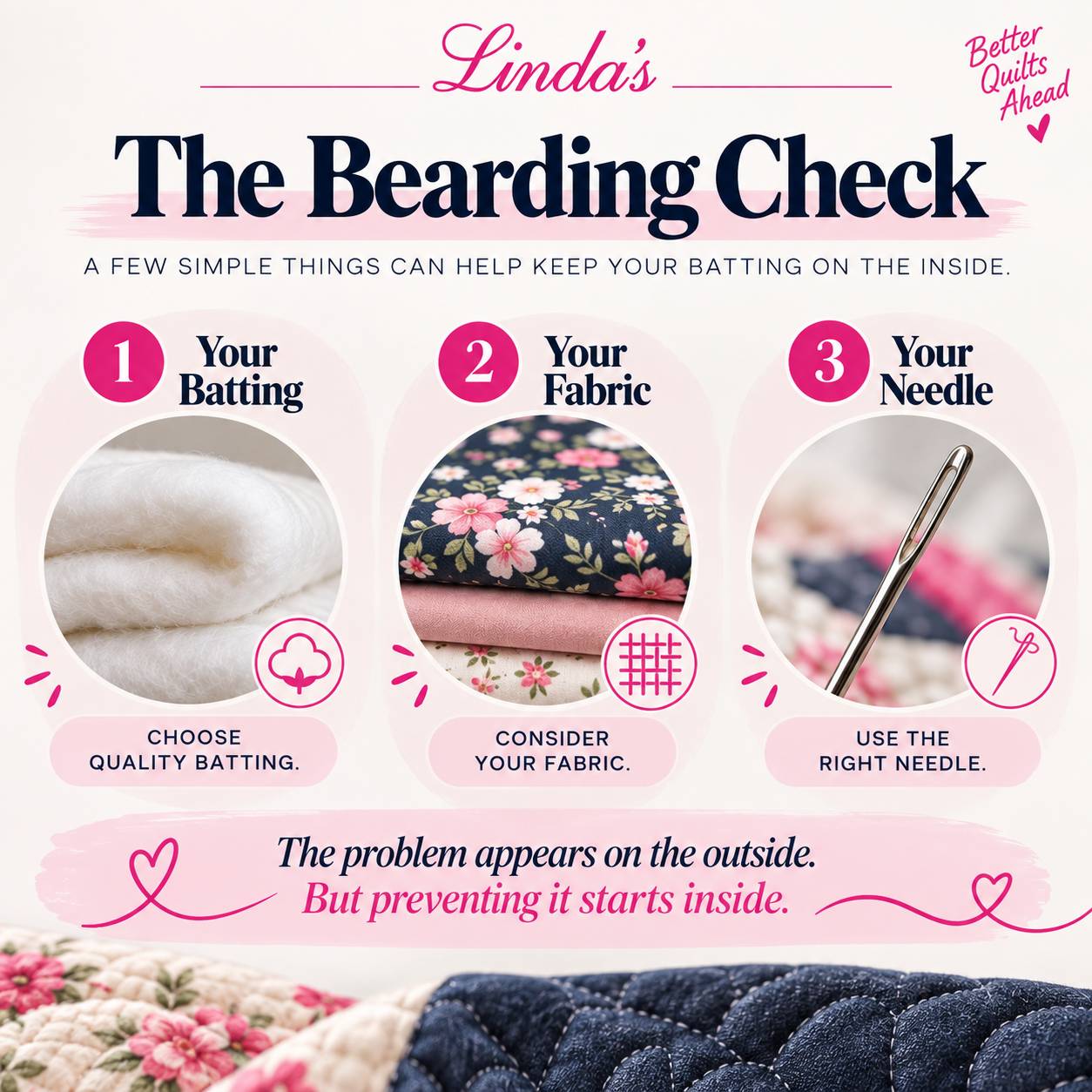
The problem appears on the outside. But preventing it starts inside.
Before your next quilt, take a closer look at these three things:
① Your Batting
Consider the fiber, quality, and construction. Choosing a batting designed to resist migration can help keep fibers where they belong. If you're not sure how the fiber types stack up, my note on why 100% cotton isn't always the answer is a good place to start, and the types of quilt batting guide goes deeper.
② Your Fabric
Looser weaves can make migrating fibers easier to see, especially when light-colored batting meets dark fabric. For dark quilts, a black batting like the one in our Hobbs Heirloom Black 80/20 guide hides any stray fiber before it becomes a problem.
③ Your Needle
Make sure your needle is appropriate for your fabric, thread, and quilting setup. If those sizing numbers on the pack are a mystery, I explained what needle numbers actually mean not long ago.
Why Batting Beards in the First Place
Here’s the part the infographic doesn’t have room for. Bearding is usually a combination of two things: short, loose fibers inside the batting, and something that gives them a path out. Low-quality or unbonded battings have more short fibers that aren’t anchored to anything. Every needle pass then opens a tiny hole in the weave and drags a few of those loose fibers up with the thread. A well-made batting is needle-punched, bonded, or built on a scrim so the fibers are locked together and can’t travel. Pair that with a tighter-weave fabric and a correctly sized, sharp needle, and the fibers simply have nowhere to go. That's also why bearding tends to show up on dark fabric with light batting: the fibers were always there, they're just finally visible.
Bottom line?
The batting may disappear between your quilt layers...
But the wrong batting can still make itself seen.
For quilters looking for a beard-resistant option, Hobbs Heirloom Premium 80/20 is an easy place to start. I put together a full Hobbs 80/20 Heirloom package guide if you want the details, and it's also the batting behind the batting question we don't ask enough.
Remember,
The batting may be hidden inside your quilt, but the right choice can make all the difference on the outside.
Choose quality batting, pair it with the right fabric and needle, and spend more time admiring your stitches, not chasing stray fibers across your quilt top.
Happy Quilting!
From Corey.

Right now The Fabric Company fabrics are on sale — tighter-weave quilting cottons are exactly the kind of fabric that keeps batting where it belongs. And if you're ready to try Hobbs 80/20, the Hobbs 80/20 batting package deal is the easiest way to stock up.
Frequently Asked Questions
What is bearding in quilting?
Bearding is when loose fibers from the batting migrate through the quilt top or backing and show up as fuzz on the surface of the quilt. It's most noticeable when light batting is used behind dark fabric. It's caused by the batting's construction, the fabric's weave, and the needle working together — which is why the fix starts inside the quilt, as I covered in the batting question we don't ask enough.
What batting is best to prevent bearding?
Look for a batting that's needle-punched, bonded, or built on a scrim, so the fibers are anchored and can't travel. A blend like Hobbs Heirloom Premium 80/20 is a reliable beard-resistant choice for most quilts. The selecting batting for quilting guide walks through how the fiber types compare.
Why does my batting show through dark fabric?
The fibers were probably always migrating; on dark fabric they're simply visible. A loose weave gives fibers more room to escape, and light batting shows against a dark top. For dark quilts, a black batting like the one in the Hobbs Heirloom Black 80/20 guide or a tighter-weave quilting cotton solves most of it.
Can the wrong needle cause bearding?
Yes. A needle that's too large or dull punches oversized holes in the fabric and drags loose batting fibers up with the thread on every stitch. Match the needle size and type to your fabric and thread. If you need a refresher, see what those needle numbers actually mean.
How do I fix bearding on a finished quilt?
Don't pull the fibers, which just draws more out. Trim them flush with small scissors or shave the surface gently with a fabric shaver, then wash the quilt to relax the weave. Prevention is far easier than repair, so start with quality batting next time — and if you're wondering whether batting is rough on your tools, I covered that in Is Batting Dulling Your Scissors? For a full rundown of every Hobbs option, see the ultimate guide to Hobbs batting.