Hi Bestie,
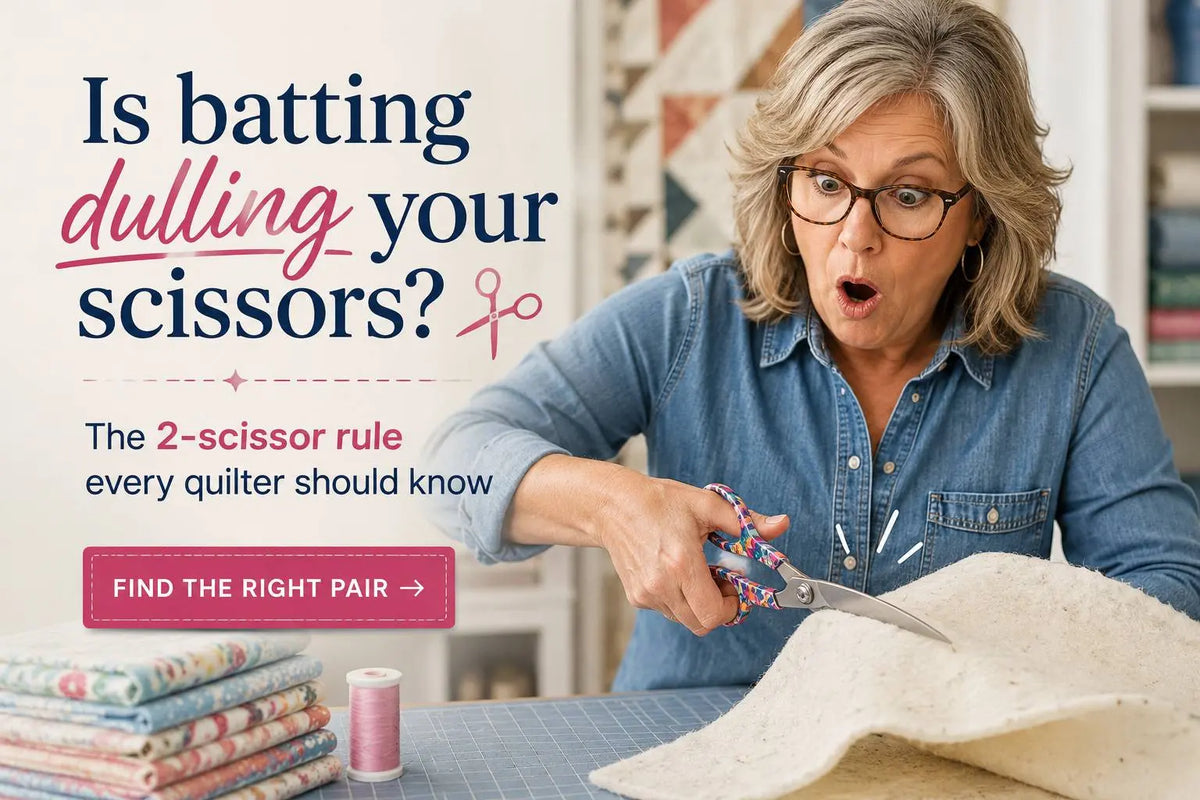
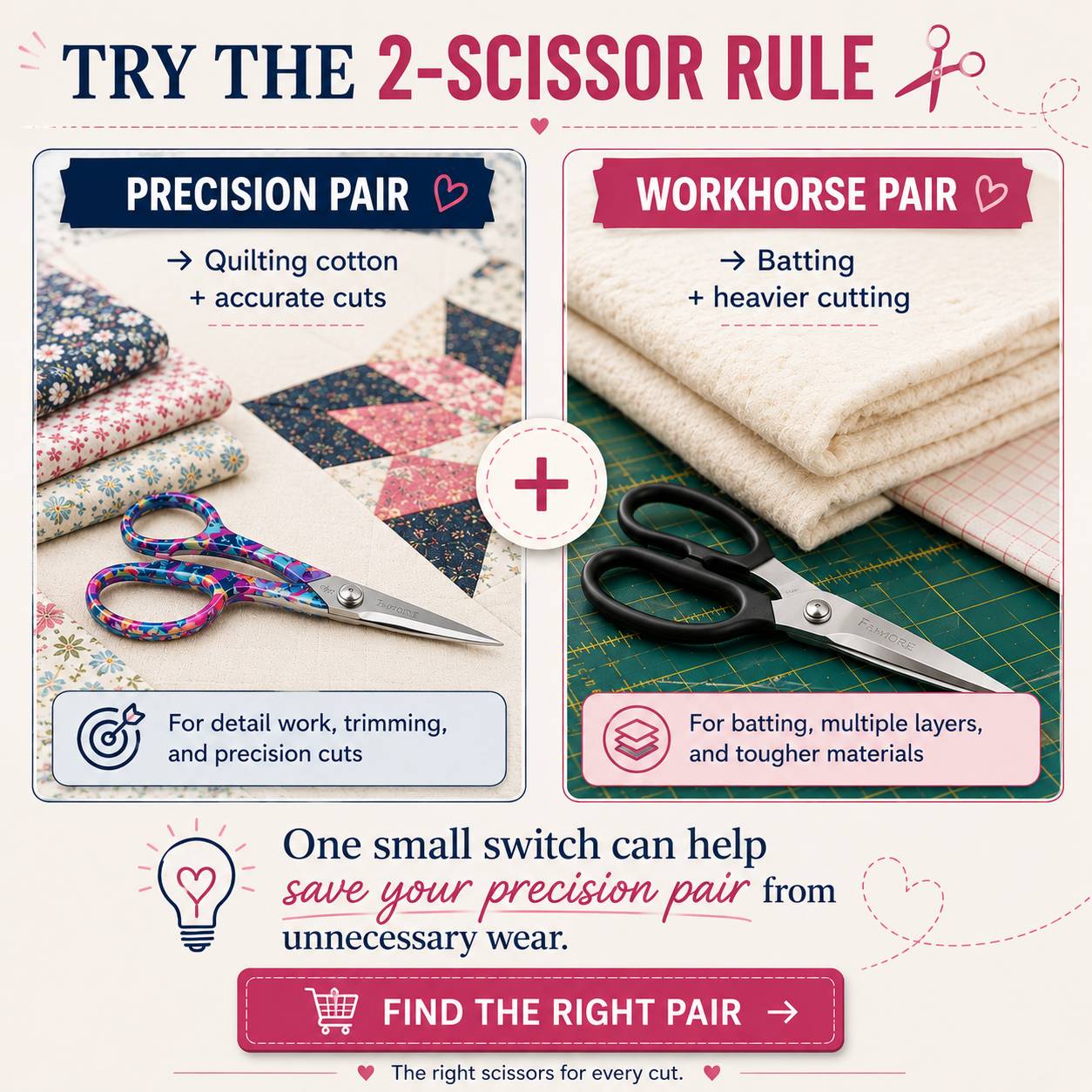
Think about what your scissors are cutting.
Quilting cotton is relatively thin and smooth. Batting is thicker, loftier, and full of fibers your blades have to work through.
That means every snip asks a little more from your scissors.
And if the same pair handles your batting and your precision work? You're asking your best scissors to do both the heavy lifting and the delicate stuff.
Why Quilters Do This
Your precision pair is the one you reach for when a clean, controlled cut really matters.
So instead of making those blades tackle every job on your cutting table, let a workhorse pair handle the batting.
It's a tiny habit that can help reduce unnecessary wear on the pair you depend on for precision.
Why Batting Wears Blades Faster
Here's the why behind it: batting packs far more fiber into every single cut than one layer of quilting cotton does. Many battings also use a scrim or light resin bonding to hold those fibers together, and that bonded, lofty material creates extra friction as the blades close. A precision edge is ground thin so it can slice cleanly — and the thinner the edge, the faster dense, fiber-heavy cutting rounds it off. It's the same reason quilters watch their rotary blade sharpness so closely: dense material dulls a fine edge first. And if you're choosing batting for your next quilt, fiber content changes more than blade wear — 100% cotton isn't always the answer.
Remember,
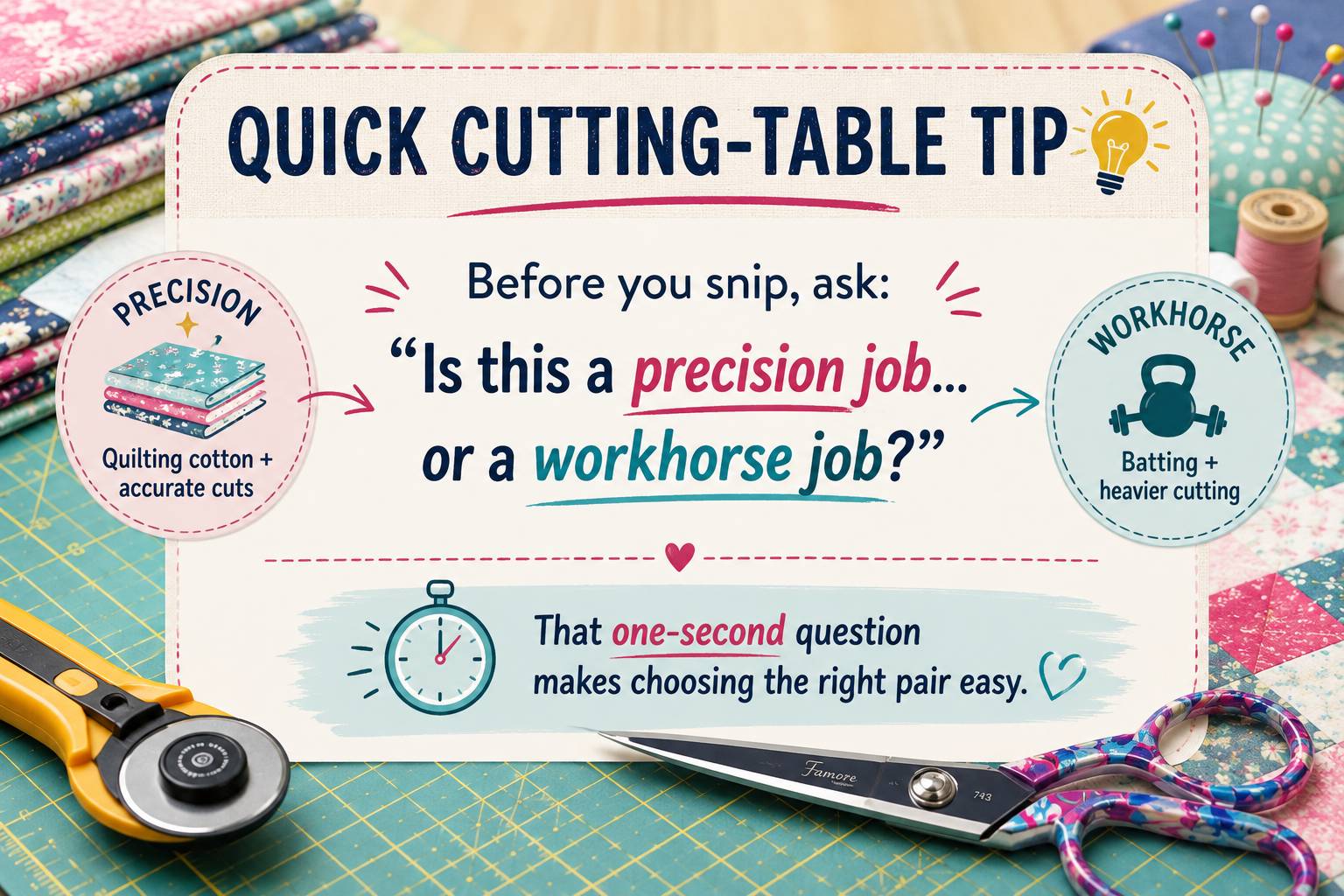
Not every cut asks the same thing from your scissors, so one pair doesn't have to do everything.
Give each pair the job it does best, and get back to the fun part: quilting.
Explore Famoré Scissors
Happy Quilting!
From Corey.

Linda's Quilting Essentials batting is on sale — shop batting cut by the yard and give your new workhorse pair something to do.
Frequently Asked Questions
Does cutting batting dull scissors faster than quilting cotton?
Yes. Batting is loftier and packs far more fiber into each cut, and many battings include a scrim or resin bonding that adds friction against the blades. Over time that rounds off a fine cutting edge much faster than smooth, single-layer cotton. If you're comparing batting types, start with our guide to selecting batting for quilting.
What is the 2-scissor rule in quilting?
The 2-scissor rule means keeping two dedicated pairs on your cutting table: a precision pair reserved for quilting cotton and accurate cuts, and a workhorse pair for batting and heavier jobs. Clean, controlled cuts protect your piecing accuracy — the same reason a small cutting mistake gets worse with every block.
What scissors are best for cutting quilt batting?
A sturdy utility or batting-specific pair works best — save your finest blades for fabric. Famoré makes dedicated batting scissors alongside appliqué and embroidery pairs; see the full breakdown in our Famoré Cutlery scissors guide or browse the Famoré scissors collection.
Can I use a rotary cutter to cut batting instead of scissors?
Absolutely — a rotary cutter on a self-healing mat handles batting well, especially for long straight cuts. Just know that batting dulls rotary blades quickly too, and your setup matters: check whether you're cutting with the ruler or the mat, and remember your cutting mat has a right side.
How do I keep my quilting scissors sharp longer?
Dedicate pairs to specific jobs, never cut paper or template plastic with fabric scissors, wipe blades clean of lint and resin residue, and store them dry and closed. The same edge-care habits apply to rotary tools — here's how to sharpen rotary cutter blades when they do wear down.